
How to Read Your Dog’s Body Language Before It Escalates
How to read dog body language by observing posture, facial tension, movement, and context together, recognizing signs of discomfort, and responding early to …
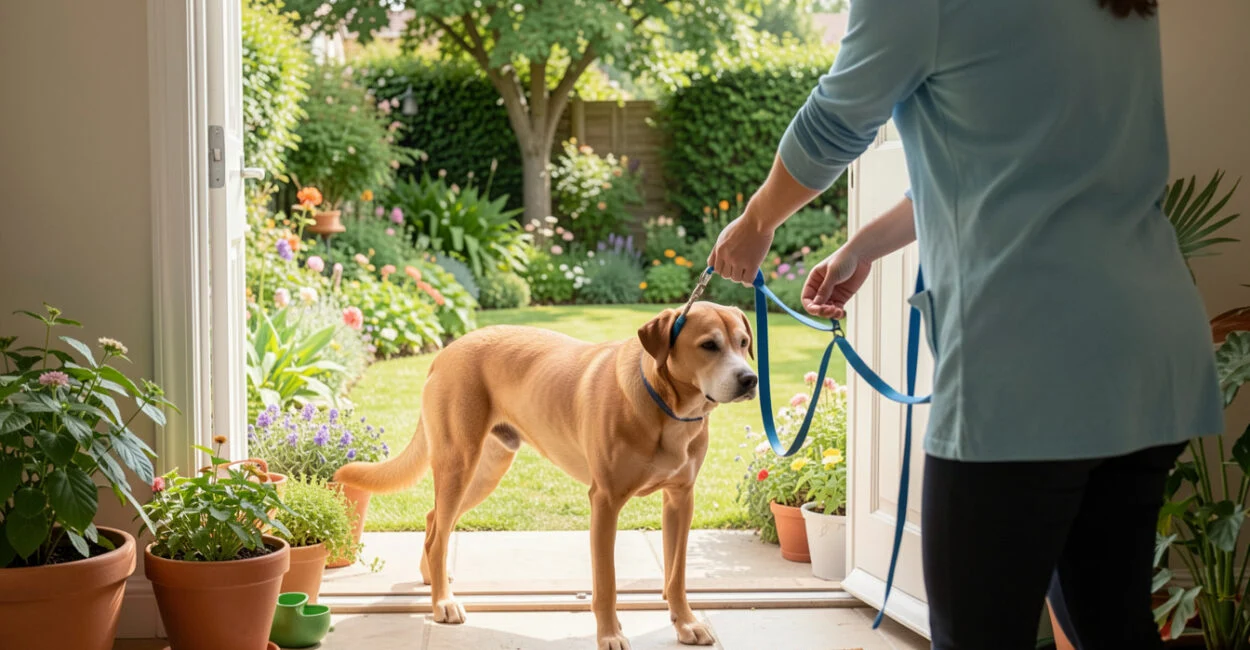 Noticing the dog’s request for space
A dog can go from sniffing a visitor’s hand to snapping when the hand keeps reaching after the dog turns away. Reading dog body language means noticing posture, facial tension, movement, and context together, then giving the dog room when signs of discomfort appear. These signals can guide safer choices, but they cannot predict every bite or reveal a dog’s feelings with certainty.
The most useful habit is to look for change: a body that was loose becomes still, a face that was soft tightens, or a dog who was approaching starts to turn away. Respond early by pausing, reducing pressure, and letting the dog choose whether to re-engage.
Before You Read the Signals
- Notice what was happening just before the behavior: handling, food, noise, another dog, or a resting place.
- Look at the whole dog, including posture, face, movement, and vocalizations.
- Give the dog an open route away; do not corner or restrain a worried dog to test a reaction.
- Compare the behavior with that dog’s usual patterns. Age, health, experience, and environment can affect how signals appear.
1. Read Dog Body Language as a Whole
Dog body language is the set of observable postures, movements, facial expressions, and vocal signals a dog uses in social situations. In everyday terms, read the combination and the situation, not one gesture in isolation: a wagging tail, for example, signals activity or arousal, but does not by itself prove friendliness.
Start with the dog’s baseline. A dog who normally carries their tail low may not be worried; a sudden tuck, stiffening, or shift away from a person can matter more than the tail’s usual height. Watch for clusters and changes over a few seconds. A still body, closed mouth, hard stare, and weight shifted forward deserves more space than any one of those cues alone.
Context helps explain what a signal might mean, but it does not make the interpretation certain. Pain, fear, excitement, and conflict can look similar from a distance. The ASPCA’s guidance on canine aggression and body language emphasizes that warning behaviors need to be taken seriously rather than challenged.
A change in the whole dog is more useful than a supposed translation of one body part.
2. Recognize Relaxed, Comfortable, and Playful Signals
A comfortable dog often has a loose body, easy movement, and a face without obvious tension. The dog may approach in a curve, sniff, then move away and return. A soft, open mouth can appear in relaxed dogs, but panting can also reflect heat, exertion, pain, or stress, so consider the setting.
Play often includes bouncy movement, pauses, and role changes. A play bow, with the front end lowered and hindquarters raised, can invite play, but it is not a universal “all clear.” Watch what happens next: both dogs should be able to pause or leave, and their bodies should loosen again after brief excitement.
How Do Dogs Say “I Love You”?
Dogs do not have one universally reliable “I love you” signal. A dog may seek proximity, lean gently, rest near a person, or greet them with a loose body, but each behavior depends on the individual and the moment. Look for voluntary, comfortable contact rather than assuming that a hug or close handling feels good to every dog.
Training can build trust when it gives the dog clear, rewarded choices. For practical, reward-based approaches, see positive pet training methods that build consistent behavior.

3. Catch Early Signs of Stress or Discomfort
Stress signals can be subtle and brief. A dog may turn their head, lick their lips, yawn, sniff the ground, or shift their weight before any growl or attempt to leave. These actions have other possible explanations, too; the useful clue is whether they appear in a tense situation or cluster with avoidance and stiffness.
- Turning away or avoiding eye contact: the dog may be trying to reduce social pressure.
- Lip licking or yawning: consider whether the dog is uneasy, particularly if the behavior appears out of context.
- Lowered posture, tucked tail, or ears held back: may accompany fear or discomfort, though ear shape and normal posture vary.
- Freezing or suddenly becoming still: pause the interaction. Stillness can precede a defensive response and is easy to miss when people focus only on movement.
- Moving away, hiding, or refusing food: treat these as reasons to reduce demands, especially if they are new for that dog.
A common mistake is to keep reaching because the dog has not growled. People may read a turned head or frozen posture as calm, then move closer and remove the dog’s chance to retreat. If a dog turns away, stop reaching and allow space; a return to loose movement is more reassuring than a person coaxing the dog to stay.
4. Treat Warning Signals as a Request for Space
Warning signals do not guarantee a bite, and their absence does not guarantee safety. They are practical reasons to stop what you are doing, create distance, and avoid escalating the situation. A growl is information; punishing it can suppress a warning without changing the discomfort behind it.
Possible cue What it may indicate Safer response Turning away, moving off, or hiding Discomfort or a wish to end contact Stop approaching and leave an open path away. Freezing, stiffening, or closing the mouth Increased tension; the dog may be assessing a threat Pause, avoid reaching, and calmly increase distance. Hard stare, lifted lip, or growl A clear warning that the dog needs space Do not scold or challenge the dog. Move away without sudden gestures. Snap or lunge The dog is already reacting defensively or at high arousal Stop the interaction, secure distance, and seek qualified help before another exposure.
For children, visitors, or anyone who cannot reliably follow these steps, use a physical barrier and keep the dog separated. The American Veterinary Society of Animal Behavior’s position statements support humane, reward-based behavior practices; fear and aggression call for careful management, not confrontational handling.
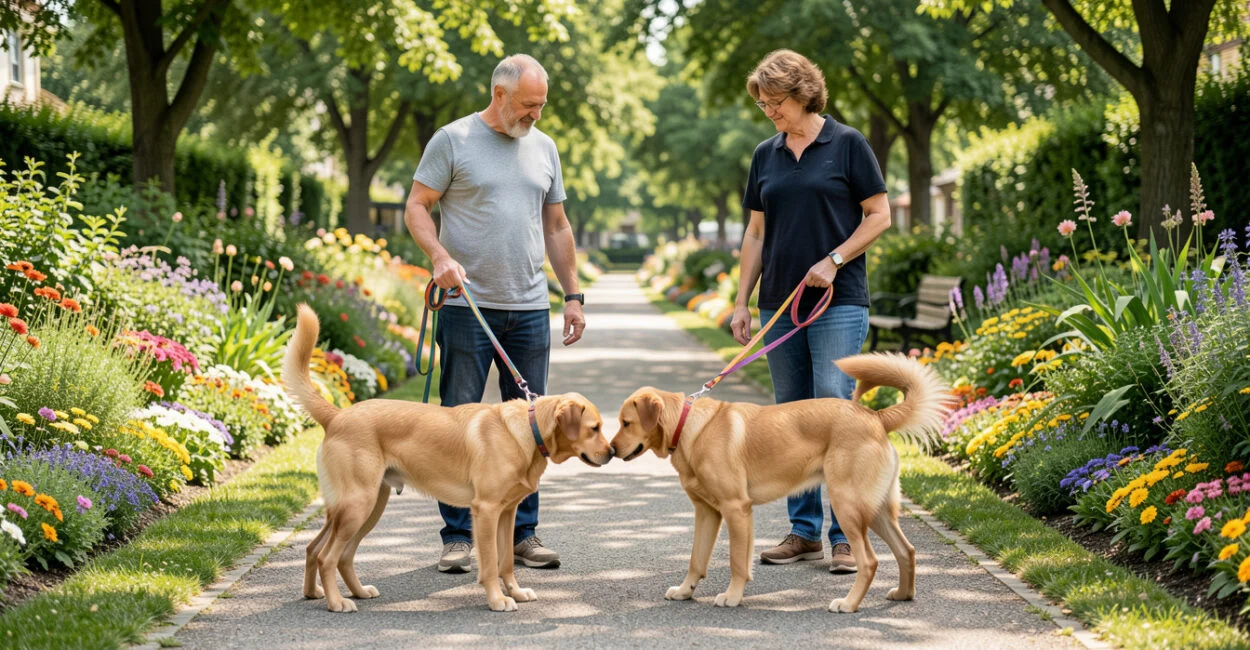
5. Read Dog-To-Dog Body Language and Manage Greetings
Healthy dog-to-dog body language is reciprocal: both dogs can approach, pause, move away, and re-engage. Curved approaches and brief sniffing are often less pressuring than a direct, head-on rush. Leashes can limit a dog’s ability to create space, so a tight leash greeting may feel more intense than the same interaction in an open area.
During play, watch for pauses and role changes. If one dog repeatedly chases, pins, or blocks the other while the pursued dog tries to hide or escape, interrupt calmly and give them space. Avoid grabbing collars in the middle of a tense interaction; use distance or a barrier when it is safe to do so.
When either dog stiffens, repeatedly turns away, or cannot disengage, end the greeting rather than waiting for a growl. A calm exit is a successful outcome. For dogs who struggle when left alone, a gradual plan such as this crate-training approach designed to avoid separation distress can support comfort with separation; a crate should never be used to force a dog through fear.
6. Interpret Sleeping Positions and Nooking Carefully
Dog sleeping positions meaning is not a reliable way to diagnose mood or health. A dog curled in a ball, stretched on their side, or lying near a person may be choosing a comfortable temperature, surface, or sense of security. A position alone cannot establish that a dog is sick.
Why Do Dogs Sit at Your Feet Facing Away?
A dog sitting at your feet while facing away may be resting close to you, watching the room, or choosing a comfortable position. It does not prove a specific emotion or serve as a fixed “protective” message. If the dog’s body remains loose and they can move freely, the posture may simply be a preferred way to settle.
What is Nooking in Dogs?
Nooking is a repetitive sucking or nursing-like motion, often directed at bedding, a blanket, or a toy. Some dogs do it as a settling habit, but the behavior itself does not establish a diagnosis. If it starts suddenly, becomes hard to interrupt, causes damage or injury, or comes with other behavior changes, discuss it with a veterinarian.
People also search for dog sleeping positions with owner or dog sleeping positions when sick. A new reluctance to lie down, repeated nighttime restlessness, difficulty getting comfortable, or a sudden change in sleep habits deserves more attention than the position itself. Pain and illness require veterinary assessment, not interpretation from a chart.
7. Respond Safely, Then Decide Whether to Get Help
When a dog shows discomfort, use a simple decision rule: if the dog can move away, stop the interaction and give them room; if the dog is trapped, being handled, or reacting more intensely, use a barrier or safe distance and get help rather than reaching in. This lowers pressure without asking the dog to tolerate more than they can manage.
- Pause the trigger. Stop petting, approaching, or presenting the object that may be causing concern.
- Make space. Turn slightly sideways, avoid leaning over the dog, and let them leave without pursuit.
- Reduce the next exposure. Use distance, a gate, or a quieter setting so the dog does not have to repeat the reaction.
- Track what happened. Note the setting, people or animals present, the first signals you noticed, and how long recovery took.
For separation-related stress, gradual practice and management matter more than leaving a dog to “get used to it.” A gradual crate-training plan may suit a dog who is comfortable in a crate, but a crate is not appropriate for every dog or every form of distress.
Contact a veterinarian when behavior changes suddenly, sleep or movement shifts, or handling brings out new sensitivity; pain and other medical issues can affect behavior. For recurring fear, growling, snapping, or difficult dog-to-dog interactions, ask your veterinarian about referral to a board-certified veterinary behaviorist or a qualified reward-based behavior professional. The AVMA also offers guidance on behavior problems in pets.
Can a Chart or Translator App Tell You What a Dog Feels?
A dog body language chart can help you remember possible cues, but it cannot interpret them reliably without context. A dog translator app, human to dog translator, or dog language translator cannot scientifically read a dog’s feelings from a bark or posture. Use tools as prompts to observe, not as substitutes for watching the dog or consulting a professional.
Your next step is to observe one ordinary interaction from a distance: note the situation, the dog’s whole-body posture, and whether the dog chooses to stay or move away. If you see a change or a cluster of stress cues, stop the interaction and give the dog space.
📱 See this content as a Web Story
Frequently Asked Questions
How Far Away Can a Dog Smell You?
There is no single dependable distance. Wind, humidity, terrain, the scent itself, and the dog’s individual abilities all affect how far a smell carries, so a precise universal estimate would be misleading.
Should I Pet a Dog Who Approaches Me?
Approach alone is not consent to touch. Pause, keep your body relaxed, and let the dog choose whether to remain nearby; if they move away or stiffen, do not reach for them.
Is Panting Always a Sign That a Dog is Happy?
No. Dogs pant after exercise or in warm conditions, but stress, pain, and illness can also cause panting. Consider the setting and look for other changes, especially if the panting is sudden or unusual.
Should I Correct a Dog for Growling?
No. A growl is a warning that the dog needs space. Stop the interaction, move away safely, and address the cause with a veterinarian or qualified behavior professional rather than punishing the signal.