
How to Choose the Right Litter Box for a Multi-Cat Home
How to choose litter boxes for multiple cats: assess each cat’s access, box size, design, and location to ensure calm, separate, and usable options in your h…
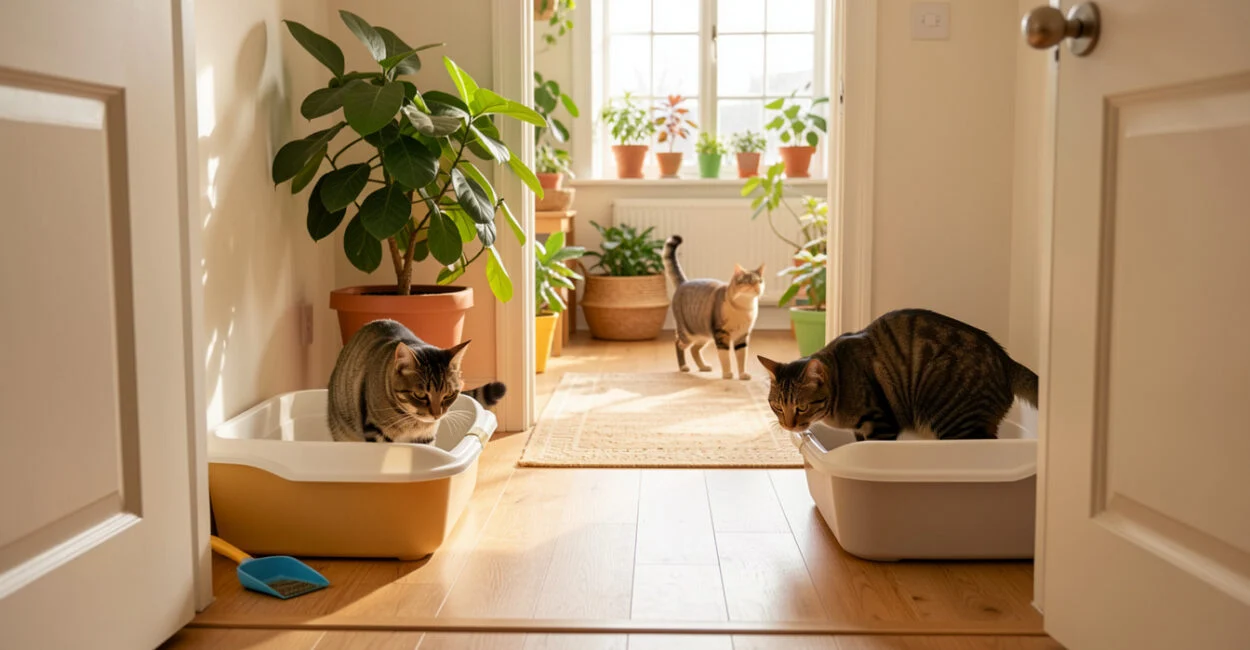 Two cats, separate accessible litter boxes
How to Choose the Right Litter Box for a Multi-Cat Home
A calm litter setup depends on where each cat can go, not just how many boxes you own.
A litter box for multiple cats has to work as part of a shared home. Each cat needs a usable, easy-to-reach option, and a quiet place to use it without being cornered or crowded.
The familiar guideline is one box per cat, plus one more. It’s a helpful starting point, but three boxes lined up in the same spot may act like one station if a cat can guard the route or block the entrance. Consider each cat’s access, the box’s size and design, and its location before counting boxes.
Start with Access, Then Count the Boxes
For two cats, the common starting point is three litter boxes. That count is not a guarantee: a cat’s age, mobility, temperament, and established habits affect whether the arrangement works. The goal is to give cats separate, accessible options rather than funneling them toward one busy corner.
The AAFP/ISFM Feline Environmental Needs Guidelines emphasize resources that cats can access without competition. In plain terms, another box helps only if your cat can reach it and feels safe using it.
Why Several Boxes Can Still Feel Like One
Boxes placed side by side may function as a single shared station: a cat can guard the area, and another may hesitate to approach. Separate them around the home so one cat can use a box without passing the other or being trapped in a dead-end space.
Imagine one cat waiting outside a laundry-room doorway while the other uses the only box there. Adding two boxes beside it may not solve the problem; moving one to a quiet, separate room gives the waiting cat another route.
Watch the approach, not just the box. A narrow hallway, closed door, or noisy appliance can turn an apparently available tray into an option a cat avoids.
Choose a Design for the Cat Using It
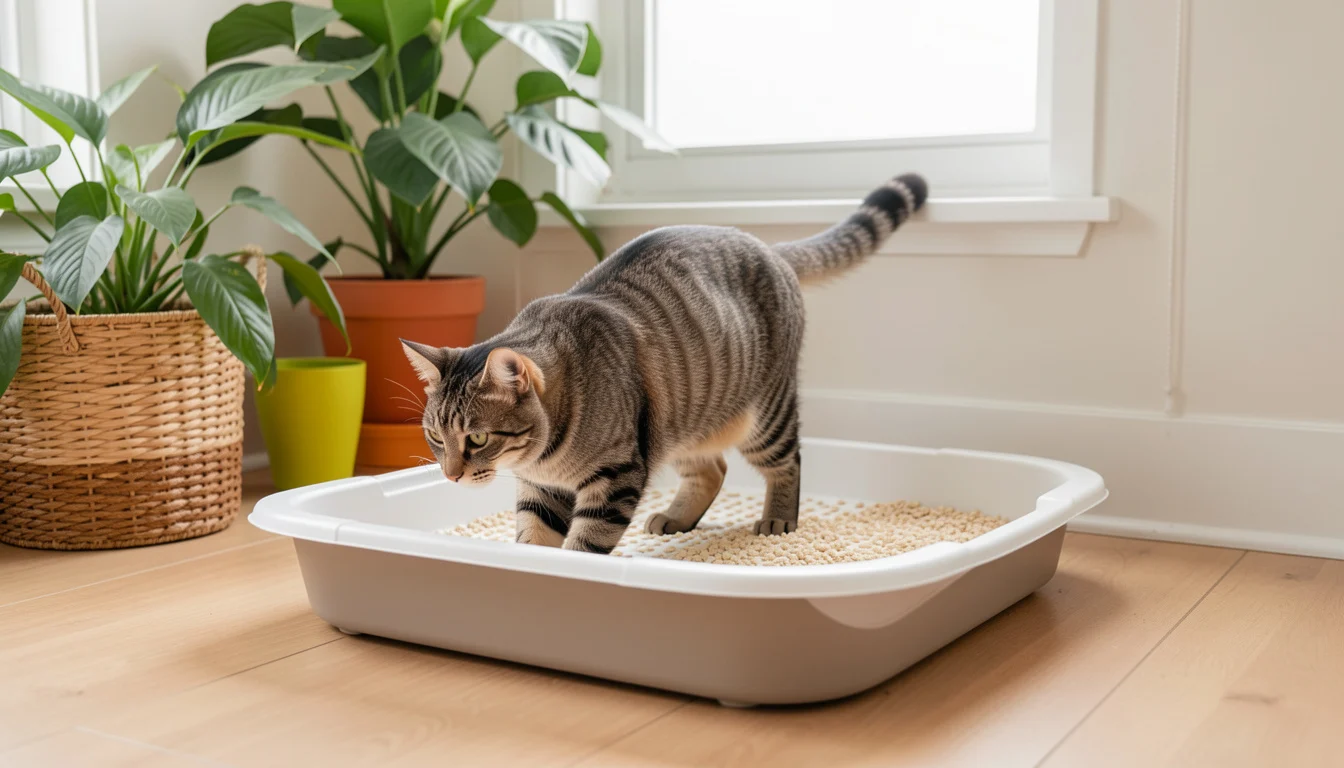
Usable space matters more than a model’s outside dimensions. Your cat should be able to enter, turn around, dig, and cover waste without pressing against the walls. Older cats or cats with mobility limits may need a low entry; a high-sided box can be harder to climb into.
Feature When it may help What to watch Large, open box Room to turn and see the surroundings Needs enough floor space and regular cleaning Covered box May suit a cat that already prefers enclosed spaces Some cats dislike the confined feel or trapped odors High sides Can contain kicked litter for agile cats May be difficult for kittens, seniors, or cats with limited mobility Low entry Easier access for cats that struggle to step over a rim May contain less scattered litter
There is no design every cat will accept. The International Cat Care guidance on litter trays also advises considering the individual cat’s preferences and access needs.
Put Boxes in Separate, Quiet Locations
Choose calm spots that cats can reach at all times, away from food and water. Avoid placing every box together or beside a washer, dryer, or other noisy appliance. Sudden sounds can startle a cat, while a blocked doorway can leave a second cat with nowhere else to go.
Think in routes as well as rooms: can a cat approach and leave without getting cornered? If one cat tends to follow or intimidate another, place boxes where they cannot all be watched from one chokepoint.
Can Your Cats Share One Litter Box?
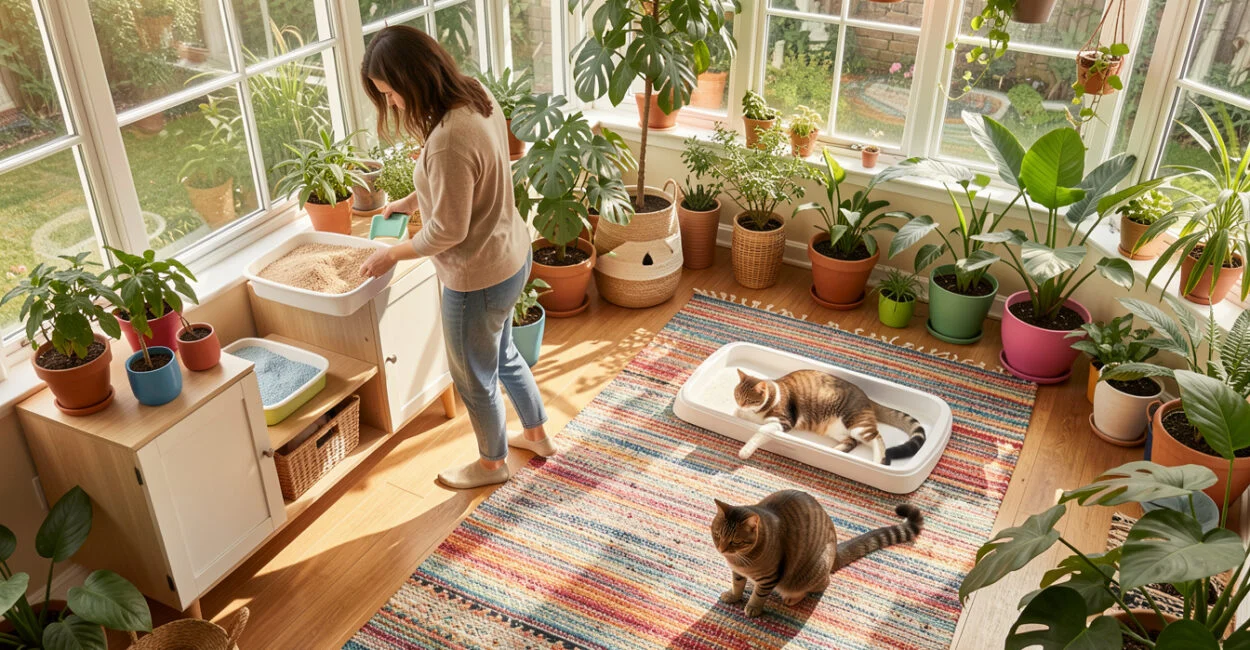
Some cats will use the same box, but sharing should not leave them without another choice. If one cat guards the tray, avoids it after the other has used it, or waits for access, add separate options and observe whether behavior improves.
A box arrangement cannot explain every change in litter habits. If a cat suddenly stops using the tray or strains, contact a veterinarian; box placement is only one possible factor.
Set Up the Arrangement, Then Observe
Make changes gradually when possible. Keep a familiar box and litter available while introducing a new tray, and watch each cat’s behavior rather than assuming the group has accepted the change.
- Can each cat reach a box without passing or confronting another?
- Are the boxes spread across separate, quiet locations?
- Can every cat step in, turn around, and dig comfortably?
- Are you scooping often enough to keep the trays inviting?
- Does each cat use the boxes without hesitation or avoidance?
The Ohio State University Indoor Pet Initiative offers broader guidance on meeting cats’ environmental needs. If a new setup leads to persistent avoidance, reconsider access, location, cleanliness, and the individual cat’s preference.
Frequently Asked Questions
How Often Should a Multi-Cat Household Scoop Litter?
Scoop at least daily, and more often if the boxes get soiled quickly. With several cats, one missed cleaning can make a shared tray less appealing.
How Can I Help a Cat Adjust to a New Litter Box?
Place it in a quiet, accessible spot and let the cat investigate at its own pace. Keep the familiar box available during the transition.
Should All the Boxes Use the Same Litter?
Keeping the familiar litter can make a new box easier to accept. If you want to change litter, do so gradually and watch how each cat responds.
What If a Cat Still Avoids the Litter Box?
Check for access problems, conflict, cleanliness, or a disliked box design. A sudden change in litter habits warrants veterinary advice.
Walk the route each cat takes to the tray. If one has to cross a guarded doorway or pass a noisy machine, move a box before buying a bigger one.