
Citronella Decor vs. Candles: Which Keeps Bugs Away Longer?
How citronella decor affects outdoor spaces: the limits of candles, plants, and torches in mosquito deterrence, and tips for combining them with reliable pro…
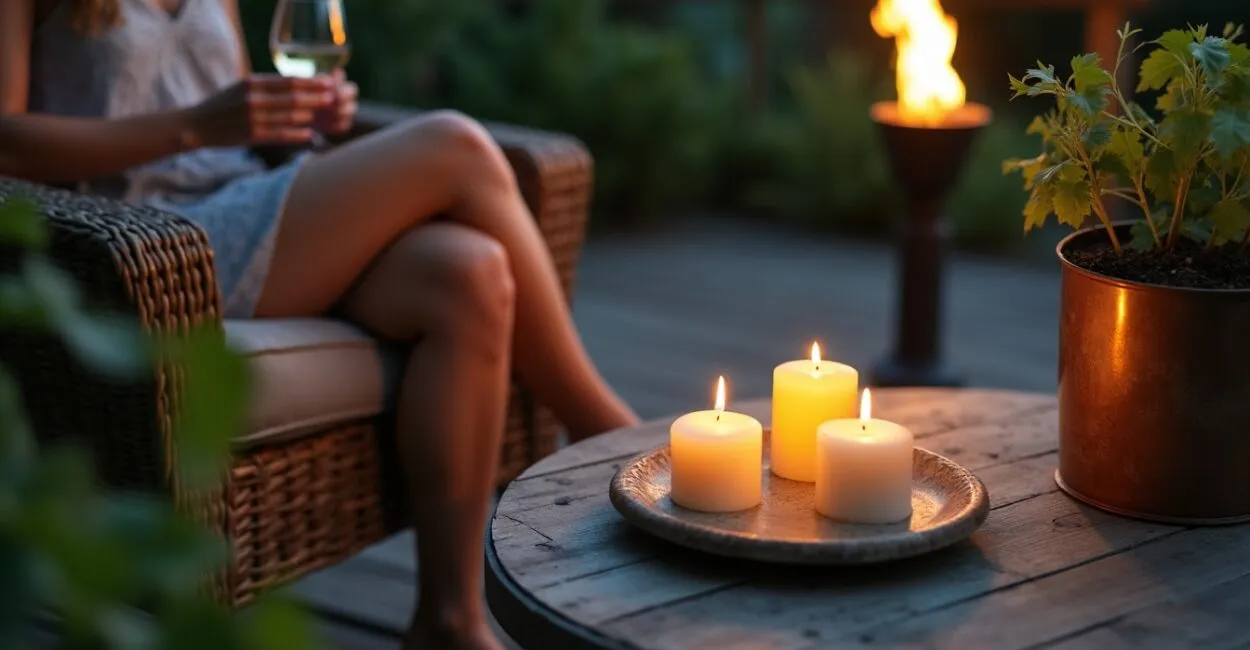 Citronella candle and plant on a dusk patio
📅 Updated on 10/10/2026
A candle can burn for hours and still leave mosquitoes circling the table. Citronella decor, including planters, candles, and torches, can add scent and atmosphere outdoors, but its mosquito-deterring effect depends on the product, wind, and how the space is arranged.
For a small seating area, a citronella candle or torch may provide a modest, localized deterrent while it burns. A living citronella plant is mainly decorative; its intact leaves release far less fragrance than products made with citronella oil. None of these options should be treated as complete mosquito protection.
Quick Takeaways
- A product’s labeled burn time describes how long it may burn, not how long it will keep a seating area free of mosquitoes.
- Outdoor airflow can carry citronella scent away from the people you want to protect.
- Plants with citronella-scented leaves need to be crushed or handled to release more aroma, and that still does not make them a dependable repellent.
- For reliable bite prevention, pair decorative products with measures such as EPA-registered repellent and clothing that covers exposed skin.
What Citronella Decor Can Do for Your Outdoor Space
Citronella decor combines outdoor furnishings or accessories with citronella-scented products intended to discourage mosquitoes nearby. Planters, candles, and tiki torches can add fragrance and help make a small seating area less appealing to some mosquitoes while the products are in use. Their effect is limited and varies with wind, product design, and conditions, so they cannot guarantee a mosquito-free patio or replace proven bite-prevention measures.
The practical distinction is between ambiance and protection. A citronella planter can make a patio look finished, while an oil-burning torch creates a visible flame and fragrance. Neither the presence of a plant nor the amount of time a candle burns tells you how much protection people will receive.
Planters, Candles, and Torches: Comparing Runtime and Use
There is no universal “longest-lasting” choice. A plant can remain in a pot for a season with suitable care, but that does not mean it deters mosquitoes for that long. Candles and torches have finite fuel supplies, and their labels provide the best available estimate of burn time for that specific product.
| Option | What lasts | Best fit | Main limitation |
|---|---|---|---|
| Citronella planter | The plant may persist with proper growing conditions. | Decorative patios and garden edges | Intact foliage gives off little scent; it is not a dependable repellent. |
| Citronella candle | Burn time depends on wax, wick, container, and label. | Small tables or a close seating area | Wind and open-air dilution can reduce its local effect. |
| Citronella tiki torch | Fuel duration depends on reservoir size, fuel, and wick setup. | Open outdoor spaces where a flame is permitted | Its scent and any deterrent effect are affected by wind; open flame adds risk. |
For a torch, the honest answer to “How long will it protect a seating area?” is that there is no dependable standard duration or radius. Follow the fuel and burn-time information on the product label, but treat that as operating guidance, not a guarantee of mosquito coverage.
How Citronella Affects Mosquitoes
Citronella oil is a volatile aromatic oil: it releases scent molecules into the air, and that odor may interfere with a mosquito’s ability to locate a person nearby. In everyday terms, the fragrance can make the immediate area less attractive to some mosquitoes for a time. It does not create a lasting barrier around a patio.
Read also: Mosquito-Repellent Plants: 7 Low-Maintenance Picks for Patios
Wind, temperature, and the distance between the product and the people matter. A breeze can disperse the scent; placing a candle far from the seating area leaves the people at the table outside its already limited zone. The U.S. Environmental Protection Agency’s guidance on insect repellents explains why registered repellents are a more appropriate choice when the goal is personal bite prevention.
What Changes Runtime and Real-World Performance?
Citronella candle runtime varies by formulation, container, wick, and use conditions. For torches, fuel capacity and wick configuration matter. Use the manufacturer’s labeled burn time for the exact item rather than applying a generic estimate to all candles or torches.
Read also: How to Keep Outdoor Wood Furniture from Fading
Runtime and effectiveness are separate measures. A candle may continue to burn after wind has carried its scent away from the table. Conversely, in a sheltered nook, the fragrance may remain noticeable nearby, though noticeable scent alone does not prove that mosquitoes are being deterred.
A common setup mistake is lighting one candle at the far end of a large patio and expecting it to protect every chair. Start by considering the actual seating zone and prevailing breeze; then place any product according to its label and observe whether the scent reaches the area without blowing directly into guests’ faces.
Choosing Citronella Decor for a Patio
Match the product to the space and the reason you want it. Planters work well as decorative accents, but their mosquito-deterring value should be treated as incidental. A candle suits a compact table where an open flame is allowed and can be watched. Torches may fit larger open areas, provided local rules, manufacturer instructions, and safe clearances permit their use.
- For a small dining table: Consider a stable, labeled outdoor candle placed where guests will not brush against it.
- For a garden border: Use citronella-scented plants for foliage and fragrance, not as a substitute for repellent.
- For an open seating area: Consider torches only if they can be set on stable ground, well away from combustible materials and foot traffic.
If bites remain a concern, combine decor with practical prevention. The CDC recommends using EPA-registered insect repellents and taking steps to reduce mosquito exposure, including wearing clothing that covers skin. See the CDC’s mosquito prevention guidance for advice that goes beyond scented products.
Placement, Maintenance, Cost, and Safety
Place candles and torches near the area people occupy, while respecting the label’s minimum distances from structures, furniture, dry leaves, and other flammable items. Avoid positioning them where a cross-breeze sends smoke or scent into someone’s face. Never leave a burning product unattended, and extinguish it before leaving the area or going indoors.
Keep flames and fuel out of reach of children and pets. A candle can tip, hot wax can burn, and torch fuel can be hazardous if spilled or swallowed. Follow the product label for storage, refilling, extinguishing, and disposal. The National Fire Protection Association’s candle safety guidance offers additional advice for reducing fire risk.
For longer candle use, trim and maintain the wick only as the manufacturer directs, keep the candle away from drafts, and burn it on a level, heat-resistant surface. A draft can make the flame burn unevenly and consume wax faster; shielding the candle must never mean enclosing it or restricting its safe use. Stop burning it at the label’s specified limit, even if wax remains.
Common Mistakes and Citronella Decor FAQs
Citronella plants are often mistaken for ready-made repellents. Many plants sold under citronella-related names have scented leaves, but the fragrance from an untouched plant does not provide the same exposure as a formulated oil product. Crushing leaves may release more scent, yet it still does not establish reliable mosquito protection.
Can citronella plants replace candles or torches?
No. Plants can add foliage and fragrance, but intact leaves do not release enough scent to act as a reliable substitute for a formulated candle or torch. Even those products offer only limited, condition-dependent deterrence.
Are citronella candles safe around kids and pets?
They can be used only with close supervision and according to the label. Keep the flame, hot wax, and candle out of reach, and do not let children or pets approach an unattended burn. If the label gives stricter precautions, follow those.
How should I place candles and torches for the best effect?
Keep them near the seating area, but use the distances and placement instructions on the product label. Account for wind, foot traffic, and nearby combustible materials. Several products do not guarantee a particular coverage area.
How can I extend candle runtime without losing effectiveness?
Follow the candle maker’s wick and burn instructions, use a level surface, and avoid drafts that make the flame flicker. There is no reliable way to extend burn time while preserving a guaranteed deterrent effect; a slower burn does not establish stronger protection.
What should I use if avoiding bites matters most?
Choose an EPA-registered insect repellent and follow its label. Citronella decor can remain part of the setting, but it should not be the only measure when mosquitoes pose a health concern.
Before buying, measure the seating area, check the product label for burn and safety instructions, and decide whether fragrance, appearance, or bite prevention matters most. Use decorative products for atmosphere and add a registered repellent when you need dependable personal protection.