
Arrange Potted Plants on a Patio: Height and Balance
How to arrange potted plants on a patio using height, shape, and spacing to create balanced groupings that add structure and avoid visual clutter.
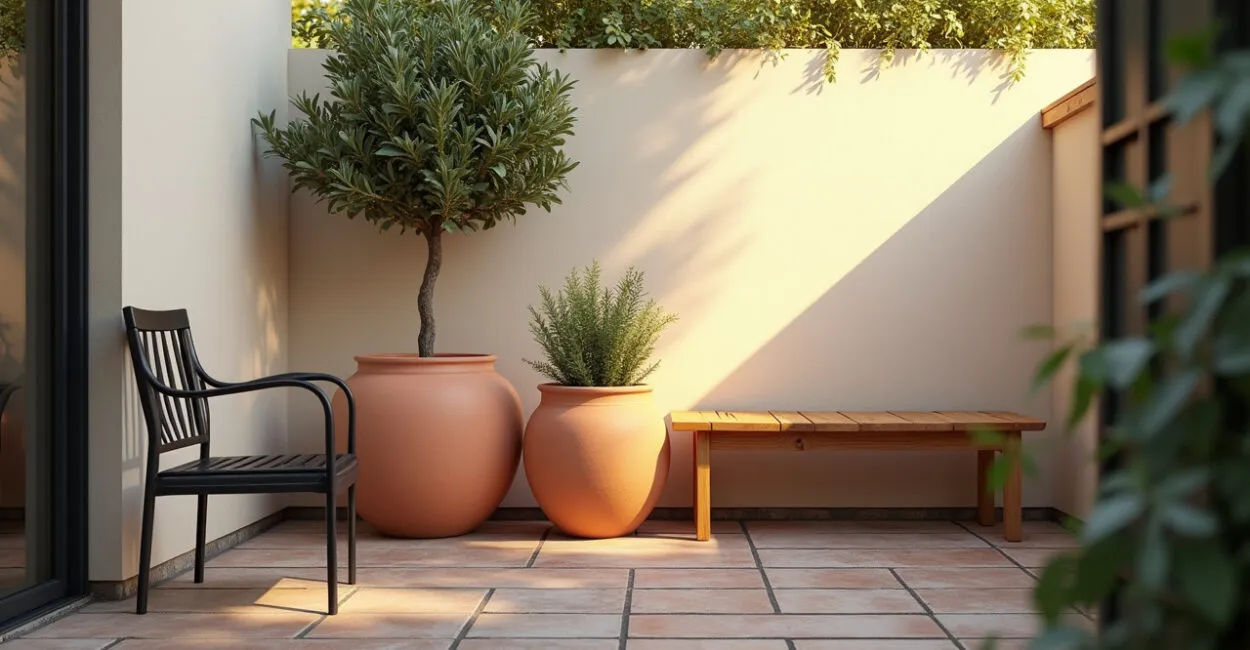 Varied potted plants balance a sunlit patio corner
A patio can look crowded in a hurry, but a few well-placed pots can make it feel designed instead of accidental. The real skill in how to arrange potted plants on a patio is not filling every empty corner; it is using height, shape, and spacing to guide the eye and create balance.
Done well, container plants add structure, soften hard edges, and make even a small outdoor space feel layered. Done poorly, they turn into visual clutter. The difference usually comes down to three things: grouping, proportion, and negative space. That is what this article covers, with practical rules you can actually use.
O Que Você Precisa Saber
- Balanced patio planting starts with one focal point, then builds outward with supporting pots of different heights and forms.
- Odd-number groupings usually look more natural than even-number groupings because the eye reads them as a single composition, not a row.
- Spacing matters as much as plant choice; leaving visible gaps prevents a patio from feeling heavy and lets each container keep its own shape.
- Large pots anchor the scene, medium pots connect the layers, and small pots work best as accents rather than the main event.
- The best arrangement depends on sun exposure, foot traffic, and how often you want to move the containers for watering or seasonal changes.
How to Arrange Potted Plants on a Patio with Height, Shape, and Balance
Start with a Visual Anchor
The most effective patio arrangement begins with one anchor, usually the largest pot, a tall planter, or a plant with a strong silhouette such as a dwarf olive, bird of paradise, or ornamental grass. That anchor gives the eye a place to land. Without it, every container competes for attention and the patio starts to feel scattered.
Think of the anchor as the “lead voice” in a composition. Around it, you add quieter pots that support the scene instead of shouting over it. A practical rule: if your anchor is tall, let the surrounding pots be lower or softer in form; if the anchor is broad, use slimmer containers nearby to keep the arrangement from feeling blocky.
Good patio design is not about placing more pots; it is about placing fewer, better-scaled pots that create a clear visual hierarchy.
Use Height Like a Staircase, Not a Wall
Most patios look better when plant heights rise and fall in a gentle sequence. If every pot is the same height, the arrangement reads as a line. If the difference is extreme, it looks staged. The sweet spot is a stepped progression: low, medium, tall, then back down again where the layout opens up.
That stepped effect works especially well near seating areas, because it frames the space without blocking sightlines. A bench behind a cluster of containers, for example, can handle a taller pot at one end and a medium-height grouping at the other. The transition feels intentional, not forced.
Group by Form, Not Just by Species
Container design gets easier when you look at shape before plant label. Round terra-cotta pots, square fiberstone planters, and narrow troughs each create different visual weight. A group of all-round pots can feel relaxed but repetitive. Mixing one round, one vertical, and one low container creates tension in the right way.
This is where texture matters too. Glossy ceramic, matte concrete, woven basket sleeves, and aged terra-cotta all change how the eye reads the patio. If the plants themselves are lush and dense, use simpler containers. If the pots are the star, keep the foliage softer and less busy.
Container Type
Visual Effect
Best Use
Tall urn or column planter
Strong vertical emphasis
Near an entry, corner, or blank wall
Medium round pot
Softens hard edges
Connects larger and smaller containers
Low bowl or squat planter
Keeps the layout grounded
In front of seating or along a step
Long trough
Creates directional flow
Along railings, walls, or edges
Spacing Rules That Keep a Patio from Looking Crowded
Leave Negative Space on Purpose
Negative space is the open area between containers, and it is what keeps the arrangement breathable. On a patio, people usually underestimate how much empty space they need. In practice, a little daylight between pots lets each plant hold its shape. When pots touch or nearly touch everywhere, the arrangement loses structure.
A useful test is to step back until the patio reads in one glance. If the pots merge into one mass, spread them apart. If they look disconnected, move them closer and add one bridging container. That middle ground is where most patios look their best.
Respect Foot Traffic and Doors
Patio beauty fails fast when containers interrupt movement. Keep walkways clear, especially near sliding doors, grill stations, and seating access points. A narrow path should stay visually open as well as physically open; people should not have to navigate around planters like obstacles.
Edge placement works well here. Put larger pots where they can define a boundary, then use smaller pots to soften corners and transitions. That strategy gives you structure without sacrificing usability. It also keeps watering, pruning, and seasonal cleanup less annoying.
The biggest mistake is not choosing the wrong plant; it is placing too many containers where the patio needs breathing room.
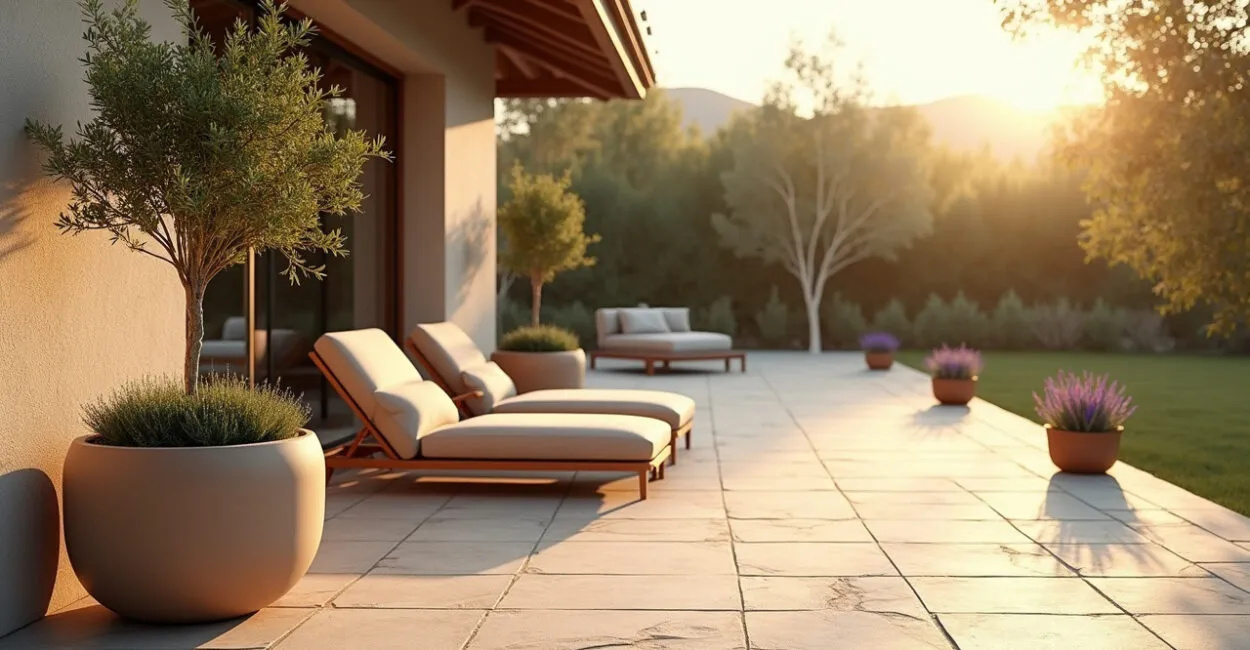
Choosing the Right Pots for Scale and Style
Match Container Scale to the Patio Size
A tiny pot on a large patio disappears. A huge planter on a narrow balcony-style patio overwhelms everything else. Scale is not about personal taste alone; it is about proportion. If the outdoor space is compact, a few medium containers usually read better than a dozen small ones. If the patio is large, at least one oversized pot helps prevent the layout from looking timid.
Garden centers often display pots in isolation, which makes them look bigger or smaller than they will feel at home. Always imagine them next to your furniture, railing, and wall surfaces. That is the real scale test.
Pick Materials That Suit the Environment
Terracotta breathes well and suits warm, dry patios, but it can dry out fast. Concrete and stone give a strong, modern look and stay stable in wind, though they are heavy. Lightweight resin or fiberglass is practical for rooftops and upper decks where weight matters. That tradeoff matters more than people think, especially when you need to rearrange plants seasonally.
For guidance on plant and container care in general, the University of Minnesota Extension’s container plant resources are a solid reference. They do not replace design judgment, but they help with the practical side of drainage, potting mix, and plant health.
Read also: Easy Patio Planter Setup in 30 Minutes — No Tools Required
Use Color as a Background Tool
Neutral pots tend to make plant color look stronger. Dark charcoal, clay, white, and muted stone finishes work because they do not fight the foliage. Brightly glazed containers can be beautiful, but they should be used sparingly unless the patio already has a very restrained palette.
The same goes for flowers. If your pots already bring strong color, let the surrounding furniture and cushions stay quieter. The patio should feel coordinated, not competitive.
Read also: Style Potted Plants for Patios: 9 Easy Design Ideas
Plant Combinations That Create Depth Without Chaos
Build Layers with Thrillers, Fillers, and Spillers
Container designers often use the thriller-filler-spiller method because it works. The thriller is the tallest, most noticeable plant. The filler gives volume in the middle. The spiller softens the edge and adds movement. In real patios, this approach helps one pot read as a complete composition instead of a single plant in a vessel.
Examples are easy to adapt: ornamental grass or dracaena as the thriller, coleus or geraniums as fillers, and sweet potato vine or trailing lobelia as spillers. This is not a rigid formula. If the container sits in a windy spot, for instance, heavy spillers can look messy fast, so a cleaner, upright arrangement may work better.
Mix Foliage Shapes for More Depth
Depth comes from contrast. Broad leaves next to fine-textured leaves create a richer read than a group of plants that all look similar. A patio arrangement with hosta-like foliage, airy grasses, and a compact shrub gives the eye different layers to explore. Even without flowers, the composition can feel finished.
That mix also helps through the seasons. When blooms fade, foliage still carries the design. On patios where people actually sit and look at the plants every day, leaf texture often matters more than flower color.
A Small Real-world Example
On a narrow townhouse patio, I once used only five containers: one tall black planter with a vertical grass, two medium clay pots with herbs, one low bowl of trailing ivy, and a square cement pot with a compact shrub. The space had almost no room to spare, but the patio looked larger after the reset. Why? The tall pot marked the far corner, the herbs created the middle layer, and the low bowl kept the front edge open. Nothing felt crowded, yet the patio no longer looked empty.
Lighting, Corners, and Focal Points That Finish the Layout
Use Corners to Stop the Eye from Falling Off
Corners are often wasted, but they are some of the most valuable spots on a patio. A corner planter can make the layout feel enclosed in a good way, almost like an outdoor room. Tall pots work especially well there because they solve the “dead corner” problem without taking much floor space.
If the patio is against a wall, use the wall as a backdrop and vary the pot heights in front of it. That creates depth immediately. A single line of equal-height pots against a flat surface usually looks thin; layered heights give the area more presence.
Let Lighting Reinforce the Arrangement
Outdoor lighting changes how the patio reads at night. Uplighting a tall planter can emphasize shape. String lights can soften the composition, but they should not compete with the containers themselves. A well-lit patio should still have clear plant structure after dark.
For safe placement near fixtures, outlets, and walkways, consult the National Park Service’s native plant guidance and compare it with your local extension service recommendations. Native and climate-adapted plants usually need less intervention, which makes long-term patio maintenance easier.
Choose One Focal Point, Not Five
A patio arrangement gets confused when everything tries to be the main attraction. Pick one focal point: a sculptural pot, a flowering specimen, a clipped evergreen, or even a grouping placed at the end of a sightline. Then let the rest of the containers support it.
That rule is especially useful for small patios. Limited space does not need more features; it needs better hierarchy.
Seasonal Adjustments That Keep the Patio Looking Intentional
Rotate for Sun, Wind, and Bloom Cycles
Plants change through the year, and your arrangement should change with them. A pot that looks full in May may look tired by late summer. Instead of forcing one static layout, shift containers as conditions change. Move sun-lovers to brighter exposure, pull tender plants back from harsh afternoon heat, and replace spent blooms before the arrangement declines.
This is where patio design becomes practical rather than decorative. The best layouts survive real use: watering, pruning, storms, and the occasional plant failure. A method that works only on the first day is not a good method.
Refresh Without Rebuilding Everything
You do not need to redo the entire patio every season. Keep your anchor pieces, then swap the supporting plants. That approach saves time and keeps the space visually familiar. One or two seasonal accents can change the mood without breaking the structure.
That also makes maintenance easier. When the bones of the arrangement stay consistent, you can evaluate what is working and what is not, instead of starting over from scratch each time.
Practical Rules That Make the Arrangement Feel Natural
- Use odd-number groupings when you want a cluster to feel organic rather than symmetrical.
- Keep one dominant height in each zone so the eye has a clear leader.
- Repeat container material or color at least once to create visual rhythm.
- Separate pots enough that each one still reads as a distinct shape.
- Match plant water needs before arranging for style, or the patio will look good for a week and fail after that.
These rules do not need to be followed with religious precision. They are guardrails. A formal patio can still use symmetry, and a very small space may need tighter spacing than a large terrace. But if you ignore all of them, the layout usually loses coherence fast. Good patio planting looks calm because the structure underneath is doing real work.
What to Do Next
Walk your patio as if you were a guest entering it for the first time. Identify the strongest corner, the weakest corner, and the main sightline from inside the house. Then place the largest pot first, add one medium-height connector, and leave room for the eye to rest. If you want the space to feel designed, start with hierarchy before you start shopping for more plants. That is the fastest way to arrange potted plants on a patio without creating clutter.
📱 See this content as a Web Story
FAQ
How Many Potted Plants Should I Put on a Patio?
The right number depends on patio size, but fewer containers usually look better than more. A small patio may only need three to five well-scaled pots, while a larger terrace can handle a stronger cluster. The key is not quantity; it is whether the arrangement has a clear focal point, enough negative space, and a comfortable path for walking. If the patio feels crowded when you step back, you already have too many containers.
Should All Patio Pots Match?
No. Matching pots can look neat, but a fully uniform set often feels flat. A better approach is to repeat one element, such as color, material, or shape, while varying the rest. For example, three containers in the same neutral finish can still feel layered if one is tall, one medium, and one low. That gives the patio rhythm without making it look like a showroom display.
Where Should the Tallest Planter Go?
The tallest planter usually works best in a corner, beside an entry, or at the end of a sightline. Those spots let it act as an anchor without blocking movement. If you place the tallest container in the middle of a narrow patio, it can interrupt circulation and make the area feel smaller. In most layouts, height belongs where it can frame the space, not dominate the walking path.
What Plants Work Best in Patio Containers?
Plants that tolerate containers well and match your light conditions are the safest choice. Sun patios often do well with herbs, ornamental grasses, lantana, and compact flowering annuals, while shadier patios may suit ferns, coleus, begonias, or structural foliage plants. The best plant is one that fits both the pot size and the available light. A beautiful plant in the wrong exposure will always struggle.
How Do I Keep Patio Pots from Looking Cluttered?
Clutter usually comes from two things: too many pots and no hierarchy. Start by removing one or two containers, then place the largest pot first and build around it with smaller pieces. Leave visible gaps so each plant still has its own outline. If all the pots are competing for attention, choose one focal point and make the rest support it. That single decision often fixes the whole patio.