

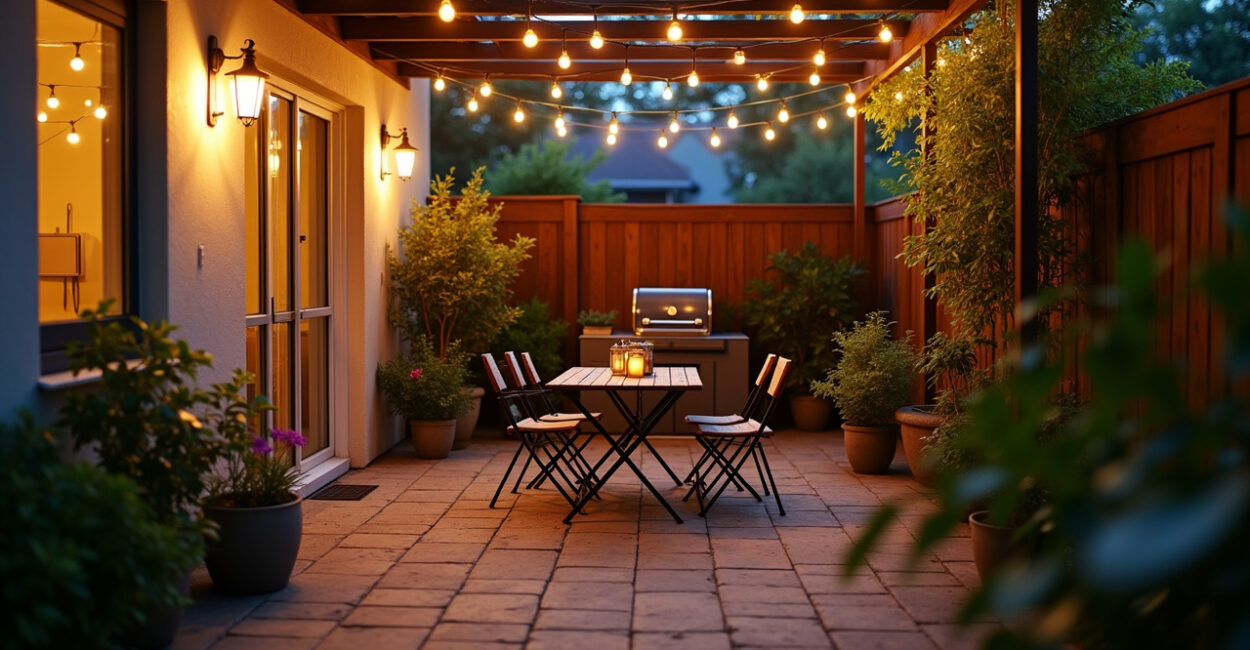
A small patio can feel twice as large at night when the lighting is planned well. The trick is not adding more fixtures; it is using layered light so the space feels warm, defined, and easy to use without paying for a full electrical overhaul. These budget patio lighting ideas for small yards work because they create depth, lower visual clutter, and keep the brightest light where people actually need it.
In practice, the best low-cost setups rely on a mix of string lights, solar accents, battery lamps, and a few reflective surfaces. That combination gives you ambient light for mood, task light for sitting or grilling, and enough contrast to make edges visible without washing out the whole yard. The ideas below are practical, not theoretical: they are the kinds of upgrades that make a compact patio look finished in one weekend.
What You Need to Know
- Layering matters more than fixture count: one warm ambient source and one or two accent sources usually beat a row of bright lights.
- Warm color temperature, around 2700K to 3000K, tends to make small patios feel softer and more inviting than cool white light.
- Solar lights are worth using where they get direct sun, but shaded corners often need battery or plug-in backup.
- Light placed at eye level or below usually feels calmer in a tight yard than overhead glare.
- For safety and efficiency, LED lighting remains the smartest budget choice; the U.S. Department of Energy notes LEDs use far less energy and last much longer than older bulbs: DOE’s LED lighting overview.
Budget Patio Lighting Ideas for Small Yards That Use Layers, Not Brightness
The formal idea behind patio lighting is simple: combine ambient, task, and accent light so the area feels usable and visually balanced. In plain English, that means one source for mood, one for function, and one for definition. In a small yard, this is even more important because too much light flattens the space and makes every corner feel exposed.
What makes a small patio feel bigger at night is not stronger light—it is controlled contrast, with warm ambient light and a few carefully placed accents.
Start with One Anchor Source
A single overhead string-light run, a wall-mounted lantern, or a café-style bulb line can become the anchor for the whole space. This gives your eye a focal point and stops the patio from feeling scattered. If you only buy one upgrade, make it a dimmable or warm-toned anchor source that can stay on for long evenings without feeling harsh.
Add One Lower Accent
Use a lantern on the floor, a solar stake near a planter, or a small uplight aimed at a textured wall. Low light adds dimension without stealing attention. Who works with small outdoor spaces knows this pattern well: the best patios rarely rely on ceiling-height brightness because that erases the intimate feel people want outside.
The U.S. Environmental Protection Agency’s Energy Star program also makes a useful point: efficient lighting saves money over time, not just upfront. See ENERGY STAR lighting guidance for the logic behind choosing efficient fixtures.
String Lights, Solar Stakes, and Lanterns: The Best Low-Cost Mix
For most compact patios, the cheapest reliable setup is a three-part mix: string lights for canopy, solar stakes for edges, and a portable lantern or two for tables. That combination covers the whole space without requiring trenching, an electrician, or a big utility bill. It also gives you flexibility, which matters because small yards change often—chairs move, planters shift, and the seating area may need to be redefined seasonally.
String Lights Do the Heavy Lifting
Outdoor string lights are the most cost-effective way to create atmosphere. Go with LED bulbs and weather-rated cords. If you can, hang them slightly slack rather than perfectly tight; a little curve feels softer and less rigid in a small area.
Solar Stakes Fill the Edges
Solar path lights or stake lights are best used to mark boundaries, not to flood the patio itself. They work well along the edge of a gravel strip, near steps, or beside a low fence. Their weakness is obvious: shade kills performance. If your yard gets limited sun, place solar lights only in the spots that charge well and reserve them for decorative accents.
Lanterns Make the Space Feel Lived-in
Battery lanterns or rechargeable table lamps are underrated because they add human scale. A single lantern beside a chair can make a patio feel intentional instead of improvised. I have seen tiny patios go from unfinished to inviting just by moving one lantern off the table and onto a low stool where it creates a pool of light.
For solar performance, the Department of Energy explains that placement and sun exposure determine output more than the label on the box: DOE solar basics.
| Lighting Option | Best Use | Budget Strength | Common Weak Spot |
|---|---|---|---|
| LED string lights | Ambient canopy lighting | High impact, low cost | Needs safe hanging points |
| Solar stake lights | Path edges and planters | No wiring, no power bill | Poor in shade |
| Battery lanterns | Tables and seating corners | Portable and flexible | Requires recharging or battery swaps |

How to Make a Small Patio Look Bigger with Placement and Color Temperature
The fastest way to shrink a patio visually is to use bright, cool light everywhere. The fastest way to make it feel bigger is to keep the brightest points at the edges and use warm light near seating. That creates depth. Light color also matters: warmer tones around 2700K to 3000K tend to look more relaxed, while cooler light can make a tiny yard feel clinical.
Push Brightness Outward
Instead of blasting the center of the patio, place accent lights at the perimeter. When the edges glow, the brain reads the space as larger because it can see where the room ends. This works especially well if you have a fence, a hedge, or a narrow planting bed that can catch light without glare.
Use Reflections to Multiply Light
Light-colored walls, pale pavers, glazed pots, and even a metal side table can reflect enough light to stretch the scene. You do not need mirrors outdoors to get the effect. A single lamp near a reflective surface often does more than a second lamp in open air.
In a compact yard, the goal is not maximum illumination; the goal is readable edges, soft seating light, and one or two visual highlights.
A practical caution: this method works beautifully in tight patios, but it can fail if your yard has no surfaces to bounce light or if nearby neighbors already flood the area with glare. In those cases, lower-output fixtures and shielded bulbs are better than adding more brightness.
DIY Upgrades That Save Money Without Looking Cheap
Most budget lighting mistakes come from trying to save money in the wrong place. People buy the cheapest plug, the brightest bulb, or a decorative fixture with poor weather protection. That usually leads to replacement, not savings. Better budget decisions focus on durability where it matters and shortcuts only where failure is harmless.
Use a Timer Before You Buy Another Fixture
A simple outdoor timer can make a cheap setup feel polished. Lights come on at the same hour, run just long enough for evening use, and shut off automatically. That consistency makes the patio feel deliberate and also prevents wasted electricity.
Upgrade Bulbs Before Hardware
If you already have a fixture, swap the bulb to a warm LED with outdoor rating. That one change often improves the whole space more than adding a second fixture. The difference is not subtle: a warm bulb makes metal furniture softer, wood richer, and plants less washed out.
- Paint or stain a plain wall in a lighter tone to help bounce light.
- Clip string lights to existing posts, trellises, or pergola beams before installing new supports.
- Choose rechargeable lamps if outlets are limited.
- Use one extension cord well, not three extension cords badly.
There is a safety limit here. Not every patio should be wired the same way, and outdoor electrical work should respect local codes, weather exposure, and outlet protection. The Consumer Product Safety Commission’s guidance on outdoor electricity is worth reading before you start: CPSC outdoor electrical safety.

What to Buy First and What to Skip for the Best Return
If the budget is tight, spend in this order: anchor light, one secondary accent, then convenience extras. That order gives you visible improvement immediately and avoids the common trap of buying decorative pieces before the patio feels usable after dark. A lot of small yards need fewer products, not more of them.
One real example: a narrow backyard patio with two chairs, a side table, and a blank fence started out with no wiring at all. The owner tried three solar lamps first, but the yard sat in afternoon shade and they barely lasted. The fix was one warm LED string-light run across the fence, one rechargeable table lantern, and a single uplight pointed at a planter. The patio looked calmer, wider, and more finished—without trenching or hiring an electrician.
Buy First
- LED string lights with outdoor-rated cord
- One rechargeable or battery lantern
- One accent light for a wall, plant, or fence
Skip Until Later
- Overly bright floodlights
- Decorative fixtures with poor weather ratings
- Cheap solar sets for shaded areas
The smartest lighting budget is the one that solves the actual use case first. If the patio is for dinners, prioritize table-level light. If it is for reading, prioritize a directed lamp. If it is mostly for atmosphere, keep the output low and the color warm. That order matters more than the product brand.
Practical Next Steps for a Small Patio Lighting Plan
Take one evening and map your patio in three zones: where people sit, where they walk, and what you want to highlight. Then choose one light source for each zone, no more. That simple rule keeps the space from becoming cluttered and helps every dollar do real work. The best small-yard lighting plans are rarely elaborate; they are tidy, intentional, and easy to maintain.
Start with the cheapest upgrade that changes how the patio feels after sunset, then test it for a week before buying more. If the space still feels flat, add only one layer at a time. That is the fastest way to avoid wasted purchases and the easiest way to build a patio that looks good every night, not just on the day you install it.
FAQ
What Color Temperature Works Best for a Small Patio?
Warm white light in the 2700K to 3000K range usually works best for small patios because it feels softer and less clinical. Cooler light can make a compact yard look harsher and smaller than it really is. If you want a cozy atmosphere for dining or relaxing, stay warm rather than bright white. For task areas, use a slightly brighter warm LED instead of shifting to cool tones.
Are Solar Lights Worth It in a Small Yard?
Yes, but only when they get enough direct sun to charge properly. Solar lights are a strong budget choice for edges, planters, and decorative accents. They are less reliable in shade, under dense tree cover, or near tall fences that block afternoon light. In those conditions, rechargeable or plug-in LEDs usually perform better and save frustration later.
How Many Lights Does a Small Patio Actually Need?
Most small patios need fewer lights than people expect. One ambient source, one accent source, and one task light are enough in many cases. Adding more than that can flatten the space and create glare. The better test is whether you can see faces, walk safely, and notice the patio edges without the area feeling overlit.
What is the Cheapest Way to Make a Patio Look Inviting at Night?
The cheapest effective method is a warm LED string-light run combined with one table lantern or lamp. That pairing gives you both overhead mood and human-scale light. If you already have a wall or fence, place the string lights there so you do not need extra hardware. The goal is to create a soft pool of light, not to light every corner evenly.
Do I Need an Electrician for Budget Outdoor Lighting?
Not always. Many small-patio setups use plug-in string lights, battery lamps, and solar fixtures with no electrical work at all. You only need a licensed electrician if you plan to add permanent wiring, new outlets, or hardwired fixtures. For anything involving outdoor power, weather exposure, or extension cords, follow local code and safety guidance carefully.