

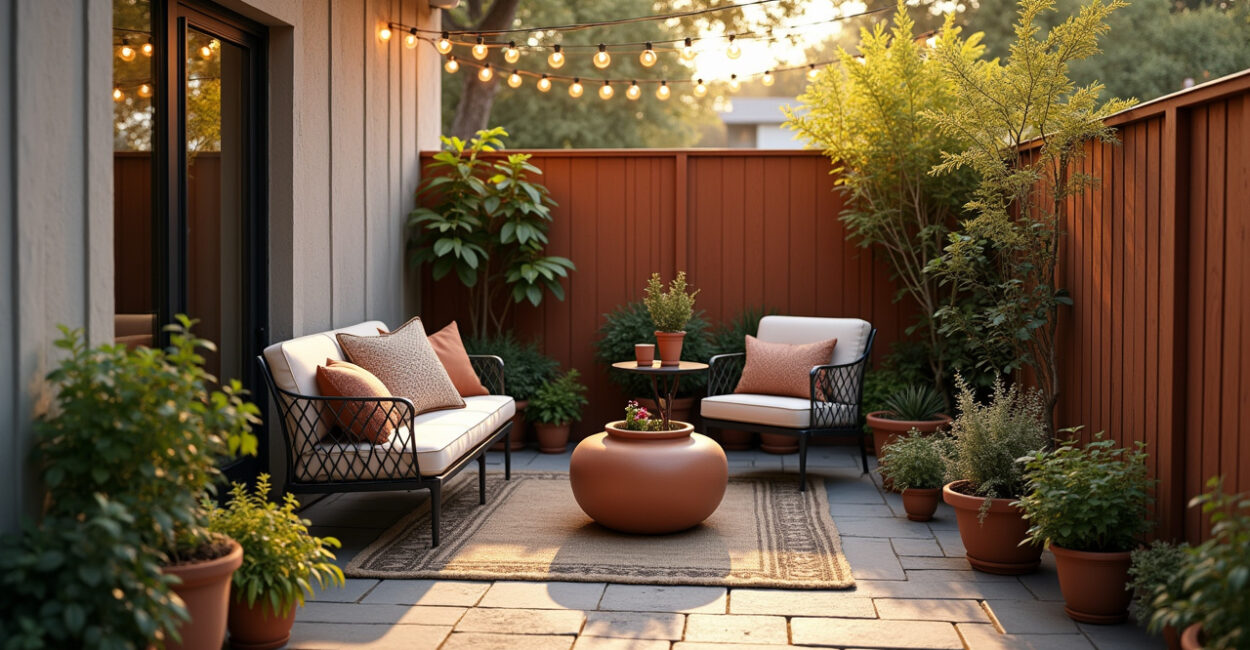
A small patio can look expensive long before it costs much. The real difference is rarely square footage; it is layout, scale, and a few well-chosen pieces that make the space feel intentional. That is why small backyard patio decorating ideas on a budget work best when they focus on proportion, not on buying a lot of things.
If your backyard feels cramped, unfinished, or awkwardly open, you do not need a full renovation to fix it. You need a tighter plan: define the seating zone, add one strong focal point, soften hard edges, and spend where the eye lands first. The practical ideas below are built for real patios, real budgets, and the kind of outdoor spaces that have to do more with less.
What Matters Most
- A small patio looks bigger when the furniture is scaled to the space and pushed into a clear layout, not scattered around the perimeter.
- The best budget upgrades are high-visibility changes: outdoor rugs, lighting, cushions, planters, and one focal feature such as a fire bowl or vertical garden.
- Mixing new and secondhand pieces usually beats buying a full matching set, because it creates a layered look without paying showroom prices.
- Durable materials matter more than trendy finishes outdoors, especially where sun, moisture, and wind shorten the life of cheap décor.
- The fastest way to make a patio feel finished is to repeat 2 to 3 colors and keep the number of materials under control.
Small Backyard Patio Decorating Ideas on a Budget That Make the Space Feel Intentional
Formally, patio decorating is the arrangement of furnishings, surfaces, lighting, and accessories to create a usable outdoor room. In plain English: it is how you make a patch of concrete, pavers, or decking feel like a place people actually want to sit. The trick is to treat the patio like an indoor room with outdoor-grade materials.
Start by choosing one job for the space. If the patio is for morning coffee, the layout should support two chairs and a small table. If it is for dinner, prioritize a table and clear circulation. When people try to fit in everything—lounging, dining, storage, plants, and décor—the patio gets crowded fast and every piece looks smaller than it should.
On a small patio, the cheapest way to make the space look better is not to add more décor, but to reduce visual noise and create one clear focal point.
Anchor the Layout Before Buying Décor
Measure the usable area and sketch it to scale. Even a rough drawing helps you avoid the common mistake of buying furniture that fits online but overwhelms the patio in real life. Leave walking space around doors and high-traffic edges, and keep the biggest item against the longest wall or fence line when possible.
Use Outdoor “room Markers”
A rug, a pair of planters, or a bench can define a zone more effectively than four or five random accents. Those markers tell the eye where the patio begins and ends, which makes the space feel organized. That matters more in a small yard than in a large one, because every inch of visual clutter gets noticed.
For general outdoor safety and weather-related planning, the National Park Service has useful guidance on outdoor materials and preservation concepts that translate well to residential spaces, especially when you want pieces that hold up outside. Not every recommendation applies to a backyard patio, but the durability mindset does.
Low-Cost Pieces That Deliver the Biggest Visual Return
In practice, the items that change a patio fastest are the ones that affect scale, light, and texture. Cheap décor that sits on a table usually does less than one good rug, a pair of weather-resistant cushions, and warm lighting strung overhead or along a fence.
| Budget Upgrade | Why It Works | Best Use Case |
|---|---|---|
| Outdoor rug | Defines the seating zone and hides visually busy floors | Concrete slabs, pavers, plain decks |
| String lights | Adds warmth and makes the patio feel usable after dark | Evening seating, fence lines, pergolas |
| Throw pillows | Introduces color and softness at low cost | Neutral chairs, benches, built-ins |
| Large planter | Adds height and makes the space feel layered | Empty corners, entry points |
| Small side table | Makes the area feel finished and functional | Two-chair setups, coffee corners |
String lights deserve their reputation, but only if they are installed with restraint. One clean line usually looks better than crisscrossing five strands across a tiny yard. The same rule applies to pillows: use a color story, not a rainbow. Two solids and one pattern are usually enough.
Secondhand shopping helps here. Facebook Marketplace, Habitat for Humanity ReStores, and local garden centers often have planters, bistro tables, and lanterns that look nearly new after a rinse and a little touch-up paint. WHO and EPA guidance on indoor-outdoor air quality is not patio décor advice, of course, but their broader material and environmental standards are a good reminder to avoid items that peel, shed, or break down quickly. The U.S. Environmental Protection Agency is a solid reference point for choosing safer, longer-lasting household materials.

Color, Texture, and Plants That Make a Small Patio Feel Bigger
A small outdoor space gains perceived size when the eye moves smoothly across it. That is why repeating colors and textures works so well. Too many finishes create visual stops; too many stops make the patio feel chopped up. Keep the palette tight and let plants do some of the decorative work.
Stick to a Simple Palette
Three colors is usually the sweet spot: one base neutral, one secondary tone, and one accent. For example, warm gray, black, and olive green create a calm look; sand, white, and terracotta feel brighter and more relaxed. If your furniture is already a dark tone, use lighter textiles to stop the space from feeling heavy.
Use Plants as Architecture
Tall planters, narrow evergreens, trailing vines, and compact herbs can shape a patio almost like walls do indoors. That is especially useful where fences are plain or the yard has an exposed edge. A vertical trellis with jasmine, clematis, or even a simple climbing bean setup can bring height without taking up floor space.
The best small-yard planting strategy is vertical first, then layered edges, then low fillers; that order keeps the floor open and the patio readable.
Local extension offices are often the most practical source for plant selection by climate. The Extension Foundation directory can point you toward regional university extension resources, which is useful when you want plants that survive your actual weather instead of an online photo. That advice fails, though, if you choose high-maintenance species for a dry, shaded, or windy patio.
DIY and Secondhand Swaps That Keep Costs Down
Whoever works on outdoor spaces for a living knows this: the budget disappears fastest when people buy brand-new sets before checking what can be repaired, repainted, or repurposed. A dated patio chair with good bones is often a better buy than a cheap new chair that rusts after one season.
What to Buy Used First
- Bistro tables with metal frames
- Solid wood benches
- Ceramic or fiberglass planters
- Lanterns and candle holders
- Outdoor stools that can double as side tables
What to DIY Instead
Paint is the classic budget tool, but it should solve a real problem. Use it to unify mismatched chairs, refresh a scuffed planter, or turn a bland cinder block into a side table. Peel-and-stick outdoor-safe surfaces can also help with tabletops, but they are not magic; if the base material flexes or holds moisture, the finish will fail faster.
Here is a simple example from a real small-space setup: a narrow patio with one cracked chair, one folding table, and a fence that looked unfinished. Instead of replacing everything, the owner kept the table, added two thrifted chairs, painted all three pieces matte black, and placed one large planter beside the seating area. The total spend was under the cost of one new patio set, and the space immediately looked deliberate.

How to Finish the Patio Without Overcrowding It
Finishing a small patio is less about adding and more about editing. Once the main pieces are in place, stop asking what else you can fit and start asking what can be removed. Extra décor on a small patio often reads as clutter, not style, because there is nowhere for the eye to rest.
Use this order when you are finalizing the space:
- Set the largest furniture pieces first.
- Add one rug or floor marker.
- Install lighting.
- Bring in plants for height and softness.
- Choose two or three accessories only after the structure is done.
That sequence matters because it prevents “buying backward,” which is how many patios end up with a basket of décor that never had a clear role. If a piece does not improve function, define a zone, or create warmth, it probably does not belong. This is one of the few places where less really is more.
Practical Buying Rules That Protect Your Budget
Budget decorating is not about hunting the cheapest item. It is about avoiding false savings. A $12 pillow that fades in a month costs more than a $25 one that survives the season, and a flimsy side table that wobbles after two uses is not a deal. The best outdoor buys are the ones that still look good after sun, rain, and repeated use.
Use this rule: spend more on structure, less on accents. Furniture, lighting, and floor pieces deserve a larger share of the budget than decorative trinkets. That approach is why small backyard patio decorating ideas on a budget work in real life instead of just in photos.
There is one limit worth stating plainly: not every patio can be transformed with décor alone. If the surface drains poorly, the furniture sits on uneven ground, or the area gets almost no light, design choices will only go so far. In those cases, the smartest “decorating” move may be leveling a chair leg, adding a paver base, or choosing shade-tolerant plants instead of chasing a theme.
What to do now: measure your patio, pick one layout goal, and buy only the pieces that support that goal. Then add one layer at a time—first the floor, then the light, then the plants, then the accents. That discipline keeps the space coherent and saves money you would otherwise spend on things that never earned a place.
FAQ
What is the Cheapest Way to Decorate a Small Backyard Patio?
The cheapest method is to focus on zoning first: one rug, one seating group, and one lighting source. After that, use plants and secondhand pieces to fill in the edges. That order gives the patio a finished look without requiring a full furniture set or a lot of accessories. In many small yards, a single large planter and a string of lights do more visual work than several low-cost decorations scattered around the space.
What Colors Make a Small Patio Look Bigger?
Light neutrals usually open up the space, especially when they are paired with one darker anchor color for contrast. White, beige, soft gray, and sand reflect more light, which helps a compact patio feel less boxed in. If you want personality without shrinking the space, add color through cushions, planters, or a patterned rug instead of painting every surface a bold shade.
Are Thrifted Patio Pieces Worth Buying?
Yes, if the frame is solid and the material can handle outdoor use. Metal bistro tables, wooden benches, and ceramic planters are often excellent secondhand buys because they can be cleaned, repainted, or refinished. The mistake is buying anything with hidden rust, rot, or wobble just because it looks cheap. If the base is weak, the savings disappear quickly.
How Do I Decorate a Patio That Gets Very Little Sun?
Use shade-tolerant plants, lighter textiles, and reflective surfaces so the area does not feel dark and closed in. Ferns, hostas, and many trailing plants handle low light better than sun-loving flowers, though local climate still matters. In a shady patio, warm string lights and pale planters can make a bigger visual difference than extra furniture. A low-light space needs brightness and restraint, not crowded décor.
Should I Buy a Patio Furniture Set or Mix Pieces?
Mixing pieces usually works better for a small patio because it avoids the stiff, catalog look that can make a tiny area feel even smaller. A bench with two chairs, or a small table with one accent seat, often gives more flexibility than a matching set. The key is to repeat one or two materials or colors so the mix still feels coordinated. Matching is not the goal; visual order is.