

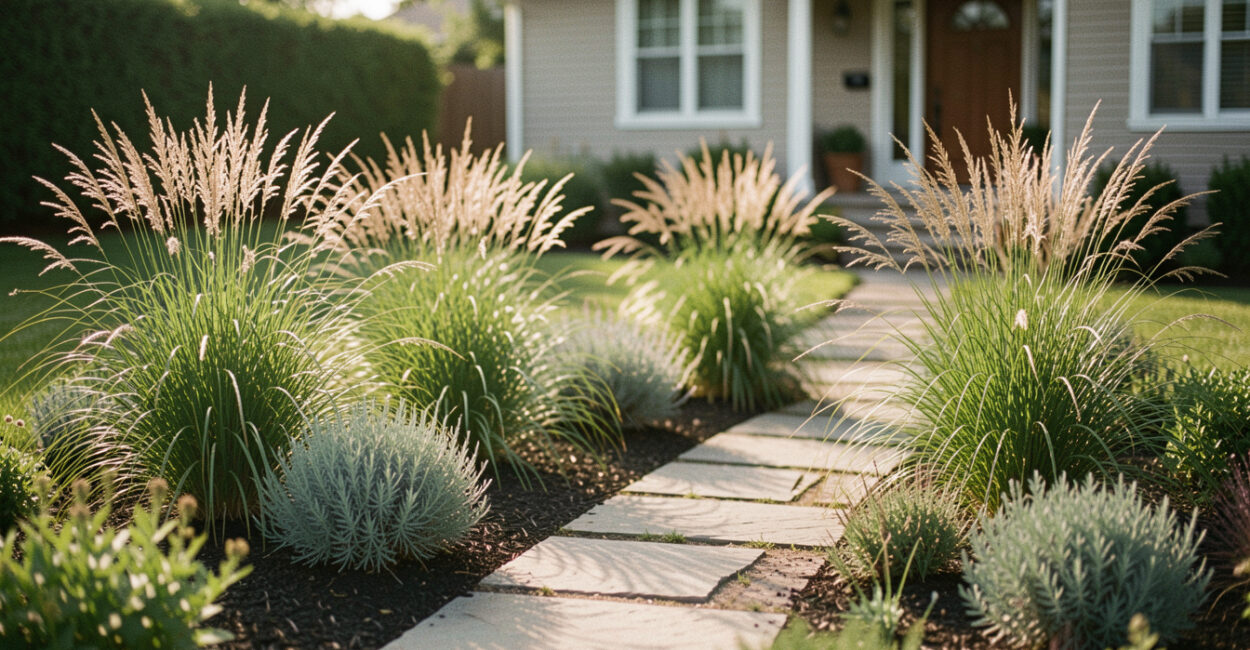
Native Grasses for Small Yards: 7 Tidy, Easy-Care Picks
A grass that looks compact in a nursery pot can become the biggest plant in a front-bed border. The best native grasses for small yards have a naturally contained habit, suit your local climate, and fit the space at their mature size.
Good candidates include blue grama, prairie dropseed, and poverty oatgrass, though none is native everywhere in the United States. Check regional status before planting, then match each grass to your sunlight and soil moisture. Most need an annual cleanup, not repeated shearing.
Quick Takeaways
- Blue grama and poverty oatgrass are among the shortest choices here, but their native ranges and growing conditions differ.
- Use the mature width as well as height to plan spacing; a compact clump can still crowd a narrow walkway.
- Warm-season grasses often look best from summer into fall, while cool-season species start growth earlier.
- Native sedges in the genus Carex can provide a grass-like look in shade, though sedges are not true grasses.
Native Grasses for Small Front Yards: Where to Start
For a small front yard, start with clumping species such as blue grama, prairie dropseed, or poverty oatgrass, choosing only those native to your region. These grasses generally hold a defined shape and need little routine pruning. Confirm their mature height and width, sunlight needs, and soil preferences before buying; local climate and cultivar can change how a plant performs.
In botanical terms, grasses are members of the Poaceae family, a group of flowering plants with narrow leaves and jointed stems. In a landscape, many ornamental native grasses form basal clumps that expand gradually, although some spread by rhizomes or seed. A plant’s label may list a broad North American range, but that does not mean it is native to every state or county within it.
Use the USDA PLANTS Database to check a species’ distribution, then compare that range with local guidance. Regional native-plant societies and extension services can help resolve edge cases, particularly where a species occurs near the boundary of its natural range.
Compare Seven Compact Native Grasses by Size and Season
These seven species offer different combinations of height, light, and seasonal interest. Dimensions are approximate mature ranges; soil, climate, and plant selection can shift them, and flower stems often rise above the foliage.
| Grass and native region | Mature size | Light | Seasonal appearance |
|---|---|---|---|
| Blue grama (Bouteloua gracilis), western and central North America | About 1–2 ft tall and wide | Full sun | Fine foliage in summer; distinctive comb-like seed heads in summer and fall |
| Prairie dropseed (Sporobolus heterolepis), central and eastern North American prairies | About 2–3 ft tall and wide, with taller flower stems | Full sun | Airy flowers in late summer; foliage may turn orange or copper in fall |
| Little bluestem (Schizachyrium scoparium), much of North America | About 2–4 ft tall and 1–2 ft wide | Full sun | Blue-green summer foliage; copper, red, or bronze tones in fall |
| Poverty oatgrass (Danthonia spicata), eastern and central North America | About 1–2 ft tall and wide | Sun to part shade | Low, fine-textured foliage; modest flower stems in late spring or early summer |
| Tufted hairgrass (Deschampsia cespitosa), cool regions of North America, including parts of the United States | About 1–3 ft tall and wide; flowers can reach 4 ft | Sun to part shade | Fine flower clouds in summer; foliage often stays green longer in cool conditions |
| Purple lovegrass (Eragrostis spectabilis), eastern and central North America | About 1–2 ft tall and 1–2 ft wide | Full sun | Hazy purple-pink flower panicles in late summer and fall |
| Side-oats grama (Bouteloua curtipendula), central and eastern North America and parts of the West | About 2–3 ft tall and 1–2 ft wide | Full sun | One-sided seed heads in summer; foliage can bronze in fall |
Range descriptions are broad, not planting approvals. Check your state or ecoregion before choosing, especially for species at the edge of their distribution. The Lady Bird Johnson Wildflower Center’s Native Plant Database provides regional plant information, but local conditions still matter.

Which Grasses Stay Neat in Limited Space?
Blue grama, poverty oatgrass, and prairie dropseed are strong starting points for a tidy, small bed. They form recognizable clumps rather than racing outward through long rhizomes, and their natural shapes usually need little intervention. Purple lovegrass also stays modest, though its airy flower heads can flop or scatter seed where the soil is bare.
Little bluestem and side-oats grama can work in small yards when there is room for their full height and flower stems. They may look oversized beside a narrow path or low window. Tufted hairgrass can also become too tall for a tight border, particularly in moist, fertile soil.
A grass stays tidy when its mature footprint fits the bed and its seed heads have room to move.
Complete guide: Native Plants for Small Yards: A Low-Maintenance Guide to Front Yard Plants
Read also: Native Plant Spacing: A Simple Front Yard Layout Guide
One common small-yard surprise is the flower stalk: foliage may look low in spring, then rise well above the leaves by midsummer. Leave enough clearance from a walkway, mailbox, and sightline at a driveway entrance. For a broader planting plan, pair grasses with regionally suitable flowering plants as described in this guide to designing native plant borders for seasonal blooms.
Match a Grass to Sun, Shade, and Soil
Full-sun beds with well-drained soil suit blue grama, prairie dropseed, little bluestem, purple lovegrass, and side-oats grama. These warm-season species generally put on their strongest growth as temperatures rise. They can struggle in deep shade or persistently wet soil, even if a plant label lists a broad tolerance.
For part shade, consider poverty oatgrass or tufted hairgrass, provided the local climate and moisture match the species. Tufted hairgrass tends to prefer cooler conditions and more consistent moisture than prairie grasses. In a hot, dry site, it may decline; in a rich, irrigated bed, it can grow larger than expected.
Before selecting a plant, note how many hours of direct sun the bed receives, whether water sits after rain, and how much width remains once neighboring plants mature. These observations are more useful than choosing by flower color alone. Native grasses also add structure to pollinator plantings; see this practical overview of planning a native pollinator garden.
Use Native Sedges for a Grass-Like Look in Shade
Native sedges, members of the genus Carex, are grass-like plants in the sedge family Cyperaceae, not true grasses. Many stay low and work well under trees or along a shaded path, where prairie grasses may thin out. Their usefulness depends on choosing a species native to the region and suited to the site’s moisture.
For example, Pennsylvania sedge (Carex pensylvanica) is native to parts of eastern North America and can form a low ground layer in dry shade. Its native range is not universal, and similar-looking sedges may have different site needs. The U.S. Forest Service offers resources on native plants and ecosystems; regional plant lists are the better guide for a specific yard.
Sedges are useful where mowing or trimming would be awkward, but they are not interchangeable. Some prefer wet soil, others dry woodland conditions, and several spread to form colonies. Check the species’ mature spread before treating a sedge as a space-saving choice.
Keep Native Grasses Tidy Without Constant Trimming
Most established clumping grasses need one seasonal cleanup, not frequent shearing. Leave stems and seed heads through winter if they suit the yard; they add structure and can provide cover for wildlife. In late winter or early spring, cut back warm-season grasses before new growth rises from the base.
- Water new plantings during their first growing season when rainfall is insufficient; once established, many prairie species need less supplemental water.
- Cut back warm-season foliage in late winter or early spring, leaving a few inches above the crown so new shoots are not damaged.
- For cool-season species such as tufted hairgrass, remove dead foliage as growth resumes, and avoid cutting into active new leaves.
- Divide a clump only when its center thins, growth weakens, or the plant exceeds its allotted space; division is not an annual chore.
In a small front yard, a frequent mistake is cutting everything short in fall. That removes winter structure and can leave wet debris packed into the crown. Cleanup timing varies with species and climate, so use local extension advice if winter damage or spring growth timing is uncertain.
Plan a Small Front-Yard Planting by Mature Width
Start with one or three clumps of a single species rather than a row of unrelated grasses. Repetition makes a small bed feel intentional, while a mixed set of tall flower stems can look crowded. Use the plant’s mature width to set spacing, and leave access for cleanup without stepping on the crowns.
A typical sunny entry bed might use blue grama near the front, with prairie dropseed behind it if the bed has enough depth. In a shaded area, a locally native sedge may make a better low layer than forcing a sun-loving grass into poor conditions. For a broader design context, compare native planting with a conventional lawn before deciding how much of the front yard to convert.
Before purchasing, verify the species’ native status for your state or ecoregion, confirm the mature dimensions on a reliable regional source, and check whether the plant is sold as a cultivar. Cultivars can differ in height, color, or habit, and sources do not always agree on the boundaries of a species’ native range. Make a short list based on the site first, then choose the best-looking option from plants that genuinely fit.
📱 See this content as a Web Story
Frequently Asked Questions
Which Short Native Grasses Work Best Along a Narrow Walkway?
Blue grama and poverty oatgrass are useful candidates where they are locally native and the site suits them. Check mature width and flower-stem height, then keep the clumps outside the walkway’s clearance.
Will Ornamental Native Grasses Grow in Clay Soil?
Some will, but heavy clay that stays wet can be a poor fit for prairie species adapted to better drainage. Check the grass’s soil and moisture needs, and observe how quickly the bed drains after rain before planting.
When Should I Cut Back Warm-season Grasses?
Usually in late winter or early spring, before new shoots emerge. Leaving the foliage standing through winter preserves structure; the right timing can shift with local weather and species.
Can Native Grasses Grow Under Trees?
Some tolerate part shade, but many prairie grasses perform best in full sun. For deeper shade, a locally native Carex may be a better fit, as long as its moisture needs match the site.
How Can I Confirm a Grass is Native to My Area?
Check the species in the USDA PLANTS Database and compare its distribution with a state or regional native-plant list. A broad range map does not confirm that a plant belongs in every locality within that range.