
Best Native Plants for Bees in Sunny Garden Beds
Native plants that support bees with staggered blooms and proper spacing, ensuring reliable nectar and pollen from early spring through late summer.
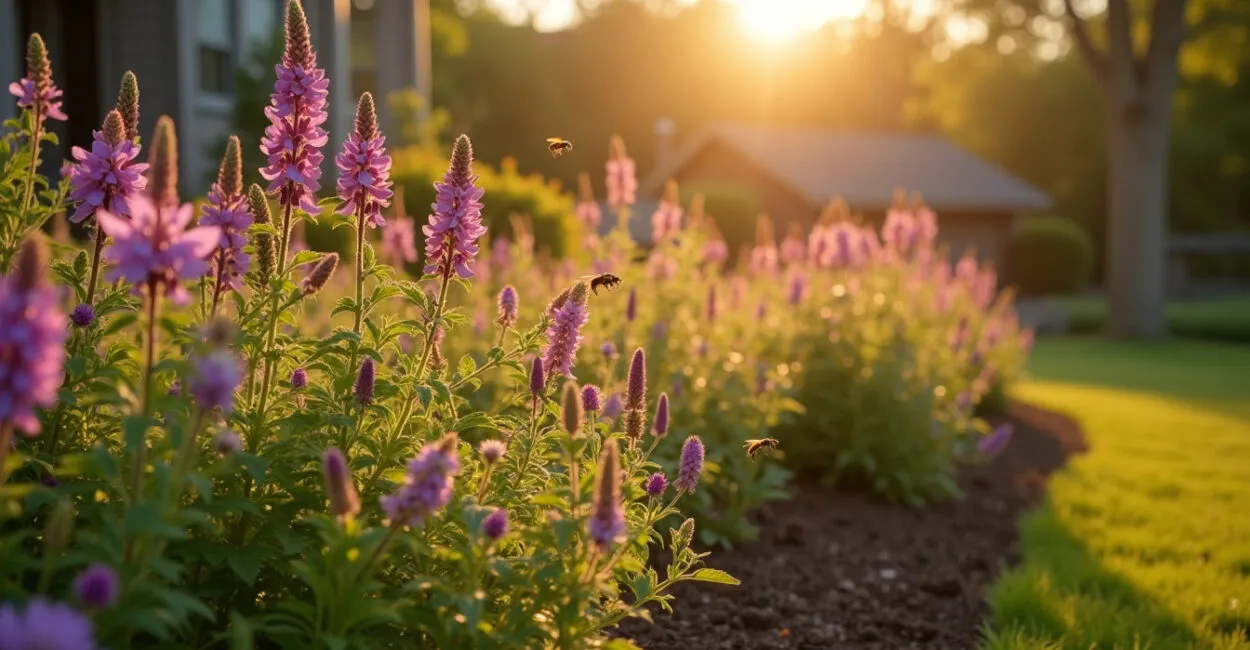 Bees visit staggered blooms in a sunny garden bed
These sunny-bed natives keep bees fed from the first warm days to late summer, but spacing them right matters more than most gardeners think.
Best native plants for bees in sunny garden beds are the ones that bloom in sequence, not all at once. That’s how you keep a patch working for pollinators from spring into summer without turning the bed into a crowded mess.
Below is a tight shortlist of reliable species, when they bloom, and how much room each one needs to actually perform.
Read also: Low-Allergy Garden Plants for Families: What Landscapers Choose Now
The 6 Natives That Do the Heavy Lifting
If you want best native plants for bees in sunny beds, start with plants that earn their keep in more than one month. In practice, the winners are the ones bees return to every year because the nectar and pollen are predictable, not flashy.
Plant Bloom window Typical spacing Why bees like it Wild columbine Spring 12–18 in. Early nectar when gardens are still waking up Penstemon Late spring 18–24 in. Tubular flowers suit many native bees Bee balm (Monarda) Early summer 18–24 in. Dense bloom heads stay busy for weeks Blue false indigo Late spring to early summer 3–4 ft. Big, pollen-rich spikes Blanket flower Early summer to frost 12–18 in. Long bloom season in full sun Goldenrod Late summer 18–24 in. Late-season fuel when few plants are left
The real trick is not choosing “pretty” plants; it’s stacking bloom windows like steps. The University of Nebraska–Lincoln’s extension guidance on pollinator gardens and the USDA Plants Database both support using native species with staggered flowering times and mature spacing to reduce crowding and increase forage value: USDA Plants Database and UNL pollinator garden guidance.
Read also: Native Pollinator Gardens: The Mistake That Shrinks Bloom Time
Why Bloom Timing Beats “more Flowers”
Here’s the part many gardeners miss: bees don’t need a bed that peaks for two weeks. They need a relay race. One plant finishes, another starts. That’s why the best native plants for bees in sunny beds are often a mix of early, middle, and late bloomers.
I’ve seen sunny borders look full in May and nearly useless by July because everything bloomed at once. Then one small change — adding goldenrod and bee balm between spring bloomers — turned the same bed into a steady buffet. Same space. Better sequence.
For bees, a long bloom calendar beats a loud spring display.
Spacing matters here too. Overcrowded plants get leggy, shade one another, and cut nectar production. Give each plant enough room to mature, even if the bed looks a little sparse in year one. That gap closes fast.
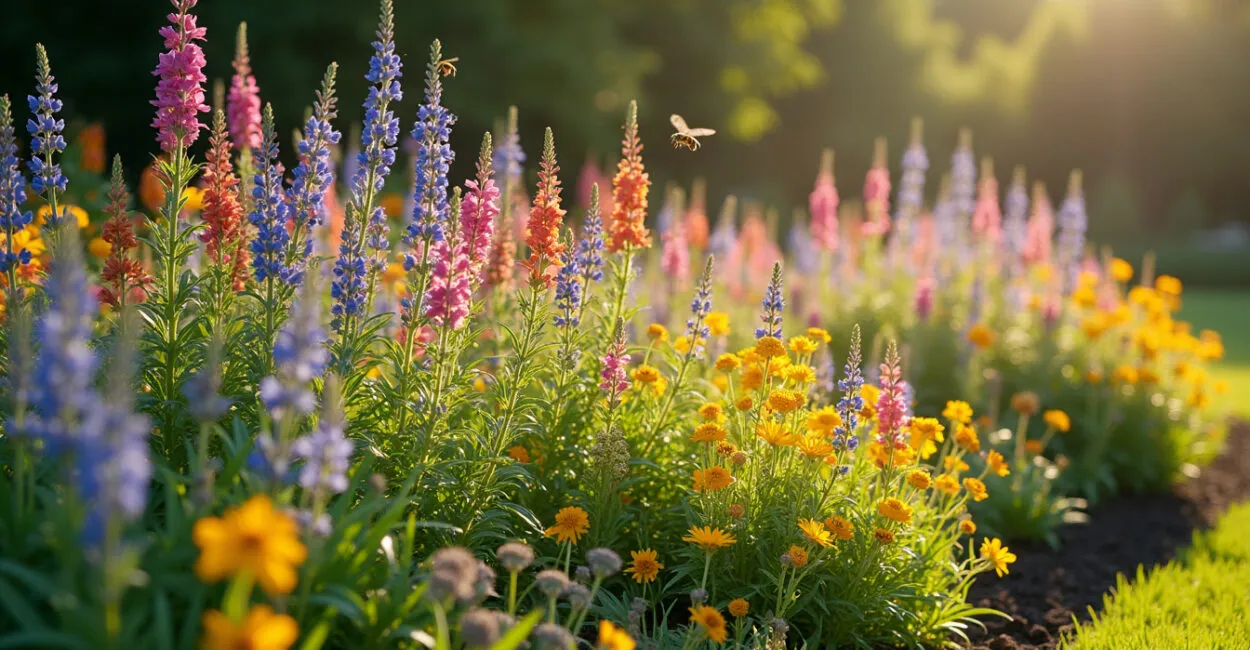
How to Place Them So the Bed Works, Not Just Grows
Think in layers. Put taller plants like blue false indigo and goldenrod toward the back or center. Keep medium growers like bee balm where you can see them. Tuck low spreaders like blanket flower along the edge. This keeps sunlight on every plant and makes the whole bed easier for bees to navigate.
- Full sun: 6+ hours a day, or bloom drops fast.
- Leave air gaps: don’t pack plants edge to edge.
- Group in drifts: 3 to 5 of one species helps bees find them faster.
- Skip rich mulch against crowns: it can rot young stems.
One caution: not every native works in every yard. Heavy clay, intense drought, or constant irrigation can change performance. Check local extension recommendations before buying, because the best native plants for bees in sunny beds are the ones that match your soil, not just your color palette.
As USDA Forest Service pollinator resources note, native habitat plantings help sustain pollinators across seasons when they’re designed around bloom continuity and local conditions.
Plant for the second wave, not the first photo. That’s how a sunny bed stops being decoration and starts acting like habitat.
Which Native Plant Blooms First for Bees?
In many sunny gardens, wild columbine is one of the earliest dependable native bloomers for bees. It brings nectar as temperatures warm and gives spring pollinators a real head start before summer plants open. If your climate runs hot fast, pair it with penstemon so the bed doesn’t go quiet after the first flush.
How Many of Each Plant Should I Group Together?
Three is a good starting point for most of the best native plants for bees in sunny beds. Small clusters make it easier for bees to forage efficiently, and they look more natural than single scattered plants. For larger beds, repeat the same species in several drifts rather than mixing one of everything, which often looks busy but performs poorly.
Do Native Plants Need Less Watering Once Established?
Usually, yes. Most natives need regular water during the first season, then far less once roots settle in. That said, “native” does not mean “no care.” A bee-friendly bed still needs enough moisture to keep blooms coming, especially during hot spells. Dry stress often shortens bloom time, which is the opposite of what pollinators need.
Can I Use Just One Native Species and Still Help Bees?
You can help, but you’ll help more with a mix. One species can create a strong nectar window, yet bees benefit most when spring and summer blooms overlap. A simple combo like columbine, bee balm, and goldenrod covers more of the season than a single mass planting and reduces the chance of a dead gap in midsummer.
What’s the Biggest Spacing Mistake People Make?
Planting for the size of the pot instead of the mature plant. That’s how sunny beds become crowded, shaded, and harder for bees to use. Give each plant room to reach its full width, then prune only when necessary. A little emptiness in year one is worth it if the bed becomes a healthier, longer-blooming pollinator strip later.
A good bee bed doesn’t just look native — it behaves like a season-long pantry. Plant for overlap, leave room for growth, and let the bloom calendar do the work. That’s the difference between a sunny border that looks nice and one that actually feeds life.
📱 See this content as a Web Story