
How to Choose the Perfect Rug for Every Room: The Ultimate Guide
How to choose the perfect rug by balancing size, material, and function room by room to anchor furniture, enhance comfort, and suit daily use and maintenance…
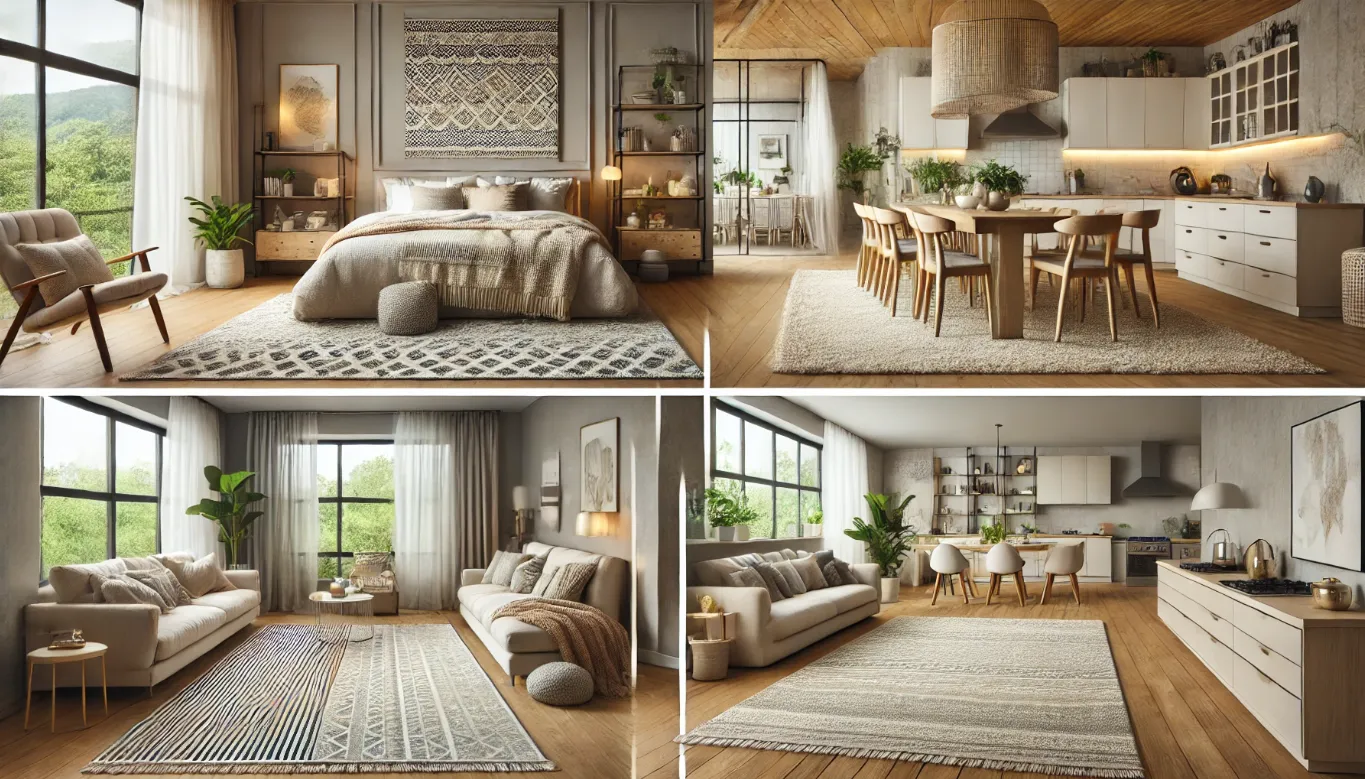 Distinctive rugs define three thoughtfully styled living spaces
📅 Updated on 06/13/2026
A rug can make a room feel finished in one move, but the wrong size, material, or pattern can throw the whole space off. The right perfect rug does more than match your decor: it anchors furniture, softens sound, improves comfort, and helps a room feel intentional instead of improvised.
Choosing well comes down to three things: scale, function, and maintenance. A living room rug should support seating, a bedroom rug should feel good underfoot, and a dining room rug must handle chairs moving in and out without snagging. Below, you’ll find a room-by-room method that makes the decision much easier.
Key Takeaways
- The best rug is the one that fits the room’s function first and its style second.
- Size matters more than pattern in most spaces; an undersized rug is the most common mistake.
- Natural fibers such as wool and jute bring texture, while synthetics like polypropylene are easier to clean.
- A rug should either connect furniture pieces or define a clear zone; if it floats awkwardly, it usually feels wrong.
- Maintenance needs should match the room’s traffic level, not just your design preference.
How the Perfect Rug Shapes Every Room in the House
The perfect rug is a floor covering chosen to fit a specific room’s scale, use, and cleaning demands. In plain terms, it is the rug that looks right, feels right, and survives real life in that space.
That definition sounds simple, but it solves most buying mistakes. People usually shop by color first, then discover the rug is too small, too delicate, or too high-maintenance for the room. The better order is room function, dimensions, material, then style.
In practice, a rug works when it supports the furniture layout and the daily traffic pattern, but it fails when it only looks good in the store.
One useful reference point for home materials is the U.S. Federal Trade Commission’s guidance on home goods and labeling, which is helpful when comparing fiber claims and care instructions. For indoor air and textile-related concerns, the U.S. Environmental Protection Agency is also a useful source on household environment and cleaning practices.
Start with the room’s job, not the pattern
A formal sitting room, a family room, and a guest bedroom all need different rug behavior. The more traffic, pets, and spills a room gets, the more you should favor durable construction and forgiving color. Style only matters after that filter is set.
The definition changes by space
A rug that feels perfect in a reading nook may be a disaster under a dining table. The rule is simple: the rug should make the room easier to use, not just prettier to photograph.
Living Room Rugs That Anchor the Seating Area
In the living room, the rug should be large enough to connect the main seating pieces. A small rug that floats under a coffee table only makes the room feel cut up.
For most layouts, the front legs of the sofa and chairs should sit on the rug, or all major furniture should sit fully on it if the room is spacious. This creates a visual boundary and makes the furniture arrangement feel grounded.
Size is the first decision
Most living rooms look better with an 8×10 or 9×12 rug, though smaller rooms may need a 5×8 if furniture is scaled down. The mistake I see most often is buying for the open floor area instead of the seating zone. Measure the group, not the empty center.
Choose pile height by how the room is used
Low- to medium-pile rugs are the safest choice for high-use living rooms because they vacuum well and let chair legs move without resistance. Thick shag can be appealing, but it traps crumbs and makes furniture placement feel less stable.
Patterns should support the room, not dominate it
If your sofa is solid and the room is neutral, a patterned rug can add depth. If the room already has bold art, textured pillows, and a statement coffee table, a quieter rug often works better.
The most common living-room rug mistake is choosing a size that frames the coffee table instead of the seating arrangement.
Bedroom Rugs That Add Comfort Without Overcomplicating the Space
A bedroom rug should feel good the moment your feet hit the floor. That means softness matters more here than in almost any other room, but the rug still has to fit the bed and the circulation around it.
Wool works well if you want warmth and resilience, while polyester and polypropylene are practical if you want easier upkeep. The right choice depends on whether the bedroom is a primary suite, a guest room, or a child’s room.
Three layouts work best
- A large rug placed under the bed with equal extension on both sides.
- Two runners on either side of the bed for narrow rooms.
- A partial rug under the lower two-thirds of the bed for a cleaner, modern look.
Don’t ignore nightstand placement
If the rug stops awkwardly before the nightstands, the room can feel chopped up. In many bedrooms, the rug should extend beyond the sides of the bed enough to create a soft landing and a balanced frame.
Bed size should drive rug size
A queen bed usually pairs well with an 8×10 rug, while a king often needs 9×12 for proper proportion. Smaller rugs can work, but only if the layout is very intentional and the room is compact.
Dining Room Rugs That Handle Chairs and Cleanups
The dining room is the toughest test of rug performance. Here, the best rug is one that allows chairs to slide in and out without catching edges and can handle frequent cleaning.
For this room, size matters more than almost anything else. The rug should extend far enough beyond the table that chairs remain fully on it, even when pulled back for seating.
Measure for chair clearance, not just table size
A good rule is to add at least 24 inches beyond the table on all sides, and sometimes 30 inches if the chairs are large. That extra space prevents wobbling and protects the rug edges from repeated friction.
Flatweave and low-pile styles are the safest bet
Flatweave rugs, indoor-outdoor rugs, and low-pile synthetics are the most practical options in dining areas. They are easier to clean, and crumbs do not disappear into deep fibers as easily.
Watch the material carefully
Wool is still a strong option because it resists crushing and can hide wear well, but high-pile natural fibers can be frustrating under dining chairs. If the room sees daily meals, polypropylene often beats a more delicate-looking rug in real life.
For fiber and material basics, the Textile World industry coverage is useful for understanding how yarn type and construction affect wear, while the National Institute of Standards and Technology is a solid reference for measurement and material consistency principles.
Entryways, Hallways, and High-Traffic Areas Need Different Rules
These spaces need durability first. A hallway runner or entry rug should resist dirt, stay in place, and dry quickly if it gets wet.
That is why low-pile, washable, or indoor-outdoor constructions are so common here. A plush rug may look inviting, but in a mudroom or entry, it usually becomes a cleaning problem.
Use grip and placement strategically
Non-slip rug pads matter more in these areas than in softer rooms. The pad reduces movement, protects the floor, and helps the rug wear more evenly.
Choose colors that forgive real life
Mid-tones, textured patterns, and heathered surfaces hide tracked dirt better than flat light shades. If the doorway is the main route from outside, a practical palette is smarter than a pristine one.
Runners should fit the architecture
A hallway runner should leave a border of visible floor on both sides so the hallway does not feel cramped. If it touches the walls, it usually looks too wide.
Material, Weave, and Backing Decide How Long a Rug Really Lasts
Design gets attention, but construction determines whether the rug still looks good a year later. This is where the weave, fiber, and backing matter as much as the color.
Wool is durable, naturally resilient, and good at hiding wear. Cotton is lighter and often cheaper, but it tends to wear out faster in busy rooms. Jute and sisal add texture, yet they can feel rough and do not love moisture. Synthetic fibers such as polypropylene and nylon offer easier maintenance, which is why they are common in family rooms and dining spaces.
Compare the common options
| Material | Best For | Main Tradeoff |
|---|---|---|
| Wool | Living rooms, bedrooms | Higher price |
| Polypropylene | Dining rooms, entryways, kids’ rooms | Less natural feel |
| Jute | Low-traffic, layered styling | Rough texture, moisture sensitivity |
| Cotton | Casual rooms, washable options | Less long-lasting |
Backing and pad matter more than most shoppers think
A rug pad adds comfort, reduces slipping, and helps preserve the floor beneath it. In homes with hardwood, the wrong backing can leave marks or accelerate wear, so it is worth checking the manufacturer’s care guidance before buying.
The rug pad is not an accessory; it is part of the rug system.
Color, Pattern, and Scale: How to Avoid the Usual Mistakes
Once size and material are set, style decisions become much easier. The safest way to choose color is to match the rug to what already exists in the room: flooring, sofa fabric, curtains, artwork, and wood tone.
A busy pattern can hide stains and soften visual clutter, while a solid rug can calm a room with a lot of movement elsewhere. Neither is inherently better; the room decides.
Use contrast with restraint
If the room has dark furniture, a lighter rug can create lift. If the walls, sofa, and floor are already light, a rug with more contrast can add structure without making the room feel sterile.
Scale should feel deliberate
Large rooms usually need larger motifs, while small rooms often benefit from tighter patterns or subtle texture. Oversized pattern in a tiny space can make the floor feel busy, but tiny pattern in a large room can disappear.
One couple I worked with had a beautiful handwoven rug in the wrong size. It looked expensive, but every chair sat off the edge and the room felt unfinished. When they replaced it with a larger, simpler rug, the whole room changed overnight. Nothing else moved.
Practical Buying Checklist Before You Commit
Before you buy, confirm the rug’s dimensions, pile height, cleaning method, and return policy. That small checklist prevents most regret purchases.
- Measure the room and the furniture zone, not just the open floor.
- Check whether the rug needs a pad.
- Confirm how the material should be cleaned.
- Choose a size that leaves balanced borders or properly anchors the furniture.
- Match the rug’s durability to the room’s traffic level.
There is one limit to any rule set: real rooms are rarely perfect rectangles, and unusual layouts sometimes justify breaking the standard. A very narrow room, a corner sofa, or a built-in bench can change what “right” looks like. The key is to be intentional, not accidental.
What to Do Next
The smartest rug choice is the one that solves the room’s biggest problem first. In one space, that problem is scale; in another, it is cleanup; in another, it is comfort underfoot. When you choose with the room’s job in mind, style stops being a gamble.
Before buying, measure the space, identify the traffic pattern, and decide whether you want the rug to anchor, soften, or define the room. Then compare two or three options against the same checklist instead of choosing from memory or impulse.
How do I know if a rug is too small?
If the rug only holds the coffee table or leaves furniture floating around it, it is too small. In a living room, at least the front legs of the main seating pieces should usually sit on the rug. In a bedroom, the rug should extend beyond the sides of the bed enough to feel intentional.
What rug material is easiest to maintain?
Polypropylene is usually the easiest to maintain because it resists staining and handles heavy use well. Wool is also durable, but it usually needs a bit more care. Cotton is lighter and easier to move, but it tends to wear faster.
Should every room have a rug?
No. Some rooms work better with bare floors, especially if they already have strong texture, small footprints, or moisture concerns. A rug should improve comfort, acoustics, or structure; if it adds clutter, skip it.
Is a more expensive rug always better?
No. Price often reflects fiber quality, hand construction, or brand reputation, but it does not guarantee a better fit for your room. A moderately priced rug that matches the room’s size and use will outperform a luxurious rug that cannot handle daily life.
What is the best rug type for pets and kids?
Low-pile synthetic rugs are usually the most practical choice because they clean easily and stand up to traffic. Darker heathered tones or subtle patterns also hide everyday mess better than flat light colors. A washable rug can be a smart option in playrooms and family rooms.