

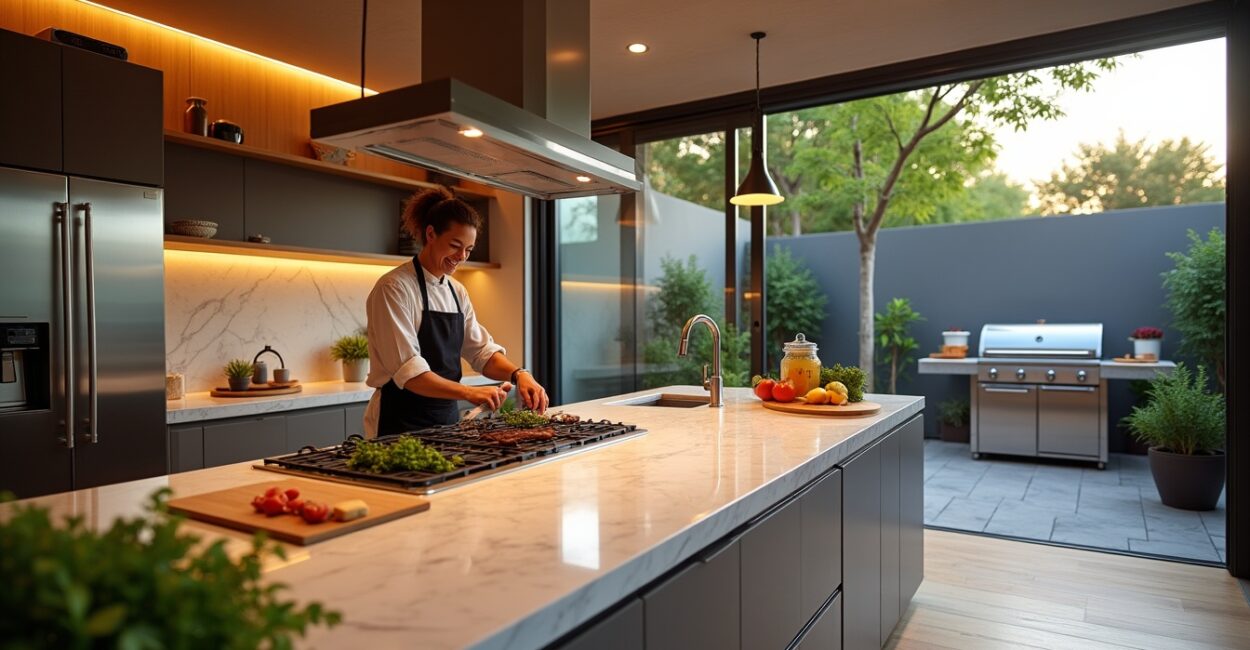
Imagine a gourmet area that feels like a joyful stage for cooking — where a marble-topped island, warm lighting, and a Wolf BBQ outside invite friends to linger. This article shows why the gourmet area matters now, blending design and function for memorable moments.
In 2025, designers push kitchen islands, alfresco grills, integrated appliances, and smart ventilation to the forefront. You’ll learn practical design moves, layout tips, appliance choices, and emotional triggers that make a gourmet area irresistible.
Spatial Foundations: layout, flow, and work triangles
Designing a gourmet area starts with flow — how people move between the island, cooktop, sink, and outdoor grill. This determines speed, comfort, and sociability in meals and gatherings.
Prioritize ergonomic workflows
Place prep zones between refrigeration and cooktop to minimize steps. Consider sightlines to seating areas, sightlines to doors, and clear traffic paths around the island.
Integrate designated prep surfaces, utensil storage, and trash access. Aim for a work triangle that reduces fatigue and boosts efficiency during long cooking sessions.
Open-plan connections
Connect the indoor gourmet area to patios or decks for seamless hosting. Visual continuity matters: materials, lighting, and sightlines should flow outside.
Sliding glass and covered alfresco kitchens multiply usable space. Blend outdoor grills like Wolf BBQ units with weatherproof counters and integrated storage.
Kitchen islands reimagined: multifunctional heart
The kitchen island is the emotional and functional core of a gourmet area — prep station, casual dining surface, and stage for social cooking. It anchors the space physically and socially.
Integrated appliances and seating
Choose islands with built-in appliances: wine fridges, warming drawers, and induction hobs. Provide deep overhangs for comfortable seating and easy conversation.
Layer task and ambient lighting above islands. Pendant groups and dimmable LEDs set moods from morning coffee to evening dinner parties.
Storage and zones
Design islands with dedicated drawers for spices, knives, and bakeware. Add pull-out bins and recycling sorting for swift cleanup and sustainability.
Use mixed materials—contrasting cabinet fronts, open shelving, and butcher-block prep—to create visual interest and functional zones.
Materials and finishes: durable, tactile, timeless
Material choices shape emotion in a gourmet area: honed stone counters, textured backsplashes, and brushed brass hardware create tactile warmth and visual depth.
Countertops that perform
Prioritize scratch- and heat-resistant surfaces like quartz or treated granite for heavy use. Add a wooden board inset for chopping and casual plating.
Balance aesthetics with maintenance: seamless surfaces reduce grout lines and simplify care, essential for busy home chefs.
Backsplash and cabinetry textures
Use glass, porcelain, or hand-glazed tile behind cooking zones to reflect light and add character. Consider matte cabinetry finishes to hide fingerprints.
Open shelving can display ceramics and cookware, creating a lived-in curated feel in the gourmet area.
Cooking technology: appliances, ventilation, and smart controls
Modern gourmet area design integrates high-performance appliances and ventilation that protect finishes and boost comfort. Choose brands and specs that match cooking habits.
Professional-grade grills and ranges
Outdoor grills, like Wolf BBQ units, offer commercial-level searing and temperature control. Indoor ranges should include convection and precise burners for technique-driven cooks.
Pair cooktops with slide-in ovens or steam ovens for versatile baking, while dedicated appliances—pizza ovens, sous-vide drawers—add specialty functions.
Ventilation and smart systems
Invest in powerful, quiet hoods and downdraft systems to manage smoke and odors, especially near open-plan living areas. Smart sensors can trigger ventilation automatically.
Integrate smart controls for lighting, temperature, and appliance timers to make the gourmet area responsive and energy-efficient.
Outdoor extension: grilling, dining, and weatherproof design
Extending the gourmet area outdoors transforms seasons into reasons to entertain. Durable countertops, covered zones, and professional grills create an all-weather kitchen.
Designing the grilling station
Place grills with adjacent prep counters, storage, and refrigeration. Ensure ventilation and safely positioned fuel lines or gas hookups for Wolf BBQ or similar units.
Include protective covers and windbreaks. Position seating to capture views and conversation without smoke crossing into indoor spaces.
- Plan grill placement near service zones.
- Install weatherproof counters and durable cabinets.
- Connect a dedicated gas line or safe fuel system.
- Add ambient and task lighting for evening use.
- Test smoke flow and make adjustments for comfort.
| Feature | Indoor | Outdoor |
|---|---|---|
| Primary Grill | Range or induction hob | Wolf BBQ or built-in grill |
| Prep Surface | Quartz island | Granite or stainless steel counter |
| Storage | Deep drawers, pantries | Weatherproof cabinets |
Lighting and ambiance: layered, dimmable, and mood-aware
Lighting transforms a gourmet area from bright workroom to cozy dinner stage. Layer task, ambient, and accent lights for flexible moods and improved UX.
Task lighting strategies
Use under-cabinet LEDs for prep surfaces and focused pendants over islands. Ensure color rendering is high for true food presentation.
Include step-dim zones to avoid harsh glare during evening gatherings and to support different activity levels.
Accent and outdoor illumination
Add recessed uplights for ceilings and integrated shelf LEDs for display. Extend lighting design outdoors with path lights and grill task lamps.
Smart bulbs and scenes let you shift instantly: bright cleaning light, warm dining glow, or celebratory color accents for parties.
Finishing touches: styling, personalization, and maintenance
Accessories and rituals bring a gourmet area to life—well-placed cookware, a curated spice wall, and simple cleaning systems sustain beauty and function.
Personal styling cues
Display favorite cookware and seasonal décor to tell a story. Add plants, textured linens, and artisan ceramics for warmth and personality.
Designate a coffee or cocktail nook to create micro-experiences within the gourmet area that invite daily rituals.
Durability and easy maintenance
Choose finishes that resist staining and scratches. Keep a cleaning caddy nearby and surface-friendly products visible to encourage upkeep.
Schedule seasonal deep-cleaning and equipment servicing—especially for grills and hoods—to preserve performance and safety.
Conclusion
Creating a standout gourmet area in 2025 means blending efficient layout, durable materials, professional appliances, and emotional warmth. From islands to Wolf BBQ grills, these moves make cooking social, resilient, and joyful.
Return to the opening image: a lively gathering around a well-designed gourmet area. With smart planning and the right finishes, every meal becomes an event worth savoring.
Frequently Asked Questions
What defines a gourmet area and why invest in one?
A gourmet area is a thoughtfully designed kitchen zone that supports high-quality cooking, entertaining, and daily rituals. Investing elevates home value, improves efficiency, and creates a social hub—combining layout, appliances, materials, and lighting for long-term enjoyment.
How do I choose the right outdoor grill for my gourmet area?
Select an outdoor grill based on cooking style, capacity, and build quality. Brands like Wolf BBQ offer precise heat control and durability; prioritize ventilation, gas hookup safety, counter space, and weatherproof cabinetry for seamless integration.
Which countertop materials are best for heavy cooking and outdoor use?
Quartz and treated granite excel indoors for heat and scratch resistance, while granite or stainless steel work outdoors. Consider sealants, maintenance routines, and aesthetic match to cabinets and backsplashes when planning your gourmet area materials.
How can I make my gourmet area more sustainable and efficient?
Choose energy-efficient appliances, LED lighting, and smart controls. Add recycling and compost stations, select sustainable materials, and prioritize induction cooking and low-flow fixtures to minimize environmental impact while maintaining performance.
When planning a remodel, what budget areas yield the biggest impact?
Invest in a well-designed island, quality ventilation, and durable countertops for visible and functional returns. Allocating funds to professional-grade heat sources and smart layout improvements often delivers the greatest usability and resale value.
External resources: Wolf Appliances, Architectural Digest.