

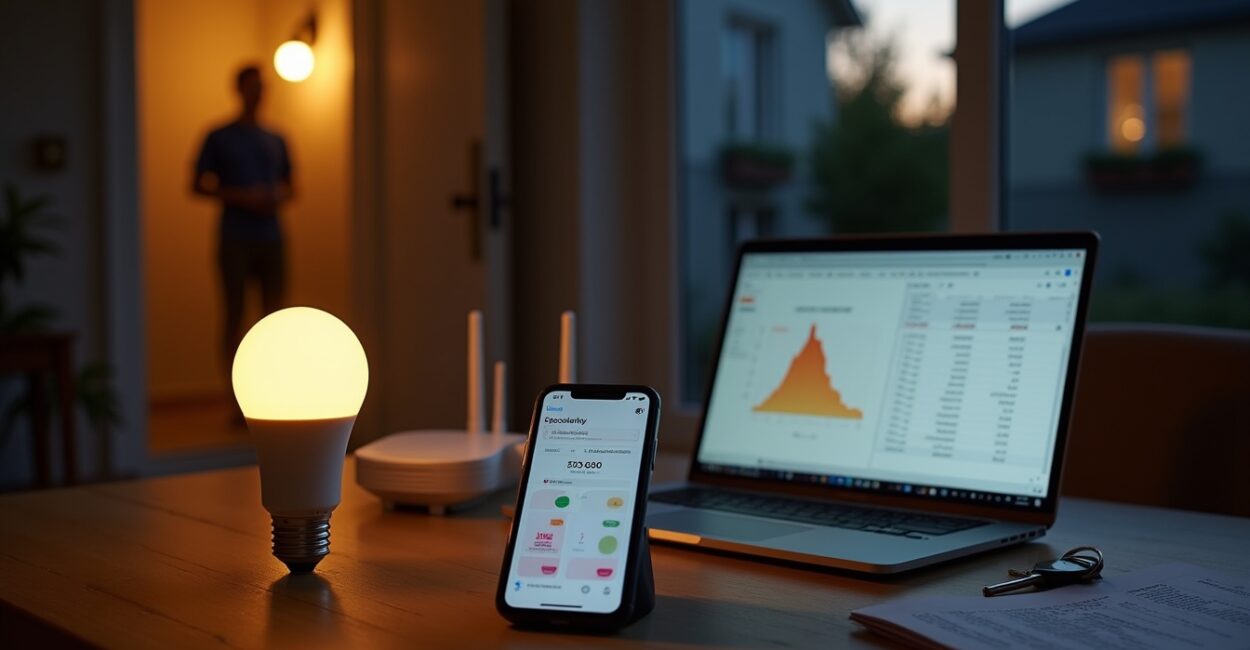
Smart lighting is reshaping homes—and your bulbs may be talking about when you’re home or away. Recent investigations show that Philips Hue and LIFX bulbs can leak occupancy patterns, creating real risks for privacy and safety.
This matters because occupancy data can enable targeted break‑ins, stalking, or profiling; understanding the technical gaps helps homeowners and policymakers respond. This article explains what was found, why it matters, and practical defenses for smart lighting owners.
In the sections below you’ll find clear evidence, easy mitigation steps, supplier responsibilities, and a realistic action plan to secure smart lighting without losing convenience. Read on to learn how to protect your privacy and take control of connected lighting.
Imagine your home lighting quietly revealing your schedule to a stranger—every dim, color change, and on/off pulse forming a predictable pattern. Smart lighting can be brilliant convenience, but leaked metadata can make your life visible to the wrong people. This article walks you through the risk, the proof, and the steps to lock down your lights.
How smart lighting can reveal occupancy
Smart lighting systems send telemetry, status updates, and event logs that may be intercepted or inferred. That metadata—timestamps, device IDs, and routine patterns—can reveal daily routines and absence periods.
Data streams and device telemetry
Bulbs communicate regularly with hubs and cloud services; those messages include timestamps and state changes useful for behavioral analysis. Attackers can correlate these to infer when occupants sleep, leave, or return.
Inference and pattern recognition
Simple on/off events form rhythms; machine learning can map those rhythms to human schedules. Even encrypted payloads can leak timing and frequency signals that reveal occupancy.
What investigations discovered about Philips Hue and LIFX
Security researchers examined network metadata and cloud APIs, concluding that both Philips Hue and LIFX can leak occupancy patterns under certain configurations. The findings highlight timing, error responses, and public discovery features as vectors.
- Observed regular beaconing intervals that expose activity windows.
- Cloud API responses revealing device presence and recent actions.
- Third‑party integrations creating cross‑service data leaks.
Timing channels and beacon leaks
Bulbs emit regular network traffic to maintain connections; those timing channels reveal when devices are active. Adversaries can passively monitor traffic to derive behavioral patterns.
Cloud and API exposure
APIs designed for convenience may disclose recent state changes or last‑seen timestamps; coupled with weak access controls, they can be exploited. Researchers documented accessible metadata in test setups.

Real-world risks: burglary, profiling, and stalking
Exploited occupancy patterns let criminals choose target windows, while advertisers or malicious actors can profile lifestyles. The privacy impact is immediate and emotionally troubling for many homeowners.
Targeted break‑ins and timing attacks
Knowing when a household is empty reduces risk for burglars. Attackers using occupancy data can choose precise windows, increasing success rates and reducing detection chances.
Behavioral profiling and unwanted surveillance
Lighting patterns can indicate work schedules, family routines, or absence for vacations. That information can be sold, weaponized, or used for coercive campaigns against individuals.
Manufacturer responsibilities and industry gaps
Device makers must design with privacy by default: minimal telemetry, anonymization, and robust access controls. Current gaps include permissive APIs, inconsistent encryption, and weak default settings.
- Audit device telemetry and minimize exposed data.
- Require authentication for all state queries and logs.
- Offer opt‑out settings for cloud backups and analytics.
- Publish clear security disclosures and timelines for fixes.
Security defaults and firmware updates
Secure defaults reduce user error and exposure. Regular firmware updates are essential to patch discovered leaks and improve cryptographic practices.
Transparency and accountability
Vendors should publish data‑handling practices and respond quickly to reported vulnerabilities. Independent audits increase trust and reveal systemic issues before exploitation.
Detection and mitigation: practical steps for homeowners
You can reduce exposure with configuration changes, network segmentation, and monitoring. These steps balance privacy with the convenience that smart lighting offers.
Immediate configuration changes
Disable unnecessary cloud features, turn off remote access if unused, and set strong account passwords. Change default settings to limit telemetry and sharing.
Network hardening and monitoring
Place bulbs on a segmented IoT network or VLAN, use a dedicated router for smart devices, and enable logging to spot unusual access patterns. Regularly review connected apps.
Comparing protection options and costs
Not all defenses cost much—some are free configuration changes; others require new hardware. The table below summarizes options, effort, and privacy improvement to help prioritize actions.
Quick wins vs. long‑term investments
Quick wins like disabling remote cloud access are immediate. Long‑term investments include replacing unsupported bulbs and adopting firewall rules for IoT traffic.
When to consider replacement
Replace devices lacking security updates or with closed ecosystems that leak metadata. Newer bulbs often support stronger encryption and better privacy controls.
| Action | Effort | Approx. Cost | Privacy Gain |
|---|---|---|---|
| Disable cloud features | Low | $0 | High |
| Segment IoT network | Medium | $50–$150 | High |
| Replace unsupported bulbs | Medium | $30–$60 per bulb | Medium–High |
| Use local control hubs | High | $100–$200 | Very High |
Action plan: step‑by‑step lockdown for smart lighting
Follow this concise plan to harden your smart lighting today. The steps are ordered for maximum impact with minimal disruption.
- Update bulb and hub firmware immediately.
- Disable remote cloud access and third‑party integrations.
- Place devices on a separate IoT network or guest Wi‑Fi.
- Use strong, unique account passwords and enable 2FA.
- Monitor logs and remove unused apps and routines.
Implementing local control options
Switching to a local control hub keeps state changes off the cloud and reduces metadata exposure. Local solutions often preserve convenience while improving privacy.
Ongoing hygiene and review
Regularly check device lists, revoke unused authorizations, and subscribe to vendor security alerts. Treat smart lighting like any other security perimeter.
Conclusion: reclaiming privacy from your lights
Smart lighting delivers comfort but can unintentionally expose sensitive daily rhythms. The investigations into Philips Hue and LIFX highlight how metadata and cloud features create occupancy leaks.
Act now: apply configuration changes, segment networks, and demand better privacy practices from vendors. With a few informed steps you can enjoy smart lighting without giving away your schedule.
Frequently Asked Questions
Can smart lighting really tell when I’m away from home?
Yes. Smart lighting emits metadata—timestamps, state changes, and periodic communication—that, when analyzed, reveal patterns tied to presence. Even without payload content, timing and frequency information can identify absence windows and routines, enabling profiling or targeted attacks if exposed.
Are Philips Hue and LIFX alone vulnerable, or is this an industry problem?
This is an industry‑wide privacy challenge. While specific investigations highlighted Philips Hue and LIFX, many smart lighting ecosystems and IoT devices leak metadata. The root causes are default cloud behaviors, permissive APIs, and inadequate telemetry minimization across vendors.
What immediate steps can I take to protect my smart lighting?
Quick defenses include disabling remote cloud access, removing unused integrations, placing devices on a segmented IoT network, updating firmware, and using strong unique passwords with two‑factor authentication to reduce the chances of unauthorized access and metadata leakage.
Will switching to local control stop occupancy leaks completely?
Local control significantly reduces cloud‑based metadata exposure because state changes stay within your home network. However, local devices still emit network traffic; network segmentation and monitoring are necessary to minimize timing channels and ensure robust privacy protection.
Where can I find authoritative guidance or vendor responses about these findings?
Refer to official vendor security pages and independent research reports for details and fixes. Check Philips Hue’s security updates at philips-hue.com and LIFX’s support at lifx.com, and browse technical analyses on security research sites like USENIX.