

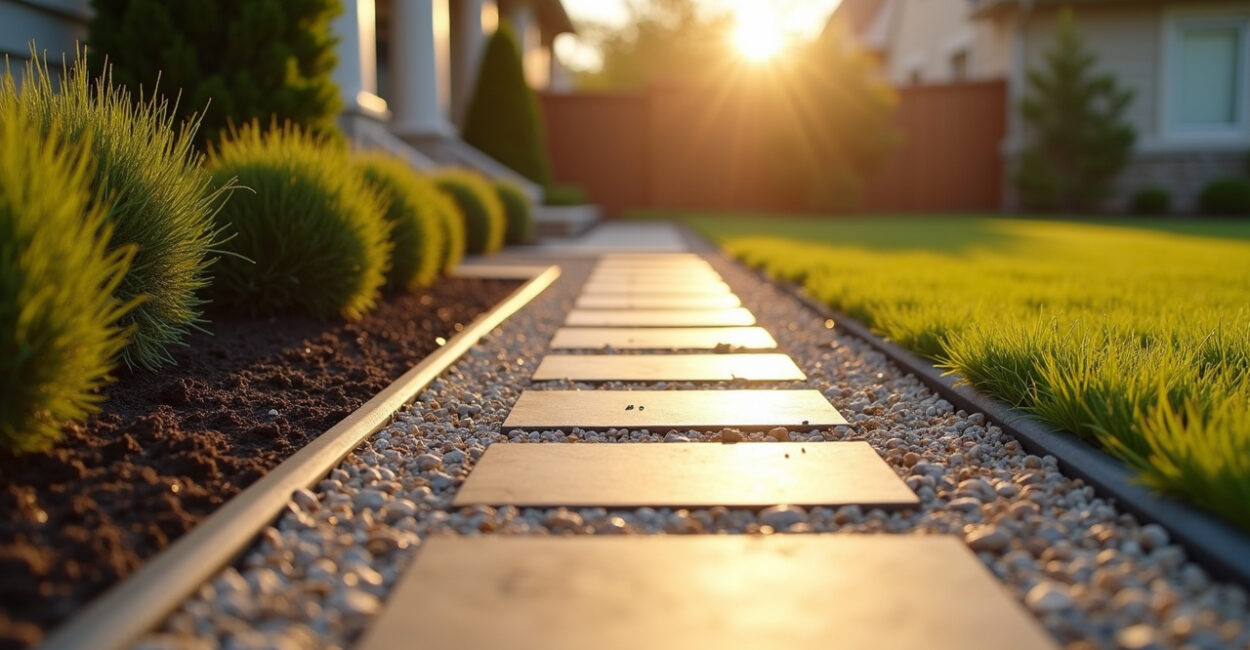
A walkway can look finished or forgotten for the cost of a few materials and one weekend. The difference usually comes down to edging: the border that holds the path together, sharpens the shape, and keeps grass, gravel, or mulch from spilling into the traffic line. If you are looking for budget front walkway edging ideas, the goal is not to fake luxury. It is to make the edge read as intentional, clean, and durable without overspending.
In practice, the best low-cost edging is the one that matches your walkway surface, your climate, and how much maintenance you actually want to do later. A $3-per-foot border that shifts every spring is not cheap. A simple paver, steel, or compacted gravel edge that stays put for years usually wins. This article breaks down the most practical options, where they work best, and how to choose one that improves curb appeal without creating more work.
What You Need to Know
- A premium look comes from clean lines, consistent height, and a material that fits the walkway style, not from expensive stone alone.
- Steel edging, concrete pavers, brick, and reclaimed materials usually give the best value because they balance price, durability, and visual structure.
- Loose materials like mulch and pea gravel need a strong edge or they migrate quickly, especially on sloped or high-traffic front entries.
- The cheapest choice upfront is often the most expensive over time if it heaves, rusts, or needs constant resetting.
- For most front walks, the real win is a simple border installed straight, leveled, and compacted well.
Budget Front Walkway Edging Ideas That Look Finished Without Looking Cheap
Front walkway edging is the boundary treatment that defines the path, controls adjacent materials, and protects the walkway from lateral movement. In plain English, it is the line that makes the whole entry feel deliberate. The best budget versions do two jobs at once: they add structure and they raise the visual quality of the front approach.
That is why I favor edges that are simple, repeatable, and easy to keep aligned. Ornate products can look awkward if the house, siding, or porch is modest. A clean border often looks more expensive than an overdesigned one.
What Separates a Bargain Edge from a Premium-looking One
The difference is rarely the material alone. It is the reveal, the straightness, and the consistency of the joint line. A slim steel strip installed flush with the walkway can look far more refined than decorative concrete that was set unevenly. For an industry overview of curb appeal and home-improvement value, see the National Association of Realtors’ Remodeling Impact Report.
What makes low-cost edging look high-end is not the price tag — it is a straight, stable border that keeps the walkway geometry crisp.
Best Low-Cost Materials: Steel, Brick, Pavers, and Reclaimed Stone
When cost matters, material choice should be judged on installation speed, maintenance load, and lifespan, not just the sticker price. The cheapest products at the store are not always the cheapest installed border. Here is how the most common options stack up in real use.
| Material | Typical Strength | Watch Out For | Best Use Case |
|---|---|---|---|
| Steel edging | Clean, narrow, modern | Needs proper staking and corrosion-resistant finish | Gravel, mulch, and crisp contemporary paths |
| Brick | Classic and sturdy | Can tilt if the base is weak | Traditional homes and curved borders |
| Concrete pavers | Strong and modular | Requires more labor than a strip edge | Walkways that need a wider, more substantial frame |
| Reclaimed stone | High-end appearance at a lower material cost | Irregular sizing can slow installation | Older homes and naturalistic landscaping |
Why Steel Edging Works So Often
Steel edging is the budget favorite for a reason. It stays visually quiet, so the walkway shape does the talking. On a front entry, that restraint matters. Use galvanized or powder-coated products if the area sees moisture and winter salt; plain steel can age fast in harsh conditions. The National Park Service’s corrosion guidance is a useful reminder that metal durability depends on exposure, coating, and maintenance.

Mulch, Gravel, and Sand: The Cheapest Borders That Still Need Structure
Loose materials can be part of the edge, but they should not be asked to behave like a hardscape wall. Gravel and mulch are low-cost fillers that improve drainage and soften the transition between the walkway and the yard. Without a restraint, though, they spread quickly and make the entry look sloppy.
This is where compacted base material matters. A simple trench, landscape fabric, and an edge restraint can keep a modest border from turning into seasonal cleanup. If you want the walkway to feel neat year-round, this category only works when the border is doing real containment work.
Where Loose Materials Make Sense
- Short front walks with low foot traffic.
- Homes where you want a softer, more natural transition.
- Yards with decent drainage and minimal runoff across the path.
Loose material looks affordable on day one, but the real test is whether the edge still holds after rain, lawn mowing, and a winter freeze-thaw cycle.
DIY Options That Save Money Without Looking DIY-Obvious
Some budget upgrades look homemade in the wrong way because the base was rushed. The trick is to use simple methods that hide labor, not cheap out on the parts that keep the line straight. A well-set edging job usually starts with a shallow trench, compacted soil or base rock, and a consistent height reference.
One Saturday job I have seen work repeatedly: a homeowner replaced a ragged mulch edge with 4-inch brick set on sand along both sides of a short front walkway. The material was modest, but the result looked custom because the bricks were leveled carefully and the joints stayed uniform. The whole front entry felt sharper without changing the path itself.
DIY Methods That Punch Above Their Weight
- Use steel or aluminum strip edging for a slim, modern outline.
- Set brick or paver soldiers vertically to create a thicker visual border.
- Recycle leftover patio pavers for a matching, low-cost frame.
- Blend a shallow gravel border with a hidden restraint for cleaner drainage.
Who works with this stuff knows the biggest mistake is rushing the base. If the soil is loose, even the nicest border will drift. If the line is out of square, the eye catches it immediately from the street.

How Climate, Soil, and Drainage Change the Right Choice
Not every edging material suits every front yard. Clay soil holds water and pushes hard on borders during freeze-thaw cycles. Sandy soil drains better but can shift more easily if the edge is not anchored well. That is why a material that looks smart in one neighborhood can fail in another.
If you live where winters are rough, set expectations realistically. Brick and concrete can move if the base is shallow. In wet or coastal areas, untreated metal may corrode sooner than expected. This is one of those cases where budget choices need a durability filter, not just a price filter.
Simple Rule of Thumb
Use restrained, flexible edging in mild climates and stronger, more anchored borders where freeze-thaw movement is common. For installation best practices on drainage and site prep, the University of Minnesota Extension offers practical guidance that applies well to residential hardscape planning. There is no universal “best” edge; there is only the best fit for the site.
Design Moves That Make a Cheap Border Look Intentional
Premium curb appeal usually comes from restraint. A narrow border in one consistent material often looks better than mixing three inexpensive products. Clean transitions matter too: if your walkway meets lawn, bed, or porch, the change in material should feel planned rather than patched together.
Color plays a bigger role than most people expect. Dark steel recedes and makes plants stand out. Warm brick softens a front entry. Light stone brightens shaded paths but can show dirt faster. Choose the visual effect you want before you choose the product.
Three Design Rules That Rarely Fail
- Keep the edging line straight unless the walkway curve is deliberate and obvious.
- Match the border style to the house, not the garden center display.
- Repeat one material at least twice near the entry so the design feels connected.
A small front walkway can look more expensive when the border is simpler, because the eye reads consistency as quality.
Cost Planning, Hidden Labor, and Where to Spend a Little More
Price comparisons get misleading when they ignore labor, tools, base prep, and cleanup. A cheap material that needs special cutting or frequent resets may cost more in time than a midrange option that installs quickly. The smartest place to spend extra is usually on the base and restraint, not on decorative surface features.
There is one limitation worth stating plainly: the lowest-cost solution is not always the most cost-effective if you want a long service life. If the walkway gets frequent foot traffic, snow shovel contact, or runoff from a driveway, invest in a stronger edge even if the face material stays simple.
A Practical Spending Hierarchy
- First, fund base prep and level layout.
- Second, buy a material that matches the exposure conditions.
- Third, add visual detail only if the border still feels too plain.
For a broader consumer view on how exterior updates influence value, This Old House’s landscaping coverage is useful because it tends to separate cosmetic upgrades from durable ones. That distinction matters here.
Next Steps for a Cleaner, Higher-End Front Entry
The strongest approach is usually the least dramatic one: pick one border material, install it straight, and let the walkway shape do the work. If your front path feels unfinished today, start by measuring the edges, noting drainage issues, and deciding whether you need containment or just definition. That decision narrows the field fast.
For most homeowners, the winning move is to test one section first, then repeat the same system across the rest of the border. That keeps the budget under control and prevents a mismatched patchwork. If you are comparing budget front walkway edging ideas, choose the option that looks calm after installation, not the one that looks loud on the shelf.
How Do I Choose the Cheapest Edging That Still Looks Good?
Start by matching the material to the walkway’s job. If the edge is mostly decorative, steel or brick can deliver a clean look at a low cost. If the border must hold gravel, mulch, or soil in place, spend a little more on restraint and base prep. The cheapest option that still looks good is usually the one that minimizes future movement, because repairs erase any upfront savings very quickly.
Is Steel Edging Better Than Brick for a Front Walkway?
Steel edging gives you a slimmer, more modern line, while brick creates a fuller, more traditional border. Neither is universally better. Steel is usually faster to install and visually quieter, but brick can feel more substantial and forgiving in older homes. The right choice depends on the house style, the amount of traffic, and whether you want the edge to disappear or become part of the design.
Can I Use Gravel as Edging Without Installing a Hard Border?
You can, but it usually fails faster than people expect. Gravel needs some form of restraint if you want it to stay tidy near a front walkway. Without edging, stones scatter into the lawn and onto the path, which makes the entry look messy. A simple steel strip, paver soldier course, or concealed border does a better job of keeping the gravel contained and the walkway readable.
What is the Biggest Mistake People Make with Budget Edging?
The biggest mistake is treating installation as an afterthought. A low-cost material set on a weak base will shift, sink, or lean, and then the whole border looks unfinished. The second biggest mistake is mixing too many materials because each one was cheap on its own. A single, consistent edge almost always looks more expensive than a collage of leftover pieces, even if the total spend is similar.
How Do I Make a Low-cost Walkway Border Look Custom?
Focus on proportion, alignment, and repetition. Use one material in a consistent height, keep the line true, and echo that material near the porch or entry step so the design feels connected. Small details matter more than decoration: flush edges, tidy joints, and a clean transition into the planting bed make the biggest visual difference. A modest border can look custom when it feels engineered, not improvised.