Warning: Cannot modify header information - headers already sent in /home/u278635817/domains/myhousegarden.com/public_html/wp-content/plugins/artigosgpt/artigosgpt.php on line 28454
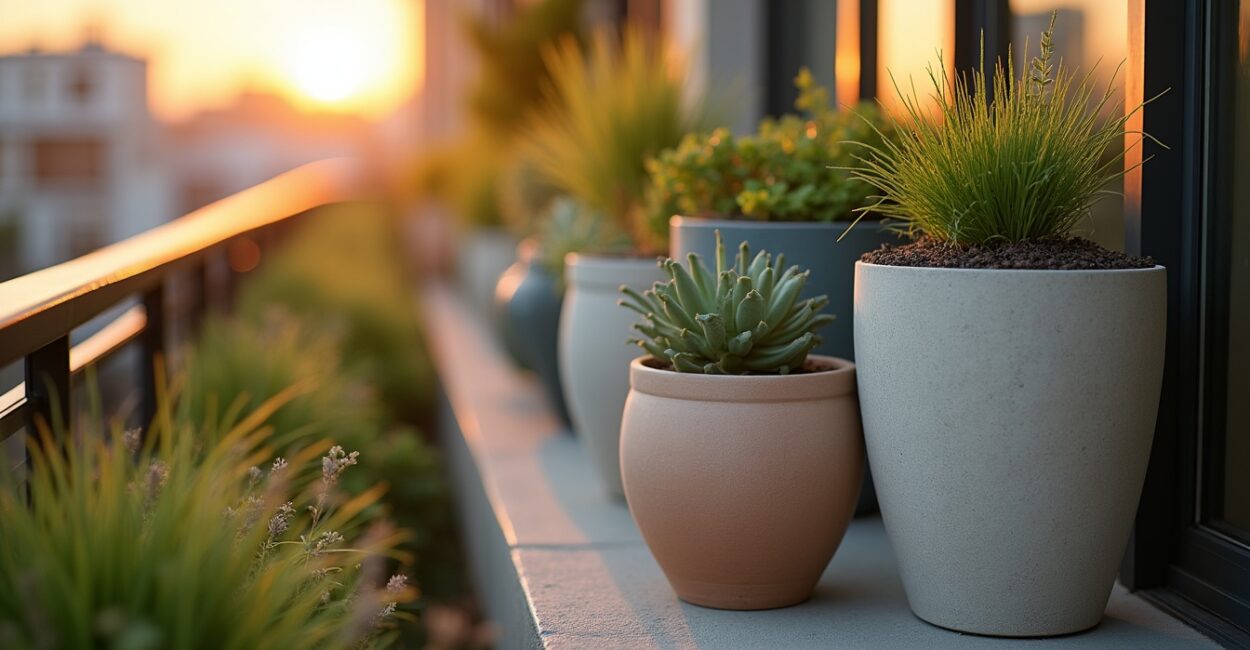
You can set up a balcony or patio that goes weeks between waterings without looking like a dry museum exhibit — it starts with choosing the right drought-tolerant containers and pairing them with plants that actually hold onto moisture. In the next paragraphs you’ll get specific container materials, soil tricks, plant combos, and a layout method that cuts watering by days or even weeks.
Why Some Containers Need Daily Watering — And the One Change That Fixes Most of It
Most people blame the plant when it wilts; the real culprit is the container. Thin plastic pots and unglazed terracotta wick water away and bake fast in sun. Switching to thicker-walled containers with glazing or insulating liners can double the time between waterings. Think of it like clothing for roots: light cotton (terracotta) vs. a windproof jacket (glazed ceramic, thick resin, or insulated fiberstone).
The Best Materials That Actually Retain Moisture
Not all pots are equal. Materials change evaporation, root temperature, and how soil dries out. The top performers:
- Glazed ceramic: low permeability, holds moisture longer.
- Thick plastic/resin: lightweight, low evaporation, especially if double-walled.
- Fiberstone or fiberglass with insulation: mimics stone but lighter and retains moisture well.
- Self-watering containers: reservoir systems that supply water from below for weeks.
Combine these with a saucer or reservoir and your pots become small, efficient ecosystems rather than thirsty buckets.
Plant Combos That Cut Watering by Weeks — What Actually Works Together
Pairing species matters. The trick is to mix deep-rooted, moisture-seeking plants with surface-dwelling, drought-adapted species so the soil profile is used efficiently. A combo like rosemary (deep), sedum (surface), and lavenders or small sages (mid-layer) can slash watering needs because they occupy different niches instead of competing for the exact same moisture pocket.
- Sun combo: Rosemary + Lavandula (lavender) + Sedum
- Shade-tolerant: Heuchera + Fern (limited) + Ajuga
- Decorative edibles: Thyme + Dwarf olive or rosemary + chives
The Irrigation Hacks Pros Use (that Don’t Feel Like Chores)
Watering frequency is influenced far more by soil and technique than by how full your watering can is. Use these high-impact moves: switch to a well-structured, high-organic potting mix, add a water-retentive amendment, and water deeply from below. Bottom watering encourages roots to go deeper and delays surface drying.
- Mix 10–20% coco coir or well-composted bark for water retention and drainage.
- Add a thin layer of mulch (gravel or organic) on top to reduce evaporation.
- Install a small reservoir or capillary mat for long gaps.
What to Avoid — The Common Mistakes That Ruin Drought-tolerant Setups
Most failures come from one of three errors:
- Choosing only terracotta for hot, exposed spots (expect daily watering).
- Using garden soil or heavy mixes that hold water at the surface but suffocate roots.
- Planting aggressive water hogs next to drought-adapted species — root competition kills the slow-drinkers.
Fix these and you’ll stop babysitting every pot on the porch.
A Surprising Comparison: Before/after of One Balcony
Before: eight terracotta pots, daily watering, crunchy leaves by noon. After: swap to glazed ceramic, use a mix with 15% coco coir, planted rosemary + sedum combos, top-mulched, and added a tiny reservoir. Result: went from daily to once every 10–14 days in the same summer heat. The difference wasn’t plant variety so much as container choice and soil structure.
| Metric | Before | After |
|---|---|---|
| Watering frequency | Daily | Every 10–14 days |
| Plant loss in heatwave | 3 of 8 | 0 of 8 |
| Time spent watering/week | 30–45 minutes | 5–10 minutes |
How to Arrange Containers So You Can Truly Go Away for Weeks
Placement and grouping are underrated. Group pots with similar water needs and put the thirsty ones in shadier, insulated spots. Use vertical layering — taller pots at the back, shallow trays in front — to create microclimates where lower containers get shade and stay cooler. Label groups by watering interval and set up one reservoir for every 3–5 pots so a single refill covers many plants.
For hard travel, give a last deep soak, cover soil with 1–2 inches of mulch, and set up a gravity-fed bottle or wick system to stretch water for 2–3 weeks.
For plant selection and care specifics, follow research-based resources like the USDA plant guides and university extension recommendations. For moisture management science, reputable resources include USDA plant resources and cooperative extension publications such as Extension.org.
Takeaway: the difference between daily watering and two-week stretches isn’t magic — it’s choice. Pick the right container material, build a moisture-smart soil, and arrange plants by root behavior. Do that and your pots will keep calm while you do the rest of your life.
How Often Will Drought-tolerant Containers Need Watering in Summer?
With the right container material (glazed or insulated), a soil mix containing water-retentive amendments, and drought-adapted plant combos, most setups will require deep watering roughly every 7–14 days in hot summer conditions. That range depends on sun exposure, pot size, and plant mix: a large glazed pot with rosemary and sedum can go toward the longer end, while a small, dark-colored container in full sun will dry out faster. Always check soil depth moisture before skipping water.
Can I Convert My Terracotta Pots to Be More Drought-friendly?
Yes. You can line terracotta with plastic or a waterproof membrane, add insulation (bubble wrap or foam) between an inner and outer pot, and use a high-organic potting mix with coco coir to enhance moisture retention. Top mulch helps, and placing terracotta in shadier spots reduces evaporation. Converting helps, but replacing with inherently low-permeability containers (glazed ceramic or resin) is simpler and more reliable for long-term low-maintenance.
Which Plants Are Best for Mixed-container Groupings to Reduce Watering?
Choose species with complementary root habits: deep-rooting shrubs like rosemary or dwarf olive, mid-rooted herbs like sage and thyme, and low-surface succulents like sedum. These occupy different soil layers and don’t compete intensely for the same moisture. Also include plants known for drought tolerance in your region — consult local extension lists. Mixing textures (woody, herbaceous, succulent) improves aesthetics and water efficiency simultaneously.
Are Self-watering Pots Worth the Investment for Long Trips?
Self-watering containers are very effective for extending intervals between watering because they deliver water from a reservoir below, preventing surface evaporation and encouraging deeper root growth. They’re particularly worth it if you travel often or want reliable intervals of two weeks or more. Quality matters: look for a vented reservoir and overflow to prevent waterlogging. For very long trips, combine self-watering with a slow-release device or capillary mat for redundancy.
How Do I Avoid Root Rot While Trying to Retain More Moisture?
Retaining moisture doesn’t mean keeping the soil soggy. Use a well-draining potting mix with good aeration (perlite, pumice, or coarse bark) and avoid dense garden soil. Ensure containers have drainage and, if using a reservoir, include an overflow and monitor for standing water. Water deeply but infrequently so roots are encouraged to explore, and check root health seasonally. Proper drainage, oxygen in the mix, and correct plant selection prevent rot while preserving moisture.