

📅 Updated on 06/14/2026
Eco houses are homes designed to use less energy, waste less water, and rely on lower-impact materials without sacrificing comfort. The best versions are not “off-grid cabins” or futuristic showpieces; they are practical buildings that work with climate, orientation, insulation, ventilation, and efficient systems to shrink operating costs and environmental harm.
If you are comparing sustainable homes, green homes, or energy-efficient homes, the real question is not whether they sound good. It is whether they perform well in daily life, how much they cost to build or retrofit, and which design choices actually matter. This guide breaks down the features, materials, trade-offs, and payback logic so you can judge an eco house with confidence.
Key Takeaways
- An eco house is defined by performance, not marketing: low energy demand, efficient water use, and lower embodied carbon all matter.
- Insulation, airtightness, passive solar design, and ventilation usually deliver more value than expensive gadgets.
- Solar panels help, but they work best after the building envelope is already doing its job.
- Eco homes can cost more up front, yet the payback often comes through lower utility bills and longer-lasting materials.
- Existing homes can be upgraded into greener homes, but the smartest sequence is usually shell first, systems second, cosmetics last.
What Makes Eco Houses and Sustainable Homes Different from Regular Houses
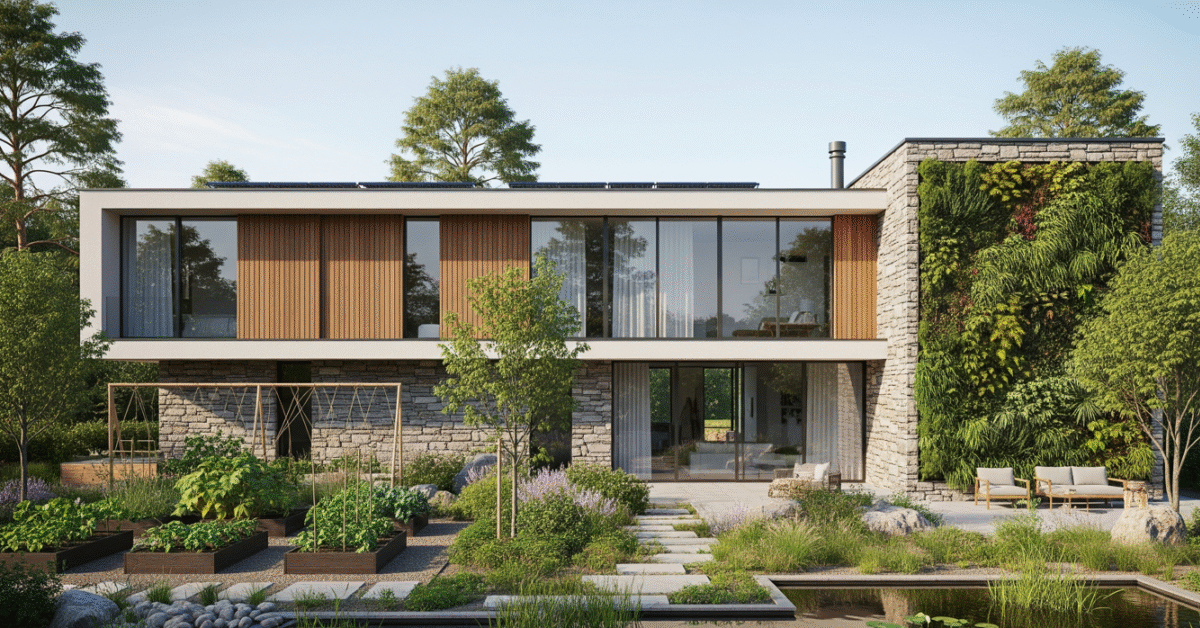
Eco houses are homes designed to cut energy use, water demand, and environmental impact through smart building form, efficient systems, and low-impact materials. In plain English, they are houses that need less to operate and create less waste while doing it. That can mean a net-zero home, a passive house, or simply a well-designed family house with strong insulation and solar panels.
The technical difference starts with the building envelope: walls, roof, windows, floor, and air sealing. If those parts perform well, the home needs less heating and cooling, which lowers bills and reduces the carbon footprint. This is why many architects put passive solar design and airtight construction ahead of visible “green” features.
What separates a truly efficient home from a merely stylish one is not the equipment on the roof — it is how little energy the building needs before the equipment ever turns on.
The core idea behind performance
Good green homes reduce demand before they add technology. That means the house is oriented to capture winter sun, shaded to limit summer heat, and detailed to stop drafts. When those basics are right, renewable energy can cover a much larger share of the remaining load.
Where passive house fits
A passive house is a very high-performance standard that focuses on airtightness, thick insulation, heat recovery ventilation, and extremely low heating and cooling needs. Not every eco house needs to meet that standard, but passive house principles often improve comfort and lower operating costs in almost any climate.
Key Features That Actually Matter in an Eco House
The most valuable features are the ones that reduce demand every day, not just during peak weather. In most projects, insulation, airtightness, glazing, ventilation, and efficient mechanical systems drive the biggest results.
Insulation and airtightness
Insulation slows heat transfer, while airtightness prevents uncontrolled air leakage. Together, they keep indoor temperatures stable and reduce the load on HVAC equipment. A poorly sealed home can lose much of the benefit of even expensive heating and cooling systems.
Passive solar design
Passive solar design uses building orientation, window placement, overhangs, and thermal mass to capture heat in colder months and limit overheating in warmer months. This approach is inexpensive compared with many add-ons, but it has to be planned early. Once the floor plan is fixed, the opportunity becomes harder to recover.
Renewable energy and solar panels
Solar panels are one of the most recognizable parts of environmentally friendly homes, but they should be treated as a finishing step, not a substitute for efficiency. A smaller, better-designed house often needs fewer panels to reach a net-zero home outcome. For a public reference on home energy performance and efficiency, the U.S. Department of Energy’s Energy Saver is a reliable starting point.
Rainwater harvesting and water efficiency
Rainwater harvesting captures roof runoff for irrigation, toilet flushing, or other non-potable uses where local codes allow it. Low-flow fixtures, drought-tolerant landscaping, and leak control often save more water than people expect, especially in places with high outdoor irrigation demand.
- High-performance windows reduce heat loss and solar gain problems.
- Heat recovery ventilators improve indoor air quality without wasting conditioned air.
- Smart thermostats help, but only after the house itself is efficient.
- Low-VOC finishes improve indoor air quality, which matters in tightly sealed homes.
Benefits of Eco Houses: Energy, Health, and Cost Savings
Eco houses lower utility bills, improve indoor comfort, and often create healthier living conditions. The biggest financial benefit usually comes from reduced heating and cooling demand, not from one dramatic feature.
In practice, what people notice first is comfort. Rooms feel more even in temperature, air leaks are reduced, and the home is quieter because better windows and tighter construction also dampen outside noise. For many buyers, that day-to-day experience is the part that makes the extra planning worthwhile.
The strongest financial case for an eco house is not that it “saves money somewhere”; it is that it avoids waste in several places at once — energy, water, maintenance, and premature replacement.
Energy savings are real, but not automatic
Do eco houses really save money on energy bills? Yes, if the design actually reduces demand. A house with great solar panels but weak insulation may still spend too much on heating and cooling. The savings come from the whole package: envelope first, equipment second, generation last.
Health and comfort advantages
Better ventilation, lower moisture risk, and fewer drafts can make a noticeable difference in daily life. Tight homes need controlled fresh air, which is why heat recovery ventilation is common in passive house design. That approach helps prevent stale air and condensation problems that can undermine comfort.
Long-term durability
Low-impact materials are often chosen not just for embodied carbon, but also for durability and maintenance. A material that lasts longer and needs fewer repairs can lower lifetime cost even if it is not the cheapest item at purchase.
For health guidance related to indoor environmental quality, the U.S. Environmental Protection Agency’s indoor air quality resources are worth reviewing before choosing finishes, ventilation, or moisture-control strategies.
How Eco Houses Reduce Environmental Impact
Eco houses reduce impact in two main ways: they use less operational energy over time, and they often have lower embodied carbon at the material stage. Operational energy is the power used to heat, cool, light, and run the home. Embodied carbon comes from extracting, manufacturing, and transporting materials.
Operational carbon versus embodied carbon
Many people focus only on solar panels, but the carbon story starts earlier. A large home with poor insulation can consume far more energy than a smaller, well-built one with no flashy features. On the other hand, a home built with low-impact materials can reduce the upfront emissions tied to construction.
Why materials matter
Recycled steel, FSC-certified timber, cellulose insulation, reclaimed wood, and some bio-based products can reduce environmental cost compared with conventional high-impact options. The right material depends on climate, local supply, fire codes, moisture exposure, and budget. There is no universal best choice.
That last point matters. A “green” material that fails in a humid climate or requires frequent replacement is not sustainable in the real world. Durability is part of sustainability, not separate from it.
What a net-zero home is trying to do
A net-zero home is designed to produce as much renewable energy as it consumes over a year, often through solar power paired with highly efficient systems. The most successful projects do not chase the label first. They reduce load until the renewable system becomes affordable and realistic.
| Impact Area | Typical Eco House Strategy | Why It Helps |
|---|---|---|
| Energy use | Insulation, airtightness, efficient HVAC | Reduces heating and cooling demand |
| Water use | Rainwater harvesting, low-flow fixtures | Lowers potable water demand |
| Materials | Low-impact materials, reclaimed or certified wood | Reduces embodied carbon and waste |
| Indoor air | Low-VOC finishes, controlled ventilation | Improves air quality and moisture control |
Eco House Materials and Design Choices That Pay Off
The best material choice is rarely the fanciest one. It is the one that fits the climate, lasts long enough to justify its footprint, and supports a healthy, low-maintenance home.
Practical low-impact materials
- FSC-certified wood for framing, cladding, and finishes when responsibly sourced timber is available.
- Cellulose or mineral wool insulation for strong thermal performance and better fire resistance in some assemblies.
- Recycled steel where structural needs or local supply chains make it practical.
- Reclaimed brick or timber when the project can accommodate salvage quality and finish variation.
- Low-VOC paints and sealants to reduce indoor chemical exposure.
Design decisions that beat expensive upgrades
Window placement, roof form, shading, and floor plan efficiency often outperform a pile of isolated “green” upgrades. A compact house generally needs less material and less energy than a sprawling one. That is one reason sustainable architecture often emphasizes simple forms and disciplined layout.
Here is a real-world pattern I have seen repeatedly: a homeowner budgets heavily for solar, but the house still leaks air around old openings and oversized windows. After the retrofit, the utility bills barely improve because the envelope was never fixed. When that same project starts with sealing, insulation, and shading, the solar array suddenly looks much more powerful.
Can an existing house be turned into an eco house?
Yes, and in many cases that is the smarter move. The usual sequence is air sealing, insulation, window upgrades where justified, mechanical system improvements, and then renewables if the budget allows. This is one area where the method works well in older homes, but it can fail if the structure has serious moisture, structural, or code issues that must be solved first.
How Much Does an Eco House Cost?
Eco houses usually cost more upfront than standard homes, but the premium varies widely depending on design ambition, local labor, and how much you are upgrading. A modest efficiency-focused build may add a small percentage to construction costs, while a highly specialized passive house can cost more because of detailed design and higher-performance components.
There is no honest single number that fits every market. Costs shift with land, permits, trades, local material supply, and whether the project is a new build or retrofit. What matters is whether the added upfront cost is offset by lower utility bills, lower maintenance, and better resale appeal.
Where the money usually goes
- Higher-quality insulation and better windows.
- Careful air sealing and blower-door testing.
- Heat pumps, heat recovery ventilation, or other efficient systems.
- Solar panels, batteries, or monitoring tools if the project targets near-zero energy use.
- Design fees for early planning, which often prevent expensive mistakes later.
Payback depends on the order of upgrades
If the first dollar goes to visible upgrades instead of building physics, the payback usually weakens. The strongest returns tend to come from measures that reduce demand every hour the home is occupied. That is why many energy auditors recommend measuring performance before and after, not relying on design intent alone.
For U.S. homeowners evaluating tax credits, the IRS energy-efficient home improvement credit page is a useful official reference, especially when solar panels, heat pumps, or insulation upgrades are part of the plan.
Eco House vs. Traditional House: The Main Differences That Matter
The difference is not just that one is “green” and the other is not. Eco houses are usually designed around lower total resource use, while traditional houses often optimize for lower first cost and familiar construction methods.
| Category | Eco House | Traditional House |
|---|---|---|
| Energy demand | Lower due to envelope and systems design | Often higher, especially if older |
| Indoor comfort | More stable temperatures, fewer drafts | More variation room to room |
| Water use | Often reduced with efficient fixtures and harvesting | Usually standard plumbing only |
| Materials | Lower-impact or certified options | Conventional materials prioritized |
| Upfront cost | Can be higher | Often lower at purchase |
| Operating cost | Usually lower over time | Usually higher over time |
The trade-off is straightforward: traditional construction may be cheaper to build, but it can cost more to run and maintain. Eco design asks you to pay attention to the full lifecycle of the house, not just the purchase price.
Is an Eco House Worth It Before You Build or Buy?
For most buyers, yes — if the design is grounded in performance rather than branding. The smartest eco houses are not the most complicated ones. They are the ones that pair a good envelope with sensible equipment, low-impact materials, and a layout that fits the climate.
The best decision test is simple: ask what the house will cost to own, not just what it will cost to build. If a home reduces energy bills, lowers maintenance, and improves comfort, it has a strong case even when the upfront price is higher. If the sustainability claims are vague and the specifications are weak, walk away.
An eco house is worth paying for when the savings and comfort gains are built into the structure itself, not promised by a single feature that can be copied onto any house.
What to check before committing
- Ask for insulation values, window specs, and airtightness details.
- Review the HVAC plan and ventilation strategy, not just the floor plan.
- Look for solar-ready or net-zero design if long-term bills matter.
- Confirm whether the materials are certified, reclaimed, or just marketed as “natural.”
- Compare likely utility costs against a conventional home of similar size.
How to think about renovations
If you are upgrading an existing house, start with the biggest leaks in performance. That usually means the roof, attic, walls, windows, and air sealing before adding premium tech. Some improvements are highly cost-effective, while others only make sense when bundled into a larger project.
Practical Questions Buyers Ask
What makes a house an eco house?
A house becomes an eco house when it is designed to reduce energy use, water use, and environmental impact over its full life. That usually includes strong insulation, airtight construction, efficient systems, and thoughtful material selection. Solar panels and rainwater harvesting can help, but they are not the whole story.
Are eco houses more expensive to build?
Often, yes — at least upfront. Better windows, higher-grade insulation, more careful detailing, and design time can raise construction costs. The size of the premium varies, and some choices pay back faster than others.
Do eco houses really save money on energy bills?
Yes, when the house is designed as a system. Savings are strongest when the building envelope, ventilation, and heating/cooling equipment are aligned. A poorly designed house with solar panels alone will not perform like a true high-efficiency home.
What materials are best for an eco house?
The best materials are the ones that fit the climate, last a long time, and have lower embodied carbon. Common choices include FSC-certified timber, recycled steel, cellulose insulation, reclaimed materials, and low-VOC finishes. The right answer depends on local code, moisture conditions, and budget.
Can an existing house be turned into an eco house?
Yes. Many older homes become much more efficient through air sealing, insulation upgrades, better windows, heat pumps, and controlled ventilation. The most effective retrofit usually targets the shell first and the renewable energy system afterward.
What to Do Next
If you are evaluating eco houses, start with performance data, not aesthetics. Ask for insulation specs, airtightness targets, ventilation plans, and projected energy use before you get distracted by finishes. That one habit filters out a lot of weak claims fast.
If you are buying or building, compare total ownership cost over 10 to 20 years instead of comparing only the sticker price. A house that costs a little more to build but much less to run is often the better financial decision, especially when comfort and durability improve at the same time.