

📅 Updated on 06/13/2026
A compost bin does not need to be new, expensive, or pretty to work well. If you are learning how to build a compost bin using recycled materials, the real objective is to create a container that keeps scraps contained, holds moisture, and still lets air move through the pile so microbes can do their job.
That is why recycled options often outperform store-bought bins for backyard use. Old pallets, a food-grade trash can, wire fencing, and sturdy plastic totes can all become practical compost systems if you choose the right material and match it to your space, budget, and volume of kitchen and yard waste.
Quick Summary
- The best recycled compost bin is the one that balances airflow, moisture retention, and pest control for your yard.
- Wood pallets work well for stationary bins, while a drilled trash can fits smaller spaces and faster setup.
- Wire fencing is the cheapest option for larger piles, but it offers less heat retention than solid-sided bins.
- Food-grade plastics are safer than random containers because they reduce contamination risk and last longer outdoors.
- Finished compost depends more on bin design and input balance than on whether the materials look polished.
How to Build a Compost Bin Using Recycled Materials Without Overbuilding It
A recycled compost bin is a structure made from repurposed materials that supports aerobic decomposition by holding organic waste in a contained space with enough air exchange, drainage, and access for turning. In plain English: it is a box, cylinder, or fenced enclosure that turns food scraps and yard debris into compost without buying a purpose-built product.
The smartest approach is to build for function first. In practice, a bin that is too airtight goes slimy and stinky, while one that is too open dries out or attracts pests. The sweet spot is a container that is easy to fill, easy to manage, and sturdy enough to survive rain, heat, and repeated use.
For a helpful baseline on composting science and bin design, the U.S. EPA’s home composting guidance is a solid reference, and Penn State Extension also publishes practical composting recommendations for home gardeners through its composting resources.
What separates a good compost bin from a bad one is not the material alone — it is whether the bin keeps the pile aerated, moist, and protected at the same time.
Start With The Waste You Actually Produce
If your household throws away mostly kitchen scraps, a small bin is enough. If you also collect leaves, grass clippings, and plant trimmings, you need more volume than most people expect. Compost piles shrink fast, so a bin that looks oversized on day one often feels cramped a month later.
Choosing The Right Recycled Material For Your Yard
The best recycled material depends on whether you want durability, speed, or low cost. Wood pallets are the most versatile choice for a backyard compost enclosure. A lidded trash can works best for tight spaces. Wire fencing is the cheapest route for big piles. Plastic totes are compact, but they need careful drilling and are better for small-scale composting.
| Recycled Material | Best For | Main Strength | Main Limitation |
|---|---|---|---|
| Wood pallets | Backyards with medium to large volumes | Good airflow and easy assembly | Can rot over time if untreated |
| Food-grade trash can | Small yards or patios | Clean, compact, pest-resistant | Needs careful drilling for ventilation |
| Wire fencing | Leaf-heavy composting | Very low cost and quick setup | Retains less heat and moisture |
| Plastic tote | Apartment balconies or starter systems | Easy to source and move | Limited capacity and airflow risk |
For material safety, avoid containers that held chemicals, solvents, or unknown industrial products. If you use a plastic container, choose one that was food-grade whenever possible. The U.S. Department of Agriculture’s composting resources are useful for understanding how organic matter breaks down and why contamination matters.
When A Pallet Bin Beats Everything Else
Pallets are the best all-around choice when you want a bin that breathes well and costs little or nothing. They are also easy to repair. If one board fails, you can replace it without rebuilding the whole structure. The tradeoff is that untreated wood eventually breaks down, so this is a practical system, not a permanent one.
Building A Pallet Compost Bin That Lasts Through More Than One Season
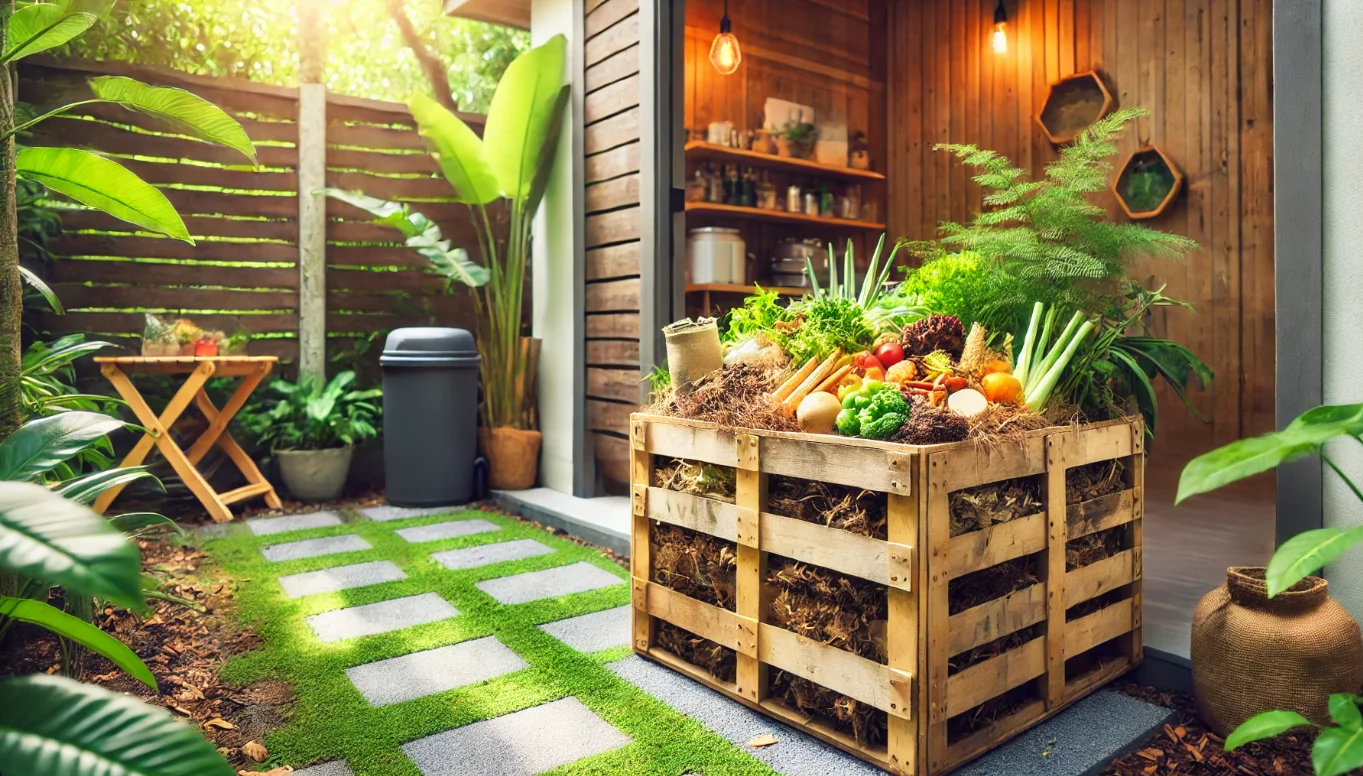
To build a pallet compost bin, connect three or four clean pallets into a square or U-shape, then secure them with screws, galvanized brackets, or heavy-duty zip ties for a temporary setup. Keep one side open for loading and turning, and elevate the base slightly so water does not pool underneath the pile.
- Choose pallets marked HT, which means heat-treated rather than chemically treated.
- Set the pallets on level ground with partial shade if possible.
- Fasten the corners firmly so the walls do not spread when the pile gets heavy.
- Leave gaps between boards for airflow, but not so wide that the pile falls out.
- Add a loose base layer of twigs or coarse brown material before filling it.
Here is the practical detail people miss: pallet spacing matters. If the boards are packed too tightly, the center of the pile gets wet and compacted. If the gaps are too large, the pile dries too quickly and loses the heat that speeds decomposition.
A pallet bin works because it is imperfect on purpose: it holds enough material to compost, but still leaks just enough air to keep the pile alive.
A Small Mistake That Causes Big Odors
People often start by dumping only food scraps into the bin. That creates a soggy, nitrogen-heavy mess. The fix is simple: cover each layer of kitchen waste with shredded cardboard, dry leaves, or torn paper. Carbon-rich “browns” absorb moisture and keep the surface from turning slimy.
Turning A Trash Can Into A Compact Composting System
A food-grade trash can becomes a useful compost bin when you drill ventilation holes around the sides and base, then lift it slightly off the ground so excess liquid can drain. This setup works best for small households, balconies, and tight urban yards where a pallet pile would take up too much room.
Use a lid to block rodents and keep rain from waterlogging the contents. A dark-colored can also absorbs more heat, which can help the pile warm faster in cooler weather. Still, this method has a limit: if the can is packed too tightly, oxygen drops and decomposition slows.
- Drill holes about 1/4 to 1/2 inch wide across the upper sides and near the bottom.
- Add a few stones or a short platform underneath for drainage.
- Use a mix of chopped scraps, dry leaves, and shredded paper to prevent compaction.
- Shake or stir the can every week if the design allows it.
Na prática, this style works well for beginners because it is contained and easy to manage. It also exposes a truth that surprises many first-time composters: the smaller the bin, the more important the ingredient balance becomes.
Why Airflow, Moisture, and Carbon Matter More Than Appearance
Healthy compost depends on three conditions: oxygen for aerobic microbes, moisture like a wrung-out sponge, and a balanced mix of carbon and nitrogen. You do not need laboratory precision, but you do need a system that keeps those three factors in range. When one fails, the pile usually tells you fast through smell, heat loss, or visible mold.
A pile that smells like ammonia usually has too much nitrogen. A pile that smells rotten often lacks oxygen. If it feels dusty and inactive, it is probably too dry. These are not cosmetic issues; they directly control whether the material breaks down efficiently.
- Greens: vegetable scraps, coffee grounds, fresh grass clippings.
- Browns: dry leaves, cardboard, straw, shredded newspaper.
- Oxygen: space between particles, turning, and side ventilation.
- Water: enough to keep the pile damp, not dripping.
If you want a broader scientific explanation of composting conditions, Oregon State University Extension offers clear guidance on compost biology and pile management.
When Recycled Containers Fail
Recycled materials fail when they solve one problem but create another. A sealed tote blocks pests but starves the pile of air. A wire ring breathes well but dries out fast in hot weather. A pallet bin is balanced, but if the wood is weak or untreated it can collapse early. There is no universal winner.
What To Put In The Bin And What To Leave Out
The safest rule is to compost plant-based material, paper products that break down cleanly, and untreated yard waste. Avoid meat, dairy, oily food, pet waste, and chemically treated wood. Those items create odor, attract pests, or introduce contamination that slows the process and makes the finished compost less reliable.
A simple starter recipe is three parts browns to one part greens by volume, adjusted as needed. That ratio is not sacred, but it works well because most kitchen waste is wetter and richer in nitrogen than most carbon materials. If the pile looks wet, add browns. If it looks dry and inactive, add greens and a little water.
A Real-World Example From A Small Backyard
A homeowner with two raised beds used four discarded pallets and a few deck screws to build a three-sided bin behind a garage. At first, the pile smelled sharp because they added too many coffee grounds and melon rinds. After mixing in torn cardboard and dry oak leaves, the odor disappeared and the center of the pile warmed within days. The bin was not fancy, but it worked because the inputs were corrected.
Placement, Pest Control, And Seasonal Maintenance
Place the bin on bare soil if possible so worms and beneficial microbes can move in from below. Keep it close enough to use easily, but not so close to the house that smell becomes a concern if the balance goes wrong. Partial shade is often better than full sun because it slows drying without making the pile cold and stagnant.
Pest control starts with the lid or enclosure, but it really depends on how you feed the bin. Never leave fresh scraps exposed on top. Bury them under browns, and avoid adding cooked food unless you have a well-managed system that heats consistently. For local composting rules and curbside options, many counties publish homeowner guidance through extension services or municipal recycling departments.
The easiest compost bin to maintain is the one that matches your waste stream, your climate, and the amount of time you will actually spend turning it.
Seasonal Adjustments That Make A Difference
In rainy months, add more dry browns and make sure drainage stays open. In hot weather, check moisture more often because recycled bins with open sides lose water faster. In winter, larger piles hold heat better, so if you are composting in a cold climate, volume matters more than container style.
Practical Next Steps For A Better Backyard System
The fastest way to get a useful compost bin is to choose one recycled material, build it simply, and start using it before you overthink the design. Most beginners do not fail because their container was wrong; they fail because they wait for the perfect setup instead of learning from a working one. Compost is forgiving, but only if you give it air, water, and a sensible mix of ingredients.
If you are ready to act, pick the bin style that fits your space, gather clean recycled materials, and build it this weekend. Then track what happens for the first month: smell, moisture, heat, and how fast scraps disappear. That feedback tells you more than any theory does.
Frequently Asked Questions
What Is The Easiest Recycled Material To Use For A Compost Bin?
Wood pallets are usually the easiest choice because they are cheap, widely available, and simple to fasten into a sturdy enclosure. They also allow strong airflow, which helps compost break down faster. If you have almost no space, a drilled trash can is the next easiest option.
Can I Use A Regular Plastic Tote For Composting?
Yes, but only if you drill enough ventilation and drainage holes. A tote without airflow traps moisture and can turn anaerobic, which causes odor and slows decomposition. Food-grade plastic is the safer choice when you can get it.
How Big Should A Home Compost Bin Be?
For most households, a bin around 3 feet by 3 feet by 3 feet is large enough to retain heat and small enough to manage. Smaller bins can work, but they usually need more frequent turning and better moisture control. If you generate a lot of leaves or yard waste, bigger is usually better.
Do Recycled Compost Bins Attract Rats Or Other Pests?
They can, if you add the wrong materials or leave food exposed. Keep meat, dairy, and oily leftovers out of the bin, and bury kitchen scraps under browns. A tight lid, side walls, and consistent layering reduce pest problems significantly.
How Long Does Compost Take In A DIY Bin?
Under decent conditions, compost can take a few months to a year. Faster results come from smaller pieces, regular turning, balanced ingredients, and enough moisture. A poorly managed pile may sit for much longer without fully breaking down.