

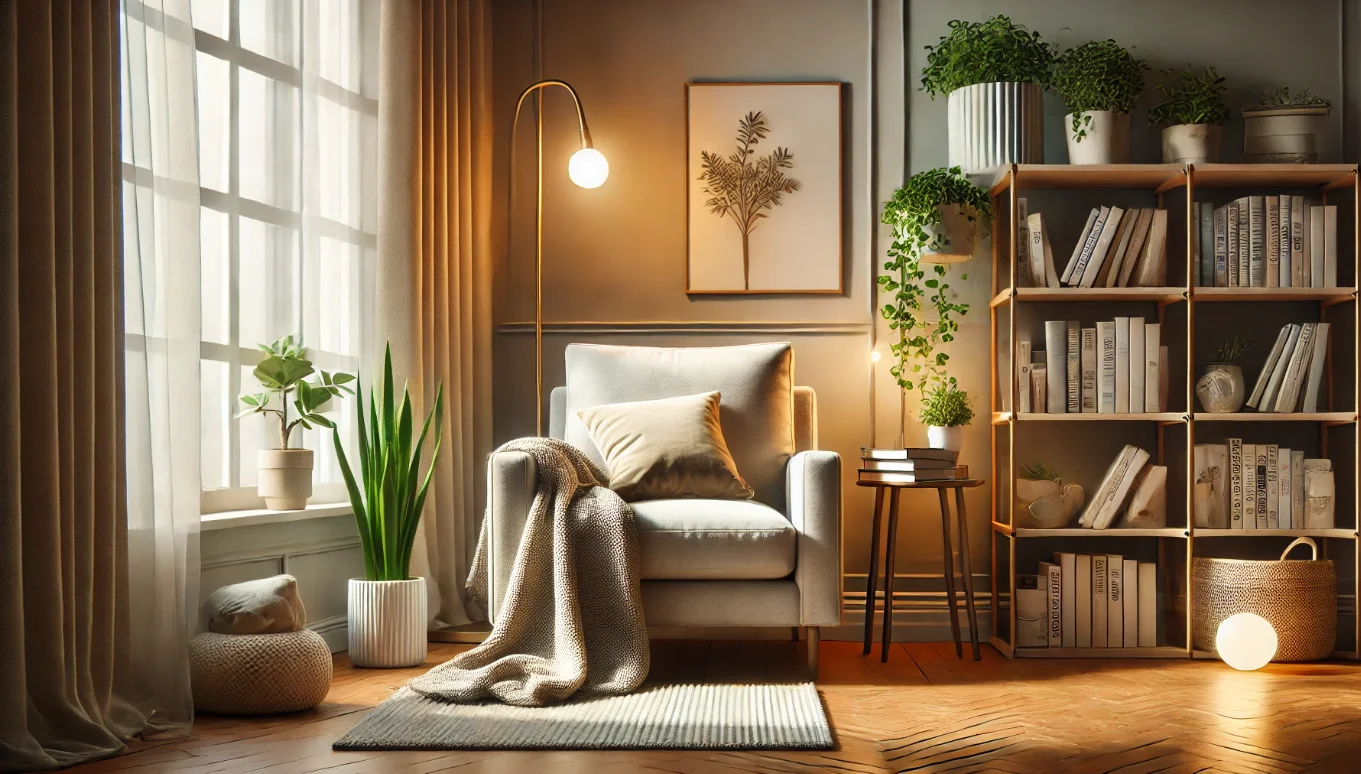
📅 Updated on 06/13/2026
A great reading nook is not about square footage; it’s about control. If you can shape light, sound, seating, and storage in one small zone, even a hallway corner or studio apartment can feel like a private retreat. That is the practical heart of how to create a cozy reading nook in any space.
This guide breaks the process into decisions that actually matter: where to place the nook, how to make it comfortable for long reading sessions, what kind of lighting works best, and which details make a space feel inviting instead of cramped. The goal is a spot you’ll use often, not a styled corner that looks good for a week and then collects laundry.
Key Takeaways
- A cozy reading nook starts with a defined footprint, even if that footprint is only 3 to 5 feet wide.
- Natural light is helpful, but layered lighting matters more because reading comfort depends on contrast, glare, and evening use.
- The best seating is not the fanciest seat; it is the one that supports your back, feet, and elbows for 20 to 60 minutes at a time.
- Storage should be within arm’s reach, or the nook stops feeling effortless and starts feeling decorative.
- Texture does more work than clutter: a throw, cushion, rug, and curtain can change the mood faster than buying more furniture.
How to Create a Cozy Reading Nook in Any Space Without Wasting Square Footage
A cozy reading nook is a small, intentional area designed for seated reading, relaxation, and low-distraction use. In plain terms, it is a spot that tells your brain, “this is where you slow down.” The best setups rely on zoning, not size, and that is why they work in apartments, bedrooms, living rooms, and even underused landings.
Start by identifying a corner with one advantage: a window, a blank wall, an awkward alcove, or a bit of unused space beside a bookshelf. The nook does not need to be secluded, but it should feel separate from high-traffic activity. That separation creates the psychological shift that turns an ordinary corner into a real reading habit.
Pick the Right Micro-Zone
Look for a place where you can sit without blocking circulation. A space that is slightly tucked away usually works better than the center of a room because it reduces visual noise. In practice, a nook succeeds when it feels easy to enter and easy to leave.
Measure First, Buy Later
Measure width, depth, and clearance before you shop. A chair that looks perfect online can swallow a tiny room, while a slimmer lounge chair or ottoman may fit beautifully. If the nook must share space with a walking path, leave enough room to move naturally without bumping into corners.
A reading nook feels cozy when it reduces effort: the less you have to adjust, reach, or fight the room, the longer you will stay in it.
Choose Seating That Supports Real Reading Sessions
The right seat should keep you comfortable for at least 20 to 45 minutes without constant shifting. That usually means more support than a soft, sink-in cushion and less formality than a dining chair. A reading nook works best when the seat matches how you actually read: upright with coffee, reclined with a novel, or curled up with a blanket.
For posture, a chair with a backrest and arm support is usually more practical than a decorative pouf alone. If you prefer floor seating, add a thick cushion, a lumbar pillow, and something under your feet so your hips are not taking all the load. The furniture should reduce friction, not create a styling problem.
Best Seating Options by Space
- Small apartments: armless accent chair, slipper chair, or compact chaise.
- Bedrooms: upholstered chair near a window, or a bench with layered pillows.
- Living rooms: corner lounge chair with a side table and floor lamp.
- Kids’ spaces: oversized floor cushion, beanbag, or low bench with storage underneath.
If you want a simple test, sit in the chair for 10 minutes with a book and your usual reading position. If you keep searching for a better angle, the chair is wrong. That sounds obvious, but it is where many well-designed corners fail: they look finished and feel annoying.
Layer Lighting for Daytime Reading and Nighttime Calm
Good lighting is the difference between a reading nook and a decorative corner. For comfortable reading, you need enough task light to see the page clearly, while avoiding glare and harsh shadows. The U.S. Department of Energy notes that lighting efficiency matters, but for readers the more immediate concern is placement: light should come from the side or behind the shoulder, not directly into your eyes.
Layering works better than relying on one fixture. Natural light handles daytime use, a floor lamp or wall sconce handles evening sessions, and a dimmable ambient source softens the room after you finish reading. If the nook faces a bright window, a sheer curtain can cut glare without making the space feel closed off.
Three-Layer Lighting That Works
- Ambient light: the room’s general illumination.
- Task light: focused light for the page or e-reader.
- Accent light: softer light that adds warmth and defines the nook.
For people who read at night, color temperature matters too. Warmer bulbs usually feel calmer, while cooler bulbs can feel sharper and more clinical. That said, there is no universal rule: some readers prefer brighter neutral light because it reduces eye strain, especially for small print.
The best reading light is not the brightest one; it is the one that lets you read without glare, shadow, or visual fatigue.
Use Texture, Color, and Fabric to Make the Space Feel Inviting
Coziness is a sensory effect. It comes from materials that soften the room: knit throws, nubby cushions, a rug underfoot, linen curtains, or even a small upholstered ottoman. These layers matter because they change how the space sounds, feels, and visually registers at a glance.
Color also shapes the mood. Muted earth tones, warm neutrals, deep greens, and softened blues tend to calm a nook without making it look flat. High-contrast palettes can still work, but they need balance. If the chair is bold, keep the pillow and throw quieter so the corner does not become visually busy.
Fast Ways to Add Warmth
- Place a rug under the chair to define the area.
- Use one large throw instead of several small decorative blankets.
- Mix one smooth texture with one tactile texture, such as leather and wool.
- Choose one accent color and repeat it twice, not five times.
Viable cozy design is often less about adding things than about editing them. A pillow, lamp, and rug can do more than ten small decor objects if each one has a job.
Build Storage That Keeps Books and Supplies Within Reach
A reading nook stops feeling relaxing the moment you have to get up repeatedly for glasses, bookmarks, a charger, or another book. Good storage keeps the essentials within one arm’s reach. That can mean a side table, floating shelf, wall-mounted ledge, basket, or the built-in shelf on a bench.
The rule here is simple: store what you use, not everything you own. A small stack of current reads is enough. If you overload the area, the nook turns into a book pile, and the calm disappears.
Storage That Fits Small Spaces
| Storage Type | Best For | Why It Works |
|---|---|---|
| Side table | Tea, glasses, bookmarks | Keeps essentials at elbow height |
| Floating shelf | Book display | Uses wall space instead of floor space |
| Basket | Blankets, magazines, chargers | Hides visual clutter quickly |
| Bench storage | Extra books, seasonal items | Stores more without adding bulk |
Here is the part people underestimate: accessibility matters more than capacity. A tiny shelf you actually use beats a large cabinet across the room. That is true in small apartments and large homes alike.
According to the CDC’s home and recreational safety guidance, keeping paths clear and reducing trip hazards is part of safer home design. In a reading nook, that means no loose cords across the floor and no stacks of books where your feet land.
Make the Nook Quiet, Private, and Easy to Return To
Quiet does not always mean silent. It means reducing interruptions enough that your attention can settle. A nook near a busy kitchen will need different tactics than one in a bedroom or loft. Thick curtains, a rug, a closed door, or even a strategically placed bookshelf can lower the sense of exposure.
The trick is to make the nook frictionless to use every day. If you have to clear it out each time, it will not become a habit. A stable layout, one blanket, one light, and one surface for your essentials are enough for most people.
Privacy Tactics That Actually Help
- Angle the chair away from the main traffic flow.
- Use a curtain, screen, or tall plant to soften the edge of the space.
- Choose a consistent “reading setup” so the nook feels ready on demand.
One practical example: a studio apartment client once used the dead corner beside a dresser as a reading zone. We placed a narrow lounge chair, a plug-in wall lamp, and a woven basket for blankets. The room did not get bigger, but the reading habit became real because the space felt prepared every time they sat down.
A nook becomes useful when it is repeatable; if setup takes effort, the room may look styled but it will not get used.
Adapt the Design to Your Home’s Layout Instead of Fighting It
Not every home gives you a window seat or a perfect alcove, and that is fine. The strongest reading nooks usually come from working with the room’s quirks: a sloped ceiling, an empty stair landing, a wide hallway niche, or the corner of a bedroom that no one uses well. That is where how to create a cozy reading nook in any space becomes less about decor and more about problem-solving.
If the room is bright and open, use furniture and fabric to create visual boundaries. If the room is compact, prioritize scale and mobility. If the nook shares space with work or family activity, make it clearly different from the surrounding zone so your brain can switch modes faster.
Layout Decisions by Space Type
- Studio apartment: define the nook with a rug and back-to-wall seating.
- Bedroom: use the corner farthest from the bed to avoid overlap.
- Living room: place the nook near, but not inside, the main conversation area.
- Hallway landing: use compact seating and vertical storage only.
For a deeper look at home comfort and indoor conditions, the EPA’s indoor air quality resources are worth skimming. Good ventilation, low-dust textiles, and cleaner materials matter more in a small nook than many people expect, especially if you spend long stretches there.
Finish With Personal Details That Make the Space Yours
The final layer should feel personal, not crowded. One framed print, a favorite candle, a plant, or a stack of well-loved books can give the nook character without stealing its function. The point is to signal identity, not to fill every surface.
There is a limit, though. Too many objects create visual noise, and visual noise works against a reading space. A good reading nook should feel like an exhale the moment you sit down.
Personal Touches Worth Keeping
- A single piece of art you actually like.
- A plant that tolerates the available light.
- One scent, not several competing ones.
- A bookmark, notebook, or reading list kept in the same place.
One caution: this method works well for homes where the goal is calm and routine, but it can fail if the nook is expected to do too many jobs. A reading corner that also needs to be a guest bed, work desk, and storage zone will lose its identity fast. In that case, keep the design lighter and protect the reading function first.
What to Do Next
The smartest next step is not shopping; it is editing. Pick one spot, define it with a chair or cushion, add one light source, and remove anything that does not support reading. Once the nook works in practice, then refine the details.
If you want the result to last, treat it like a habit space, not a decor project. Start with comfort, test it for a week, and adjust based on where you naturally sit, what time you read, and which objects you actually reach for.
FAQ
How much space do I need for a cozy reading nook?
You can create a usable reading nook in roughly 3 to 5 feet of width if the seating is compact. The key is not floor area alone, but whether you can sit, reach a light, and keep essentials close by without crowding the room.
What is the best chair for a reading nook?
The best chair supports your back and lets your feet rest comfortably. A compact accent chair, slipper chair, or small chaise usually works better than a chair that looks plush but forces you into one awkward position.
Do I need natural light for a reading corner?
No, but natural light helps during the day. A well-placed lamp with warm, glare-free task lighting is more important overall because it makes the nook usable at night and in darker rooms.
How can I make a reading nook feel cozy without buying much?
Use texture and placement before shopping. A blanket, one pillow, a small rug, and a lamp can change the feel of a corner faster than adding lots of decor.
Can a reading nook work in a shared room?
Yes, if you define the area clearly. A rug, a chair angled away from traffic, and a small storage piece can separate the nook from the rest of the room without building walls.