

📅 Updated on 06/13/2026
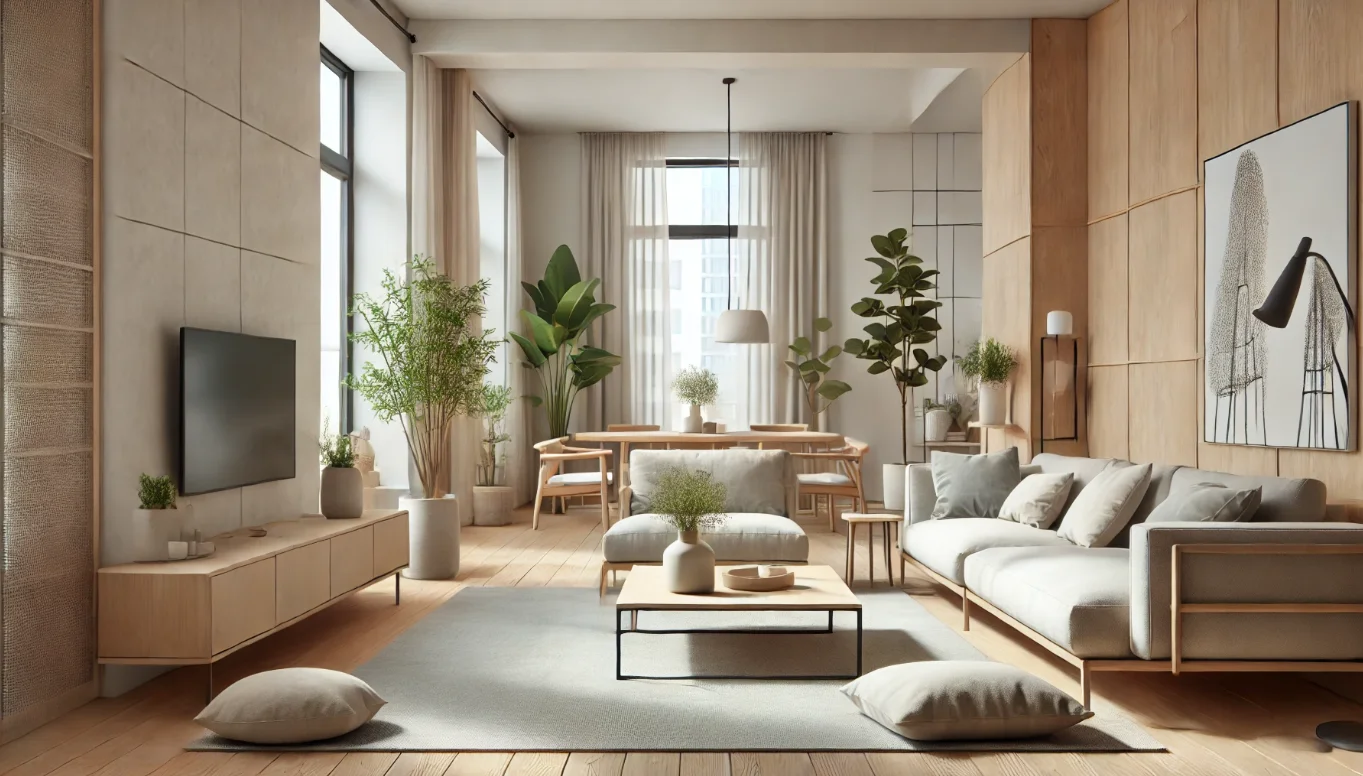
The strongest rooms rarely look “decorated” at all. They feel calm because every object has a reason to be there, and that is the real logic behind a minimalist home décor style: fewer items, cleaner visual lines, and a tighter edit of color, texture, and function.
Done well, minimalism does not feel empty or cold. It feels deliberate. It gives your home more breathing room, reduces visual noise, and makes the pieces you do keep look more intentional. This guide breaks down how to build that look without turning your space into a showroom or stripping out all personality.
Key Takeaways
- Minimalism is not about owning as little as possible; it is about keeping only what supports the room’s function and visual balance.
- The best minimalist rooms use a limited palette, consistent materials, and negative space as design tools, not as leftovers.
- Storage matters more than people expect, because a minimalist room fails fast when everyday items have nowhere to disappear.
- Texture replaces excess ornament, so linen, wood, stone, wool, and matte finishes do most of the visual work.
- A good edit still leaves room for warmth, which is why lived-in minimalism always looks better than a sterile, overcurated version.
How Minimalist Home Décor Style Creates Calm and Clarity
Minimalist home décor style is an interior design approach built around restraint: fewer decorative objects, clearer sightlines, and a smaller set of repeated materials and colors. In practice, that means the room feels organized before you even notice the furniture, because the layout and the edit are doing the work. The goal is not absence; it is purpose.
That distinction matters. A sparse room with no plan feels unfinished, while a minimalist room with a plan feels grounded. Who works in interiors knows this well: the difference between “empty” and “calm” is usually proportion, storage, and whether the room still supports real life. The National Gallery’s collection and broader design history both show how restraint can sharpen attention rather than weaken it.
What Minimalism Is — and What It Is Not
Minimalism is not an all-white aesthetic, and it is not a rule that every surface must stay bare. It is a method of editing. You choose fewer pieces, repeat them with intention, and let negative space become part of the composition.
The Design Principles Behind the Look
- Reduce visual clutter by limiting competing colors, patterns, and object types.
- Repeat materials so the room feels cohesive instead of random.
- Use scale carefully, because one oversized piece often works better than three medium ones.
What separates a minimalist room from a vacant one is not the number of objects — it is whether every object earns its place.
Start With a Ruthless Edit of What Stays
The fastest way to build this style is to remove the wrong things before buying anything new. That sounds obvious, but most rooms fail because people try to decorate around too much stuff. In the real world, a tight edit usually creates more impact than a shopping list.
Use the “Keep, Move, Store, Remove” Method
- Keep only the pieces that support function or genuinely improve the room.
- Move items that belong in another space.
- Store seasonal or occasional objects out of sight.
- Remove anything that adds weight without adding value.
Why This Step Fails in Real Homes
Most people underestimate emotional clutter. A lamp that “might be useful someday” or a side table kept only because it was expensive can quietly break the room. I have seen homes improve almost overnight once the owner stopped treating every item as permanent. The room did not need more styling; it needed less indecision.
For a practical benchmark on household organization and space use, the U.S. Department of Housing and Urban Development publishes guidance on housing standards and livability that supports the idea that usable space matters just as much as square footage.
Choose a Restricted Color Palette That Still Feels Warm
A minimalist palette works best when it is limited, not flat. Most successful rooms use one base neutral, one secondary neutral, and one accent that appears sparingly. Think warm white, soft taupe, charcoal, oak, or muted olive rather than bright contrast for its own sake.
Best Color Moves for a Balanced Room
| Palette Choice | Effect | Best Use |
|---|---|---|
| Warm white + oak | Soft, airy, natural | Living rooms and bedrooms |
| Greige + black accents | Clean and structured | Modern apartments |
| Sand + linen + matte brass | Quiet, lived-in, refined | Relaxed family spaces |
Where People Overdo It
The mistake is not choosing neutrals. The mistake is choosing neutrals with no contrast in value, texture, or finish. If everything is the same tone and sheen, the room goes flat. That is where linen drapes, a wool rug, and a matte ceramic lamp save the design from looking unfinished.
A minimalist palette succeeds when it creates variation through texture and tone, not when it relies on stark contrast to look intentional.
Let Furniture Do More With Less Visual Weight
Furniture in minimalist spaces should look lighter than it is. That does not always mean thin legs and floating frames, although those help. It means choosing shapes that leave room to breathe around them, with enough open floor visible that the room still feels navigable.
What to Prioritize When Buying or Editing Furniture
- Simple silhouettes with one clear purpose.
- Proportions that match the room, not the catalog photo.
- Pieces with built-in storage when clutter tends to accumulate.
- Materials that age well, such as solid wood, wool, stone, and powder-coated metal.
A Small Example That Changes the Outcome
A client once replaced a bulky coffee table, two side tables, and a crowded shelf unit with one low oak table, a single reading chair, and a closed console. Nothing “decorative” was added. Yet the room felt larger, because the eye finally had a place to rest and the floor was no longer fragmented.
That is the part people miss: minimalist rooms are not just visually simpler, they are easier to move through and use. The editorial work on architectural and interior design has long shown that proportion and restraint often matter more than the number of furnishings on display.
Use Texture and Light to Replace Ornament
If you remove decorative excess, texture has to pick up the slack. A flat, smooth room with no variation feels sterile. A good minimalist space layers matte and soft surfaces against harder ones so the room has depth without visual noise.
Textural Elements That Work Well
- Linen curtains that soften daylight.
- Wool or flatweave rugs that anchor the floor.
- Ceramic, stone, or plaster accents for tactile contrast.
- Unlacquered or matte-finish metals for subtle detail.
Light Is Not Just Brightness
Light shape matters. Natural light during the day can make a spare room feel generous, while layered artificial lighting at night keeps it from becoming harsh. Use one ambient source, one task source, and one accent source if the room needs it. That combination gives the space dimension without filling it with objects.
Minimalism also benefits from seasonal adjustment. A room that feels perfect in summer may read too bare in winter unless you add a thicker throw, heavier drapery, or a darker accessory. That is one of the limits of the style: it works best when you adapt it to climate and daily use instead of treating it like a fixed rulebook.
Build Storage Into the Design Before Clutter Returns
Minimalist design fails when storage is an afterthought. Open surfaces always collect life: keys, mail, chargers, remotes, toys, and the objects you thought you would put away later. The fix is not more discipline alone; it is designing for the mess that real households create.
Storage That Supports the Style
- Closed cabinets instead of extra open shelving.
- Baskets and bins that hide small daily items.
- Bed frames, benches, and consoles with concealed storage.
- One designated landing zone near the entry.
Why Open Shelving Needs Discipline
Open shelving can work, but only when the contents are edited with the same care as the rest of the room. One row of books, one plant, and one ceramic object can feel composed. Six unrelated objects create visual static. That is why many designers use open shelves as display, not storage.
Storage is the hidden engine of minimalism: if daily objects have no planned home, the style collapses into clutter within weeks.
Bring Personality Back Without Breaking the Rule of Restraint
A minimalist room still needs a point of view. Otherwise, it looks rented, staged, or emotionally blank. The trick is to choose a small number of meaningful items and let them stand alone instead of competing with everything else in the room.
Ways to Add Character Without Adding Noise
- One large artwork instead of a crowded gallery wall.
- A handmade ceramic vase with an irregular form.
- Vintage wood or metal pieces with patina.
- Books, but edited and stacked with intention.
What to Avoid
Do not confuse personality with accumulation. A room filled with “meaningful” objects can still feel chaotic if they all demand attention at once. The stronger choice is usually one or two pieces that tell a story and leave room around them. That balance is what makes the room feel human instead of staged.
Practical Next Steps for a Minimal Home That Still Feels Lived In
The smartest way to use a minimalist home décor style is to treat it as an ongoing edit, not a one-time makeover. Start by clearing visual clutter, choose a narrow palette, and invest in a few better materials rather than many average ones. Then test the room for a week before adding anything back.
If you want a durable result, focus on function first and aesthetics second. The rooms that last are the ones that make daily routines easier, because beauty that gets in the way does not survive real life. A useful next step is to audit one room tonight and remove five objects that do not support how you actually use the space.
FAQ
Is minimalist décor the same as a modern style?
No. Modern design is a broader category tied to mid-20th-century principles, while minimalism is about reduction and clarity. A minimalist room can look modern, traditional, or even rustic if the materials and shapes support that direction.
Can a minimalist room still feel cozy?
Yes, if you use warm neutrals, layered textures, and soft lighting. Cozy minimalism usually comes from materials and proportion, not from adding more decorative objects.
What is the biggest mistake people make with minimalism?
They remove character along with clutter. That often leaves a space that is tidy but emotionally flat. The better approach is to edit hard, then keep a few meaningful pieces that give the room identity.
How many colors should a minimalist room use?
Most rooms work well with three to five closely related tones. You need enough variation to avoid flatness, but not so many that the eye keeps bouncing from one focal point to another.
Does minimalist style work in small apartments?
Yes, and often better than in large homes. Smaller spaces benefit from fewer visual interruptions, smarter storage, and furniture that leaves open floor around it.
Do I need to buy all new furniture to get the look?
No. In many homes, the biggest improvement comes from editing, reordering, and removing excess. New pieces help only after the room’s structure is already clear.