

📅 Updated on 06/13/2026
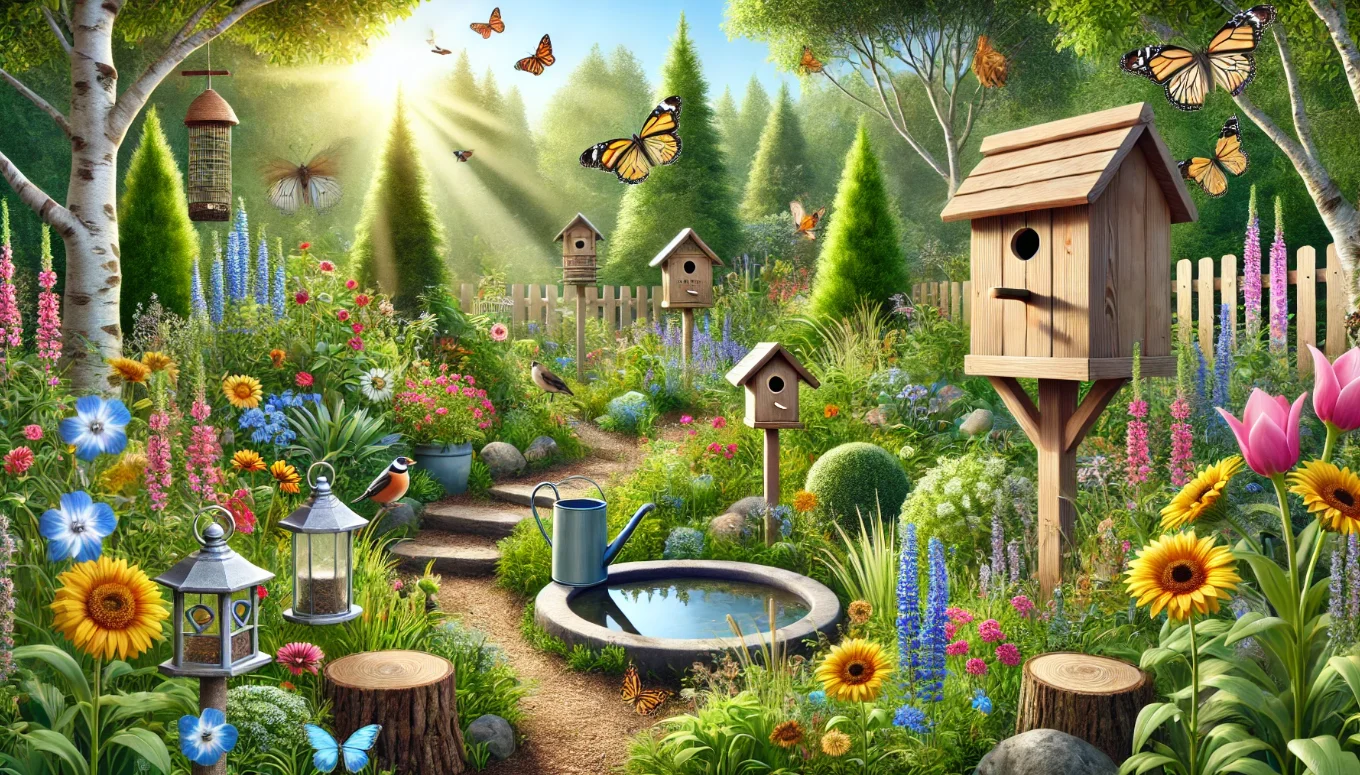
A thriving garden can do more than look beautiful. When it’s designed as a wildlife-friendly garden, it becomes a working habitat that supports pollinators, birds, and beneficial insects through food, cover, water, and shelter.
That shift matters because many backyard landscapes are neat but biologically empty. The goal is not to “let things go”; it’s to make deliberate choices that increase biodiversity while still keeping the space manageable, attractive, and safe for people, pets, and local species.
Key Takeaways
- A wildlife-friendly garden is a habitat, not just a planting bed, so every feature should serve food, shelter, water, or nesting value.
- Native plants do most of the heavy lifting because local insects, birds, and mammals evolved to use them as food and cover.
- Layers matter: ground cover, shrubs, flowers, and trees create more usable space than a flat lawn ever will.
- Small water sources, dead wood, leaf litter, and messy corners often matter more to wildlife than expensive décor.
- Maintenance decisions can either support biodiversity or erase it; overcleaning is one of the fastest ways to make a garden less alive.
How a Wildlife-Friendly Garden Works as a Living Habitat
A wildlife-friendly garden is a designed outdoor space that provides habitat functions: food, water, shelter, and nesting or breeding support for local fauna. In plain language, it means planting and maintaining your yard so it helps living creatures survive instead of just looking tidy.
That definition sounds simple, but the biology behind it is specific. Butterflies need host plants for their caterpillars, songbirds need insects and seed sources, and amphibians need damp cover and access to water. If one of those pieces is missing, the habitat becomes decorative rather than functional.
What separates a decorative yard from a real wildlife habitat is not size — it is the number of ways the space can support life across the seasons.
Organizations such as the National Wildlife Federation and the U.S. National Park Service emphasize the same core idea: habitat quality depends on native food sources, shelter, and reduced disturbance. The more naturally those elements work together, the more species your garden can support.
The Four Habitat Elements That Matter Most
- Food: nectar, pollen, berries, seeds, foliage, and insects.
- Water: shallow basins, puddling spots, birdbaths, or small ponds.
- Cover: shrubs, grasses, logs, stones, and dense planting.
- Breeding space: host plants, bare soil, stems, cavities, and leaf litter.
Choose Native Plants That Feed Local Wildlife
Native plants are the backbone of any strong wildlife-friendly garden because they are adapted to local climate and support local food webs. If you want the fastest ecological return for your effort, this is where to start.
In practice, the best plant palette is not just “pretty natives.” It includes host plants for caterpillars, nectar plants for adult insects, berry-producing shrubs for birds, and seed heads that stay useful into fall and winter. A garden full of sterile ornamentals may bloom, but it often feeds very little.
Why Native Plants Outperform Most Ornamentals
Native species usually need less irrigation and fewer interventions once established, but the bigger advantage is ecological compatibility. Many native insects can only complete their life cycle on specific host plants, which means those plants feed the entire chain above them, including birds and bats.
The University of Delaware’s extension resources and related university research on pollinator habitat consistently point to the same conclusion: the right plant list matters more than the total number of plants. A small, dense patch of good species will outperform a larger patch of irrelevant ones.
Good Plant Choices by Function
- For pollinators: coneflower, goldenrod, aster, bee balm, milkweed.
- For birds: serviceberry, elderberry, viburnum, native grasses with seed heads.
- For butterflies: milkweed, parsley-family hosts, violets, native grasses.
- For structure: oak, redbud, hazelnut, dogwood, cedar.
Native plants do more than attract wildlife; they keep the food web intact by supporting the insects that birds and other animals depend on.
One caution: “native” is not a magic label. A plant can be native to a region and still be wrong for your site if the soil, sun exposure, or moisture level does not fit. The plant list should match both ecology and conditions.
Build Layers: Trees, Shrubs, Flowers, and Ground Cover
Vertical layering increases habitat value because wildlife uses different parts of the garden for different needs. A flat lawn offers one level of function. A layered garden creates multiple niches at once.
This is one reason old woods and edge habitats are so biologically rich. They are structurally complex. Birds forage higher up, insects live in leaf litter, small mammals move through the understory, and pollinators move between bloom layers.
A Simple Layering Model
- Canopy: trees that offer shade, nesting sites, and long-term shelter.
- Understory: smaller trees and large shrubs for cover and berries.
- Herbaceous layer: flowering perennials for nectar and pollen.
- Ground layer: sedges, native grasses, mosses, and low plants that protect soil.
Na prática, o que acontece é que gardens with more structure stay active longer in the year. I’ve seen compact suburban yards become much more lively after adding just two shrubs, one small tree, and a band of native perennials where turf used to dominate. The space did not get wild; it got usable.
Water, Nesting, and Shelter Without Making a Mess
Wildlife needs reliable water and safe refuge, but those features should be small, cleanable, and intentional. A shallow birdbath, a tiny pond with sloping edges, or even a dish refreshed regularly can make a major difference during dry periods.
Shelter is where many well-meaning gardeners go wrong. They remove too much leaf litter, cut stems too early, and clear every log or brush pile. That can make the garden look neat, but it removes the hiding places and overwintering sites many species rely on.
Simple Habitat Features That Pull Real Weight
- Leave some leaf litter under shrubs and trees.
- Keep hollow stems standing through winter when appropriate.
- Create a small brush pile in a back corner.
- Use a shallow water source with pebbles for safe access.
- Add rocks or logs where insects and small reptiles can bask or shelter.
The limit here is obvious: not every yard can tolerate every habitat feature. A tiny urban patio will not support a brush pile, and some water features need extra care to avoid mosquitoes or algae. The point is to match the feature to the site, not force a checklist into a space that cannot handle it.
Reduce Lawn and Shrink the High-Maintenance Areas
Lawn is the least efficient part of most yards from a biodiversity standpoint. It offers little food, little shelter, and limited seasonal value unless you are using it for play, access, or another clear function.
You do not have to eliminate turf completely. The smarter move is to reduce it where it is not doing real work and replace those edges with native beds, meadow strips, or low-maintenance ground cover. That change often has a bigger ecological effect than adding more flowers.
Where Lawn Reduction Pays Off Fastest
- Sunny strips along fences and driveways.
- Thin side yards that are hard to mow.
- Areas near existing trees where turf struggles anyway.
- Back corners with poor visibility and little use.
Mini example: A homeowner with a 1/4-acre lot replaced a narrow turf border near the back fence with native asters, switchgrass, and a small serviceberry. Within one season, the area moved from a dead visual edge to a consistent stop for bees and finches. The rest of the yard stayed intact.
For broader guidance on pollinator habitat and native planting, the USDA Forest Service pollinator resources are a useful starting point, especially if you want a science-backed view of plant and habitat selection.
Use Maintenance That Supports Biodiversity Instead of Erasing It
Maintenance is where the garden either becomes wildlife-friendly or quietly stops being so. Timing matters. Cutting everything down in late fall, mowing too short, or blasting pests on a schedule can undo months of good planting choices.
Bird-safe and pollinator-safe gardening usually means fewer interventions, not no interventions. You still weed, prune, and clean up problem spots. The difference is that you do it with a light hand and with awareness of nesting, overwintering, and flowering cycles.
Better Maintenance Habits
- Delay major cleanup until temperatures are consistently warmer in spring.
- Leave seed heads on some plants through winter.
- Mow less often and raise the blade height.
- Use targeted pest control only when necessary.
- Avoid pesticides that harm beneficial insects, especially during bloom.
The U.S. Environmental Protection Agency’s pollinator protection guidance is worth reading if you use any chemical treatments at all. It is also where many gardeners realize that “spray first, ask later” is a bad habit for any habitat-focused yard.
Design for Seasons, Not Just Spring Blooms
A strong wildlife-friendly garden works across the year, not just during peak bloom. Spring brings nesting and early forage, summer brings heavy feeding, fall supports migration and fat storage, and winter depends on structure, seed, and shelter.
That seasonal thinking changes plant selection. A garden that looks great for six weeks and empty for the rest of the year is not doing much ecological work. Better to choose species that stagger bloom times, hold seed, or keep structure after frost.
Seasonal Value Checklist
| Season | What Wildlife Needs | What to Provide |
|---|---|---|
| Spring | Early nectar, nesting material, insects | Willows, early perennials, leaf litter pockets |
| Summer | Continuous forage, shade, water | Dense blooms, shrubs, shallow water |
| Fall | Seeds, berries, migration fuel | Asters, goldenrod, viburnum, grasses |
| Winter | Cover, seed, dormancy sites | Standing stems, brush, evergreens |
A garden that only performs in spring is a seasonal display; a garden that supports life through winter is a habitat.
Start Small, Measure What Changes, and Adjust
The most reliable way to build a better garden is to change one section at a time. Begin with the corner that gets the most sun, the driest strip, or the area you already know is underused. Add native plants, a water source, and one shelter element, then observe what shows up.
That observation step matters more than most people think. Gardens are local systems. Soil, rainfall, deer pressure, and neighborhood green space all influence which species appear and which plants thrive. A method that works well in one yard may stall in another because the conditions are different.
A Practical First-Year Plan
- Map sun, shade, wind, and wet spots.
- Replace one turf patch with native plants.
- Add one shallow water source.
- Leave one sheltered area slightly “messy.”
- Watch which insects, birds, and other animals use it.
Over time, the garden will tell you what is working. The goal is not perfection. It is ecological function, repeatable results, and a landscape that earns its place by supporting life.
Next step: pick one square of your yard this week and redesign it for food, water, shelter, and nesting value. Then compare how that space changes over the next three months instead of waiting for a complete makeover.
FAQ
What makes a garden wildlife-friendly?
A wildlife-friendly garden provides food, water, shelter, and breeding support for local species. Native plants, layered vegetation, and reduced chemical use are the biggest drivers of habitat value. If those elements are present, the garden can function as a real ecosystem instead of a decorative space.
Do native plants always work better than non-native plants?
Native plants usually support more local insects and birds because they evolved in the same region. That said, a non-native plant can still be useful if it is non-invasive and provides nectar, fruit, or structure. The key is to prioritize natives first, then add carefully chosen non-invasive species where they serve a clear purpose.
Is it okay to leave leaves and dead stems in the garden?
Yes, in many cases leaving some leaves and stems is one of the best things you can do for wildlife. Those materials provide overwintering habitat for insects and cover for small animals. The trick is to leave them in selected areas, not everywhere.
Will a wildlife-friendly garden attract pests?
It may attract more insects, but that is not the same as attracting pests in a problem sense. A healthy garden also attracts predators and beneficial insects that help keep balance. If a specific pest becomes severe, use targeted management rather than broad pesticide sprays.
Can a small yard still support wildlife?
Yes. Even a small yard, balcony, or courtyard can support pollinators and birds if it includes the right plants, water, and shelter. Small spaces matter most when they connect to other green areas nearby.
What is the easiest first change to make?
Swap one patch of lawn for native flowering plants or a shrub layer. That single change usually creates more habitat value than adding more decorations or lawn features. If you also include a shallow water source, the results improve quickly.