

📅 Updated on 06/13/2026
A room can feel fresh without a full makeover. The trick is to change the parts people notice first: color, texture, scent, and lighting. That is what a seasonal home really is in practice—a space that shifts with the calendar while staying cohesive, comfortable, and budget-friendly.
Good seasonal decorating is not about buying a new set of everything every three months. It is about editing what you already own, adding a few high-impact pieces, and knowing when to stop. The payoff is a home that feels current without looking overdone or expensive.
What You Need to Know
- Seasonal decorating works best when it follows a repeatable system: keep the big pieces neutral, then rotate smaller accents by season.
- The highest-return updates are textiles, table surfaces, lighting temperature, and scent, not major furniture changes.
- Budget control comes from reusing the same base items and swapping only 10% to 20% of the visible decor.
- Consistency matters more than theme; a few coordinated changes read as intentional, while too many novelty items look cluttered.
- Storage is part of the strategy, because a seasonal home only stays affordable when off-season items are protected, labeled, and easy to reuse.
How a Seasonal Home Works Without Constant Spending
A seasonal home is a decorating approach that updates the mood of a space as the weather and holidays change, while keeping the underlying furniture and layout stable. In plain terms, you are not redecorating from scratch; you are rotating layers. That is why this method saves money: the structure stays the same, and only the surface details shift.
In practice, the rooms that feel the most polished are the ones with a strong baseline. Think neutral sofas, natural wood, simple curtains, and lighting that flatters the room year-round. Then add seasonal touches in smaller doses. That approach works because the eye notices contrast, not quantity.
One useful rule: if an item is expensive, bulky, or hard to store, it should usually stay. If it is soft, small, or easy to swap, it becomes part of your seasonal rotation. That is the logic behind affordable decorating systems used in interior styling, home staging, and retail displays.
What separates a stylish seasonal home from a cluttered one is restraint: the best updates change the feeling of the room, not the identity of every object in it.
The Base Layer That Makes Every Season Look Intentional
The base layer is the permanent foundation of your decor, and it should be calm enough to support multiple looks. If your base is too busy, every seasonal change fights for attention. A neutral foundation gives you more freedom, not less.
Choose Permanent Pieces With Long Life
Start with items you will not want to replace every few months: sofa, rug, dining table, bed frame, major wall art, and core window treatments. These pieces should work across all seasons. Linen, cotton, wood, ceramic, brass, and matte black finishes are reliable because they adapt easily.
Keep The Color Story Flexible
Use one main neutral palette and one or two accent families. For example, warm white and oak can support sage in spring, navy in winter, terracotta in fall, and pale blue in summer. The palette changes, but the room still feels like the same home.
If you want a good reference for room proportions and comfort, the National Institute of Standards and Technology publishes widely used research on standards and measurement that shape how designers think about scale and consistency. For practical home guidance, the U.S. Department of Energy also offers useful advice on lighting choices that affect how a room feels across the year.
Where Small Swaps Create the Biggest Seasonal Shift
The fastest changes usually come from textiles, tabletop decor, and lighting. These are the layers people touch and notice daily, which is why they create a stronger seasonal effect than most larger purchases. If you only change three things, change those.
Textiles Do Most Of The Work
Pillows, throws, table runners, napkins, and bedding can transform a room with very little spending. A heavier knit or velvet feels right in colder months; light cotton or washed linen reads as relaxed and airy in warmer months. You do not need a full theme—just a material shift.
Lighting Changes The Mood Faster Than Decor
Warm bulbs make a space feel softer and more inviting in fall and winter. Brighter, cooler light can work in spring and summer if the room gets little daylight. The point is not to chase trends. It is to match the room’s visual temperature to the season.
Scent Signals The Season Before The Eye Does
Candles, diffusers, and simmer pots are underrated tools. Citrus, herbs, and clean florals feel lighter; cedar, amber, clove, and vanilla feel richer. Use scent sparingly. Too much fragrance makes a room feel forced fast.
The most cost-effective seasonal update is often invisible at first glance: a bulb change, a fabric swap, or a scent shift can do more than a cart full of decor.
What To Keep, What To Rotate, And What To Skip
Not every decor item belongs in the seasonal cycle. The smartest budget move is deciding in advance what stays fixed and what earns a temporary spot. That keeps the home from turning into a storage problem disguised as style.
| Category | Keep Year-Round | Rotate Seasonally | Usually Skip |
|---|---|---|---|
| Furniture | Sofa, bed, dining table | Accent chair covers | Frequent replacements |
| Textiles | Neutral curtains, rug base | Pillows, throws, bedding | Too many pattern sets |
| Decor | Framed art, mirrors, lamps | Vases, trays, tabletop accents | Novelty items that only work once |
| Scent | Clean baseline fragrance | Seasonal candles, diffusers | Overpowering perfumes |
Vi cases where people bought new decor for every holiday and ended up with boxes they never opened again. The problem was not taste; it was volume. When you rotate only the items that are easy to store and genuinely visible, the room stays fresh without the backroom chaos.
A Practical Seasonal Decorating Plan For The Whole Year
The simplest planning method is to build four small style kits instead of shopping randomly. Each kit should reflect the season without demanding a full redesign. That way, you spend once and reuse with small edits.
Spring: Lighten The Palette
Spring works best with softer colors, lighter fabrics, and fewer visual layers. Swap heavy throws for airy ones, bring in fresh greenery, and use glass or ceramic accents. The goal is openness.
Summer: Reduce Visual Weight
In summer, remove anything that feels dense or dark. Natural textures like rattan, jute, and washed cotton keep a room feeling relaxed. Even a simpler coffee table arrangement can make the whole space feel cooler.
Fall: Add Warmth And Texture
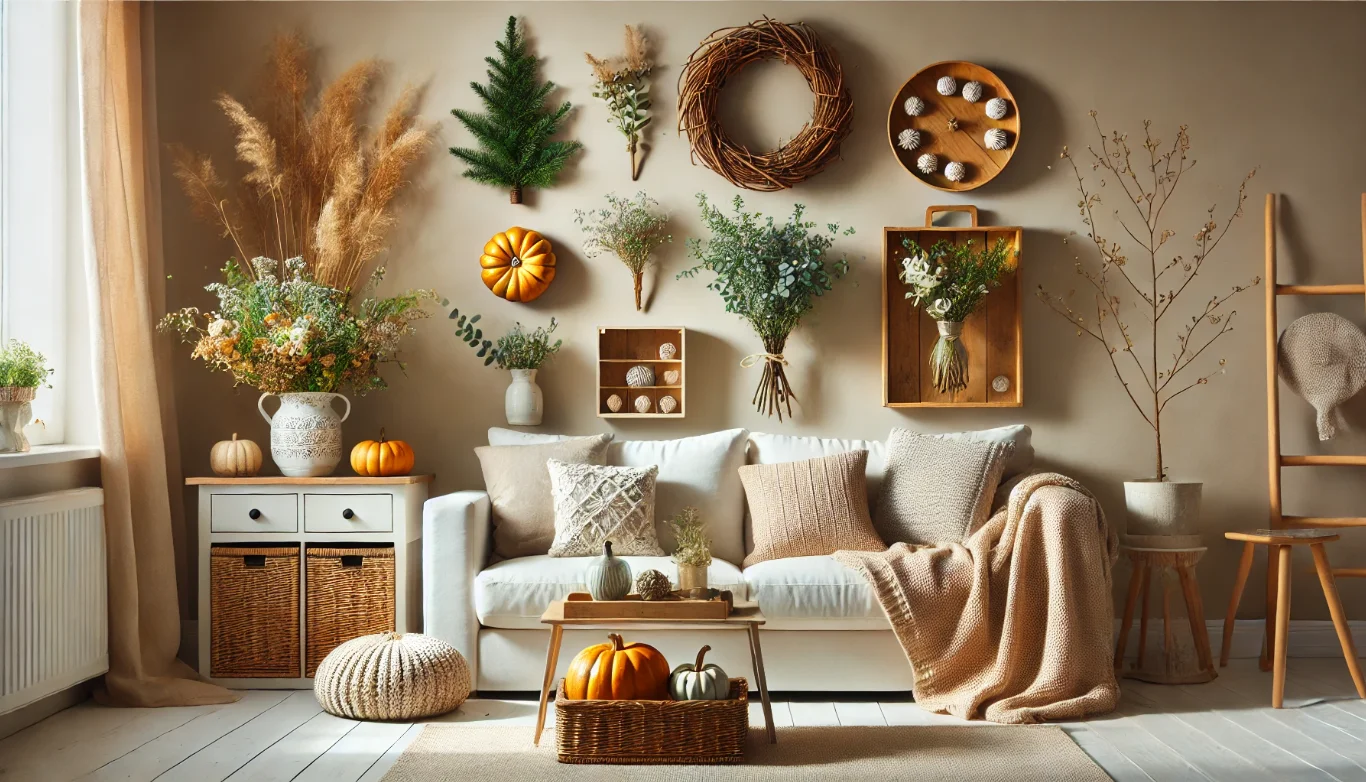
Fall is the season for depth. Use richer colors, textured pillows, amber glass, and warmer lighting. This is also where layered throws and wood tones shine.
Winter: Make The Room Feel Grounded
Winter decor should feel calm, not crowded. Choose a few substantial pieces: thicker textiles, candles, metallic accents, and darker greens or deep neutrals. If the room already has good lighting, winter decorating becomes much easier.
The U.S. Environmental Protection Agency has practical guidance on indoor air quality, which matters if you use candles, incense, or diffusers for seasonal scent. That kind of detail is easy to ignore, but it matters in real homes, especially in smaller rooms or homes with pets and children.
How To Decorate Seasonally On A Tight Budget
You do not need to buy more; you need to buy more selectively. The most reliable budget strategy is to set a limit for each season and spend only on items that can work in more than one room. That keeps the cost per use low.
Use A Reusable Checklist Before Shopping
- Can this item work in another season?
- Does it match at least two existing colors in the room?
- Is it small enough to store easily?
- Will I still like it without the holiday context?
Shop Off-Season And Edit Ruthlessly
Discounted inventory after a holiday can be useful, but only if the item has long-term value. A lantern, neutral vase, or plain wreath can be reused. A highly specific novelty piece usually cannot. The best seasonal bargains are the ones that do not scream one exact date.
Repurpose What You Already Own
A basket can hold blankets in winter and magazines in summer. A dough bowl can carry ornaments in December and fruit in August. This is where a lot of the savings happen: objects with flexible jobs reduce the need for new purchases.
The cheapest seasonal update is rarely a purchase; it is a reassignment of something already in the house.
One Small Family Room Story That Shows The Difference
A family I worked with had a living room that looked tired by March and cluttered by November. Nothing was wrong with the furniture. The issue was that every season brought a new set of decorative objects, but nothing was being removed.
We simplified the room first: one neutral throw, two pillow covers per season, one tray styling change, and one candle scent swap. We kept the rug, sofa, and lamps untouched. The room stopped looking busy, and the seasonal changes started reading as design instead of accumulation. The budget dropped too, because they were no longer buying duplicate pieces.
Why Some Seasonal Updates Fail Even When The Items Are Cute
Seasonal decorating fails when the room loses its core identity. If every holiday or season brings a totally different style, the home feels fragmented. That is a common mistake in homes that rely on impulse buys or social media trends.
There is also a limit to how much theme a room can handle. A seasonal home should feel lived-in, not staged for a shop display. If the decor only makes sense for one month, it is probably too narrow. If it works for weeks without feeling tired, it is probably a good buy.
One more nuance: not every climate follows the calendar neatly. In warmer regions, “winter decor” may need to be lighter and less layered. In homes with very little storage, fewer swaps may be smarter than trying to keep four complete sets of decor. The rule is to adapt the system to your actual life, not the other way around.
What To Do Next
Build your seasonal plan around a fixed base, three or four reusable accent kits, and a strict rule about what earns storage space. That gives you the look of frequent refreshes without the cost of constant replacement. If a piece does not improve the room in at least two seasons, it probably should not be in your cart.
Start by choosing one room, one palette, and one storage bin for off-season items. Then rotate the easiest layers first: textiles, scent, and lighting. That sequence gives the fastest visual result and makes the rest of the house easier to manage.
Frequently Asked Questions
What is a seasonal home?
A seasonal home is a home decorated with small, planned updates that reflect the time of year without changing the main furniture or layout. The idea is to refresh the mood of the room, not rebuild it every season. It is a practical system for style on a budget.
What should change first when decorating seasonally?
Start with textiles, lighting, and scent. Those three changes create the biggest shift for the least money. They are also easy to store and reuse.
How much should I spend on seasonal decor?
There is no fixed amount, but a good rule is to limit spending to a small portion of your overall decor budget and focus on reusable items. If something cannot be used in another season, it should earn its price quickly. That keeps the system affordable over time.
How do I keep seasonal decor from looking cluttered?
Use fewer items with stronger impact. Keep the foundation neutral and remove one or two existing pieces before adding new ones. When everything changes at once, the room loses balance.
Can I decorate seasonally in a small home?
Yes, and small homes often benefit most from a tight seasonal system. The key is to choose compact items that store easily, like pillow covers, throws, and tabletop accents. Avoid large, one-use decor that creates storage problems.
Is it better to match holidays or the season?
Seasonal decor usually lasts longer than holiday-specific decor. A fall palette can work from September through November, while Halloween items may only make sense for a few weeks. If your goal is value, season-based decorating is the smarter choice.