
Warning: Cannot modify header information - headers already sent in /home/u278635817/domains/myhousegarden.com/public_html/wp-content/plugins/artigosgpt/artigosgpt.php on line 28454
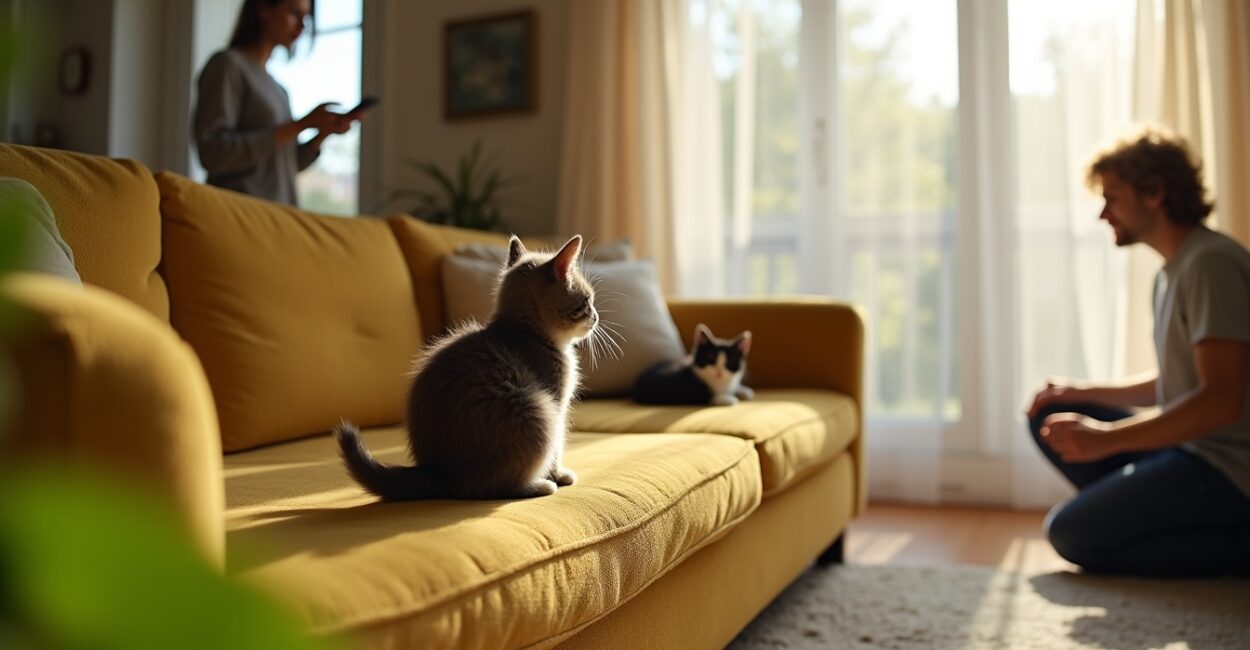
Halfway through a living room standoff — one kitten puffed up on the couch, the other flattened behind the curtains — an owner split into two rooms and filmed a trend that exploded online. That clip claimed a simple hack: separate the humans, let each person bond alone with one kitten, then reunite everyone. Within days “splitting owners” was either hailed as a genius shortcut to harmony or blamed for creating territorial chaos. This is the viral kitten introduction method people are arguing about.
Here’s the thing: kitten introduction is rarely one-size-fits-all. The trend can produce peaceful roommates in a week or escalate into real bites, stressed fur, and vet bills. Below I break down how the method works, why it divides owners, what actually helps cats bond, and clear signs you should never try this approach.
The Core Claim That Hooked Thousands of Viewers
The central promise: split the humans, reduce competition for affection, and the kittens bond more easily. The idea is intuitive — if each kitten gets undivided attention from one person, they build secure attachments without jockeying for the same lap. Videos show calm reunions and play sessions framed as proof. But selection bias is huge: happy outcomes get posted, messy ones don’t. Real-life temperament, age, and prior socialization matter far more than a human-splitting choreography.
How Proponents Actually Stage the Split-owner Method
There’s a repeatable sequence people follow, and small differences change the result. Typical steps include: keep kittens separated in adjacent rooms for a few days, let each owner spend focused time with one kitten, swap scent items (blankets, towels), then orchestrate short supervised face-to-face sessions. Some add feeding at the door and parallel play through a baby gate. The disputed move is the “sudden reunion” — whether to allow a calm supervised meetup after 48 hours or wait weeks depends on feline body language, not a TikTok timer.
Why Some Owners Report Peaceful Bonding and Others Don’t
Temperament and context decide whether this hack helps or hurts. If both kittens are outgoing, healthy, and roughly the same age, separating owners can reduce early jealousy and let each kitten feel secure. If one kitten is timid or has prior trauma, focused attention with a human may increase its resource guarding or fear of newcomers. Other variables: household noise, existing pets, and how the “reunion” is managed. It’s a small change that interacts with many fragile variables.
Unexpected Comparison: Expectation Vs. Reality
Expectation: Two content kittens curling together after 48 hours. Reality: Many owners see tense hissing or one kitten hiding for days. Compare an idealized video (bright room, calm music, edited petting montages) with an honest timeline: first contact often involves stretched ears, low growls, or one cat asserting dominance. That contrast explains why some people cheer the method and others warn against it — they’re not witnessing the same reality or admitting the messy middle.
Top Mistakes People Make When Trying the Trend
Common errors turn a promising technique into a disaster.
- Rushing the reunion — forcing face-to-face contact before both kittens show relaxed signals.
- Ignoring body language — missing subtle signs like tail flicks or skin ripple that predict escalation.
- Not swapping scents — skipping scent exchange removes a low-stress way to normalize each other.
- Over-reliance on human intervention — insisting the humans “fix” the relationship instead of setting safe conditions.
- Expecting social media timelines to be typical — edit bias makes success stories misleading.
When to Avoid the Split-owner Trend and Safer Alternatives
Don’t try this method if either kitten is shy, injured, unvaccinated, or if you have a nervous resident cat. Instead, use gradual scent swaps, staggered door feedings, and short supervised interactions through a barrier. For medical or behavioral concerns, consult your veterinarian or a certified animal behaviorist. Authoritative resources like the ASPCA and Cornell Feline Health Center offer science-backed introduction guidelines that reduce risk and stress; consider their stepwise protocols before imitating a viral clip. ASPCA guidance and Cornell’s feline resources are good places to start.
A Short Scene That Sums Up the Trade-off
Two friends, two kittens, one living room and a camera. One friend splits off to the kitchen to spoil “their” kitten; the other scrolls comments telling them it’ll be fine. Two days later, one kitten sleeps on the human’s chest; the other hisses at boots left by the door. A week later, with scent swaps and slow gate sessions, the hissing fades. The lesson: focused human time can speed trust, but only when paired with patience and careful handling.
Viral trends give you a toolkit, not a guarantee. The split-owner method can be a helpful hack in the right hands — or it can amplify fear and resource guarding if applied mechanically. Your cats’ signals matter more than the number of views on the tutorial.
How Long Should I Separate Rooms When Introducing Kittens?
Start with adjacent-but-separated spaces for at least 48–72 hours so each kitten can adjust to the new home without direct pressure. During this time, swap bedding or towels so they become familiar with each other’s scent. Allow brief visual contact through a barrier before forcing in-person meetings; incremental exposure helps cats interpret cues without rushing into competitive behavior. If either kitten shows ongoing stress, extend separation and consult resources like veterinarian guidance for tailored timelines.
Can Splitting Owners Create Stronger Bonds Between Kittens?
Splitting owners can help when kittens are confident, similarly social, and in low-stress environments — it reduces immediate competition for attention and allows each kitten to build a secure attachment. However, it risks creating uneven socialization if one kitten becomes overly dependent on one person. Successful bonding depends on gradual supervised interactions, scent swapping, and attentive reading of feline body language; human splitting is a single variable among many and not a guaranteed shortcut to harmony.
What Signs Mean the Method is Failing and I Should Stop?
Stop and regroup if you see persistent hissing, flattened ears, lunging, refusal to eat, hiding, or visible stress like over-grooming. These are concrete signals that the kittens are not acclimating well. If reintroduction escalates into actual fights or injuries, separate them and seek veterinary or behaviorist input. Healthy introductions show decreasing tension and increasing curiosity; rising aggression after repeated attempts is a clear red flag to pause and change strategy.
Are There Health Risks Tied to Quick Reunions of Kittens?
Yes — abrupt interactions can lead to scratches and bites that may become infected, stress-linked immune suppression, or the spread of contagious illnesses if vaccinations aren’t current. New kittens should be up-to-date on core vaccines and checked for parasites before extended contact. If either kitten has unknown medical history or signs of illness, quarantine and veterinary screening are critical steps to protect both animals and household members from preventable risks.
When Should I Call a Professional Behaviorist During Introductions?
Consult a certified animal behaviorist if repeated supervised meetings result in escalation, if one kitten shows extreme fear or aggression, or if your household includes vulnerable members (elderly pets, young children). Behaviorists provide tailored desensitization plans, help interpret subtle cues, and can recommend alternatives to owner-splitting. Early intervention often prevents entrenched problems and reduces long-term stress for both kittens and owners.