

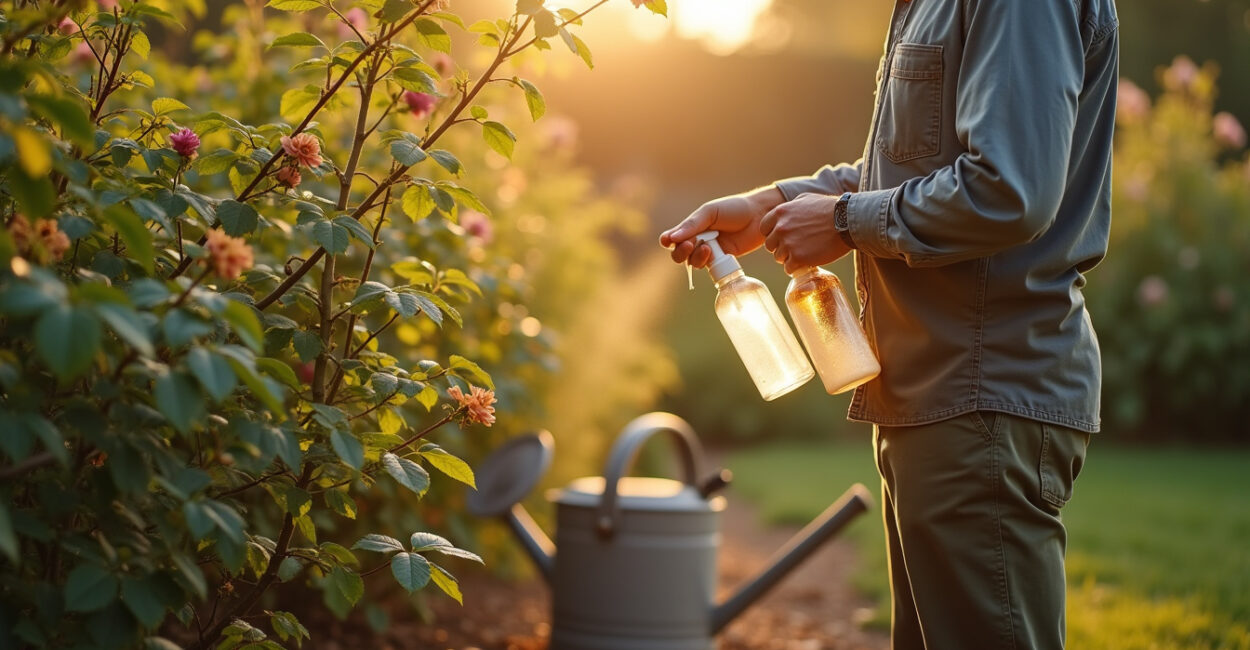
Neem oil and soap spray solve the same problem in very different ways—and the wrong choice can waste days on a plant already under stress.
When you’re dealing with neem oil for aphids on garden plants, the real question is not “which is better?” It’s “what stage is the infestation in, and what can this plant tolerate right now?” Neem interrupts feeding and growth. Soap spray hits on contact. That difference changes everything.
Neem Oil Vs. Soap Spray: The Mechanism That Changes the Outcome
Neem oil is a botanical insecticide, usually used as a foliar spray. Its active compound, azadirachtin, disrupts insect feeding and development. Soap spray is a contact killer: it has to coat the aphids directly to damage their outer layer. That means neem can keep working after application, while soap works best only when you hit the pest itself.
For light to moderate aphid pressure, neem oil often fits better. For a fast outbreak on tender leaves, soap spray can be the sharper first move. If you’re comparing neem oil for aphids on garden plants with soap, think “slow interference” versus “immediate contact.”
Neem is the long game. Soap is the direct hit.
Choose by Infestation Stage and Plant Type
Here’s the practical split. If aphids are clustered but not yet deforming new growth, neem oil is usually the steadier option. If the infestation is obvious and you want fast knockdown, soap spray can clear visible aphids quickly—if you coat them well.
- Young seedlings: use caution with both; test a small leaf first.
- Soft herbs and tender ornamentals: soap spray can burn leaves if mixed too strong.
- Woody shrubs and mature vegetables: neem oil is often easier to repeat safely.
In practice, I’ve seen gardeners spray soap once, see fewer aphids the next day, and think the job is done—then the colony rebounds because the hidden ones survived. That’s where neem oil for aphids on garden plants earns its place: it keeps pressure on the population. But it still needs coverage and repeat timing. According to the U.S. EPA on neem oil, it works best as part of a broader pest-management approach, not as a magic reset.

What Actually Works Without Scorching Your Plants
Spray in the early morning or evening, not in strong sun. Aphids hide on undersides of leaves, so coverage matters more than enthusiasm. With neem oil, don’t overmix; with soap spray, don’t assume “more” means “better.” Both can stress plants if you go heavy.
- Start with the most infested leaves.
- Reapply after rain or new growth.
- Avoid spraying drought-stressed plants.
For the biology side, UC IPM’s aphid guidance is a strong reference: aphids reproduce fast, so timing beats panic. The takeaway is simple: neem oil for aphids on garden plants is best when you want prevention and feeding disruption; soap spray is best when you need immediate contact control.
FAQ
Is Neem Oil Better Than Soap Spray for Aphids?
Not always. Neem oil is usually better when you want slower, longer pressure on the infestation, while soap spray is better when you need to knock down visible aphids fast. The best choice depends on plant type, how bad the outbreak is, and whether you can reach the insects directly. If aphids are hiding deep in curled leaves, soap loses efficiency fast.
Can I Use Neem Oil and Soap Spray on the Same Plant?
Yes, but not at the same time. Spraying both together can increase leaf stress, especially on seedlings, herbs, or plants already weakened by heat. A safer move is to pick one method, observe the plant for a few days, and switch only if needed. On delicate plants, a spot test on one leaf is the smarter play than treating the whole bed at once.
How Often Should I Apply Neem Oil for Aphids on Garden Plants?
Most gardeners repeat neem every 5 to 7 days during an active infestation, following the label directions. The exact timing depends on rain, new growth, and how many aphids are still present. If the plant is bouncing back and predators are showing up, you may not need to keep spraying. The goal is control, not endless treatment.
Will Soap Spray Kill Aphid Eggs?
Soap spray mainly affects live aphids it touches. It is not a reliable egg treatment, which is why repeated applications matter when populations keep reappearing. If you only spray once, you may miss the next wave. That’s also why neem oil can feel more forgiving: it keeps working on feeding insects that survive the first round.
What Should I Avoid When Using Neem Oil or Soap Spray?
Avoid spraying in hot sun, on drought-stressed plants, or right before rain. Don’t assume a stronger mix works better; it often just increases leaf burn. Also avoid treating every plant on a schedule if the infestation is already dropping. The smartest gardeners watch the plant, not the bottle. That’s how neem oil for aphids on garden plants stays useful instead of becoming a weekly habit.