

How to Layer Weatherproof Rugs Correctly on a Small Patio
How to layer weatherproof rugs on a small patio by balancing scale, texture, and placement to define zones and avoid overcrowding or wind-related issues.
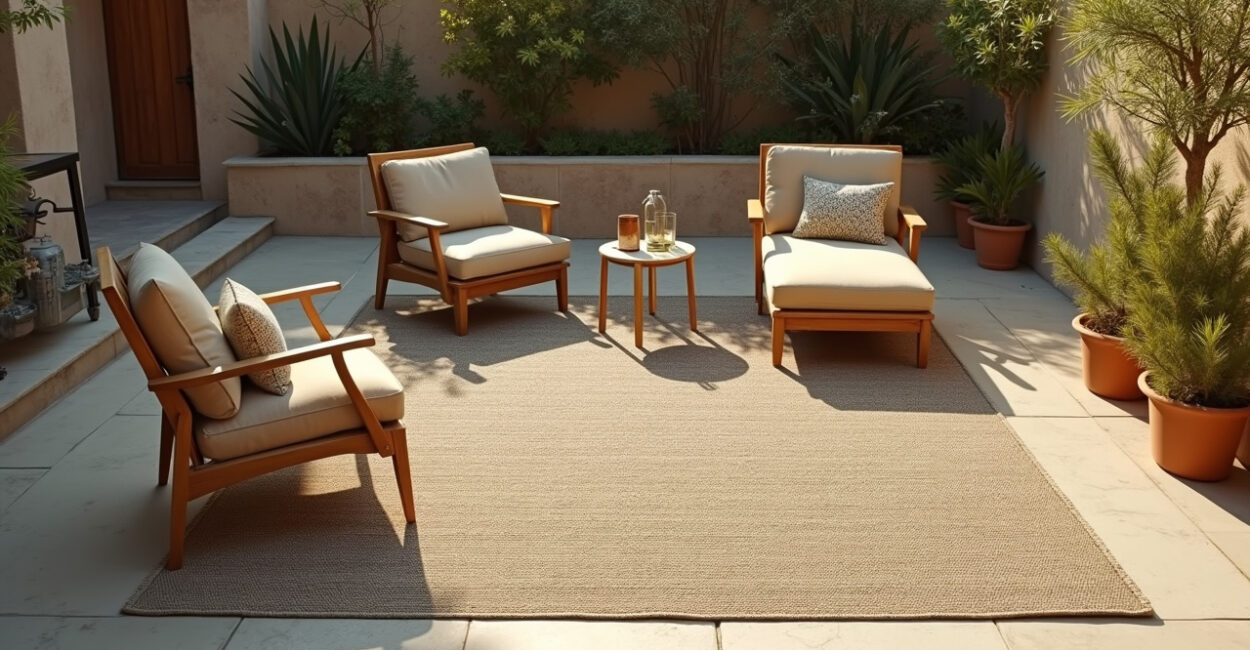
A small patio can feel finished—or cramped—based on one choice: how you layer the floor. When you layer weatherproof rugs on a small patio, you are not just adding decoration; you are creating zone definition, visual depth, and a softer transition between furniture and hard surfaces.
The trick is to make the layering look intentional, not improvised. Done well, it makes a compact space feel larger and more designed. Done badly, it reads as clutter, lifts edges in the wind, and turns every chair pull into a snag test. This guide breaks down scale, material pairing, placement, and the mistakes that most often ruin the effect.
Quick Takeaways
- Layering works best when the base rug is neutral, flat, and larger than the top rug by at least 12 to 24 inches on each visible side.
- Weatherproof rugs need a flat weave, fast-drying fibers, and enough weight or grip to stay put in wind and foot traffic.
- A small patio looks bigger when the top rug creates a defined seating zone instead of filling every inch of the floor.
- Texture matters more than pattern count; mixing one woven base with one tighter-patterned accent usually looks cleaner than stacking two loud prints.
- The safest placement is centered under the front legs of seating, not stretched wall to wall, because breathing room makes the layout feel deliberate.
How to Layer Weatherproof Rugs on a Small Patio Without Overcrowding It
The technical idea is simple: a layered rug setup uses one anchor rug plus one accent rug to create contrast in scale, texture, or pattern. On a patio, the anchor should be the more weather-resistant, more stable piece. The accent rug adds personality, but it should never fight the furniture or compete with the view.
In practice, the base layer often does the real work. A flatwoven polypropylene rug, for example, can visually ground a bistro set or lounge pair, while a smaller top rug—sometimes a washable indoor-outdoor style—creates a focal point. The “layer” is not a pile-on; it is a framing device.
Why the Base Rug Has to Be Larger
If the base rug barely exceeds the top rug, the whole arrangement looks accidental. You want a clear border around the accent layer so the eye reads hierarchy. On a small patio, that border is what keeps the floor from looking chopped into fragments.
Where Layering Fails First
The first failure is scale. The second is slip. The third is visual noise. A rug with a busy medallion pattern under another busy pattern tends to flatten the room instead of deepening it. The cleanest results usually come from one calm layer and one expressive layer.
On a compact patio, the layer that matters most is the one you notice least: a stable, proportioned base that makes the accent rug look purposeful instead of temporary.
Choosing Weatherproof Materials That Actually Hold Up Outside
Not every outdoor rug deserves to be layered. For patios, the best performers are usually polypropylene, recycled PET, and tightly woven synthetics designed to shed moisture and resist mildew. These fibers dry faster than natural jute or wool, and they tolerate sun exposure better than many people expect.
That said, there is a catch. A rug can be weatherproof and still be a poor layering choice if it has too much texture or curl at the edges. Who works with patios for a living knows that the ugliest failures usually come from beautiful materials that cannot stay flat.
According to the U.S. Environmental Protection Agency’s guidance on mold, moisture control is central to preventing mold growth in damp environments. On a patio, that means avoiding layers that trap water between them after rain or hosing.
Best Material Combinations
- Polypropylene base + low-pile outdoor accent: the most forgiving option for weather and traffic.
- Recycled PET base + flatwoven top rug: a good choice when you want a softer hand feel without sacrificing drainage.
- Synthetic jute-look base + patterned weatherproof accent: strong visually, but only if both rugs dry quickly and lie flat.
Materials I Would Avoid
Real jute, untreated cotton, and thick shag rugs are bad partners for outdoor layering. They absorb water, hold dirt, and often become heavy enough to shift in unpredictable ways. If the patio gets dew, afternoon storms, or sprinkler overspray, those fibers age quickly.

Scale Rules That Keep a Small Patio Looking Bigger
Scale is the difference between “designed” and “crowded.” On a small patio, the safest rule is to let the base rug define the full seating zone, then place the top rug so it occupies only the center or front half of that zone. The eye needs empty margin around the perimeter.
A useful proportion is this: the top rug should usually be 12 to 24 inches smaller on each exposed side than the rug beneath it. If the base is 5 by 7 feet, the accent might be 3 by 5 feet. If the base is 6 by 9 feet, the accent could sit at about 4 by 6 feet or even smaller, depending on furniture size.
| Patio Size | Recommended Base Rug | Typical Top Rug | Visual Effect |
|---|---|---|---|
| Very small balcony-style patio | 4′ x 6′ | 2′ x 3′ or 3′ x 5′ | Creates a focal point without covering all floor space |
| Small square patio | 5′ x 7′ | 3′ x 5′ | Frames a café set or two chairs cleanly |
| Compact lounge patio | 6′ x 9′ | 4′ x 6′ | Defines a sitting zone while preserving edges |
The American Academy of Dermatology’s sun-safety guidance is not about rugs, of course, but it does reinforce a practical point outdoor designers already know: UV exposure changes materials over time. If your patio gets intense afternoon sun, choose solution-dyed synthetics and expect the top layer to fade before the base layer if it has more pigment contrast.
Texture and Pattern Pairings That Look Intentional
The easiest way to get this right is to make one rug quiet and the other specific. A textured neutral base, such as a sisal-look polypropylene, gives the arrangement structure. A top rug can then carry a subtle stripe, border, or geometric pattern without overpowering the space.
Read also: Best Weatherproof Rug Colors for Sun-Drenched Spaces
Read also: Best Pots for Small Patios: Materials, Sizes, and Style
Read also: Weatherproof Outdoor Rug Styling Tips for Every Patio
If both rugs are loud, the patio reads visually smaller. If both are flat and plain, the layering can disappear. The sweet spot is contrast with restraint.
Reliable Pairings
- Woven base + striped accent: good for narrow patios because stripes can elongate the space.
- Natural-look base + tonal geometric top: works when you want warmth without visual chaos.
- Solid base + faded vintage-style accent: best for relaxed spaces that need character, not sharp contrast.
Pattern Mistakes to Skip
A loud Moroccan print over another high-contrast pattern can look stylish in a large yard, but it usually overwhelms a small patio. The same goes for two rugs with competing borders. If you need a rule, use only one dominant graphic element in the whole floor composition.
The smaller the patio, the more important negative space becomes; leaving visible flooring around the rug stack is what makes the layering feel curated.
Placement, Furniture, and the Wind Test
Placement should follow the furniture, not the other way around. On a seating patio, place the base rug so the front legs of chairs or a loveseat sit on it. Then center the smaller rug under the coffee table or in the open zone between seats. That creates a visual anchor without forcing every piece of furniture onto both layers.
When people layer rugs outdoors, they often forget the wind test. A light rug that slides half an inch every time a chair moves will never look polished for long. I have seen otherwise beautiful patios lose their whole effect because the top rug shifted diagonally after the first breezy evening.
Best Anchoring Methods
- Use a rug pad rated for outdoor use if the surface is smooth.
- Choose a heavier woven base so the upper layer has friction beneath it.
- Keep the top rug away from high-traffic corners where feet turn sharply.
For technical background on slippery surfaces and injury prevention around the home, the National Safety Council’s outdoor safety resources are a useful reference point. They reinforce a simple principle: stable footing matters more than decorative ambition, especially in small spaces where every step lands near a rug edge.
Style Formulas That Work in Real Patios
There is no single formula that works everywhere, but three layouts show up again and again because they solve different problems. The first makes a patio feel longer. The second makes it cozier. The third works when the space is split between dining and lounging.
Formula 1: Calm Base, Patterned Center
Use a neutral flatwoven rug as the full seating anchor, then place a smaller patterned rug under the coffee table. This is the safest option when the patio already has strong furniture, like black metal frames or dark wicker.
Formula 2: Natural Texture, Soft Contrast
A jute-look synthetic base with a tone-on-tone accent rug gives a warm, layered effect without pushing the eye too hard. This formula works best with wood or rattan furniture, because the textures echo each other without becoming repetitive.
Formula 3: Long Rectangle for Narrow Spaces
On a long, slim patio, run the base rug lengthwise and keep the top rug centered lower in the composition. That vertical alignment draws the eye across the patio instead of stopping it at the edges.
Here is a concrete example. A homeowner with a 6-by-10-foot patio, two lounge chairs, and a small fire table used a 5-by-8-foot polypropylene rug as the base and a 3-by-5-foot faded stripe rug on top. The first setup felt too blank. The second made the space feel finished, and the furniture suddenly looked proportioned rather than squeezed in.
Maintenance, Storage, and the Limits of Layering Outdoors
Layered rugs outdoors need more maintenance than a single rug. Dirt collects between layers, moisture can linger after rain, and UV exposure rarely affects both pieces evenly. If you live somewhere with frequent storms, plan to lift the top rug every so often and let both pieces dry fully.
This is where the method has limits. It works well in covered or partially covered patios, but it is less forgiving in fully exposed spaces with heavy rainfall or constant shade. Shade slows drying, which means mildew risk rises if air cannot circulate under the layers.
Some homeowners also discover that seasonal use changes the setup. In spring and summer, layering can make a patio feel composed and inviting. In late fall, the same arrangement may need to be simplified to one rug so water, leaves, and debris do not collect in the seam.
Simple Care Routine
- Shake out loose grit weekly.
- Lift the top rug after heavy rain.
- Rotate both rugs every few weeks to reduce uneven fading.
- Store the accent rug indoors during long wet spells.
What to Do Next Before You Buy Anything
The smartest move is to measure the patio seating area first, then map the rug layers on paper or with painter’s tape. If the composition still feels balanced when you outline it on the floor, it will usually work in real life. If the taped layout already feels crowded, the rugs will not save it.
For an information-based decision, the best next step is to compare one base rug and one accent rug using size, drainage, and texture—not color alone. Color is the last filter, not the first. Choose the structure first, then shop for the finish.
Action to take: measure the seating zone, mark the footprint with tape, and test the layered proportions before ordering. That one step prevents most of the mistakes people make when they layer weatherproof rugs on a small patio.
Frequently Asked Questions
What Size Should the Bottom Rug Be for a Small Patio?
The bottom rug should usually extend at least 12 inches beyond the top rug on visible sides, and often more if the patio has furniture around the perimeter. A 5′ x 7′ base with a 3′ x 5′ accent is a reliable starting point for a small seating area. The goal is to create a clear frame, not to cover every inch of floor. If the base rug barely shows, the layering loses its purpose.
Can You Layer Two Outdoor Rugs Directly on Concrete?
Yes, but only if the rugs lie flat and the lower rug has enough grip or weight to stay in place. Concrete can make slipping more obvious because there is no natural texture to hold the rug stack. An outdoor rug pad can help, though it must be thin enough to avoid creating a trip edge. In damp climates, make sure water can drain and air can circulate underneath.
Should Both Rugs Be Weatherproof?
Ideally, yes. If one rug is absorbent or slow to dry, it can trap moisture between the layers and encourage mildew. Many designers use a fully weatherproof base and a washable or indoor-outdoor accent, but both should still handle humidity and occasional wetting. The more exposed the patio is, the more important it becomes for both layers to dry quickly.
What Patterns Work Best on a Small Patio?
Smaller patios usually look best with one grounded pattern and one quieter base. Narrow stripes, faded geometrics, and subtle borders tend to work better than two competing bold prints. If the furniture is already visually busy, a calmer rug pair will look more expensive and more intentional. The safest choice is to let the rug layering support the furniture, not argue with it.
How Do You Keep Layered Rugs from Sliding?
Use a rug pad designed for outdoor use, or choose a heavier woven base with enough surface friction to hold the top rug. Keep the upper rug centered away from high-traffic edges where chairs scrape and feet pivot. If wind is a problem, lighter rugs may need to be brought in during storms or replaced with denser weaves. A stable layout always looks more polished than one that shifts every day.