

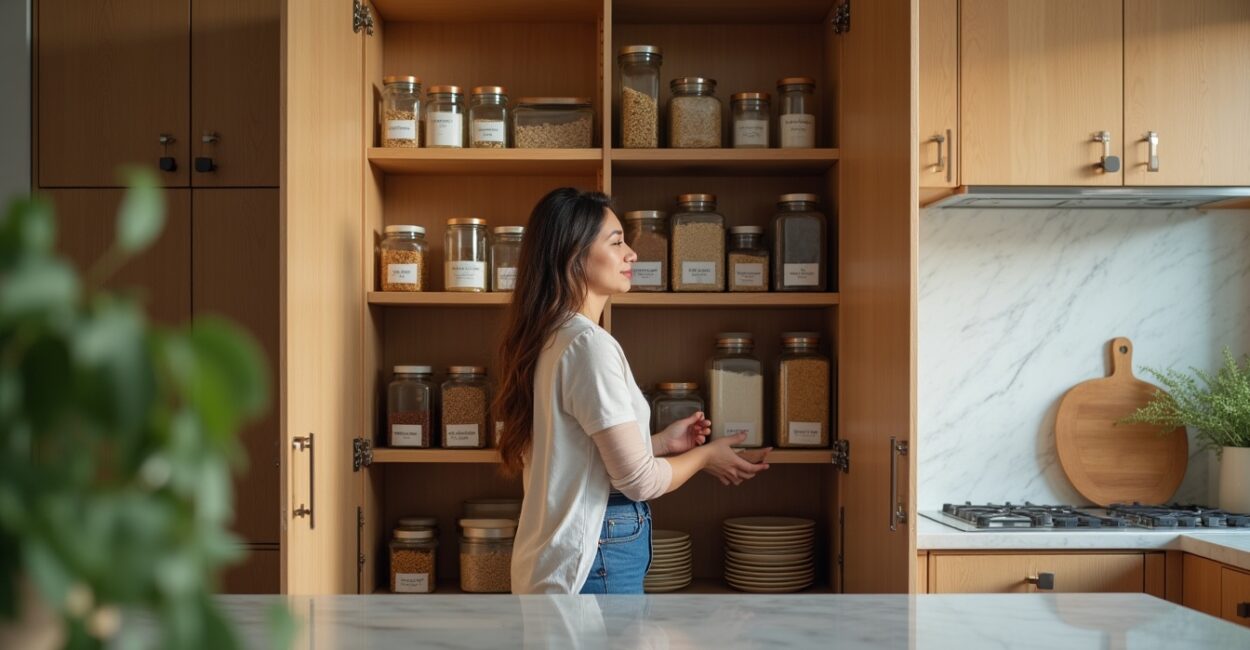
You shove one more jar into a shelf and two minutes later you can’t find the coffee — sound familiar? In a space that barely counts as a closet, tiny pantry tips stop being cute hacks and become survival skills. This guide shows how stacking, labeling, and rotation systems fit into a real layout so you can store more food, waste less, and shave time off meal prep.
The 2-square-foot Layout That Feels Like Magic
Claim: you can store enough staples for a week of meals in just 2 sq. ft. The trick is vertical planning and defining zones: breakfast, snacks, bulk dry goods, and meal kit area. Imagine a shallow 24″ wide cabinet split into four 6″ vertical strips — each strip holds a different category so items never hide behind each other.
- Top shelf: rarely used containers and overflow
- Eye level: daily staples and the “grab-and-go” row
- Lower shelf: heavy, stackable items like cans and jars
- Door area: spice rack, slender packets
That layout turns chaos into a predictable system — and beats the random-jam method 9 times out of 10.
Stacking Systems That Multiply Space (not Weight)
Vertical stacking is more than piling; it’s about creating stable stacks and sightlines. Use risers, clear bins, and shelf extenders to create mini-shelves inside a shelf. When you build layers, you create visibility and accessibility — two things tiny pantries desperately need.
Tip: group by height and frequency. Put tall cereal boxes at the back, shorter items front. Clear modular bins allow you to lift a whole bin and scan contents instead of fishing.
Labeling That Eliminates Decision Fatigue
Labels aren’t just tidy; they cut the seconds you lose deciding what to use. Apply labels on the front of bins and on the edge of shelves — not the lid. A simple system: item name, purchase date, and “use-by” window. This single habit reduces expired food and speeds cooking decisions.
- Use writable labels for rotation dates
- Color-code categories (grains, baking, snacks, sauces)
- Label shelf edges for family members to follow
Rotation Systems: First in, First Used — In Practice
Rotation sounds boring until you realize it saves both money and guilt. The rule: new items go to the back; older items move forward. Use a “rotation tray” for canned goods — every time you add a new can, place it behind the others. That tiny discipline prevents the rotten-tomato surprise two weeks after you buy it.
Comparison: expectation vs. reality — expectation is “I’ll use fresh stuff,” reality is “I forgot the bag of beans in the back.” Rotation fixes that reality.
What People Get Wrong: 7 Common Pantry Mistakes to Avoid
People try to cram everything in and end up with invisibility pockets. Avoid these mistakes:
- Storing spills without a tray (crumbs spread and attract pests)
- No zones — everything mixed together
- Using opaque containers that hide contents
- Stacking unstable items that topple
- Ignoring dates and relying on memory
- Failing to measure the opening — bulky containers won’t fit
- Not giving frequently used items prime real estate
A tiny pantry isn’t a test of willpower — it’s design. Avoiding these errors makes the rest effortless.
A Mini-story: How Stacking and Labels Rescued a Thursday Night
One Thursday, dinner plans collapsed: the fridge was bare and the last grocery delivery was delayed. In a 2 sq. ft. pantry, I grabbed the labeled “meal kit” bin, pulled a rotisserie chicken substitute packet (labeled two weeks before), a jar of salsa from the rotation tray, and a bag of quick-cook rice from the front row. Dinner on the table in 20 minutes. The stackable bins and clear labels turned panic into dinner — no frantic store run.
Tools and Shopping List That Actually Matter
Spend small on a few smart tools and they pay back every week: clear acrylic bins, flat shelf risers, a label maker, a small lazy susan for oils, and slim door rack pockets. Prioritize these items:
- Clear modular bins (various widths)
- Shelf risers and stackable can organizers
- Writable labels and a marker
- Rotation tray for cans
- Door-mounted spice rack
Buy quality for the items you use daily (bins, label maker). Save on occasional tools.
For best practices and food safety guidelines, check official storage recommendations like those from the U.S. Department of Agriculture and preservation tips from university extension services such as University of Minnesota Extension.
Your tiny pantry can stop being a source of stress and start being a tool that saves time and money. A little structure — stacking, labeling, rotation — delivers outsized returns.
Think of your pantry as a tiny restaurant prep station: every inch gets a purpose, and everything has a home. When it’s designed that way, feeding yourself becomes faster and less wasteful—period.
How Often Should I Rotate Pantry Items?
Rotate pantry items every time you add something new: place new purchases behind existing ones so older items move forward. Do a quick scan weekly while planning meals to check dates and transfer anything nearing its use-by window to the front. For high-turnover goods like cereal or snacks, rotate every 2–3 weeks. For slower items like canned goods, a monthly check is sufficient. This habit prevents waste and keeps your meal options fresh without extra effort.
What Containers Work Best in a 2 Sq. Ft. Pantry?
Choose clear, modular containers sized to your shelf height — think shallow and stackable. Acrylic bins that nest or clip together save space and allow you to lift an entire category out to inspect contents. Use risers to create an extra shelf plane and slim containers for the door. Prioritize containers that are dishwasher-safe and labeled on the front. Avoid over-large canisters that reduce flexibility; small-to-medium sizes maximize options in tight footprints.
How Do I Store Bulk Items Without Losing Space?
Divide bulk into meal-sized or week-sized portions and store them in labeled bins or resealable bags inside clear containers. Keep the bulk source (like a large flour bag) in a low, stable spot and decant smaller, regularly used quantities into front-facing containers. Use stackable bins so you can see the portions at a glance. This method keeps the main bulk controlled while giving you quick access to the amounts you actually use.
Can Small Pantries Be Pest-proofed Effectively?
Yes. Start by cleaning regularly and storing open food in airtight containers. Use trays to catch crumbs and check seals on jars and bags. Inspect incoming groceries for signs of infestation and freeze susceptible items (like flour) for 48 hours before storing if you’re unsure. Keep a small bowl of bay leaves or pheromone traps as deterrents, and maintain rotation so nothing sits long enough to attract pests. Consistency beats expensive treatments.
How Do I Prioritize Items When Space is Extremely Limited?
Prioritize based on frequency and function: daily staples (coffee, milk substitute, bread substitute) at eye level; cooking essentials (oil, salt, a multipurpose sauce) in the grab-and-go row; bulk and backups lower or higher. Create a “meal kit” bin for emergency dinners and a snack bin at kid-access height. If something hasn’t been used in three months, evaluate whether to donate, compress, or discard. The goal is energy-saving placement, not maximal accumulation.