

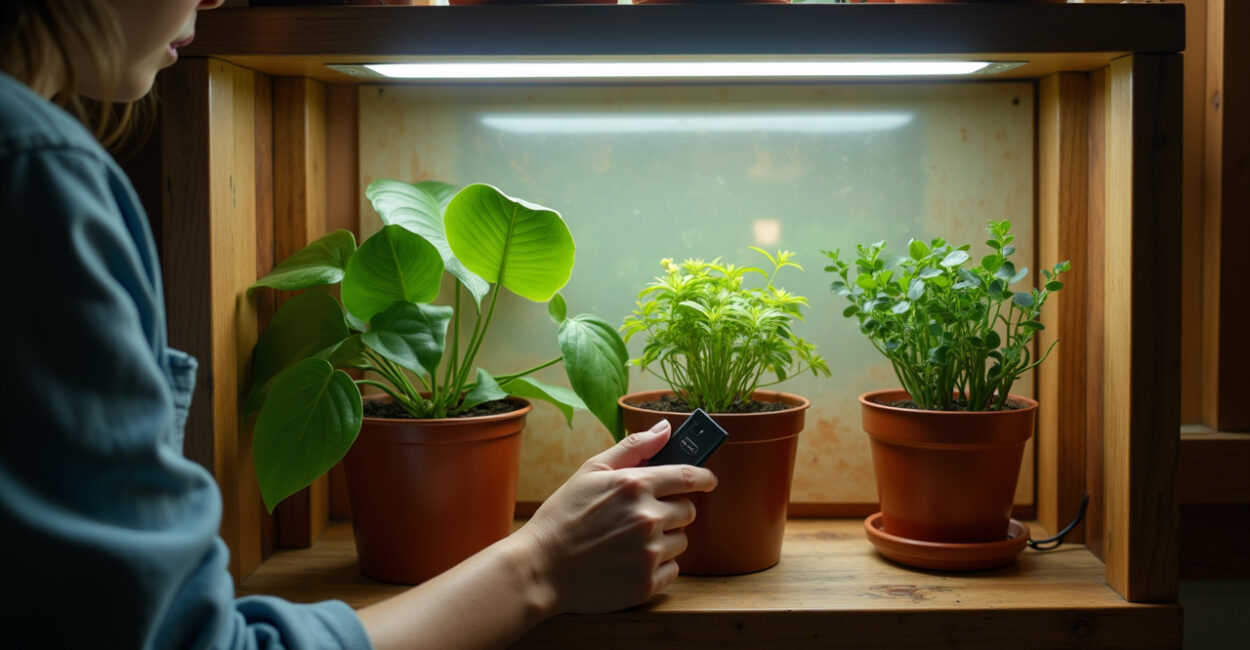
There I was, a shelf of droopy philodendrons and a west-facing window that seemed to hold a grudge. I plugged in a cheap strip of grow lights and watched one plant perk up in three days. That moment makes one thing clear: grow lights can be a rescue plan, but they’re not always the answer. This piece cuts straight to when grow lights actually help low-light plants, which fixtures make sense, how long to run them, and how to do it without wasting money.
When Low-light Plants Truly Need Grow Lights
Most shade-loving houseplants survive low light — they don’t thrive. If leaves are pale, internodes stretch, or new growth stalls, that’s light stress. Grow lights become necessary when natural light is consistently below what the species needs for more than a few weeks. Examples: compact ferns and snake plants often tolerate dim rooms; young calathea or alocasia will struggle and may need supplemental light.
Look for three concrete signs: slow new growth, yellowing lower leaves, and elongated stems. If two of those show up, try grow lights before changing pots or fertilizer.
The One Test That Tells You to Buy a Light Now
There’s an easy test: move the plant to the brightest safe spot for 7–10 days. If it improves, the issue was light. If nothing changes, a grow light will likely fix the problem faster than any other tweak. Don’t guess. Plants are honest — they show stress. This quick trial avoids wasted spend and shows whether grow lights will have impact.
Which Type of Grow Lights Actually Work for Shade Lovers
Not all grow lights are equal. LED fixtures win for efficiency and low heat. Fluorescent tubes are cheap but bulkier. Full-spectrum LEDs mimic sunlight and support leaf color and growth. For shade-loving species, aim for low-to-moderate intensity LEDs rather than high-power “grow room” lights.
- Best for small setups: LED bars or strips (12–24 inches).
- Best for a larger shelf: full-spectrum LED panels with dimmers.
- Budget pick: T5 fluorescent tubes for short racks.
How Long to Run Grow Lights — Practical Schedules That Actually Work
Light duration matters more than blasting intensity. Shade plants usually need 8–12 hours a day under supplemental light. A timer is non-negotiable. Run lights long enough to mimic a normal day, not to compensate for weak bulbs.
- Supplemental brief: 2–4 hours in morning or evening when natural light is present midday.
- Full replacement: 10–12 hours if the room gets almost no daylight.
- Check plant response weekly and reduce if leaves burn or color fades.
Cost-effective Setups That Keep Shade Lovers Healthy
You don’t need a pro grow tent. A small LED bar over a plant shelf, a timer, and a smart plug are enough. Most household setups cost cents per day, not dollars. Compare a cheap LED strip ($20–40) to a high-wattage panel ($150+). Often the strip wins for low-light plants because they need low intensity.
Simple checklist:
- LED bar with adjustable height
- 6–12 hour timer or smart plug
- Light meter app or simple lux reader for placement
Common Mistakes People Make with Grow Lights (and How to Avoid Them)
People often buy the brightest light available, thinking more is better. That’s wrong for shade plants. Too much intensity causes leaf burn, faded variegation, and stress. Other errors:
- Placing lights too close — leaves scorch.
- Running lights 24/7 — plants need darkness to rest.
- Ignoring color temperature — blue light favors foliage; red supports flowering, which isn’t necessary for most shade houseplants.
Avoid these and you’ll spend less and keep plants happier.
The Surprising Before/after: What Grow Lights Did for One Neglected Shelf
One apartment shelf had five plants barely clinging to life. After switching to a low-intensity LED bar on a 10-hour timer, leaves regained color in a week and new shoots appeared in three weeks. Expect subtle changes first — firmer stems, less droop — then true growth. That quick before/after shows grow lights are a targeted tool, not a magic fix.
If you want data, University extension services and plant physiology studies explain light needs in detail; see research at Penn State Extension and basics at USDA for deeper reading.
Grow lights are a practical way to rescue or refine low-light setups. Use them selectively, set sensible hours, and pick the right intensity. Treat them like a prescription: measured, timed, and checked. Your plants will tell you if you’ve dosed correctly.
How Do I Know Which Plants Truly Need Grow Lights?
Look for clear signs: slow or halted new growth, stretched internodes, and pale or yellow lower leaves. Move the plant to the brightest safe spot for a week as a test—if it perks up, light was the issue. Consider the species: compact snake plants and pothos tolerate dimness; young aroids and calatheas often need extra light. If two signs appear together, try a low-intensity grow light on a timer before changing soil or fertilizer. Monitor response weekly and adjust run time or distance accordingly.
Will Grow Lights Damage Shade-loving Plants?
They can if used wrong. Shade-loving plants evolved for low light and can get leaf burn or faded variegation from high-intensity light. Use low-to-moderate intensity LEDs and keep lights farther away than for sun-loving species. A timer is essential—don’t run lights 24/7. Start with 8–10 hours and watch for stress like scorched edges or bleached leaves. If that shows up, lower intensity or increase distance. Proper use supports steady growth without harm.
What’s the Cheapest Effective Grow Light Setup for a Shelf?
A simple, affordable setup is an LED bar (12–24 inches), a smart plug with a timer, and adjustable hooks. LED bars cost $20–40 and use little power. Place the bar 12–18 inches above leaves and set it for 8–10 hours daily. Add a basic clip-on reflector if light spill is a concern. This setup costs little up front and cents per day to run. Upgrade later to a dimmable panel if your plants need more intensity.
How Do I Measure Whether My Grow Lights Are Doing Their Job?
Check plant responses: firmer stems, new leaves, and less stretching are good signs. Use a light meter app or an inexpensive lux meter to measure light at leaf level; shade plants often thrive around 100–1000 lux with supplemental light, depending on species. Compare readings before and after installing the light. Track changes weekly. If nothing improves after two to three weeks, try increasing duration slightly or moving the fixture closer, but avoid overheating or burning the foliage.
Can I Use Grow Lights to Improve Variegation or Color?
Yes, but carefully. Variegated plants need bright, indirect light to maintain contrast—too little light causes reversion to green; too much bleaches the white parts. A moderate full-spectrum LED on a timer helps preserve variegation without stress. Start with 8–10 hours and watch leaf margins and pattern clarity. If variegation fades, gently increase light duration or intensity. Balance is key: the right amount of light keeps color while avoiding sunscald on delicate patches.