

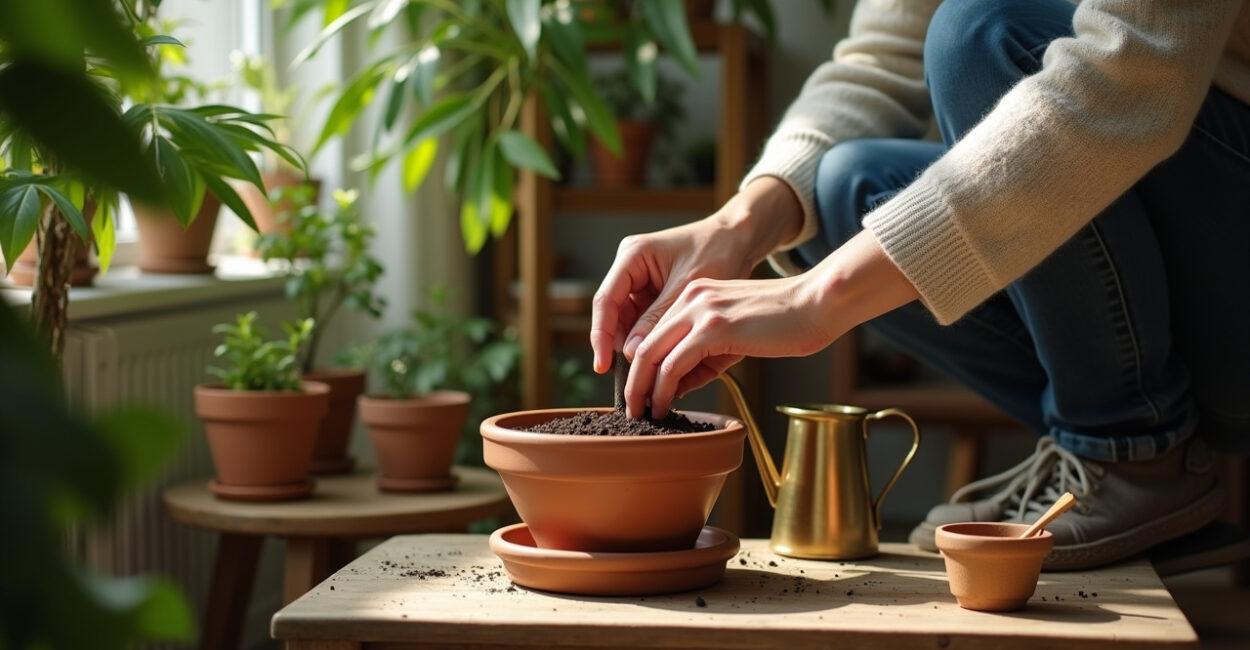
Leaves limp within 24 hours after you watered them? Or pots that stay soggy for weeks? If you want your indoor jungle to look like it lives, not just exists, learning how to water houseplants the right way is the single best upgrade you can give them. This guide gets blunt, practical, and usable today — no mystery tools, just habits that work.
1. The Simple Test That Tells You When to Water
Stop guessing — start checking. The easiest, most reliable method is the finger test: push your finger 1–2 inches into the soil. If it’s dry, water. If it’s damp, wait. For large pots, use a wooden chopstick or a moisture meter. These tools cut through wishful thinking and protect roots from both drought and rot. When you water houseplants based on touch, you avoid the two extremes that kill most indoor plants: chronic dryness and chronic sogginess.
2. How Often to Water, by Plant Personality
Frequency isn’t a number — it’s a relationship. Succulents and cacti like long drinks and long breaks: water every 2–4 weeks. Tropical foliage (philodendron, monstera) prefers regular, moderate moisture: roughly every 7–14 days. Flowering houseplants (African violets, orchids) have their own quirks. Match water rhythm to plant type, not a calendar. Keep a quick log for two months and you’ll see patterns: light, pot size, and season all change the plan.
3. The Seasonal Switch: How to Adjust Through the Year
Plants do more than sit pretty — they follow light and temperature. In spring and summer most houseplants grow and need more water. In fall and winter growth slows and they need less. Lower temp + lower light = longer between waterings. Move pots away from hot vents in winter and reduce frequency. A simple rule: check twice as often in summer as in winter, but always use the finger test before pouring.
4. Watering Technique That Actually Reaches the Roots
Pouring a trickle across the surface is wishful thinking. Aim for even saturation until water runs out the drainage hole — then let the pot drain completely. For compacted soil, soak-and-drain: water, wait 10–15 minutes, then water again. Deep, infrequent watering encourages deep roots. If you use tap water and your plants show brown leaf edges, let water sit 24 hours to let chlorine dissipate or use filtered water for sensitive species.
5. The Mistakes I See in Every Plant Group (and How to Avoid Them)
Most indoor plant deaths are avoidable and repeatable. Common errors: overwatering, potting in non-draining containers, assuming all plants have the same needs, and ignoring soil condition. Fixes: use pots with drainage, fresh, airy potting mix, and learn to read your plant’s signals — droop can mean thirst or rot, so always check soil. Also don’t repot right after overwatering; let plants dry and recover first.
- Don’t water on a fixed schedule without checking soil.
- Avoid saucers full of standing water.
- Don’t confuse brown crispy leaves (dry) with yellow mushy leaves (overwater).
6. Little Tricks Pros Use That Make a Big Difference
Pros aren’t secretive — they just use practical hacks. Bottom-watering (sit pot in water for 10–30 minutes) helps flush salts and encourages roots to reach down. Grouping plants raises local humidity. Use a moisture meter for finicky species. Repotting into a lighter mix every 12–24 months keeps soil lively and improves drainage. For more science-backed watering schedules and plant guides, see resources like the Royal Horticultural Society and the USDA.
7. A Quick Troubleshooting Flowchart You Can Use Now
When a plant looks wrong, follow these steps: check soil depth, inspect drainage hole, lift pot to feel weight, and look at leaves for color/texture signs. One failed routine fix often reveals the real problem. Example: a limp, green plant that’s light when lifted usually needs water. A limp, yellowing plant that’s heavy? Roots are probably rotting. This small diagnostic habit saves hours and a lot of grief.
Comparison that wakes you up: expect vs reality — people often water on a fixed two-week schedule (expectation). Reality: the same plant may need water every 10 days in summer and every 28 days in winter. Make checks, not rules.
Mini-story: A friend kept losing her pothos despite “watering weekly.” I visited, dug a finger in, and found wet soil. She had been overwatering because the top looked dry. We switched to the chopstick test and moved the pot to brighter light. Three months later it was sending new vines across the shelf.
What to avoid: never let a pot sit in a saucer of standing water for days, don’t use garden soil in pots, and don’t repot immediately after infestation or rot — let the plant stabilize. These small choices decide if a plant survives or thrives.
Now go touch the soil of your favorite plant. You’ll know more after one test than after a year of guessing.
FAQ
How Do I Tell If My Houseplant is Underwatered or Overwatered?
Check soil moisture first: stick your finger 1–2 inches down. If it’s bone dry, the plant is likely underwatered. Lift the pot — if it feels heavy and the soil is damp, overwatering is likely. Look at leaves: crispy brown edges and brittle texture point to drought; yellowing, soft, or translucent leaves suggest rot from too much water. Also inspect roots if possible; healthy roots are firm and light-colored, while rotten roots are dark and mushy. Correct the problem by adjusting watering frequency and improving drainage.
Can I Use Tap Water for My Houseplants Every Time?
Most tap water is fine for common houseplants, but sensitive species may react to chlorine, chloramines, or hard minerals. If your leaves show brown tips or white crust on soil, consider letting tap water sit 24 hours to reduce chlorine, use filtered water, or collect rainwater. For orchids and carnivorous plants, use distilled or rainwater when possible. Consistent use of very hard water can build up salts in the soil, so flush the pot with fresh water occasionally to rinse excess minerals away.
What Soil Mix Should I Use to Avoid Overwatering?
Use mixes that drain well and hold some moisture. A good all-purpose indoor mix is one part peat or coco coir, one part perlite, and one part compost or fine bark. Succulents need a grittier mix with more perlite or sand. For aroids and monsteras, add orchid bark to increase air pockets. Fresh, airy mix prevents compaction and helps water reach roots without suffocating them. Repot every 12–24 months to refresh the mix and check root health.
How Much Water Should I Give My Plants When I Do Water Them?
Water until it starts to run out of the drainage hole, then let the pot drain completely. That ensures the entire root ball is moistened and salts are flushed. For large pots, water slowly in two stages: soak, wait 10–15 minutes, then soak again. The goal is even moisture, not puddles on top. Adjust volume by pot size and plant type: small succulents need only a few tablespoons, while a large tropical pot may need a liter or more to fully saturate the soil.
How Do I Change My Watering Routine When I Travel?
Short trips (days) can be handled by moving plants out of direct sun and grouping them to retain humidity; larger pots dry slower. For longer trips, use self-watering stakes, a drip system, or place pots in a tray with moist pebbles to raise humidity. Another option is bottom-watering: set pots in a shallow tray of water for an hour before you leave so they start with fuller soil. Ask a friend to check in for extended absences and send photos so they can water only if the soil is dry.