

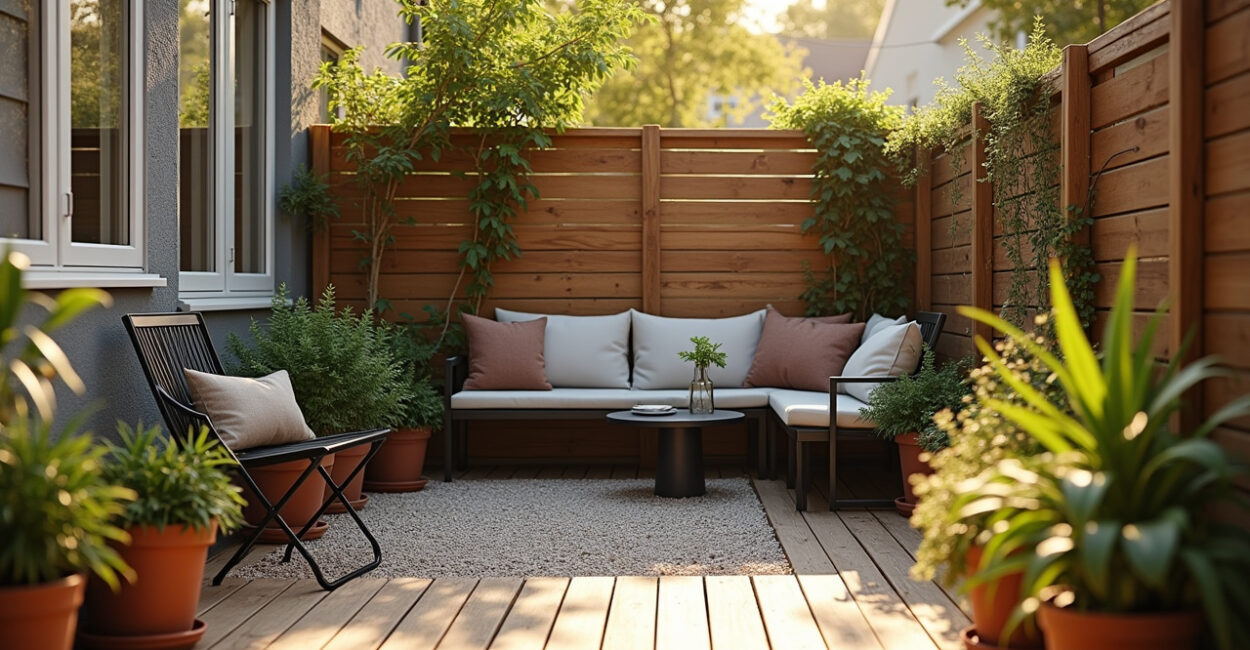
A tiny backyard can feel even smaller when one oversized chair set eats the whole patio. The trick with cheap patio seating ideas for tiny backyards is not finding the cheapest-looking furniture; it is choosing pieces that keep sightlines open, move easily, and do more than one job.
That usually means slimmer profiles, modular seating, and a few smart DIY moves instead of a full matching set. In practice, the best results come from measuring first, buying less, and using materials that can handle weather without looking bulky. This article breaks down what works, what wastes money, and how to make a small outdoor space feel intentional instead of cramped.
What Matters Most
- In a small patio, seat depth and visual weight matter more than brand name or matching sets.
- Folding chairs, benches with storage, and corner seating often beat lounge chairs because they preserve walking space.
- Low-cost seating looks better when you limit the palette to two materials, such as wood and cushion fabric.
- The cheapest option is not always the best value if it rots, rusts, or blocks circulation after one season.
- A measuring tape and painter’s tape can save more money than a coupon because they prevent bad-sized purchases.
Cheap Patio Seating Ideas for Tiny Backyards That Still Feel Comfortable
If the goal is to stretch a small budget, start with seating types that naturally fit tight footprints. A narrow bench, a pair of folding chairs, or a small bistro set usually works better than a deep sectional because they leave room for movement. The official University of Minnesota Extension recommends planning outdoor spaces in zones, and that idea matters here: seating should support the patio layout, not fight it.
Bench Seating is the Best Budget Anchor
A straight bench does one thing very well: it gives you multiple seats along one wall without breaking the floor plan. Built-in benches are ideal if you already have a retaining wall, deck edge, or planter border, but a simple freestanding bench can work too. Add one outdoor cushion and the space feels finished without the visual clutter of three separate chairs.
Folding Chairs Win on Flexibility
Folding chairs are not glamorous, but they are hard to beat for tiny yards. You can store them when you need open floor space for a grill, kid play area, or plant care day. Look for powder-coated steel or treated wood frames; those usually hold up better than bargain plastic that bends in summer heat.
In a tiny backyard, the seat that disappears when you do not need it is often more valuable than the seat that looks biggest in a showroom.
Bistro Sets Fit the Social Use Case
A compact bistro table with two slim chairs makes sense when the patio is more about coffee, snacks, or one-on-one conversation than long lounging. The important detail is scale: choose a table top around 24 to 30 inches wide, not a full dining table pretending to be compact. That keeps knee space usable and prevents the patio from feeling boxed in.
For people who want a more design-focused reference, North Carolina State University and other land-grant institutions regularly publish small-space landscape guidance that emphasizes proportion, circulation, and clear function. Those same principles apply to furniture selection.
Choose Materials That Look Light, Not Cheap
The cheapest patio set is often the one that fails the fastest. Sun, moisture, and temperature swings punish thin metal, unfinished wood, and low-grade resin. If a piece looks heavy, dark, and overbuilt, it usually makes a tiny backyard feel even smaller. The better move is to choose materials that read visually light while still surviving the weather.
Powder-Coated Steel and Aluminum
These are common for budget chairs because they are relatively affordable and easy to maintain. Aluminum is lighter and resists rust well, while powder-coated steel can be sturdier if the coating stays intact. If you live in a rainy climate, scratched metal is a problem; once the finish breaks down, rust can spread faster than expected.
Acacia and Other Budget Hardwoods
Acacia often gives you a warmer look than metal at a lower price than teak. It needs sealing and some care, but it can be a smart middle ground if you want the patio to feel less like a café and more like an outdoor room. Do not assume “hardwood” means maintenance-free. It does not.
Resin Wicker and Recycled Plastic
Resin wicker can be a good option when you want texture without the price of full natural wicker. Recycled plastic furniture is worth considering for damp areas because it does not absorb water the way untreated wood can. The U.S. EPA recycling guidance is useful here if you are comparing products made with post-consumer material, since recycled content often improves durability and reduces waste.
For small patios, visual lightness is a design feature, not a luxury; the less furniture blocks the eye, the larger the yard feels.

DIY and Thrifted Seating That Saves Money Without Looking Improvised
Some of the best budget seating starts with what already exists. I have seen tiny patios come together with one salvaged bench, two thrifted chairs, and a weatherproof cushion that tied everything together. The difference between “scrappy” and “stylish” usually comes down to consistency: same finish family, same cushion tone, same height range.
Wood Pallet Benches Only Work If You Finish Them Properly
Pallet furniture can be cheap, but it needs sanding, reinforcement, and sealing. Without that, splinters and wobble show up quickly. A well-built pallet bench is fine for light use on a covered patio, but it is not the right answer if you want a durable everyday seat in full sun and rain.
Thrift Store Finds Need a Tight Edit
Secondhand chairs are a bargain only when they match your space and do not need expensive repairs. A chipped metal chair can be repainted. A cracked frame is a money sink. The best thrift strategy is to buy one or two pieces that share a similar silhouette, then unify them with cushions or paint.
Paint Does More Than Change Color
One coat of exterior-grade paint can turn mixed chairs into a set. Dark colors hide more flaws, while lighter finishes reduce the visual bulk of the furniture. If you are working with a very small yard, consider matte or satin finishes; glossy surfaces reflect more light in ways that can make mismatched pieces stand out.
| Option | Best For | Main Tradeoff |
|---|---|---|
| Thrifted metal chairs | Quick upgrades | May need rust repair |
| Pallet bench | Covered patios | Needs sealing and sanding |
| Painted wood stools | Extra flexible seating | Less comfortable for long sitting |
Layout Tricks That Keep a Tiny Backyard Open
Furniture choice matters, but layout usually decides whether a patio feels usable. A small backyard needs clear movement paths, and that means avoiding the instinct to push every seat into the center. Even a simple arrangement can feel smarter if one side stays open and the tallest pieces sit against the perimeter.
Use Corners on Purpose
Corner placement is one of the easiest ways to save floor space. A bench tucked into a corner can replace two chairs and free up the middle of the patio. If the space is irregular, use the longest wall first and let the remaining seating orbit around it rather than trying to force symmetry.
Keep the Seat Height Consistent
Mixed-height seating can work, but only if you do it carefully. If one chair sits much lower than the others, the setup feels accidental. Consistent seat height makes the area look planned, and planned spaces usually feel larger because the eye reads them faster.
Leave the Middle Easier to Cross Than to Fill
That sounds obvious, but it is where many small patios fail. A clear middle path makes the whole space more functional, especially if people need to move between the house, grill, and garden beds. If you want one practical rule, use this: if a piece blocks walking in two directions, it is too large for the yard.
Mini example: A narrow 8-by-10-foot patio can hold a 40-inch bench, two folding chairs, and a small side table if the bench sits on the longest wall. Add cushions in one color and a planter at one corner, and the space reads as intentional instead of crowded. The same patio with a full loveseat and coffee table usually loses its walkway immediately.

What to Buy First When the Budget is Tight
If money is limited, do not buy a full set first. Buy the piece that solves the biggest problem in the space, then build around it. For many small backyards, that means one anchor seat plus one movable seat. This is where cheap patio seating ideas for tiny backyards become practical rather than theoretical: the right first purchase saves you from replacing the wrong one later.
Start with One Anchor Piece
A bench or compact loveseat usually gives the best return because it defines the seating zone. Once that is in place, you can add one or two lighter pieces without making the patio feel cluttered. If your budget only allows one item this season, choose the seat that will still make sense after you add plants, lighting, or a small table.
Spend More on Comfort, Less on Extras
Outdoor cushions and seat pads often matter more than decorative side pieces. A plain bench with a good cushion is more usable than a pretty chair that nobody wants to sit in. That is the part many shoppers miss: comfort is not an upgrade, it is what makes the furniture get used.
Set a Durability Floor
Cheap does not have to mean disposable. If a product cannot survive one wet season, it is too cheap for real use. Look for simple indicators like treated wood, rust-resistant hardware, UV-resistant fabric, and replaceable cushions. Those details usually separate a smart bargain from a false economy.
Practical Buying Rules for Small Patios
Before you click “buy,” check the scale, the storage plan, and the weather exposure. Those three things do more to protect your budget than chasing the lowest sticker price. A chair that folds flat or a bench that doubles as storage often beats a larger set that needs a permanent footprint.
- Measure the usable floor space, not the total patio size.
- Leave enough room to walk behind seated people.
- Choose one finish family so the space feels cohesive.
- Avoid deep seating unless the patio is large enough to spare circulation space.
- Buy cushions only after the frame is settled, or the fit will be off.
There is one limit to this approach: if your tiny backyard gets constant wind, heavy rain, or extreme sun, the cheapest materials will fail faster no matter how well you arrange them. In that case, it is better to buy fewer, sturdier pieces than to replace flimsy furniture every year.
What to Do Next
Measure the patio, mark the walking path with tape, and decide on one seating anchor before shopping. Then compare folding chairs, narrow benches, and compact bistro sets against that layout instead of against the photo on the box. That one habit filters out most bad purchases and keeps the yard open, comfortable, and easier to live with over time.
What is the Cheapest Seating Option for a Tiny Backyard?
The cheapest useful option is usually a folding chair pair or a simple bench, depending on how you use the space. Folding chairs win if you need storage and flexibility; benches win if you want more seating in one footprint. The lowest sticker price is not always the best value, because weather damage can erase the savings quickly. A piece that lasts two or three seasons is often cheaper in practice than one that fails after a summer.
Are DIY Patio Seats Actually Worth It?
They are worth it when you already have the tools, time, and patience to finish them correctly. A DIY bench can save money, but only if you sand, seal, and reinforce it well enough for outdoor use. If the project turns into multiple hardware-store trips, the savings disappear fast. DIY makes the most sense for simple, straight designs rather than complicated seating with built-in storage or curves.
What Furniture Makes a Tiny Patio Look Bigger?
Slender frames, open legs, and lighter finishes usually make the biggest visual difference. A bench along a wall often looks less bulky than two deep chairs, and a small bistro set takes less visual space than a full dining arrangement. Avoid oversized armrests and thick cushions if the area is already tight. The goal is to reduce visual weight, not just physical size.
How Many Seats Should I Put in a Small Backyard?
Most tiny backyards work best with two to four seats total. That number gives you enough flexibility for daily use without crowding the circulation path. If the patio is used mainly for solo coffee or one guest at a time, two seats may be enough. If you host often, use modular or movable pieces rather than permanently filling the space with a large set.
Can I Mix Different Patio Chairs and Still Make It Look Good?
Yes, but only if you control the variables. Keep the color family consistent, repeat at least one material or finish, and match the seat height closely. Mixed furniture looks intentional when the shapes feel related, not random. Paint and cushions are the fastest ways to make mismatched pieces work together without buying a brand-new set.