

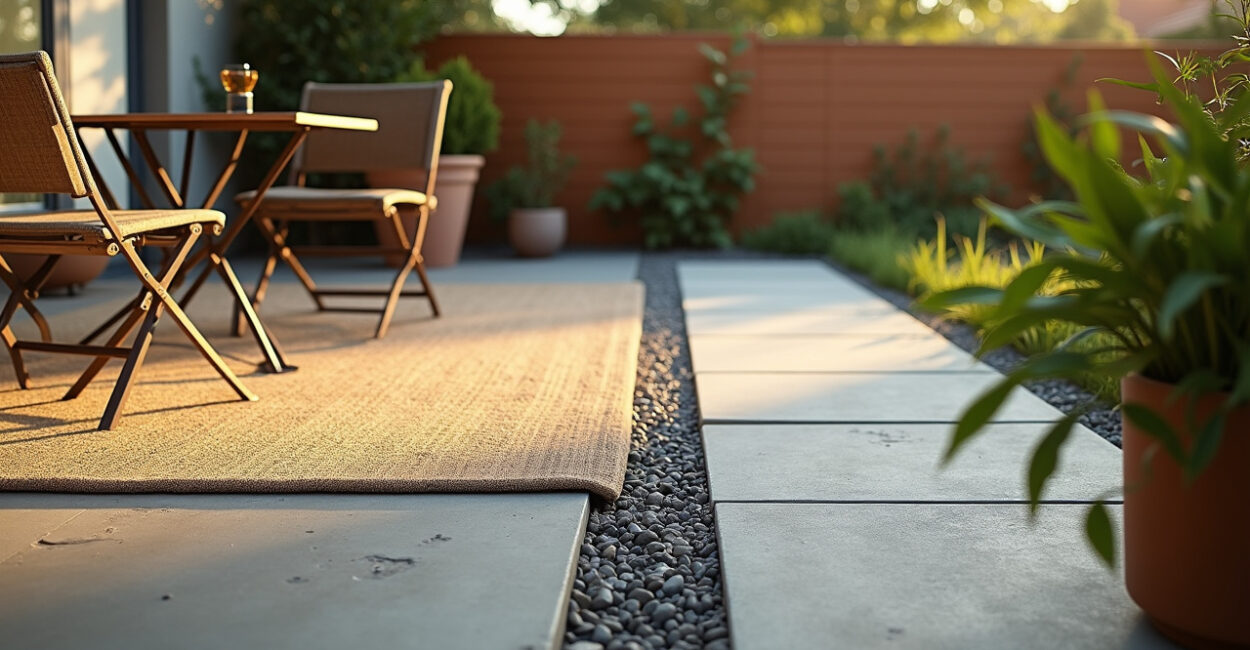
A small patio can feel twice as useful when the floor is chosen well—and twice as cramped when it is not. The best budget patio floor ideas for small spaces do one of two jobs: they either create a clean, finished surface fast, or they add a durable base that makes the whole area feel intentional without a full rebuild.
That is why the comparison between outdoor rugs and pavers matters. Both are affordable, both can work in tight footprints, and both can look far better than bare concrete or worn decking. But they solve different problems. This article breaks down which option wins on durability, style, installation effort, and real-world impact in compact backyard spaces.
O Que Você Precisa Saber
- Outdoor rugs are the fastest way to hide an unattractive surface, but they are a surface treatment, not a structural upgrade.
- Pavers create a harder-wearing patio floor, yet they demand better ground prep, more time, and a slightly higher upfront cost.
- In very small spaces, the visual effect matters as much as material cost; scale, color, and layout can make a patio feel larger or more cluttered.
- The smartest budget choice depends on whether the patio is temporary, exposed to heavy rain, or expected to handle frequent furniture movement.
- For renters or seasonal setups, rugs often make more sense; for long-term ownership, pavers usually deliver the better value per year of use.
Budget Patio Floor Ideas for Small Spaces: Outdoor Rugs Vs. Pavers
The technical difference is simple. An outdoor rug is a removable textile layer made from weather-resistant fibers such as polypropylene or recycled PET, designed to sit on top of an existing floor. A paver patio is a hardscape surface built from concrete, brick, or stone units set on a compacted base, often with sand-filled joints. One is finish. The other is construction.
That distinction matters more in small patios than people expect. In a compact footprint, every edge reads louder, every seam is more visible, and every inch of slope affects drainage. A rug can make the space look styled in minutes. Pavers can make the space feel permanent, but they ask for more planning upfront.
The real difference between outdoor rugs and pavers is not style versus durability—it is temporary visual impact versus long-term surface performance.
How Each Option Behaves in a Tight Footprint
On a 6-by-8-foot patio, a rug can instantly define a seating zone without stealing visual space. That is useful when the goal is to make the area feel like an outdoor room. Pavers, by contrast, alter the entire surface plane. They are better when the concrete is cracked, stained, or uneven enough that decoration alone will not fix the problem.
In practice, people often underestimate the importance of transitions. A rug works best when furniture sits mostly within its border. If the chairs keep sliding off the edges, the layout starts to feel improvised. Pavers do not have that issue, but they can make a tiny patio feel busier if the pattern or color is too loud.
Who Should Pick Which One First
- Choose a rug first if the slab is sound, you rent the home, or you need a fast refresh before a gathering.
- Choose pavers first if the floor is failing, pooling water is a problem, or you want a surface that can handle years of use.
- Choose neither if the patio still needs drainage, grading, or structural repair; a cosmetic upgrade will not solve those issues.
Outdoor Rugs: The Fastest Low-Cost Way to Change the Look
Outdoor rugs are the quickest path to a polished patio because they cover the largest visible surface in one move. That makes them especially useful for small spaces where a single design decision has outsized visual impact. A neutral rug can calm a busy yard; a striped one can stretch the eye and make a narrow patio feel wider.
Who works with outdoor spaces knows this: the rug is often doing more psychological work than physical work. It signals “this is a room,” even if the base is plain concrete. That is why it is such a good budget move for balconies, townhouse patios, and tiny backyards that need immediate personality.
Outdoor rugs are the best budget choice when the goal is to improve how a patio feels this weekend, not to rebuild what lies underneath.
Where Rugs Win Hard
They win on installation speed. Roll it out, anchor it if needed, and the space changes instantly. They also win on flexibility. If you rearrange furniture, change planters, or move to a new home, the rug goes with you. For outdoor maintenance guidance from the EPA, reducing unnecessary water use and upkeep matters in outdoor living areas; a rug can support a lower-maintenance setup when paired with potted plants instead of heavy landscape work.
They also win when the existing patio is decent but visually tired. I have seen small patios transformed by a rug, two planters, and one narrow café table. The surface underneath was nothing special. The composition was.
Where Rugs Fall Short
Rugs fail when moisture sits under them. On shaded slabs, trapped dampness can lead to odor, mildew, or a slick underside. They also age poorly if dragged across rough concrete edges. And while a good polypropylene rug resists weather, it still looks like a rug. It will never hide major cracking, heaving, or drainage trouble.
That is the limitation many homeowners discover too late. A rug improves the scene, but it does not improve the floor itself.

Pavers: More Work Upfront, Better Long-Term Value
Pavers are the stronger choice when you want the patio floor to become part of the property, not just part of the décor. Concrete pavers, clay brick, and some natural stone options can all work in small spaces, but the principle stays the same: you are building a finished hard surface over a prepared base. That gives you durability, drainage control, and a more permanent visual lift.
For cost-conscious projects, the key is not chasing the fanciest material. It is using a simple pattern, limiting cuts, and keeping the footprint tight. A straightforward square or running-bond layout usually costs less to install than a complex herringbone field with lots of edge trimming.
Why Small Spaces Can Make Pavers Cheaper Than You Think
Because the area is small, the material quantity stays manageable. A modest patio may need far fewer units than people expect, which is why landscape planning principles from the National Park Service emphasize proportion, circulation, and scale. In a compact yard, a well-planned hardscape often does more than a large, unfocused one.
The catch is labor. Even a small paver project needs excavation depth, base material, compaction, leveling, edging, and joint sand. Skip those steps, and the surface shifts. That is why pavers are only “budget” if the prep is done correctly and the design stays restrained.
Mini-Story: The 8-by-10 Patio That Changed the Yard
A homeowner with an 8-by-10 concrete slab tried three rugs over two years. Each one looked good for a season, then curled, faded, or stayed damp after rain. The final fix was not expensive pavers everywhere. It was a simple border of concrete pavers around the slab’s worst edge, plus a small gravel transition zone where water pooled.
The space did not become luxurious. It became usable. That is the real benchmark in a small yard.
Durability, Maintenance, and Climate: The Deciding Factors
If your patio gets a lot of rain, shade, or freeze-thaw cycles, durability should outweigh appearance. Pavers tolerate weather better because they are designed as a surface system. Outdoor rugs are more exposed to UV fading, mildew, and dirt accumulation, especially when the patio sits under trees or lacks airflow.
The maintenance question is just as practical. Rugs need shaking, scrubbing, drying, and occasional replacement. Pavers need weed control in joints, occasional re-sanding, and basic sweeping. Neither is maintenance-free, but the kind of maintenance is very different. One is textile care. The other is surface care.
| Factor | Outdoor Rug | Pavers |
|---|---|---|
| Upfront cost | Lower | Moderate to higher |
| Install time | Minutes | Hours to days |
| Durability | Moderate | High |
| Best use case | Fast style refresh | Permanent floor upgrade |
| Maintenance | Cleaning and drying | Sweeping, joint care, leveling checks |
For drainage and slope issues, pavers are usually the safer investment, but they are not magic. If the base is poorly compacted or water has nowhere to go, even a well-made paver patio can shift. The method works well in small spaces, but it fails when the prep is rushed.

How to Choose the Right Budget Upgrade for Your Patio
Start with the floor, not the décor. Ask three questions: Is the existing surface stable? Does the space get wet or stay shaded? Do you want a temporary fix or a long-term one? Your answers point to the better choice faster than any trend list.
- Pick an outdoor rug if the slab is solid, you want the lowest-cost visual upgrade, and flexibility matters more than permanence.
- Pick pavers if the patio is a long-term project, the floor needs a real improvement, or water management matters.
- Combine both only if the hardscape is already stable and the rug will stay in a dry, well-ventilated area.
The best small-patio result usually comes from restraint. A single material, one strong focal point, and clear circulation will beat a crowded mix of textures. In a tight footprint, the floor should support the space, not compete with it.
What to Do Next Before You Spend a Dollar
The smartest move is to measure the patio, test drainage after rain, and decide whether the surface needs styling or structure. If the slab is sound, an outdoor rug can deliver the quickest payoff. If the floor is failing or the patio needs to last for years, pavers are the stronger investment. That is the real dividing line in budget patio floor ideas for small spaces: fast transformation versus durable reset.
Before buying anything, photograph the patio in daylight, note the damp spots, and sketch the furniture footprint on paper. Then choose the solution that matches the actual problem. A good small-space upgrade is not the cheapest option on the shelf; it is the one you will not regret after the first hard rain.
FAQ
Are Outdoor Rugs a Good Idea for Small Patios?
Yes, if your goal is a quick style upgrade and the existing surface is already in decent shape. Outdoor rugs are especially useful on small patios because they define a seating area without requiring demolition or heavy tools. They are less effective in damp, shaded spaces where moisture can get trapped underneath. For renters, temporary setups, or seasonal refreshes, they are often the most practical low-cost choice.
Are Pavers Worth It for a Small Patio?
Usually, yes, if you want a more permanent floor that can handle weather and regular use. A small patio does not need a huge budget to benefit from pavers because the square footage is limited, which keeps material costs manageable. The main expense is labor and base prep. If those steps are done right, pavers can outlast several rounds of rug replacements.
Which Option is Better in Rainy or Humid Climates?
Pavers usually perform better because they handle moisture more predictably when installed with proper slope and drainage. Outdoor rugs can work, but they need airflow, drying time, and a base that does not stay wet. In humid conditions, mildew and odor become the weak points of rug-based setups. If the patio stays damp after storms, pavers are the safer long-term bet.
Can I Put an Outdoor Rug over Pavers?
Yes, and it is a common approach when the hardscape is already in place but needs more warmth or color. The key is to choose a rug with a stable backing and enough weight to stay put in wind. Make sure water can drain and the rug can dry after rain. In small spaces, a rug on pavers can work well if the pattern is simple and the furniture scale is kept tight.
What is the Cheapest Way to Improve a Small Patio Floor?
If the existing surface is usable, an outdoor rug is usually the cheapest immediate fix. If the floor is damaged, the cheapest real improvement may be a small paver section rather than covering the whole area. That is where many homeowners save money by solving the worst part first. The lowest sticker price is not always the lowest long-term cost.