

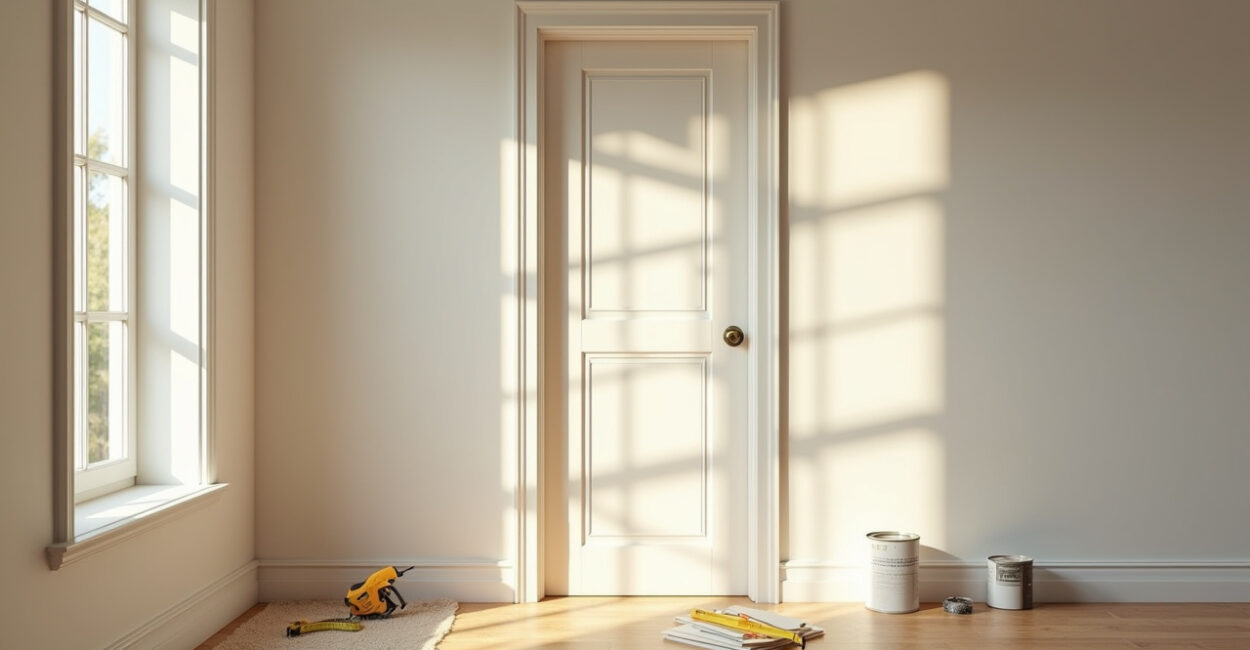
A plain hollow-core door can look five years newer with less than a weekend’s work. The trick is not spending more—it’s choosing cheap interior door trim upgrades that add shadow lines, depth, and proportion without turning a simple door into a complicated carpentry project. Done right, trim changes the way a room reads before anyone notices the door itself.
This article breaks down seven budget-friendly trim ideas that deliver the biggest visual payoff, plus the materials that make sense, the shortcuts that actually hold up, and the places where a low-cost upgrade is worth doing versus where it is not. If you want a cleaner, more finished look without replacing the door, this is the practical path.
Quick Takeaways
- Most interior door trim upgrades work because they change proportion first and decoration second; the eye reads the frame before it reads the hardware.
- Paint-grade MDF, pine, flexible trim, and 1x stock are the best low-cost materials for a clean finish on standard doors.
- Pre-primed trim saves time, but raw stock can be cheaper if you are comfortable sanding, filling, and painting.
- The best results come from repeating one trim language throughout a hallway, not mixing four different molding styles.
- Cheap upgrades fail when reveals are uneven, caulk is overused, or the casing profile fights the style of the room.
Cheap Interior Door Trim Upgrades That Make Plain Doors Look Built-In
Technically, door trim is the casing, molding, and applied detail around the opening that frames the door and hides the gap between wall and jamb. In everyday language, it is the border that makes a door feel finished. Once you understand that, the budget choices become easier: you are not “adding fancy trim,” you are improving the visual scale of the opening.
For a solid reference on trim terminology and finish-carpentry basics, the This Is Carpentry archive is a strong trade resource, and the Family Handyman walkthrough is useful for the basic install sequence. The National Association of Home Builders also maintains broad finish-quality guidance through NAHB.
What separates a cheap-looking trim job from a polished one is not the price of the molding—it is the consistency of the reveal, the joint quality, and the proportion of the casing to the door opening.
1) Add Wider Casing over the Existing Trim
If your doors have thin, builder-basic casing, the fastest visual upgrade is to replace it with wider flat stock or layer new trim over the old frame. A 2 1/4-inch casing can look underwhelming in a newer home; stepping up to 3 1/2 inches or even 4 inches gives the opening more presence. This works best when the walls are flat and the existing jamb depth is forgiving.
Who works with this stuff knows the shortcut: if the old casing is secure and not damaged, you do not always need a full tear-out. You can add a clean face layer, fill the edge, and paint everything one color. That said, this method fails if the old trim is badly warped or if the added thickness interferes with door swing clearance.
- Best material: primed pine or MDF casing.
- Best rooms: hallways, bedrooms, and closets.
- Watch for: hinge-side clearance and uneven walls.
2) Create a Flat-Panel Molding Frame on the Door Face
This is the upgrade that gives a flat slab door the look of a more expensive panel door. You apply thin molding in a symmetrical frame pattern on the door face, then paint the whole unit in a uniform finish. The effect is subtle but strong: the door starts to look intentional rather than generic.
Na prática, the most common mistake is overcomplicating the layout. One centered rectangle, or two vertical frames on a tall door, is usually enough. Measure the stiles and rails so the border reads evenly from a normal standing distance. If the door has textured paint or deep dents, skim-coating first improves the result far more than using thicker trim.
3) Use Simple Chair Rail or Picture-Frame Molding Around the Opening
Picture-frame molding is not just for walls. Around a door opening, thin molding can create a boutique-hotel feel when you keep the profile slim and the layout tight. This is a good option if you want trim detail without making the opening bulky or old-fashioned.
The key is restraint. A common setup is a narrow outer casing with an inner frame that repeats the wall’s geometry. This works well in older homes where tall ceilings can handle more detail, but it can feel fussy in small rooms with low ceilings. If your hallway already has strong baseboards, keep the door trim simpler so the room does not compete with itself.
The right trim profile should match the room’s architecture, not fight it; a simple flat casing usually beats an ornate molding in small or modern spaces.
Best Budget Materials for a Clean Finish
Material choice matters because trim is judged at the edges. A board that cuts cleanly, sands well, and holds paint is worth more than a prettier profile that chips the first time you caulk a seam. For low-cost interior trim, the usual winners are MDF, finger-jointed pine, and pre-primed poplar.
For paint and prep guidance, Bob Vila’s trim painting advice and the Consumer Reports painting guide are both useful for avoiding visible brush marks and rough edges.
| Material | Cost | Best For | Main Trade-Off |
|---|---|---|---|
| MDF | Low | Painted trim in dry rooms | Weak against moisture and impact |
| Finger-jointed pine | Low to moderate | General-purpose casing | Can show knots or grain if not primed well |
| Pre-primed poplar | Moderate | Sharper finish carpentry | Costs more, but paints beautifully |
| Flexible trim | Moderate | Arched or uneven openings | Not ideal for crisp, modern lines |
Why MDF Often Wins on a Tight Budget
MDF is hard to beat when the trim will be painted and the room stays reasonably dry. It cuts smoothly, accepts a clean bead of caulk, and hides better than knotty stock. The downside is real, though: it can swell if exposed to water, so it is a poor choice for bathrooms with frequent condensation or for basement spaces with moisture issues. In those cases, pine or poplar gives you more forgiveness.
If you are matching existing trim in a hallway, buy one test board before committing to the whole house. Grain, edge profile, and primer quality vary more than people expect.
4) Paint the Trim and Door the Same Color
Color unification is one of the cheapest upgrades with the biggest payoff. When the door and casing are painted the same color, the opening looks more intentional and the trim reads as part of the architecture, not a separate afterthought. This is especially effective in small spaces where visual clutter makes the hallway feel cramped.
Here is the trade-off: the technique hides less. Every dent, gap, and imperfect miter becomes more visible under one continuous paint color, so prep matters. Fill nail holes, sand the edges smooth, and use a high-quality enamel or trim paint that dries hard. A satin finish is usually the safest middle ground between easy cleaning and low glare.

Fast Weekend Upgrades That Change the Whole Room
Most homeowners underestimate how much can be done in a single weekend. If the door is structurally fine, you do not need to rebuild it to improve the room. You need one clean idea, decent measurements, and a careful finish.
- Remove or score old caulk and loose paint.
- Measure the opening and plan the reveal before cutting.
- Cut trim pieces dry-fit first, then install.
- Fill seams, sand lightly, and prime any raw edges.
- Paint after the caulk cures, not before.
A practical example: a friend’s rental had flat white doors with scuffed casing and no visual rhythm. We used pre-primed pine, widened the casing on two doors facing the main hallway, and painted both doors and trim in the same soft white. The job took one Saturday and a short touch-up on Sunday. The place did not look “renovated,” but it looked cared for—and that is usually the real goal with budget trim work.
How to Match Trim Style to the Room Without Overdoing It
The trim should look like it belongs to the house. That sounds obvious, but it is where many low-cost projects go sideways. A modern flat casing in a traditional home can look unfinished; ornate molding in a minimalist room can look staged. Match the profile to the room’s baseboards, window trim, and hardware before you buy anything.
For design references, the National Park Service historic preservation guidance is useful when you are working in older homes, because it explains why proportions and original details matter. Architectural Digest also offers approachable visual examples in its trim and molding coverage: Architectural Digest.
Use the Existing House Language
If the baseboards are simple and squared off, keep the door trim simple too. If the home has heavier traditional profiles, a slightly taller casing can help the door feel aligned with the rest of the interior. This is not about matching every detail exactly; it is about avoiding a visual argument between surfaces that sit only a few feet apart.
When in doubt, borrow the smallest repeatable detail from the room and carry it across the trim. That keeps the upgrade coherent instead of decorative for decoration’s sake.

Where Cheap Trim Upgrades Fail
There is a reason some budget trim jobs look messy even when the materials are decent. The failure usually comes from installation, not cost. Uneven cuts, sloppy caulk, and trim that is too small for the opening make the whole thing look improvised.
Cheap trim upgrades fail when the proportions are wrong; good finish work makes inexpensive materials look deliberate, but bad layout makes expensive trim look cheap.
That rule explains most of the common mistakes:
- Too narrow: thin trim disappears visually, especially beside modern baseboards.
- Too ornate: decorative profiles can feel disconnected in plain rooms.
- Too much caulk: caulk should fill hairline gaps, not replace poor cuts.
- Poor paint prep: glossy chips and raw edges show immediately under side light.
There is also a limit to how much a trim upgrade can fix. If the wall is wavy, the door frame is out of square, or the jamb is damaged, the best-looking casing in the store will not solve the problem. In those cases, repair the substrate first and trim second.
Tools and Supplies That Keep the Project Cheap
You do not need a cabinet shop to do this well. A miter saw helps, but a sharp miter box can work for smaller jobs. A brad nailer speeds things up, yet hand nailing is still fine if you are patient. What matters most is precision, not gadget count.
- Measuring tape and combination square
- Miter saw or miter box
- Brad nailer or finish nails
- Paintable caulk and wood filler
- Sandpaper in 120 and 220 grit
- Primer and trim enamel
If you are choosing where to spend and where to save, put money into paint, primer, and decent blades. Save on decorative extras. A sharp cut and a durable finish will outlast a fancier trim profile every time.
What to Do First If You Want the Biggest Visual Payoff
Start with the door that gets seen most often. Usually that is the hallway door, the entry from the living room, or the one facing a main sightline. One good trim upgrade in the right spot changes the whole run of doors much more than spreading a tiny budget across every opening in the house.
If you want the strongest return from cheap interior door trim upgrades, pick one style, repeat it, and finish it cleanly. That consistency is what makes the house feel more finished than the individual materials themselves.
Frequently Asked Questions
What is the Cheapest Interior Door Trim Upgrade That Still Looks Good?
Painting the door and trim the same color is usually the lowest-cost upgrade with the highest visual payoff. If the casing is already in decent shape, new paint, careful caulk, and a cleaner finish can make the opening look newly installed. If you need a bit more impact, adding wider flat casing is the next step up without getting into custom millwork. The real advantage is that both options stay affordable and can be finished in a weekend.
Is MDF or Pine Better for Budget Door Trim?
MDF is cheaper and easier to paint, so it works well in dry rooms where impact and moisture are not a big issue. Pine costs a little more, but it handles bumps better and is more forgiving if the room has temperature swings or light humidity. For a painted finish, either can work well when sealed and primed properly. The better choice depends on whether you want the lowest price or a bit more durability.
Can I Install New Trim over Old Trim?
Yes, in many cases you can, and that is one of the fastest ways to upgrade the look without full demolition. This works best when the old casing is stable, reasonably flat, and not rotted or warped. You need to check door swing clearance and make sure the added thickness will not interfere with hinges, stops, or nearby walls. If the existing trim is damaged or uneven, replacing it usually gives a cleaner result.
How Do I Keep Cheap Trim Upgrades from Looking Amateur?
Focus on proportion, clean cuts, and restraint. Trim that is too narrow, too ornate, or installed with obvious gaps will stand out for the wrong reasons. Use a square, dry-fit your pieces before nailing, and keep caulk to the smallest amount needed to close seams. A simple profile painted well almost always looks better than a complicated design with sloppy joints.
Do Door Trim Upgrades Work in Rental Homes?
They can, but only if the lease allows cosmetic changes and you can revert the work later if needed. Painted trim refreshes, removable moldings, and careful casing overlays are the most rental-friendly options. I would avoid anything that requires heavy demolition or changes the door frame permanently. In rentals, the best upgrade is one that improves the space without creating a repair headache at move-out.