
Small Front Yard Landscaping Designs That Feel Finished Fast
How to design small front yard landscaping that creates depth and focus with one clear entry path, layered plants, and structured beds for a balanced look.
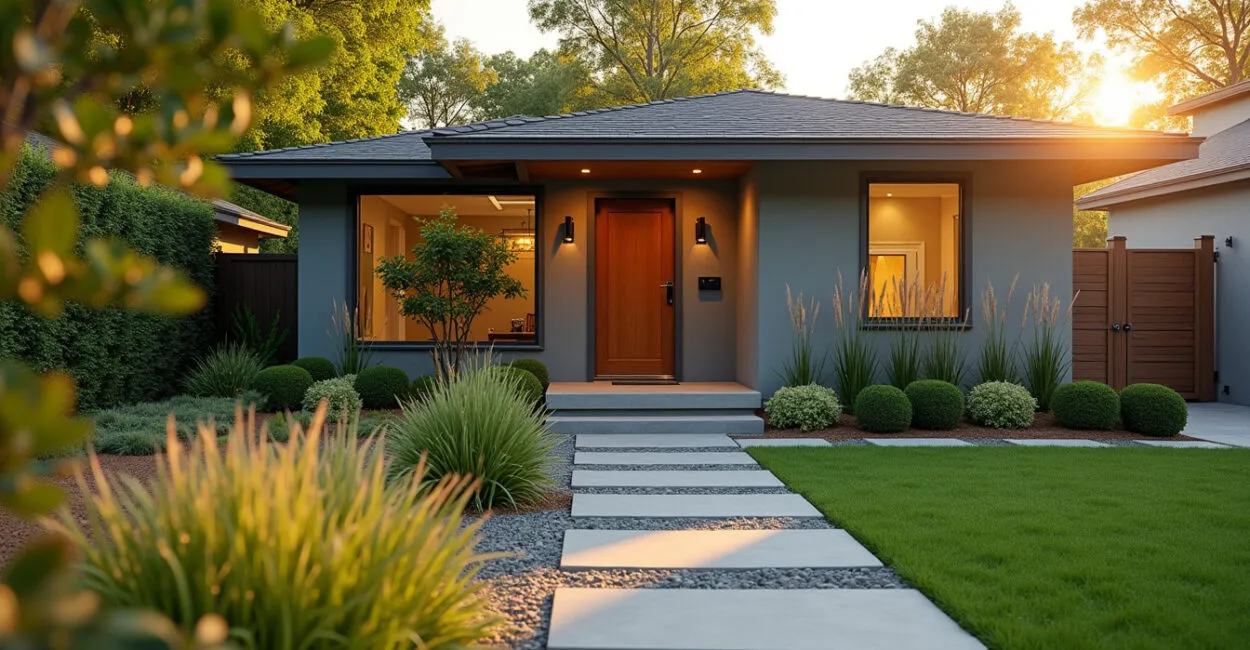 A curved stone path leads through layered front-yard plantings
A smart small front yard landscaping layout does more with less: it creates depth, frames the entry, and still looks calm when everything fills in.
The trick is not packing in more plants. It’s using structure first—paths, edges, repetition, and scale—so a tight lot feels intentional instead of crowded. That’s the difference between “cute today” and “finished fast.”
Start with One Clear Entry Story
Every successful small front yard landscaping layout gives the eye one obvious place to go. That usually means a straight or gently curved walk, a defined planting bed, and one strong focal point near the door. If the front yard has three competing ideas, it reads smaller. If it has one clean arrival path, it feels deeper.
Read also: Drought-Tolerant Front Yard Plants: 9 Picks That Stay Neat
Think in layers: low in front, medium in the middle, and one taller accent only where it won’t block windows or the porch. That single move creates perspective. A narrow bed with repeating plants often looks richer than a packed mix of random shapes.
One mistake I see all the time is using the same plant size everywhere. It flattens the whole yard. Instead, let the small front yard landscaping layout breathe around the entry with open mulch space, a few repeats, and one anchor plant—like a dwarf evergreen, ornamental grass, or compact shrub.
Read also: Low-Maintenance Front Yard Landscaping Ideas That Work in 2026
The Layout Moves That Add Depth Without Adding Clutter
Depth comes from contrast, not density. A bed that starts wider near the house and tapers toward the street can make a narrow front yard feel longer. So can a stepping-stone path that bends just enough to slow the eye.
- Use odd numbers for plant groupings.
- Repeat 2–3 plant types instead of mixing 10.
- Keep taller plants away from corners that need to stay open.
- Leave negative space so mature plants have room to expand.
Here’s the part people miss: a crowded yard often looks worse in year two than on install day. A good small front yard landscaping layout plans for growth, not just empty soil. That means checking mature widths, not nursery pot size. The National Garden Bureau has useful plant-size guidance, and the University of Minnesota Extension landscaping resources explain why scale matters so much in small spaces.
Small yards don’t need more plants. They need better spacing.
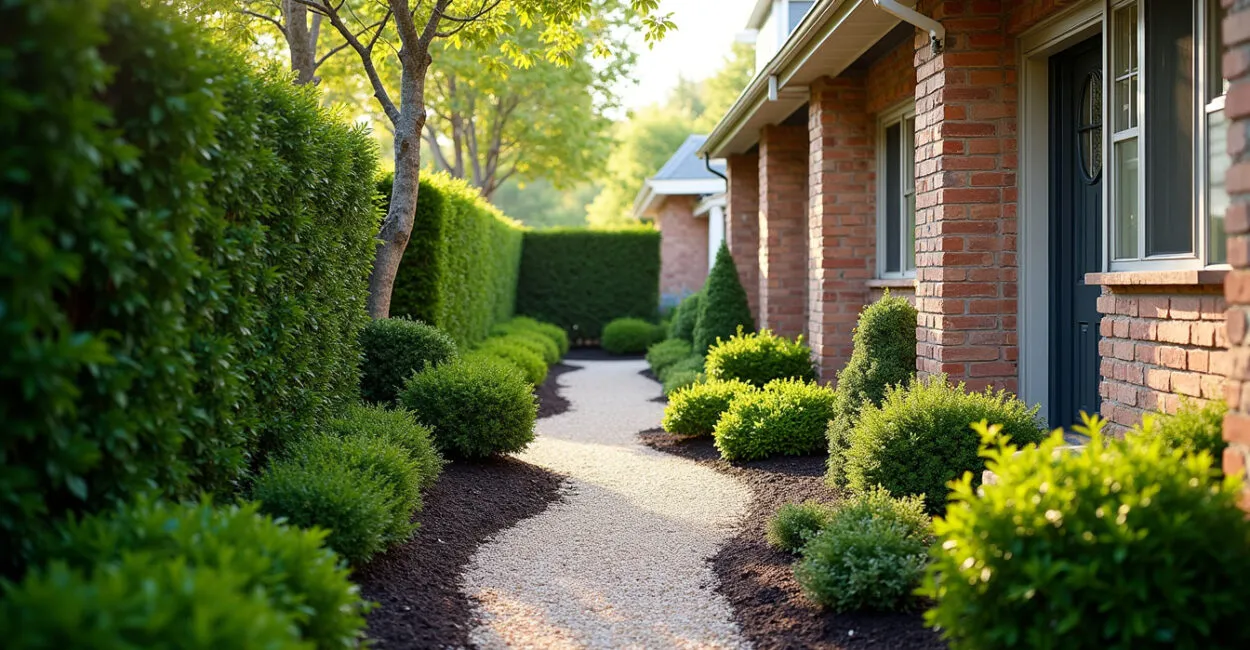
Make It Look Finished Fast—Then Let It Age Well
The fastest way to make a small front yard landscaping layout feel complete is to combine hard edges with soft planting. Crisp bed lines, a clean mulch finish, and one repeated groundcover can make even a modest yard look designed the same day it’s planted.
Mini-story: a narrow front yard with six different shrubs felt busy and cheap. The owner cut it back to three plant types, widened the entry bed, and added a low hedge line. The house suddenly looked taller. The yard looked twice as deep. Nothing “extra” was added—just less confusion.
This is also where local rules can matter. Setbacks, sightlines, and curb visibility affect what you can plant near the street. If you’re checking code or right-of-way questions, a city planning site or local extension office is worth reading before you dig. The National Park Service landscaping guidance is a solid reminder that plants, space, and maintenance all work together.
How Do I Make a Small Front Yard Look Bigger?
Use one clear path, repeat a few plants, and avoid filling every open inch. A small front yard landscaping layout looks bigger when the eye can move through it instead of stopping at clutter. Wider bed edges near the house, lighter planting near the entry, and one focal point help create depth fast. Negative space is not wasted space—it’s part of the design.
What Plants Work Best in a Tight Front Yard?
Choose compact shrubs, ornamental grasses, groundcovers, and one small anchor plant with controlled mature size. Look for varieties that stay tidy without constant pruning. In a small front yard landscaping layout, plants that naturally hold shape usually beat fast-growing fillers, because fast growers often create the crowded look you’re trying to avoid in year two.
Should the Walkway Be Straight or Curved?
Either can work, but the goal is clarity. A straight walk feels formal and efficient; a slight curve can add depth in a narrow space if it doesn’t become fussy. For a small front yard landscaping layout, the best choice is the one that guides visitors naturally and leaves enough room for planting beds without pinching the entry.
How Many Plant Types Should I Use?
Usually fewer than you think. Three to five strong plant types often look more polished than a long list of “interesting” options. Repetition creates rhythm, and rhythm makes a small front yard landscaping layout feel intentional. If everything is different, the yard reads as busy, even when the plants are healthy and well maintained.
What Should I Avoid First?
Avoid oversized shrubs, overcrowded beds, and tiny plants scattered like confetti. Those choices make a small front yard landscaping layout feel cramped immediately and unfinished later. Also skip narrow edging that disappears, because weak borders make the whole design look temporary. Start with structure, then add plants that can grow into the space without fighting it.
The best front yards don’t try to impress with volume. They feel calm, clear, and quietly confident from the curb.
If the layout reads well now and still has room to breathe later, you’ve designed the part most people get wrong.
📱 See this content as a Web Story