
Designing Native Plant Borders for Blooms Throughout the Season
How to design native plant borders for blooms with layered early, mid, and late-season flowers, using structure and spacing to sustain color and pollinators …
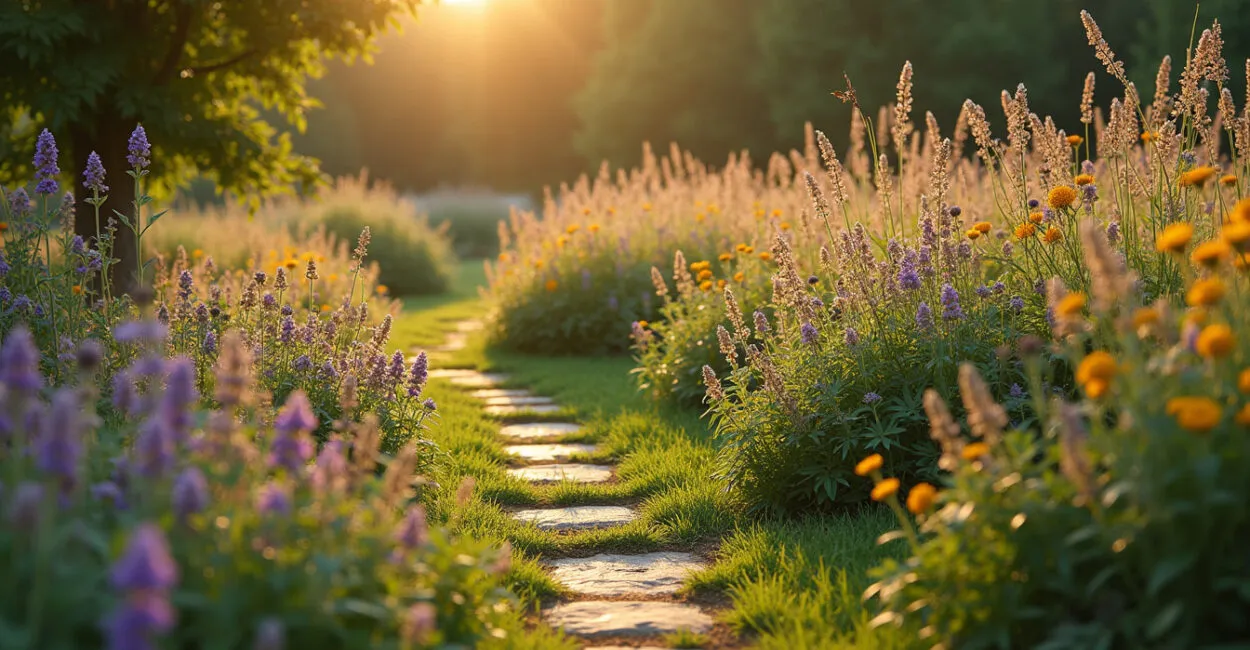 Layered native blooms edge a sunlit stone path
Layering early, mid, and late bloomers is what keeps design native plant borders for blooms from looking packed one month and empty the next.
Most borders fail for one simple reason: every plant peaks at once. The result is a gorgeous two-week burst, then six months of polite green leaves. A better border feeds pollinators from frost to fall, and it does it without turning into a jumble.
The trick is not more plants. It’s sequence, spacing, and restraint.
Build the Border in Layers, Not in One Bloom Rush
Think of a native border as a relay race. Early bloomers hand off to midseason plants, then late bloomers finish the job. That’s the core of design native plant borders for blooms: you are planning color and nectar in waves, not in a single show.
Read also: Native Plants Vs. Lawns: Pollinators Win in Most Landscapes
Start with the border’s backbone: grasses, sedges, and strong foliage plants that hold shape after flowers fade. Then tuck in spring stars like woodland phlox or golden alexanders, follow with summer workhorses such as purple coneflower or bee balm, and finish with asters, goldenrod, and other late-season anchors. The structure stays calm even as the flower list changes.
The border looks richer when plants repeat in small drifts instead of being scattered one by one. Three clumps of the same species read as intention. One lonely specimen reads as a mistake.
Read also: Best Native Plants for Bees in Sunny Garden Beds
Why the Best Native Borders Look Calm Even When They’re Busy
The surprise is that the busiest-looking borders are often the most controlled. If you mix every bloom time evenly, the eye has nowhere to rest. If you group by height and season, the border feels layered, not chaotic.
Here’s the comparison that changes everything: a “collector’s garden” has many plants, but weak rhythm; a designed border has fewer visual decisions, but more impact. In practice, that means tall late bloomers go toward the back, medium plants fill the middle, and low spring bloomers soften the edge. That one move makes design native plant borders for blooms feel deliberate.
Common mistakes to avoid:
- Putting all the spring color in one corner.
- Using only showy flowers and no foliage structure.
- Choosing plants that bloom together but fade together.
- Ignoring mature size, then pruning panic sets in by July.
Who works with native beds every season knows the real test is July: if the border still has form then, it will likely look good in October too.
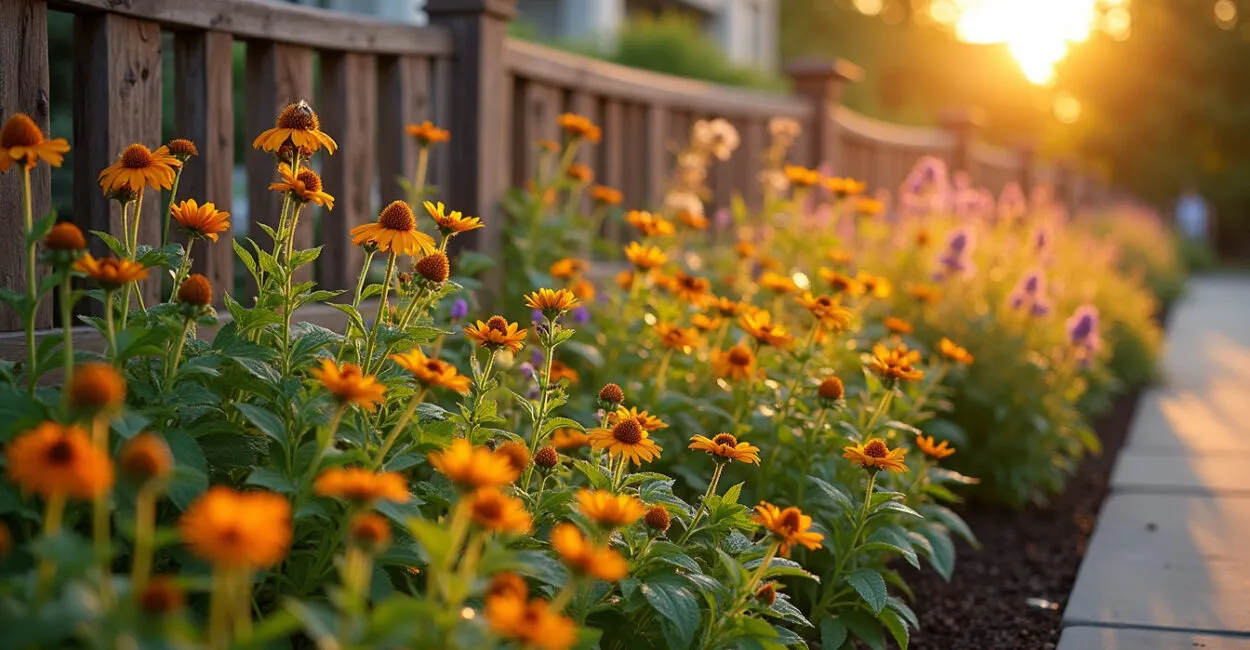
The Planting Sequence That Keeps Pollinators Coming Back
A pollinator-friendly border is really a calendar with roots. Early bloomers help emerging bees. Midseason flowers carry the heaviest traffic. Late bloomers matter more than people think, because fall nectar is what helps wildlife bridge the gap into colder weather.
For proof that native planting supports insect life at scale, see the Xerces Society’s native plant guidance and the U.S. Forest Service pollinator resources. Both point to the same idea: season-long bloom diversity matters more than one dramatic flush.
One small story says it all. A homeowner planted only early coneflower relatives and a few summer perennials. April was busy. By August, the border looked tired and the bees had moved on. The next year, they added asters and goldenrod at the back, plus a few low spring bloomers near the front. The garden didn’t get bigger. It just started working.
A good native border does not peak. It pulses.
How Many Native Plants Should Bloom in Each Season?
There is no perfect ratio, but a healthy border usually has something blooming in every major window: spring, summer, and fall. The goal is overlap, not equal numbers. If every plant blooms at once, you get a short spectacle and a long lull. If bloom times stagger, the border feels alive for months and pollinators keep finding a reason to return.
What Should Go Near the Front of the Border?
Put lower plants with tidy habits at the front, especially spring bloomers and species that keep a clean edge after flowering. This helps the border read as layered instead of messy. You still want variety, but the front should act like a frame, not a crowd. That’s where restraint makes the whole design look more expensive than it was.
Do Native Plant Borders Need Deadheading?
Sometimes, but not always. If you want a tidier look, removing spent flowers from certain species can help. If wildlife value is the priority, many seed heads are worth keeping into fall and winter. The best choice depends on your goal: a polished street-facing border may need more editing than a meadow-style edge.
Can a Small Border Still Bloom All Season?
Yes, but small spaces need stricter editing. Choose fewer species, repeat them, and favor plants that earn their keep in more than one season through foliage, seed heads, or structure. In a tight bed, one weak choice is more noticeable than in a large planting. Small borders work best when every plant has a job.
What’s the Biggest Mistake in Designing for Long Bloom?
Buying plants for the label instead of the timeline. Many gardens look amazing in the nursery and disappointing in the ground because everything blooms together. The fix is to map bloom periods before planting. If early, mid, and late bloomers are all present, design native plant borders for blooms becomes a system, not a gamble.
When a border is designed well, it doesn’t shout for attention. It keeps showing up, week after week, when the rest of the garden has already moved on.
That’s the real payoff: a border that looks composed in May, generous in July, and still useful in October.
📱 See this content as a Web Story