
How to Start an Herb Garden in Your Kitchen: A Complete Guide for Beginners
How to set up a kitchen herb garden with ideal light and watering, choosing the best herbs, and tips to keep plants healthy for fresh cooking flavors.
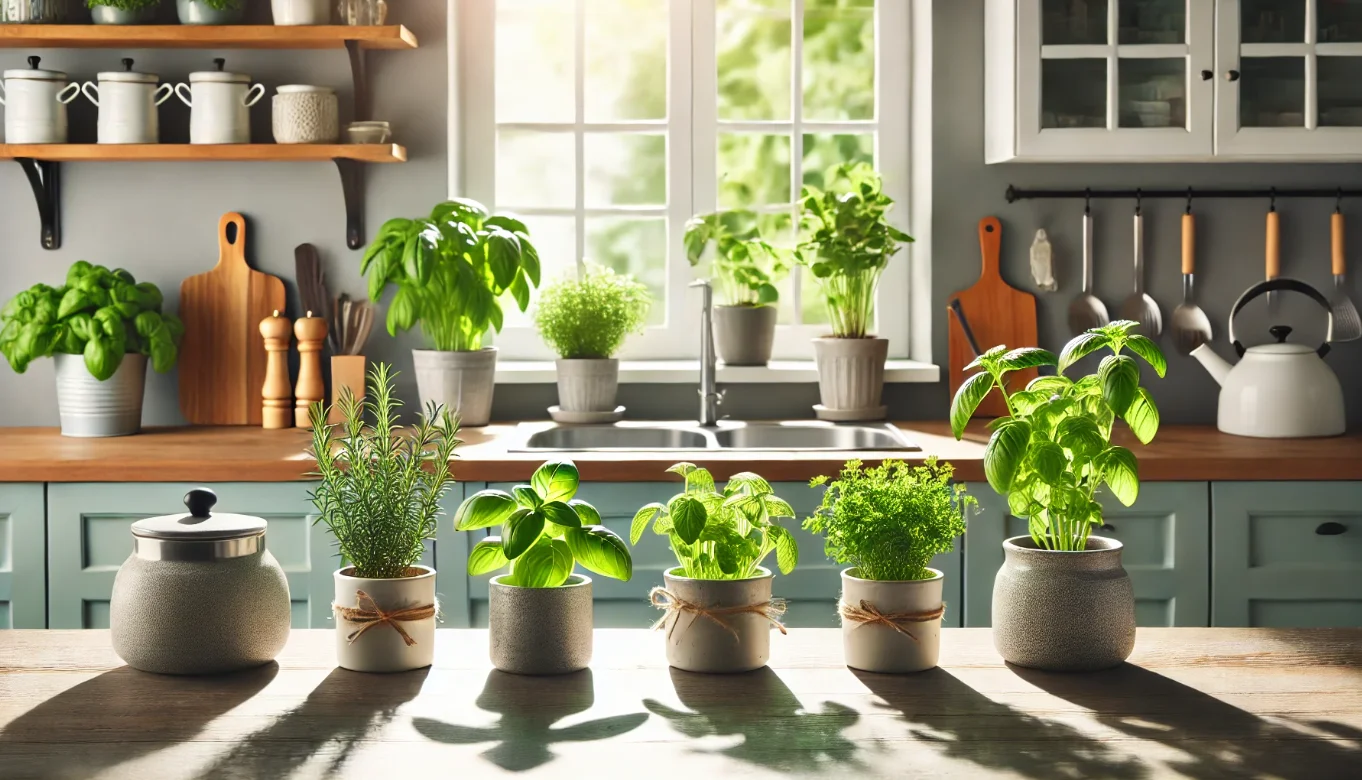 Fresh herbs growing in pots on a sunny windowsill
📅 Updated on 06/13/2026
A fresh herb garden in the kitchen changes how everyday cooking feels. Instead of buying a bunch of basil, using three leaves, and watching the rest turn limp in the fridge, you keep living herbs within reach and cut only what you need.
The setup is smaller than most people expect, but the payoff is real: better flavor, less waste, and a steady supply of parsley, thyme, mint, chives, or rosemary right where you cook. The key is not collecting every herb at the store. It’s choosing plants that match your light, your habits, and the conditions inside your home.
In a Nutshell
- A kitchen herb garden works best with 4 to 6 herbs that share the same light and watering needs.
- South- or west-facing windows usually give herbs the strongest indoor growth; weak light is the main reason indoor plants fail.
- Basil, parsley, chives, mint, and thyme are dependable beginner choices, but rosemary and cilantro are less forgiving indoors.
- Overwatering kills more countertop herbs than neglect does, because roots need oxygen as much as they need water.
- The easiest way to keep herbs productive is to harvest often, trim above a leaf node, and rotate pots every few days.
How a Herb Garden in the Kitchen Actually Works
A kitchen herb garden is a small indoor growing system built for culinary herbs, usually in pots, planters, or a window box near daily prep space. In practical terms, it is not a decoration first and a garden second; it is a light-and-water balance that keeps edible plants healthy enough to harvest repeatedly.
That distinction matters. Herbs sold for cooking are often packed tightly at the nursery, so they look lush for a week and then collapse indoors if they do not get enough light or airflow. The goal is to keep them in a state where they produce new leaves faster than you harvest them.
What separates a thriving kitchen herb garden from a dying windowsill display is not the pot or the price tag — it is whether the plant gets enough light, enough drainage, and regular pruning.
For indoor growing basics, the University of Minnesota Extension is a reliable starting point, and the Royal Horticultural Society has practical herb-growing guidance that translates well to small spaces. If you want to understand why light matters so much, the University of Arizona Cooperative Extension explains indoor plant requirements clearly.
Choose Herbs That Match Your Light, Not Your Shopping List
Start with herbs that behave well indoors: basil, chives, mint, parsley, thyme, and oregano are the safest beginner picks. They are not identical, though, and that is where many kitchen setups go wrong. Basil wants more warmth and stronger light, while mint tolerates lower light but spreads aggressively if you let it.
The most dependable beginner herbs
- Basil: Fast-growing, flavorful, and sensitive to cold drafts.
- Chives: Compact, forgiving, and quick to regrow after cutting.
- Mint: Tough and productive, but best kept in its own pot.
- Parsley: Slow to start, then steady if the light is decent.
- Thyme: Prefers drying out between waterings and dislikes soggy soil.
Herbs that often disappoint indoors
Rosemary and cilantro are the two most common sources of frustration. Rosemary wants intense light and very sharp drainage, while cilantro bolts quickly once the indoor environment gets warm and uneven. That does not mean they are impossible, only that they are less forgiving than marketing images suggest.
Viable choices also depend on how you cook. If you use pesto, basil earns its spot. If you cook soups and eggs often, chives and thyme make more sense. If you want fresh tea, mint belongs in the mix, but in its own container.
Light, Drainage, and Pot Size Set the Ceiling
Most indoor herb problems trace back to three things: insufficient light, poor drainage, or a container that is too large for the roots. A kitchen herb garden can survive one weak point, but it rarely survives all three at once.
Light is the first filter
Herbs are sun-loving plants. A bright south-facing window often works best, followed by a west-facing window with several hours of direct sun. If your kitchen is dim, a small LED grow light will usually outperform hoping the plant “adapts.”
Drainage matters more than decorative pots
Use pots with drainage holes. Always. A cachepot without drainage looks neat on social media and causes trouble in real life because excess water has nowhere to go. Good potting mix should drain quickly but still hold enough moisture for the roots.
Size should match the herb
Small pots dry out fast, while oversized pots hold water too long. For most supermarket transplants, a 6- to 8-inch pot is enough at first. Mint may need more room later, but giving it a giant container immediately is usually unnecessary.
Most indoor herb failures are water failures disguised as light problems; the plant often dies because the roots stayed wet too long, not because the gardener forgot to water once.
| Herb | Light Need | Watering Style | Indoor Difficulty |
|---|---|---|---|
| Basil | High | Keep evenly moist | Moderate |
| Mint | Medium | Keep lightly moist | Easy |
| Thyme | High | Let soil dry between waterings | Easy to moderate |
| Parsley | Medium to high | Even moisture | Moderate |
How to Set Up the Kitchen Without Overcomplicating It
A functional setup is simple: one bright location, matching herbs, pots with drainage, quality potting mix, and a way to water without guesswork. That is enough to start. Fancy labels, matching ceramic containers, and elaborate shelves are optional.
- Pick the brightest practical spot in the kitchen.
- Choose herbs with similar water and light needs.
- Use pots that drain and a potting mix designed for containers.
- Group herbs with similar growth habits together.
- Water only when the top inch of soil feels dry for drier herbs, or when the surface begins to dry for moisture-loving herbs.
One useful rule: place the plants where you will actually notice them. If they sit in a corner you never pass, you will miss the early signs of stress. Near the sink or prep area is usually better than a decorative but inconvenient shelf.
Watering, Pruning, and Harvesting Keep Herbs Productive
Herbs stay productive when you treat harvesting as part of maintenance, not as damage. Cut often, but cut correctly. Snipping the top growth encourages branching, which gives you a fuller plant and more leaves over time.
Water with the plant, not the calendar
Indoor herb care is easiest when you check the soil before watering. Basil and parsley prefer more even moisture, while thyme and oregano want the soil to dry more between drinks. A fixed “every Saturday” schedule fails because temperature, pot size, and light all change drying speed.
Prune above a node
When you cut just above a pair of leaves, the plant usually branches below the cut. That means more stems, not less. If basil starts to flower, pinch the flowers early; once it bolts, leaf production drops and the flavor can turn bitter.
Viable kitchen herb gardens often follow the same pattern: a quick trim every few days, a deeper cut every couple of weeks, and a reset when one plant starts to outgrow the rest. That rhythm keeps the garden useful instead of decorative.
The Mistakes That Kill Indoor Herbs Fastest
The most common mistake is buying too many herbs at once. The second is placing them all in one pretty container without considering root space and water needs. The third is assuming every plant wants the same treatment because they all came from the produce aisle or nursery bench.
Here is a small example from a real kitchen pattern: someone buys basil, mint, rosemary, and cilantro on a Saturday, puts them in matching pots on a dim windowsill, and waters them all on the same day. Basil droops from low light, rosemary yellowing starts from too much moisture, cilantro bolts, and mint survives by sheer toughness. The setup looked organized; the plants were not.
There is one more nuance worth admitting: not every kitchen is a good herb-growing space. A cold north-facing room, a sealed apartment with almost no sun, or a stove that throws heat directly onto the pots can make success difficult. In those cases, a small grow light or a different location may matter more than the plant choice itself.
When to Start, Expand, or Restart Your Setup
The best time to start is when you can commit to a bright spot and a simple care routine. You do not need a perfect kitchen. You do need consistency for the first few weeks, because herbs establish faster when the environment stays steady.
Expand only after the first group is thriving. That keeps you from turning a manageable setup into a crowded one that dries unevenly and invites fungus or root rot. If a plant fails, replace it with one better suited to your conditions instead of forcing the same herb to work a second time.
A kitchen herb garden succeeds when it matches the room you actually have, not the one you wish you had.
What to Do Next
The smartest next step is to start small: choose two or three herbs, give them the brightest window you have, and watch how the soil dries over one week. That test tells you more than any shopping list. If the spot is weak on light, add a grow light before adding more plants.
Once the first round is stable, build outward based on what your cooking uses most. Fresh herbs are only useful when they stay alive long enough to reach the cutting board, so let your kitchen habits decide what stays and what goes.
Frequently Asked Questions
What herbs are easiest to grow in a kitchen?
Chives, mint, basil, parsley, and thyme are the most beginner-friendly options. Mint is the toughest, but it should stay in its own pot because it spreads aggressively. Basil grows fast, but it needs stronger light than people often expect.
How much sunlight does a kitchen herb garden need?
Most herbs want several hours of bright light each day. A south-facing window is usually the best natural option, and a west-facing window can also work well. If the kitchen is dim, a small LED grow light helps a lot more than guessing.
Why do indoor herbs die so often?
Indoor herbs usually fail from too little light, too much water, or poor drainage. Decorative pots without drainage holes are a common problem. Crowding too many herbs together also makes it harder to keep their moisture needs straight.
Should I plant different herbs together in one pot?
Only if they need similar light and watering. Basil and parsley can sometimes share a setup, but mint should stay separate, and thyme does better with drier soil than basil. Mixed pots look good, but matching plant needs matters more than appearance.
Can I grow herbs from supermarket plants?
Yes, and many people start that way. The plant usually needs to be transplanted into a pot with drainage and given better light than the store shelf provided. It is a practical way to start fast, though the herbs may still need time to recover from crowded nursery conditions.