
How to Create a Cozy Reading Nook in Your Home: A Complete Guide
How a cozy reading nook reduces friction with balanced lighting, supportive seating, and smart storage to create a calm, practical space that fits your real …
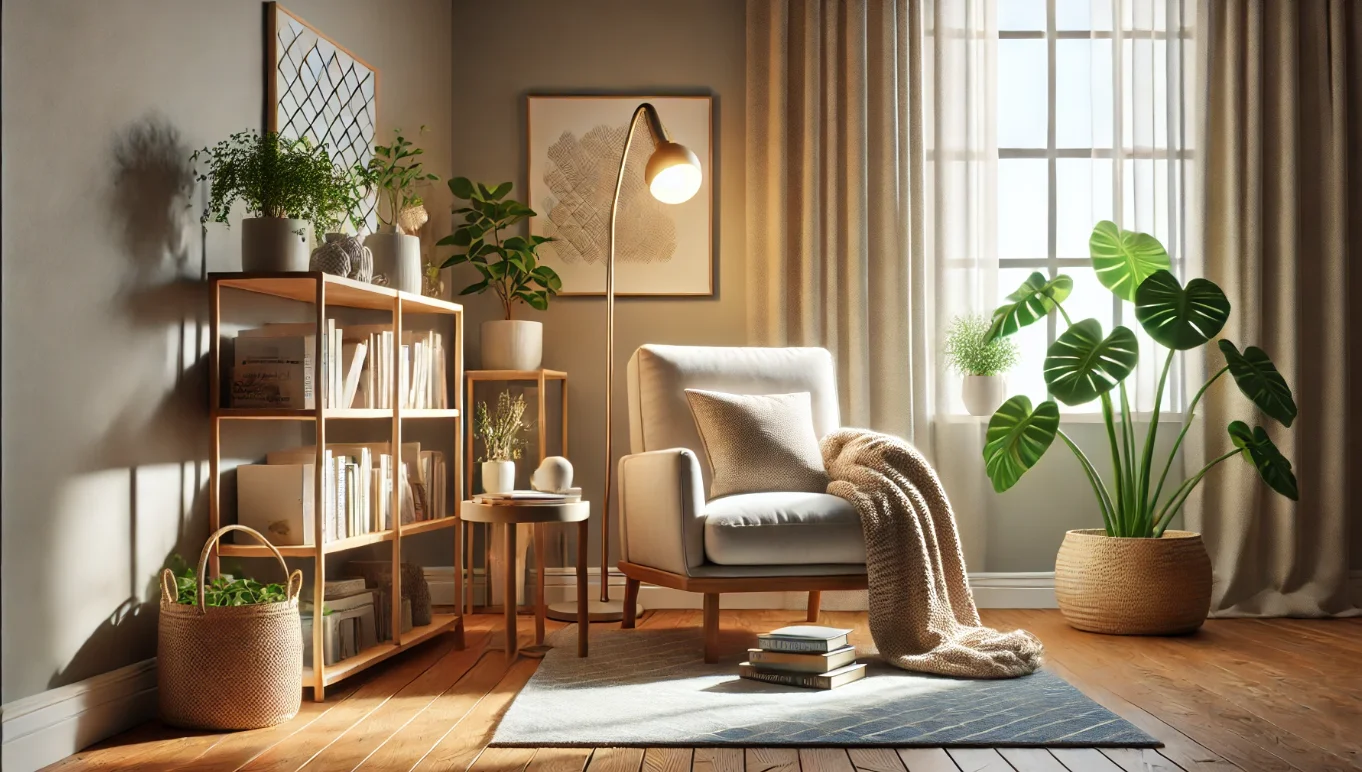 A warm reading nook beside a rain-streaked window
📅 Updated on 06/13/2026
A well-designed cozy reading nook is not a decoration trend first; it is a comfort system. When the light is right, the seat supports your body, and the space feels calm instead of cluttered, reading gets easier to start and easier to sustain.
That matters because most people do not abandon books for lack of interest. They stop because the setup creates friction: glare, awkward posture, nowhere to put the book, and too many visual distractions. This guide breaks down how to build a reading corner that actually gets used, not just photographed.
In a Nutshell
- A reading corner works best when it reduces friction: controlled light, supportive seating, and nearby storage matter more than decorative extras.
- The most successful setups pair one strong anchor piece, like an armchair or window seat, with two comfort layers: textiles and a place for your feet.
- Natural light is helpful, but only if it avoids glare; layered lighting usually beats a single overhead fixture.
- Small spaces can still support a great nook if the layout protects sightlines and keeps only the essentials within reach.
- The best reading nook is the one that matches how you read in real life, not an idealized version of your home.
How a Cozy Reading Nook Works as a Comfort System
A cozy reading nook is a small, intentionally arranged reading zone with supportive seating, controlled lighting, nearby storage, and tactile comfort elements such as a throw blanket, cushion, or footrest. In plain English, it is a place that makes sitting down with a book feel easy instead of effortful.
The practical goal is lower friction
The point is not to create a “bookish” corner for show. The point is to remove the tiny obstacles that keep people from reading: bad posture, harsh light, missing bookmarks, and phones that never leave the room. A space that solves those problems gets used more often.
Who works with interiors knows this pattern well: when a space feels demanding, people avoid it. When it feels welcoming and obvious, they return to it. That is why the best reading spaces usually look simple at first glance.
Comfort beats decoration
You do not need a dedicated library or a custom built-in to make this work. A chair near a window, a side table, and good task lighting can outperform a more expensive setup that looks polished but feels stiff. If the seat is too deep, too low, or too firm, the rest of the design will not save it.
What separates a reading nook that gets used from one that gets admired is not style alone — it is whether the space removes enough friction to let reading start without effort.
Choosing the Right Spot in Your Home
The best location is usually quiet, semi-private, and close to light. A corner by a window, a recessed alcove, the end of a bedroom, or even a cleared section of living room can work if the space feels visually calmer than the rest of the room.
Look for natural pauses in the floor plan
Dead corners often work better than central areas because they already feel separate. If a spot naturally catches daylight without direct glare, that is a strong candidate. If it sits near a hallway, television, or kitchen traffic, it may be harder to settle in for more than a few pages.
What to avoid
- Direct overhead glare that hits the page at the wrong angle.
- High-traffic paths where people keep interrupting your attention.
- Spaces crowded with visual noise, such as stacked bins or mixed-use clutter.
- Seats placed where you must twist your neck or shoulders to read comfortably.
For room-specific comfort and lighting guidance, the U.S. Department of Energy explains why lamp type and placement affect both visibility and energy use, which matters when you plan a nook you will actually use at night.
Lighting That Protects Your Eyes and Mood
Good reading light should be bright enough to prevent strain, but soft enough to feel relaxing. The goal is even illumination on the page, not a spotlight aimed at your face. A floor lamp with an adjustable head, a swing-arm lamp, or a window plus a reading lamp usually gives the best result.
Layer light instead of relying on one source
One overhead fixture rarely does the job well. A better setup combines ambient light for the room with a focused reading light for the book. If you read in the evening, warm color temperatures tend to feel calmer than cool, stark light.
The American Academy of Ophthalmology recommends reducing eye strain by matching light to the task and avoiding excessive glare. That advice lines up with real-world use: the less your eyes have to fight the environment, the longer you can stay focused.
Natural light has a catch
Window light is excellent until it causes glare on glossy pages or a tablet screen. If that happens, sheer curtains, blinds, or a slight shift in chair angle can solve the problem fast. The right reading corner uses daylight well without forcing you to squint.
Natural light helps a reading space feel open, but controlled light is what makes it usable for more than a few minutes at a time.
Seating, Support, and the Small Details That Change Everything
The seat is the anchor of the whole setup. If it does not support your back, hips, and shoulders well enough, you will not stay there long, no matter how attractive the space looks. An armchair, recliner, chaise, window seat with cushions, or even a bench with proper support can work.
What makes a seat work
- Back support: Your spine should feel settled, not held in place by effort.
- Seat depth: You should be able to sit back without losing foot contact or sliding forward.
- Arm support: Arms reduce fatigue during longer reading sessions.
- Cushioning: Enough softness to relax, not so much that you sink into bad posture.
Don’t ignore the footrest
A footrest or ottoman changes posture more than many people expect. It helps distribute weight, reduces pressure on the lower back, and makes longer sessions feel less tiring. If your feet dangle or your knees sit too high, the nook will feel “off” even if everything else looks right.
In one apartment project, the owner insisted on a beautiful sculptural chair that looked perfect in photos. She stopped using it after a week because the seat angle was too upright and the arm height was wrong for her frame. After swapping in a simpler chair with an ottoman, she started reading there every evening. The lesson was plain: comfort has to fit the body, not the mood board.
Storage, Surfaces, and the Stuff You Actually Need
A reading nook fails when it asks you to get up constantly. The right storage keeps the basics within arm’s reach: the current book, a bookmark, reading glasses, a cup of tea, and maybe a notebook or device charger. A small shelf, basket, tray, or side table is usually enough.
Keep the zone visually clean
Storage should support use, not turn the nook into a second desk. Open shelving works if you keep it edited. Closed baskets work if you want the space to feel calmer. A side table with one drawer often gives the best balance because it hides clutter while keeping essentials close.
| Storage Option | Best For | Tradeoff |
|---|---|---|
| Side table | Books, lamp, tea, glasses | Takes floor space |
| Basket | Blankets, extra pillows, magazines | Can look messy if overfilled |
| Wall shelf | Tight rooms and vertical storage | Less convenient for frequently used items |
| Tray | Portable setup on a bench or ottoman | Limited capacity |
Use only what earns its place
Every object in the nook should do one of three things: support reading, support comfort, or reduce clutter. If it does none of those things, it does not belong there. That rule keeps the area from drifting into decorative noise.
Textiles, Color, and the Atmosphere of the Space
Soft materials do more than make a room look inviting. They absorb visual sharpness, add warmth, and signal that the area is meant for lingering. A throw blanket, lumbar pillow, textured rug, or curtain panel can change how the nook feels without crowding it.
Choose calm, not dull
Muted colors usually work best because they support focus, but the space should not feel flat. Warm neutrals, deep greens, soft blues, clay tones, and natural textures like wool, linen, or cotton give a reading corner a settled feel. One accent color is enough.
There is some disagreement among designers about how much pattern is too much. That skepticism is fair: a little pattern can add personality, but busy prints near the reading seat often compete with the page. If you already have strong artwork or a patterned rug elsewhere in the room, keep the nook itself quieter.
Make the space feel intentional
The atmosphere should tell your brain, “This is where we slow down.” That message comes from consistency. A blanket always folded in the same place, a lamp always ready, and a chair that never becomes a dumping ground all help reinforce the habit.
A reading nook feels cozy when the room sends one message repeatedly: this is a place for focus, not a place for multitasking.
How to Build One in a Small Space Without Overcrowding It
Small spaces are not a problem if you are disciplined about scale. The mistake is trying to fit a full living-room setup into a corner. In a compact apartment, bedroom, or studio, the smartest version of a cozy reading nook usually uses one seat, one light, and one place for books.
Think vertical and compact
Wall-mounted shelves, narrow side tables, and slim floor lamps save space without sacrificing function. A window ledge can replace part of the table role if it is deep enough and stable enough for a book or drink. If a piece crowds your walking path, it is probably too large.
A simple checklist for small homes
- Measure the floor area before buying anything.
- Choose the seat first, because it determines the footprint.
- Add light next, then storage only if it still feels open.
- Leave at least one clear path in and out of the corner.
The National Institute on Aging has practical guidance on vision and reading comfort, including the value of reducing strain through better lighting and larger, easier-to-read materials. That is a useful reminder that a nook should adapt to the reader, not the other way around.
What Makes It Sustainable Over Time
A reading nook only matters if it becomes part of your routine. The spaces people use most are usually the ones with low maintenance and no guilt attached. If you have to reset it every day from scratch, it will slowly disappear under real life.
Build habits into the setup
Keep a current book in the seat, not in another room. Leave the lamp on a switch that is easy to reach. Store one blanket there year-round if the climate calls for it. Tiny conveniences like these reduce the mental cost of starting a reading session.
Also, accept that the nook may evolve. A winter setup may need more textile weight and warmer light; a summer setup may feel better with lighter fabric and more daylight. That flexibility keeps the space useful across seasons.
The real test is use, not appearance
If you sit there often, the setup is working. If it looks perfect but stays empty, something is wrong with the ergonomics, the light, or the location. That is the most honest metric you have.
Practical Next Steps
Start with the space you already have, not with a shopping list. Pick one corner, one seat, and one light source, then test the setup for a week before adding anything else. The strongest reading spaces are built by subtraction first: less clutter, less glare, less effort to begin.
If you want the result to feel lasting, prioritize function over trend. Measure the area, check the lighting at the time you actually read, and choose comfort pieces that support your body instead of just matching the room. Then use the nook daily, even if only for ten minutes, until the habit sticks.
Frequently Asked Questions
What is the ideal size for a cozy reading nook?
There is no single perfect size, but even a 3-by-4-foot corner can work if the seat fits and the light is controlled. The key is not square footage alone; it is whether the nook feels separate, comfortable, and easy to use.
Can a reading nook work without a window?
Yes. A window helps, but a good floor lamp or task lamp can create an excellent reading setup without natural light. If you rely on artificial light, focus on glare control and a warm, even beam.
What chair is best for long reading sessions?
An armchair with back support and a matching footrest is usually the most comfortable option for longer sessions. The best chair is the one that fits your body, supports your posture, and does not force you to shift every few minutes.
How do I make a small reading corner feel cozy instead of cramped?
Use fewer pieces with better proportions. A slim lamp, a compact side table, and one textured throw can make a small nook feel finished without crowding it. Keep the visual field calm and avoid stacking too many accessories.
Should a reading nook match the rest of the room?
It should coordinate, not disappear. A subtle contrast in texture, lighting, or color helps the nook feel special while still belonging to the room. Too much contrast can make it feel pasted in.
How do I keep the nook from becoming cluttered?
Limit the space to reading essentials and give every item a fixed home. If something does not support reading or comfort, it should live elsewhere. That one rule prevents the corner from turning into storage overflow.