

📅 Updated on 06/13/2026
A well-designed garden does not need constant irrigation to look full and vibrant. With the right mix of drought-tolerant plants, you can build a landscape that stays attractive through dry spells, uses less water, and still supports pollinators and seasonal color.
The key is not just choosing “plants that survive without water.” Technically, drought tolerance means a plant can maintain acceptable growth and function under limited soil moisture; in plain English, it means the plant handles dry conditions better than most others. This guide explains how to choose those plants, where they work best, and how to avoid the common mistakes that make water-wise gardens fail.
Quick Summary
- Drought tolerance is a plant trait, but success still depends on soil, sun exposure, drainage, and establishment time.
- New plantings need regular watering at first; mature drought-adapted plants usually become reliable only after roots are established.
- Lavender, yarrow, sedum, salvia, rosemary, agave, lantana, and ornamental grasses are strong choices for low-water gardens in many regions.
- The biggest mistake is treating all “low-water” plants the same; native species, Mediterranean herbs, and succulents often need very different care.
- A water-wise garden works best when plants are grouped by sun, soil, and irrigation needs instead of scattered randomly.
Drought-Tolerant Plants and Water-Wise Gardening: What They Really Solve
Drought-tolerant plants reduce water demand by surviving longer between irrigations, but they do not eliminate maintenance or seasonal watering needs. That distinction matters. A dry-climate border, a pollinator bed, and a container garden all behave differently, even if each uses the same category of plant. In practice, the best results come from matching plant physiology to site conditions, not from chasing a single “best” species.
What Makes a Plant Drought-Tolerant
These plants usually have one or more survival strategies: deep root systems, small or waxy leaves, gray-green foliage that reflects heat, or the ability to store water in stems and leaves. Succulents such as sedum and agave hold water in thick tissues. Mediterranean herbs like rosemary and lavender reduce moisture loss with narrow, aromatic leaves. Prairie plants and ornamental grasses often survive by rooting deeply and going semi-dormant during hot stretches.
That said, drought tolerance is not a universal badge. A plant that thrives in sandy, fast-draining soil may fail in heavy clay if its roots stay wet too long. That is one reason even experienced gardeners sometimes lose “low-water” plants after the first season.
Water-wise gardening succeeds when plant choice, soil drainage, and establishment strategy work together; any one of those three can fail the whole design.
Why This Matters Beyond Saving Water
Lower water use is the obvious benefit, but the real payoff is stability. A garden built around resilient plants usually handles heat waves, watering restrictions, and long weekends away from home with less stress. It can also support bees, butterflies, and other beneficial insects when you choose flowering species with staggered bloom times.
For a practical overview of efficient irrigation and landscape water use, the EPA WaterSense program is a useful starting point.
How to Choose the Right Species for Your Site
The best plant is the one that fits your microclimate. Sun exposure, soil texture, and winter lows matter as much as drought tolerance. A plant that looks perfect in a sunny Southern California nursery can struggle in a humid, shaded yard with compacted soil.
Start With Sun, Soil, and Drainage
Full-sun plants need at least six hours of direct light. If your yard gets afternoon shade, you can widen your options considerably. Soil matters just as much: sandy soil drains quickly, clay holds water longer, and loam usually offers the best balance.
If drainage is poor, amend the bed lightly and choose plants that tolerate occasional wet roots. If drainage is excellent, use mulch and deeper watering to avoid shallow root growth. That difference is often what separates a thriving border from a short-lived one.
Match Plant Type to Garden Use
- Groundcovers: sedum, creeping thyme, ice plant in suitable climates.
- Shrubs: rosemary, cistus, texas sage, lantana.
- Perennials: salvia, yarrow, coneflower, blanket flower.
- Structural plants: agave, yucca, ornamental grasses.
- Herbs: lavender, thyme, oregano, sage.
For region-by-region native plant guidance, the USDA Forest Service Wildflowers and Native Plants resource is a solid reference, especially when you want species that support local ecosystems.
Best Drought-Tolerant Plants for Color, Texture, and Pollinators
The strongest gardens mix structure, bloom, and foliage contrast. If you only use succulents, the result can feel static. If you only use flowering perennials, the garden may look uneven after bloom cycles pass. The sweet spot is a layered planting palette.
Flowering Perennials That Earn Their Keep
Salvia, yarrow, blanket flower, and coneflower are dependable in many dry gardens because they bloom for long stretches and attract bees, butterflies, and hummingbirds. Lantana is another strong option in warm climates, with dense clusters of color and high heat tolerance. These plants perform best in full sun and reward deep, infrequent watering once established.
Herbs and Shrubs That Pull Double Duty
Rosemary, lavender, thyme, and oregano do more than survive dry weather. They bring scent, edible value, and seasonal structure. In many yards, they also act as border plants that soften hard edges without demanding much input.
Texas sage and cistus are excellent shrub choices for hot, dry settings. They are not flashy every day, but when they bloom, the effect is dramatic. That is the kind of plant I keep seeing succeed in gardens where frequent watering is either expensive or unrealistic.
The most reliable low-water gardens are built from layered plant types, not from a single category of “resilient” plants.
Succulents and Architectural Plants
Agave, yucca, and sedum create strong shapes and visual rhythm. They work well as focal points, especially in gravel beds, modern landscapes, and slopes where runoff is a problem. Use them carefully, though; a garden full of only spiky forms can feel harsh if you do not balance them with softer textures.
Soil Prep and Irrigation Habits That Make Them Last
Good plant choice is only half the equation. If the soil is compacted, roots stay shallow and plants become more dependent on irrigation. If you water too often, you train even drought-adapted plants to sit near the surface instead of searching deeper for moisture.
Build the Root Zone First
Before planting, loosen compacted soil and mix in organic matter only where it improves structure. Do not overdo amendments in fast-draining beds; too much compost can create a moisture pocket that works against desert species. After planting, mulch around the base to reduce evaporation and keep root temperatures more stable.
Water Deeply, Not Frequently
New plants need regular watering during establishment, often for the first growing season. After that, shift to deeper, less frequent irrigation. That approach encourages roots to move down instead of spreading sideways into the wettest top layer.
The USGS water education resources explain why evaporation, soil moisture, and runoff change so quickly in hot landscapes. Those basics matter more than most product labels suggest.
- Water early in the morning to reduce evaporation loss.
- Use drip irrigation or soaker hoses where possible.
- Avoid constant light watering, which keeps roots shallow.
- Check soil moisture with your fingers before adding more water.
Designing a Garden That Looks Good in a Heatwave
A resilient garden should still look intentional. That means repeating forms, using contrast wisely, and grouping plants by water needs. If you scatter thirsty annuals among dry-climate perennials, the whole bed ends up watered on the most demanding plant’s schedule.
Use Massing Instead of Random Placement
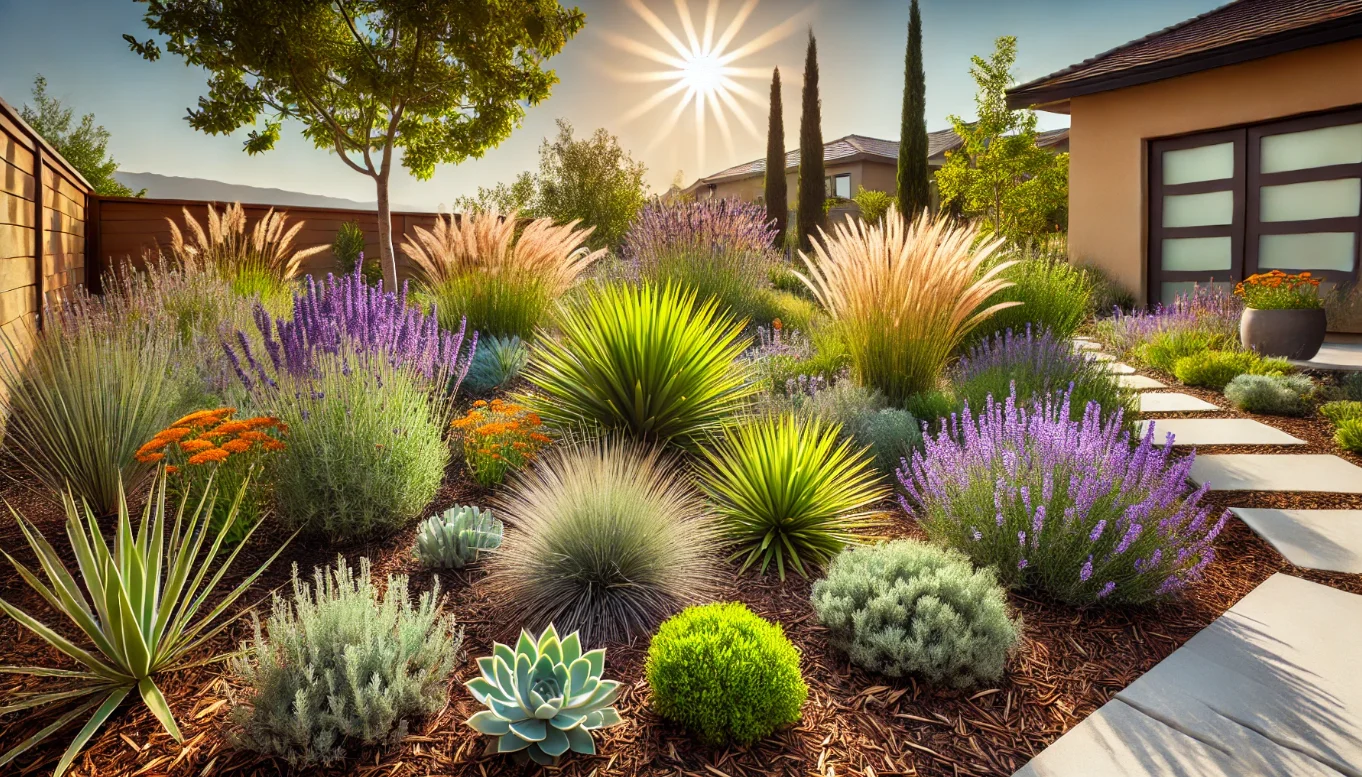
Plant in groups of three, five, or more when possible. Repetition creates order, and order makes a low-water garden feel designed rather than improvised. A sweep of lavender or a repeated ribbon of ornamental grass looks far better than isolated plants spread across empty mulch.
Let Texture Do Some of the Work
When bloom is limited, texture carries the design. Pair fine-textured grasses with broad-leaved succulents. Place silver foliage next to deep green shrubs. Use upright plants near low mounds to create movement without relying on constant flowers.
One homeowner I worked with had a front bed that burned out every summer. We replaced thirsty annuals with salvia, rosemary, and sedum, then added drip irrigation and mulch. The first season looked a little sparse. By the second summer, the bed had filled in, used far less water, and still looked presentable during a two-week heat wave.
Common Mistakes That Undercut Low-Water Gardens
Most failures are predictable. The plants were not wrong for the site; the site setup was wrong for the plants. That is the part many people skip because it is less exciting than picking colorful flowers.
Buying by Label Alone
“Drought-tolerant” on a tag does not mean “no care needed” or “works anywhere.” A nursery label tells you the plant can handle dry periods, not that it will survive shade, poor drainage, cold snaps, or heavy clay.
Overwatering During the First Year
New roots need moisture, but too much water can be more damaging than too little. Keep the soil evenly moist during establishment, then taper slowly. That transition is where many gardeners go wrong.
Ignoring Regional Limits
Some plants are drought-tolerant only in specific climates. Lantana excels in warm areas but may behave very differently in cooler zones. Likewise, many Mediterranean herbs prefer dry air and sun, so they can struggle in humid summers even if the soil is well drained. There is no single plant list that fits every ZIP code.
Not every drought-tolerant plant is a good plant for every garden; climate fit matters as much as water use.
How to Build a Plant List You Can Actually Maintain
The easiest way to avoid disappointment is to choose plants in tiers. Start with a core of reliable performers, then add a few accent species for color or structure. That way, if one plant underperforms, the entire bed does not collapse visually.
A Practical Starter Mix
- 1 structural plant: agave or yucca
- 2 to 3 shrubs: rosemary, texas sage, cistus
- 3 to 5 perennials: salvia, yarrow, coneflower
- 2 groundcovers: sedum, creeping thyme
- 1 or 2 accent species for seasonal color
If your goal is long-term efficiency, start small and expand after one growing season. That gives you time to see which parts of the yard dry out fastest, where wind increases evaporation, and which beds get more reflected heat from walls or pavement.
What to Do Next If You Want a Smaller Water Bill and a Better Garden
The smartest move is to treat plant selection as a site design problem, not a shopping list. Walk your yard at different times of day, note where the sun hits longest, and identify the driest zones first. Then build the bed around those conditions instead of trying to force one irrigation pattern across the whole landscape.
If you want a practical next step, choose three plants that fit your sun exposure and soil drainage, then test them in one bed before reworking the whole yard. That one decision will tell you far more than a dozen nursery tags ever will.
FAQ
Do drought-tolerant plants need water after planting?
Yes. Most of them need consistent watering during the establishment period, usually through the first growing season. After roots develop, they can handle longer gaps between irrigations.
Can I use drought-tolerant plants in containers?
Yes, but containers dry out much faster than in-ground beds. Use a well-draining potting mix, a large enough container, and expect to water more often than you would in the garden.
Are succulents the same as drought-tolerant plants?
Not exactly. Succulents are one type of drought-adapted plant, but many drought-tolerant species are not succulents at all. Lavender, salvia, and yarrow are good examples.
Which drought-tolerant plants are best for pollinators?
Salvia, yarrow, coneflower, blanket flower, and lantana are strong choices. They offer nectar and bloom over a long enough period to support bees, butterflies, and hummingbirds.
Why do some drought-tolerant plants fail in my yard?
Usually because the site does not match the plant. Poor drainage, too much shade, heavy clay, or constant shallow watering can overwhelm a plant that is otherwise well suited to dry conditions.
What is the biggest mistake people make with water-wise gardens?
They pick plants first and design second. A water-wise garden works best when sun, soil, drainage, and irrigation all support the same goal.