
How to Start Composting at Home: The Ultimate Beginner’s Guide
How to balance greens, browns, air, and moisture for effective home composting, with tips for indoor and outdoor setups and recognizing finished compost.
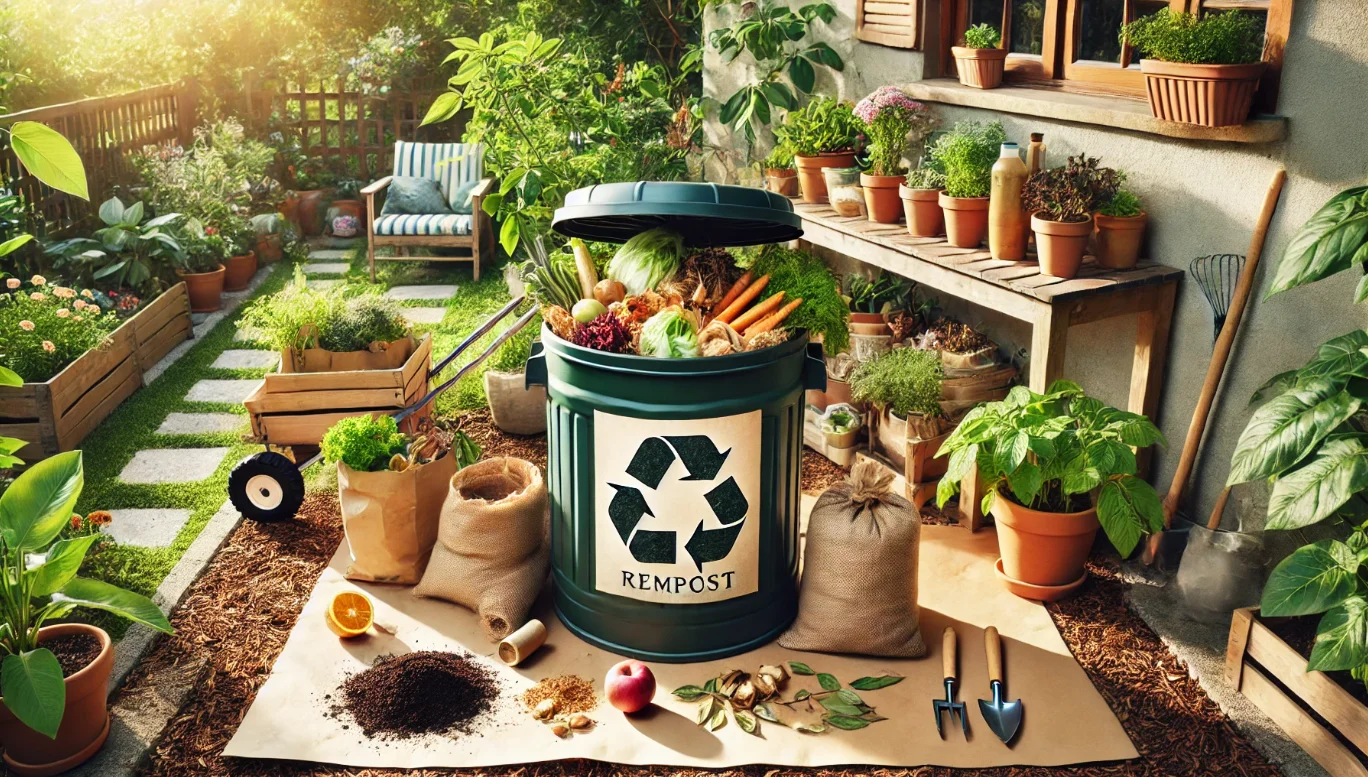 A family adds kitchen scraps to a compost bin
📅 Updated on 06/13/2026
A banana peel is only “waste” if you send it to the landfill. In a kitchen bin, that same peel can become finished compost in a few months, which is why composting at home is one of the most practical ways to reduce trash without buying specialized equipment.
At its core, composting is controlled decomposition: you combine food scraps, dry carbon-rich materials, air, and moisture, then give microbes time to turn that mix into a dark, crumbly soil amendment. The method you choose depends on your space, your tolerance for odor, and how much effort you want to put in, and this guide breaks down the options in plain English.
What You Need to Know
- Compost works best when “greens” and “browns” are balanced, because microbes need both nitrogen and carbon to keep breaking material down efficiently.
- Most home compost problems come from too much moisture, not too little; a pile that smells bad is usually starving for air.
- Indoor food scrap systems can work well in apartments, but they require tighter control than outdoor piles.
- Finished compost is ready when it looks dark, feels crumbly, and no longer resembles the original scraps.
- The easiest system is the one you will maintain weekly, not the one that sounds most advanced.
Composting at Home Starts With the Right Balance of Greens, Browns, Air, and Moisture
Composting at home is the process of turning organic household waste into humus-like material through aerobic decomposition. In practical terms, that means feeding microbes a mix of wet nitrogen-rich scraps and dry carbon-rich materials while keeping the pile airy and damp, not soggy. If those conditions stay in range, decomposition moves steadily instead of turning into a smelly mess.
Greens are the wet, nitrogen-rich inputs
Kitchen scraps like fruit peels, vegetable trimmings, coffee grounds, and fresh grass clippings count as greens. They supply the nitrogen that microbes use to grow and multiply. Too many greens without enough browns, though, usually leads to compaction and odor.
Browns are the dry carbon-rich inputs
Dry leaves, shredded cardboard, paper towels without chemicals, straw, and wood chips are browns. They provide structure and carbon, which help airflow and prevent the pile from becoming a wet mat. A pile that leans brown may decompose slowly, but it is usually easier to manage than one overloaded with scraps.
Air and moisture decide whether the pile works or fails
Microbes in an aerobic compost pile need oxygen. When a pile gets waterlogged or packed down, oxygen drops and anaerobic organisms take over, which is where the sour smell starts. A healthy pile should feel like a wrung-out sponge.
In home composting, odor is usually a ventilation problem, not a decomposition problem.
Choose a Method That Fits Your Space and Your Routine
The best composting system is the one you can maintain consistently. A backyard with leaves and room for a bin gives you more freedom, while an apartment may be better suited to a countertop collector, a bokashi bucket, or a sealed worm bin. For a useful overview of composting fundamentals, the U.S. Environmental Protection Agency’s home composting guide is a reliable starting point.
Backyard pile
This is the simplest option if you have outdoor space and regular access to yard waste. You layer scraps and browns, turn the pile occasionally, and let weather and microbes do the work. It is forgiving, but it does take more time than indoor systems.
Stationary bin or tumbler
A bin keeps material contained and often looks tidier than an open pile. Tumblers make turning easier, but they do not magically speed everything up if the mix is wrong. Good balance still matters more than container style.
Worm bin and bokashi
Worm bins rely on red wigglers to process food scraps, especially in small spaces. Bokashi uses fermentation in a sealed bucket, then the pre-compost gets buried or added to a larger compost system. Both can work well indoors, but both require more attention than a basic outdoor pile.
| Method | Best For | Main Tradeoff |
|---|---|---|
| Backyard pile | Homes with outdoor space and yard waste | Less tidy, slower in cold weather |
| Stationary bin | People who want cleaner containment | Needs occasional turning and monitoring |
| Tumbler | Users who want easier mixing | Small capacity and not always faster |
| Worm bin | Apartments and small households | Sensitive to temperature and feed rate |
| Bokashi | Indoor food scrap management | Requires a second stage after fermentation |
What You Can Compost and What You Should Keep Out
Good compost inputs are biodegradable materials that break down safely and predictably. The basic rule is simple: if it is plant-based, untreated, and not greasy or contaminated, it usually belongs in the pile. That said, some materials look harmless but create pest, odor, or pathogen problems later.
Safe everyday inputs
- Fruit and vegetable scraps
- Coffee grounds and paper filters
- Tea leaves and plain tea bags
- Shredded cardboard and newspaper
- Dry leaves, straw, and untreated yard trimmings
Materials to avoid
Keep out meat, dairy, oily foods, pet waste, diseased plants, and treated wood. These items can attract rodents, create strong odors, or introduce contaminants. Some municipal systems accept more than a home setup should, so local rules matter.
The Cornell Waste Management Institute has long been a respected source on composting science, especially for explaining how feedstock choice affects heat, breakdown speed, and contamination risk.
The fastest compost pile is not the biggest one; it is the one with the best ratio of air, moisture, and shredded material.
How to Build the Pile So It Actually Breaks Down
Start with a base of coarse browns such as twigs, straw, or crumpled cardboard so air can move through the bottom layer. Then alternate greens and browns, roughly aiming for more browns than greens by volume. After that, water the pile lightly and mix in enough structure so it does not settle into a compact mass.
A simple setup that works
- Place coarse brown material at the bottom.
- Add a layer of food scraps.
- Cover the scraps with dry browns.
- Moisten until the pile feels like a wrung-out sponge.
- Turn or mix the pile when the center stops warming or starts to smell sour.
Why shredding matters more than people expect
Smaller pieces create more surface area, and more surface area gives microbes more places to work. That is why shredded cardboard outperforms whole boxes and why chopped kitchen scraps usually break down faster than intact peels. If you want faster compost, size reduction is one of the easiest upgrades.
Mini-story: A homeowner I worked with kept adding melon rinds to a covered bin and wondered why the pile turned slimy. The fix was not a new bin. The fix was shredded leaves, a weekly turning schedule, and covering every load of scraps with dry material. Two weeks later, the smell was gone.
How to Tell When Compost Is Ready to Use
Finished compost is dark, earthy, and crumbly, with few or no recognizable food scraps left. In a home system, that usually takes anywhere from a few months to a year, depending on temperature, moisture, particle size, and how often you turn the material. Cold weather slows the process a lot.
Signs the compost is finished
- It smells like soil, not garbage.
- It no longer heats up after turning.
- The texture is loose and crumbly.
- Original ingredients are hard to identify.
How to use it
You can mix finished compost into garden beds, top-dress containers, or spread it lightly around trees and shrubs. It is a soil amendment, not a complete potting mix, so it improves structure and biology more than it replaces fertilizer. If your compost is still chunky, let it cure longer before using it on seedlings.
Common Problems and the Fix That Usually Works
Most home composting failures have a small number of causes. The good news is that the fix is usually straightforward once you diagnose the problem instead of guessing. A pile that smells bad, dries out, or refuses to heat up is telling you something specific.
Bad smell
Usually too wet, too compact, or too many food scraps exposed to air. Add browns, mix the pile, and improve airflow.
Nothing seems to happen
The pile may be too dry, too small, or too brown-heavy. Add moisture and some fresh greens, then wait a few days before checking again.
Pests show up
Food scraps are probably exposed. Always bury scraps under a layer of browns, and avoid adding meat, dairy, or oily leftovers.
There is one limit worth admitting: composting at home works best when you can monitor it. If you travel often, forget to add browns, or live in a very cold climate, a simpler low-maintenance system may beat an ambitious one.
Why Home Composting Matters Beyond Your Bin
Composting at home does more than cut trash. It keeps organic material out of landfills, where it can generate methane under low-oxygen conditions, and it turns kitchen waste into a resource for soil structure, water retention, and plant health. For broader context on waste diversion and food scraps, the U.S. Department of Agriculture offers useful background on food loss, recycling, and soil systems.
The practical payoff
The real value is not a perfect pile; it is a system you can maintain week after week. Once composting becomes routine, you produce less trash, buy fewer bagged soil amendments, and get a better feel for what your household throws away.
Próximos passos
If you are starting from zero, choose one method and stick with it for 30 days. Pick a container, save a source of browns, and track what goes in so you can spot patterns before the pile goes wrong. The fastest way to learn is to begin with a simple setup and improve it after you see how your household actually behaves.
For a first project, start with a small bin or pile, use shredded leaves or cardboard as your browns, and keep a weekly checklist for moisture and odor. That is enough to build a reliable system without overcomplicating it.
Frequently Asked Questions
How long does home composting take?
Most home compost piles take a few months to a year to finish. Warm temperatures, small particle size, regular turning, and a balanced mix can shorten that timeline. Cold weather and oversized scraps usually slow it down.
Can I compost in an apartment?
Yes. Worm bins and bokashi systems are the most common apartment-friendly options because they control odor and fit in small spaces. A sealed countertop scrap collector can also help you store inputs until you take them to a larger system.
Why does my compost smell bad?
Bad odor usually means the pile is too wet, too compact, or overloaded with greens. Add dry browns, mix in air, and stop leaving scraps exposed on top. If the smell is rotten rather than earthy, the pile needs oxygen.
Do I need worms to make compost?
No. Worms are useful in worm bins, but they are not required for standard composting. Most outdoor piles rely on microbes, moisture, and airflow instead.
Is compost the same as soil?
No. Compost is a soil amendment, which means it improves soil rather than replacing it. It adds organic matter, helps hold moisture, and supports beneficial biology, but it is not a complete growing medium on its own.
Can I compost citrus peels and onion scraps?
Yes, in moderation. Small amounts usually break down fine in a healthy pile, but large volumes can slow the process or create imbalance in smaller systems. Chopping them first helps them decompose faster.