

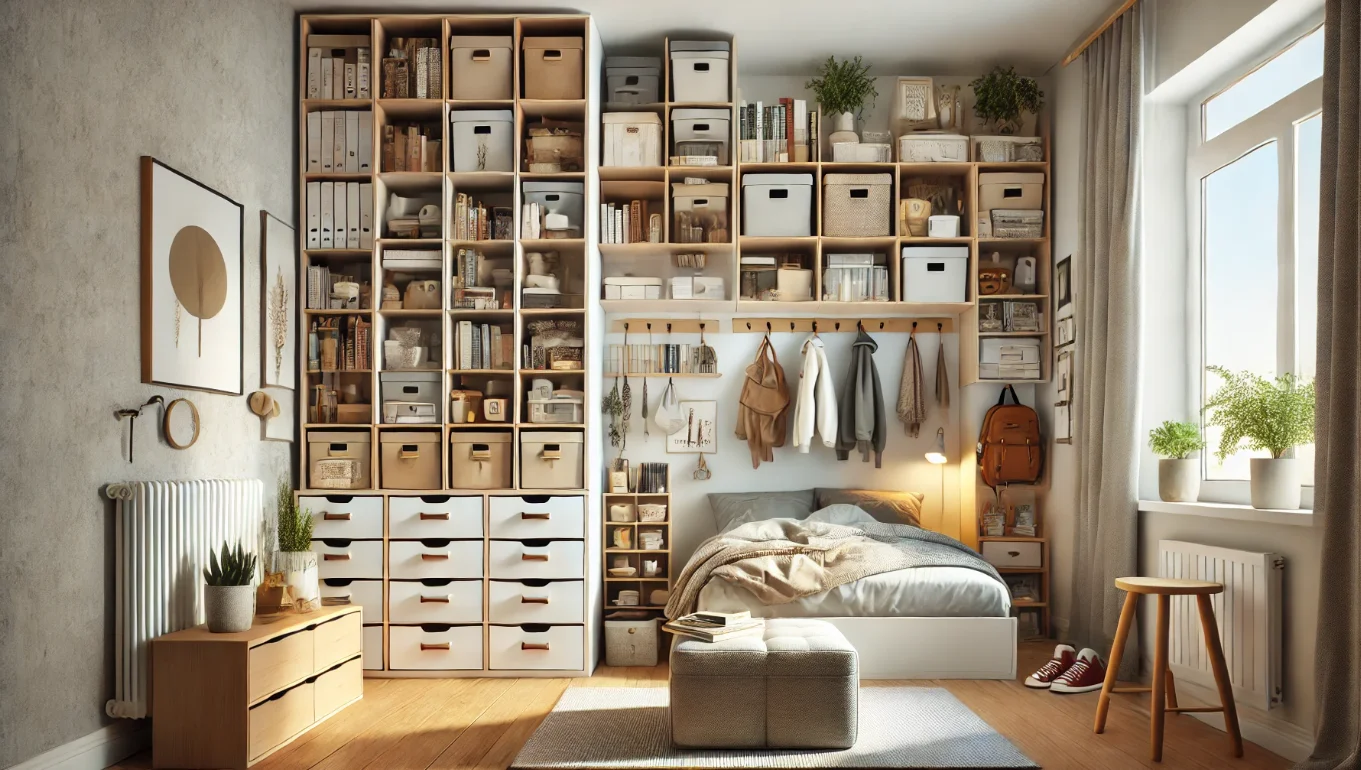
A cramped room doesn’t stay cramped because of its size; it usually feels cramped because storage is working against the layout. Smart storage solutions for small spaces are less about buying more containers and more about using height, depth, and hidden zones with intent.
That means the best systems are the ones you barely notice: wall space that carries weight, furniture that does double duty, and routines that stop clutter before it spreads. In practical terms, a small apartment can feel far larger when every object has a place that makes sense for how you actually live.
Quick Take
- Storage in small homes works best when it uses vertical space, dead corners, and furniture with built-in capacity.
- The most effective systems reduce visual clutter first, because a room feels bigger when surfaces stay open.
- Multi-use pieces like storage ottomans and platform beds often deliver more value than standalone bins.
- Good organization is a layout problem before it is a shopping problem.
- Small-space storage fails when access is awkward, even if the solution looks tidy on paper.
Smart Storage Solutions for Small Spaces Start with Vertical Planning
The first technical rule is simple: move storage off the floor whenever possible. Vertical planning means using wall height, doors, the sides of cabinets, and the upper third of a room to store items that do not need daily access. That frees circulation space, which is what makes a small room feel livable instead of packed.
Use Wall Height Before You Add More Furniture
Floor-standing pieces eat usable square footage fast. Tall shelving units, pegboards, and wall rails extend storage upward without blocking movement. If a room already has a narrow footprint, one well-placed vertical system usually beats two smaller pieces scattered around the space.
Who works with compact interiors knows this: the empty wall above eye level is usually wasted real estate. Even a simple set of shelves can hold books, baskets, linens, or pantry items while keeping the floor open. For design guidance that reinforces safe access and efficient use of space, see the National Park Service guidance on maintaining open sightlines and space balance, which aligns with how visual openness affects room perception.
In small rooms, vertical storage works when it removes pressure from the floor plan; it fails when it makes everyday items harder to reach.
Think in Zones, Not in Piles
A shelf system becomes useful only when each level has a job. Top shelves should hold seasonal or rarely used items. Middle shelves should hold the objects you reach for often. Lower shelves should support heavier or bulkier items. That logic keeps you from creating a pretty stack of problems.
One common mistake is storing everything by category but ignoring frequency. A vacuum, charging cables, and office supplies may all fit in one closet, but if you need them every day, they should not sit behind infrequently used decor. The U.S. Department of Energy’s design resources also support the broader point: layout choices affect how efficiently a space performs.
Wall-Mounted Shelving Brings Storage Without Visual Weight
Wall-mounted shelving is one of the cleanest answers to small-space clutter because it stores items without adding bulk at eye level. Unlike closed cabinets, open shelves can make a room feel lighter, but only if they stay edited. If they turn into a crowded display, the benefit disappears quickly.
Where Open Shelves Work Best
They are strongest in kitchens, bathrooms, hallways, and home offices. In a kitchen, they can hold dishes or glassware you use daily. In a bathroom, they keep towels and toiletries easy to grab. In a narrow hallway, a shallow shelf can handle keys, mail, and small essentials without creating a bottleneck.
The best wall shelves are shallow enough to stay unobtrusive and strong enough for the load they carry. Anchoring matters more than style. Drywall anchors, stud placement, and shelf depth determine whether the system is a real solution or a future repair job.
How to Keep Shelves from Looking Crowded
Use a simple rule: leave some negative space. A shelf packed edge to edge looks heavier than one with breathing room, even when both hold the same amount. Group objects by use, material, or color so the eye reads order instead of noise.
- Store daily items at hand level.
- Keep decorative objects to a minimum.
- Use matching bins when small objects would otherwise look messy.
Multi-Use Furniture Solves the Hidden Storage Problem
In tight rooms, furniture has to earn its footprint. A coffee table with drawers, a bed frame with lift-up storage, or a bench with a compartment inside can replace two separate pieces. That matters because a small apartment rarely has enough room for both function and filler.
Choose Pieces That Hide the Mess You Actually Have
People often buy storage furniture for a fantasy version of their routine. They imagine perfectly folded throws and three neatly labeled baskets. Real life includes chargers, socks, pet gear, board games, and random receipts. Pick pieces that can absorb the chaos you already own, not the idealized version of it.
A storage ottoman can hold blankets while serving as seating. A platform bed can hide off-season clothing in drawers underneath. A narrow console table can become an entry drop zone if it includes baskets or a shelf below. That flexibility is why multi-use furniture is one of the most reliable Smart Storage Solutions for Small Spaces.
Know When Multi-Use Furniture Is Not Enough
There is a limit. If a piece becomes so overloaded that accessing it is annoying, it stops being useful. A lift-top bed with no room to open fully, for example, can create daily friction. The right choice depends on how often you use the stored items and how much physical effort the system demands.
The best storage furniture is not the one with the most hidden space; it is the one you can use without thinking about it.
Closet and Cabinet Interiors Matter More Than the Doors
People focus on the outside of storage units, but the inside determines whether they work. Adjustable shelves, hanging rods at the right height, pull-out baskets, and drawer dividers make a closet or cabinet usable. Without interior structure, space gets lost to awkward gaps and stacked clutter.
Make Every Inch Inside a Cabinet Count
Cabinets are full of dead zones by default. The top shelf is often too high, the lower shelf is too deep, and the back corner becomes a graveyard for things you forgot you owned. Shelf risers, bins, and sliding organizers create access layers so the whole volume stays usable.
A small kitchen pantry is a good example. Clear containers let you see quantities at a glance. Bins keep snacks, baking items, and canned goods grouped. A riser doubles the visible storage without changing the cabinet’s footprint. That kind of internal structure is the difference between storage and hiding stuff.
Use Doors and Sides as Extra Capacity
Back-of-door racks, adhesive hooks, and slim pocket organizers work well for lightweight items: cleaning supplies, spice packets, hair tools, or accessories. The key is restraint. Put only items there that can hang, flatten, or slide without blocking the door’s function.
| Storage Area | Best For | Main Advantage |
|---|---|---|
| Door backs | Light tools, accessories, cleaning items | Uses wasted surface area |
| Cabinet sides | Hooks, slim baskets, wrap storage | Adds capacity without crowding shelves |
| Pull-out drawers | Pantry, toiletries, office supplies | Improves access to deep spaces |
Hidden Storage Works Best When It Stays Easy to Reach
Hidden storage is attractive because it clears visual clutter, but it can fail if it becomes inconvenient. A storage system that takes too many steps to open, lift, or unpack won’t survive daily use. The goal is not secrecy; the goal is frictionless access.
Use Hidden Storage for Overflow, Not Essentials
Deep under-bed bins, stair drawers, and ottoman compartments are ideal for things you use occasionally: seasonal bedding, spare linens, holiday decor, or archived paperwork. Daily essentials should live closer to where you use them. When that balance is wrong, people start leaving items on counters and chairs because the stored version is too annoying to retrieve.
I’ve seen this happen in small studios more than once: a beautifully organized hidden compartment looks great for two weeks, then becomes a dumping ground because the owner wants the item in ten seconds, not thirty. That is why accessibility is part of design, not an afterthought.
Labeling Prevents the “Out of Sight, Out of Mind” Trap
Labels work because memory is unreliable under pressure. If several bins look identical, people stop using them consistently. Clear labels, transparent containers, or color-coded zones reduce confusion and keep hidden storage functional over time.
Room-by-Room Storage Needs Are Never the Same
The smartest small-space setups are tailored to the room, not copied from one viral idea. A kitchen needs fast access and food safety. A bedroom needs calm surfaces and clothing control. A living room needs flexible storage that doesn’t dominate the look of the space.
Kitchen: Prioritize Frequency
Keep cooking tools, dishes, and staples close to where they’re used. Store rarely used appliances higher up or deeper inside cabinets. The most practical kitchen storage keeps prep flow intact, which means fewer steps between grabbing an ingredient and using it.
Bedroom: Protect Visual Rest
Bedrooms feel smaller when clothing, cords, and personal items are visible. Closed storage, under-bed drawers, and bedside options with hidden compartments can calm the room without making it sterile. The point is to lower visual noise so the room supports sleep and reset time.
Entryway: Build a Small Landing Zone
An entry needs a place for keys, shoes, bags, and mail. Without that, clutter spreads into the first open surface in the home. A narrow bench, a wall hook strip, and one tray can prevent the entire house from becoming a drop zone.
What Usually Fails in Small-Space Storage
Most bad storage systems fail for the same three reasons: they are too deep, too pretty to use, or too disconnected from daily habits. Depth hides things you need. Over-design makes access annoying. Habit mismatch guarantees the system will break down.
That is why there is no universal fix. A storage ladder may work in one apartment and fail in another because of ceiling height, wall structure, or how much the resident actually moves around. Small-space organization always depends on the real behavior of the people in the home.
- If you cannot reach it easily, it will not stay organized.
- If it solves one problem but creates another, it is the wrong system.
- If the room feels heavier after organizing, the layout still needs work.
For broader home planning ideas, the University of Minnesota Extension’s home organization guidance is a useful reference on how systems work best when they match daily routines. The same principle applies here: a good setup supports behavior instead of fighting it.
Practical Next Steps
The fastest way to improve a small home is to audit what is sitting on the floor, on counters, or in overstuffed closets. From there, decide what should move upward, what should be hidden, and what should be replaced with a dual-purpose piece. That sequence matters more than buying storage products first.
Start with one room, not the entire home. Measure the available wall height, identify one dead zone, and install one system that solves a real bottleneck. Then test it for a week. If it reduces friction, keep going. If it creates extra steps, change the design instead of forcing the habit.
Frequently Asked Questions
What is the most effective storage solution for a very small apartment?
The most effective solution is usually vertical storage combined with one or two multi-use furniture pieces. That combination frees floor area while still giving you enough capacity for daily life. The exact setup depends on whether your biggest problem is clothes, kitchen items, or visual clutter.
Are open shelves better than closed cabinets in small spaces?
Open shelves feel lighter and can make a room look less crowded, but they require discipline. Closed cabinets hide visual clutter better and are often easier to maintain. In many homes, the best answer is a mix of both.
How do I keep small-space storage from looking messy?
Use fewer, larger systems instead of many small ones, and leave some open space on shelves. Matching bins, clear labels, and consistent groupings make the room read as organized. If a shelf is full but visually calm, it is working.
What should I store under the bed?
Under-bed space is best for seasonal or infrequently used items like extra bedding, off-season clothing, or archived files. Daily essentials should stay in easier-to-reach places. If accessing the bin feels annoying, the item probably belongs somewhere else.
How do I decide whether to buy storage furniture?
Buy it only if it solves a real access or capacity problem in the room. Measure the footprint, check how the piece opens, and make sure it fits your routine. A piece that stores more but makes daily use harder is not a good investment.