
Elegant Outdoor Living Areas: Designing Stylish Outdoor Spaces in Small Areas
How to design small outdoor leisure areas that maximize comfort and function through layout, seating, lighting, shade, privacy, and low-maintenance elements.
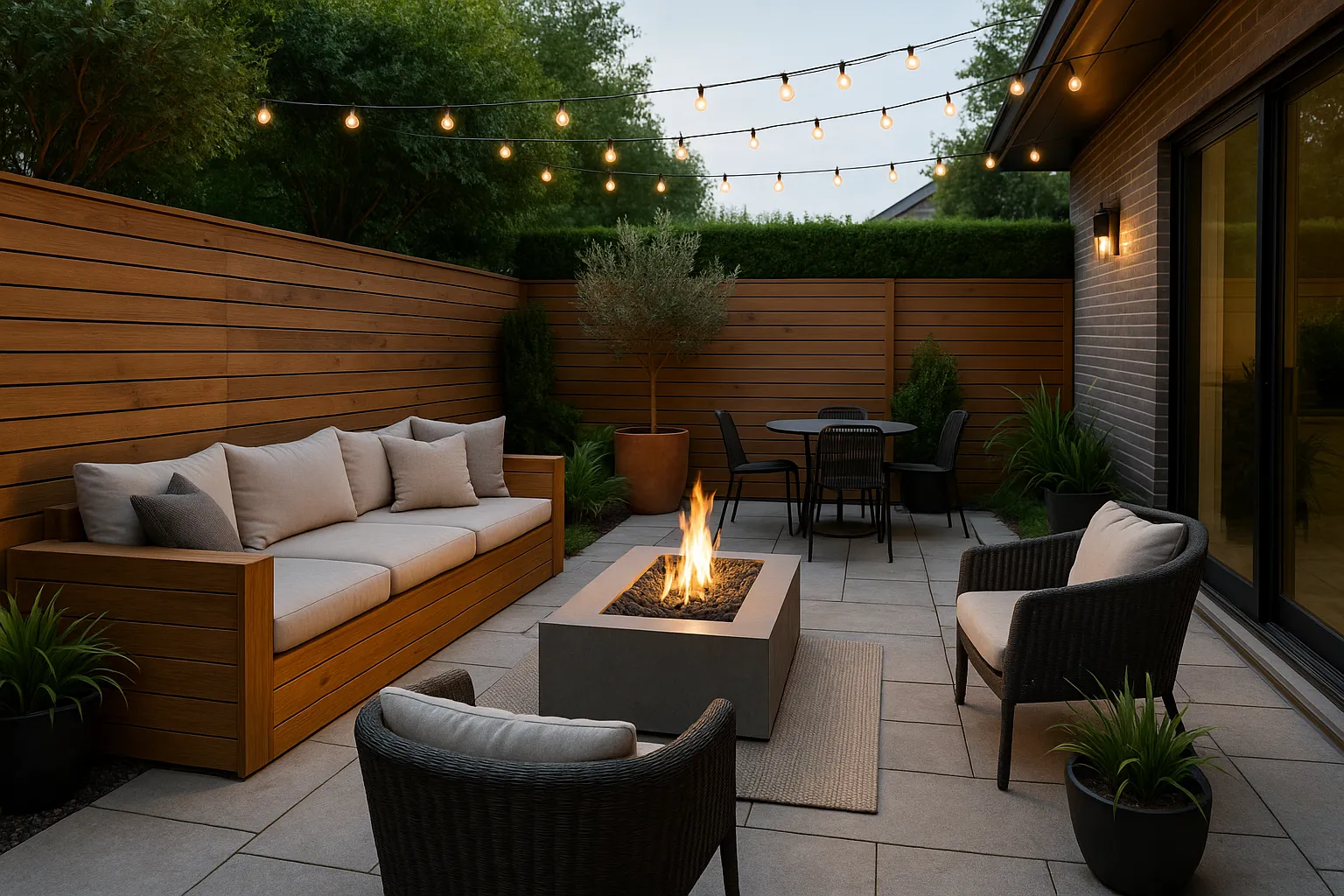 A cozy rooftop terrace with compact lounge seating
📅 Updated on 06/14/2026
A well-designed outdoor space does not need to be large to feel useful. The best leisure areas are planned around how people will actually sit, move, relax, and store things—not just how they will look on a design board.
That matters because a balcony, patio, rooftop, garden corner, or shared courtyard can become a daily-use retreat when the layout, seating, shade, lighting, and privacy all work together. In this article, you’ll get a practical framework for leisure area design that works in compact spaces first and decorative details second.
Key Takeaways
- A good leisure area starts with a clear purpose: conversation, reading, dining, sunbathing, or quiet downtime.
- Small outdoor leisure areas feel larger when circulation stays open and furniture follows the shape of the space instead of blocking it.
- Lighting, shade, and privacy are not finishing touches; they determine whether the space is actually comfortable enough to use.
- Space-saving furniture and multifunctional furniture matter more than oversized lounge sets in compact layouts.
- Plants, materials, and storage should support low-maintenance comfort, not create extra visual noise.
Leisure Areas and Outdoor Leisure Spaces: What They Need to Work Well
A functional leisure area is a deliberately planned space for rest, socializing, or light recreation. In practical terms, it needs five things: a defined purpose, comfortable seating, weather protection, enough circulation, and a sensory atmosphere that feels calm rather than cluttered.
Most people start with décor and end up with a space that looks finished but feels awkward. The better approach is to decide what the space is for first, then choose the minimum furniture and features needed to support that use. A garden seating area meant for reading needs different planning than a rooftop leisure area meant for hosting three or four people.
The difference between a pretty outdoor space and a usable one is planning: if people cannot sit comfortably, move freely, and stay protected from sun or wind, the area will be underused no matter how attractive it looks.
The core elements every space should include
- Purpose: one primary use, such as dining, lounging, or quiet conversation.
- Seating: enough for the expected number of users, with a comfortable posture and easy access.
- Climate control: shade, wind protection, or both, depending on exposure.
- Lighting: enough for safe evening use without harsh glare.
- Storage: a place for cushions, throws, and small accessories so the area stays tidy.
Space planning also follows local conditions. In windy high-rise settings, a balcony design that works on paper may fail because lightweight chairs move around or planters become unstable. In hot climates, direct afternoon sun can make even a beautiful patio unusable without a canopy, pergola, or adjustable umbrella.
Planning the Layout for Comfort and Flow
The best layout keeps movement simple and seating close enough for conversation without making the area feel cramped. A compact leisure space works when every item has a clear role and the main walking path stays unobstructed.
Start with the circulation path
Leave a clear route from the door or access point to the main seating zone. If guests have to squeeze past a table edge or turn sideways to enter, the layout is already too tight. In small leisure areas, that extra 30 to 60 centimeters of breathing room often matters more than adding another chair.
Use zones, even in a tiny footprint
You do not need walls to define zones. A rug, planter cluster, bench, or change in flooring can separate a lounge corner from a dining spot. On larger terraces, zoning prevents the space from feeling empty; on smaller patios, it keeps the furniture from blending into one cluttered rectangle.
Measure before you buy
That sounds obvious, but it is where most compact outdoor projects go wrong. Measure the usable floor area, then sketch furniture footprints at scale. A lounge chair that looks slim in a product photo can consume more room than two stackable chairs and a narrow side table.
Small leisure areas feel bigger when furniture follows the edges of the space and the center stays open.
Best Seating Choices for Compact Outdoor Spaces
Seating should match the space type and the way people use it. For compact outdoor leisure areas, the best choice is usually not the largest or softest option; it is the one that balances comfort, scale, and flexibility.
Bench seating for narrow layouts
Built-in benches work well along walls, balconies, and garden edges because they use one side of the perimeter and free up the middle. Add cushions with removable covers, and the bench becomes casual, durable, and easy to maintain.
Stackable chairs for flexible use
If the space shifts between solo use and social use, stackable chairs are hard to beat. They store neatly, move quickly, and let the area adapt without locking you into a single arrangement. This is one of the most practical small leisure areas solutions for renters.
Modular sofas and compact loungers
Modular pieces work best when you can reconfigure them for conversation or reclining. The catch is scale: in a tight patio or terrace, oversize modules can make the area feel heavy. Choose lower-profile frames and slimmer arms to keep sightlines open.
- Best for balconies: folding chairs, bistro sets, narrow benches
- Best for patios: modular sofas, sectional benches, compact loungers
- Best for gardens: weather-resistant benches, lounge chairs, movable stools
- Best for rooftops: lightweight frames, anchored pieces, storage-friendly seating
One practical example: a client-style terrace I saw in a dense urban building had room for only 2.4 meters of usable depth. Instead of forcing in a bulky sofa, the owners used a slim bench, two folding chairs, and a narrow table. The space stopped feeling like leftover area and started functioning like a real sitting room outdoors.
Lighting, Shade, and Privacy That Make the Space Usable
Comfort depends on controlling exposure. Without shade, glare and heat shorten the amount of time people want to stay outside. Without privacy, even an attractive seating area can feel exposed and stressful. And without layered outdoor lighting, the space stops working after sunset.
Outdoor lighting should be layered, not harsh
Use a mix of ambient, task, and accent lighting. A wall sconce or string lights can create a warm base, while a small lamp or spotlight helps with reading, dining, or safe movement. For practical guidance on safe lighting and outdoor comfort, the U.S. Department of Energy’s Energy Saver resources are a useful starting point.
Shade should be adjustable when possible
Fixed shade is helpful, but adjustable shade is more forgiving. Umbrellas, retractable awnings, slatted pergolas, and sail shades let you respond to sun angle and season. In hot climates, this is one of the main differences between a space that gets used at noon and one that gets ignored until evening.
Privacy can feel open
A privacy screen does not have to close a space off. Lattice panels, tall planters, partial trellises, sheer outdoor curtains, and slatted wood screens can block direct sightlines while keeping air and light moving. That balance matters most on balconies and rooftops, where complete enclosure can make the area feel smaller.
Read also: Outdoor Storage: How to Boost Resale Value in 3 Days — Step-by-Step
For local climate references and sun exposure planning, the National Weather Service is a reliable source for weather patterns that affect outdoor use. If you live in a place with strong afternoon sun or frequent wind, plan protection first and decoration second.
Materials, Colors, and Plants That Support Relaxation
Relaxation is not just visual. Material texture, color temperature, and planting density all affect how a space feels when you sit down in it. A successful relaxing outdoor space usually relies on calm, durable materials and a restrained palette rather than visual overload.
Choose materials that age well
For exposed outdoor settings, prioritize powder-coated metal, teak or teak-look woods, concrete, stone, and UV-resistant fabrics. Glossy finishes can reflect too much light; rough, natural textures tend to feel warmer and less formal. If maintenance is a concern, choose finishes that are easy to wipe clean and do not demand frequent sealing.
Keep the color palette grounded
Soft neutrals, muted greens, charcoal, sand, and warm wood tones create a restful backdrop. You can add contrast with one or two accent colors, but too many high-saturation pieces make a small space feel busier than it is. That restraint is one reason many rooftop leisure area projects feel calmer than crowded courtyard designs.
Use plants as structure, not just decoration
Plants do more than add greenery. They soften edges, create partial enclosure, and absorb some of the visual hardness of hardscape materials. For plant selection and outdoor resilience, the Royal Horticultural Society offers practical plant guidance that helps match species to light, wind, and container conditions.
Plants improve a leisure area most when they define boundaries and soften views, not when they are packed in so tightly that the space starts to feel crowded.
Space-Saving Furniture and Storage for Small Leisure Areas
In compact settings, furniture has to earn its place. The best small leisure areas use pieces that either serve more than one purpose or disappear when they are not needed. That is where multifunctional furniture becomes more valuable than decorative extras.
| Furniture Type | Best Use | Why It Works in Small Spaces |
|---|---|---|
| Folding chairs | Occasional seating | Store flat when not in use |
| Storage bench | Seating + hidden storage | Keeps cushions and accessories out of sight |
| Nesting tables | Drinks, books, snacks | Expand when needed, shrink when not |
| Ottoman with lid | Footrest + extra seat | Adds function without visual bulk |
| Wall-mounted shelf | Small accessories | Uses vertical space instead of floor space |
Outdoor storage should be invisible when possible
Storage works best when it removes clutter from view. A bench with a lift-up top, a lidded deck box, or a narrow cabinet can keep throws, seat pads, and gardening tools accessible without turning the area into a utility corner. For building and safety considerations on terrace or roof installations, the FEMA guidance on outdoor safety and resilience is worth reviewing if your space is exposed to stronger weather.
One rule has held up across many compact projects: if a piece cannot be moved, tucked away, or used for more than one function, it should earn its keep by doing something essential. Decorative clutter is the fastest way to make a small outdoor room feel smaller than it is.
Leisure Area Ideas by Space Type
Different spaces ask for different solutions. A balcony, a patio, a garden seating area, and a rooftop all have distinct constraints, so the same layout rarely works everywhere.
Balcony design
Balconies benefit from vertical thinking. Use narrow furniture, wall planters, folding pieces, and slim railside tables where permitted. Keep the center clear, avoid deep seating that blocks movement, and choose lightweight items that are easy to shift for cleaning or weather changes.
Patio ideas
Patios can handle more structure than balconies, so they are ideal for dividing the area into dining and lounging zones. Add a rug to anchor the seating group, use a pergola or umbrella for shade, and include a side table close enough to be useful without interrupting flow.
Garden seating area
Gardens work best when seating feels integrated into the landscape. A bench near a border, chairs under a tree, or a small gravel pad with a bistro set can create a calm pause point without overpowering the planting. This is where natural textures and softer materials pay off most.
Rooftop leisure area
A rooftop leisure area needs wind-aware design, durable materials, and secure furniture placement. Lower-profile seating, weighted planters, and wind screens help the area feel controlled rather than exposed. Lighting matters more here because rooftop spaces often work for both sunset and evening use.
Communal area
Shared courtyards and neighborhood terraces need a balance of openness and structure. The design should encourage casual use without making any one person feel boxed in. Durable seating, clear paths, and a few social anchors—such as a long table, planters, or a shade structure—usually outperform highly decorative installations.
If you are evaluating a shared outdoor area, start by observing how people already use it. In many buildings, the problem is not lack of potential but lack of clarity: nobody knows where to sit, where to store items, or whether the space is intended for quiet use or conversation.
Common Mistakes That Make Outdoor Relaxation Less Comfortable
Most failed leisure area design comes down to scale and priorities. People buy furniture before measuring, overdo the décor, or skip shade and privacy because those elements seem secondary. They are not. They are what decide whether the space gets used on a normal weekday, not just in photos.
- Buying a full-size sofa for a compact patio.
- Leaving no clear walking path from the entry point.
- Using hard, reflective surfaces that make the space feel hotter and louder.
- Choosing plants that need more care than the space can support.
- Ignoring wind exposure on rooftops and upper-floor balconies.
There is one limit worth stating plainly: a compact outdoor space cannot do everything. If you want dining, lounging, storage, and entertaining in the same footprint, something has to be simplified. The best design choices reduce conflict between uses instead of pretending every function can fit at once.
What to Do Next
The smartest way to improve a leisure area is to treat it like a room with weather, not a decoration project. Decide the main use, map the circulation, choose the seating that fits the footprint, and add shade, lighting, and privacy only after the layout works. That sequence saves money and prevents the space from becoming crowded or impractical.
If you are planning one for yourself, measure the usable area, define one primary function, and test the layout with taped footprints before buying furniture. That single step exposes most problems early and makes it much easier to turn an underused corner into a space people actually want to spend time in.
Frequently Asked Questions
What should every leisure area include?
Every usable leisure area should include a clear purpose, comfortable seating, weather protection, lighting, and a place to store small items. If one of those elements is missing, the space usually feels unfinished or gets used less often.
How do you make a small leisure area feel bigger?
Keep the center open, use furniture sized to the footprint, and avoid visual clutter. Light colors, vertical storage, mirrors in sheltered areas, and slim seating can also make the space feel more open.
What furniture works best in compact outdoor spaces?
Folding chairs, storage benches, nesting tables, slim benches, and modular pieces work well because they save space or serve more than one function. Oversized sectionals and deep loungers usually overwhelm small layouts.
How do lighting and plants change the mood of a leisure area?
Lighting sets the emotional tone after dark and determines whether the space feels inviting or harsh. Plants soften hard edges, add privacy, and make the area feel calmer by reducing visual emptiness.
How can you create privacy without closing the space in?
Use partial privacy screens, trellises, tall planters, slatted panels, or outdoor curtains instead of solid walls. These options block direct views while keeping air and light moving through the area.
What is the biggest mistake in leisure area design?
The most common mistake is starting with décor instead of function. If the layout, circulation, and comfort basics are wrong, the space may look good for a photo but still feel awkward to use.