
How to Create a Sustainable Home in North America: Design, Efficiency, and Well-Being
How a sustainable home balances insulation, air sealing, efficient windows, and indoor air quality to reduce energy, water use, and long-term costs effectively.
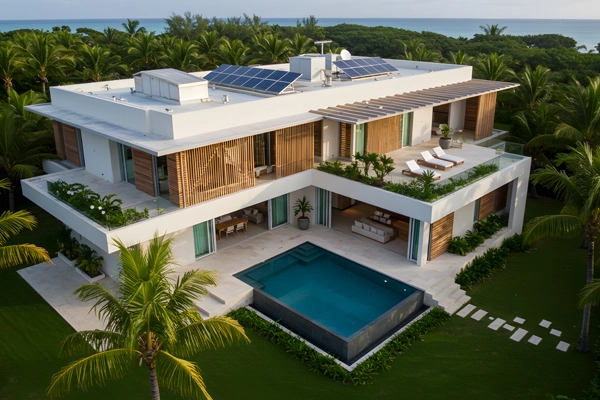 Couple admire energy-efficient features in a sunlit home
📅 Updated on 06/14/2026
A sustainable home is designed to use less energy and water, reduce waste, improve indoor air quality, and last longer with lower operating costs. The goal is not “living with less” for its own sake; it is building or upgrading a house so it performs well, feels comfortable, and costs less to run over time.
That matters because the biggest environmental wins in housing usually come from the least glamorous decisions: insulation, airtightness, windows, efficient heating and cooling, durable materials, and smart water management. Solar panels help, but they are only one piece of a much larger system. This guide breaks down what actually makes a home sustainable and which upgrades deserve priority first.
In a Nutshell
- A sustainable house is a performance system, not a single product. Energy, water, materials, and indoor air all affect the result.
- The highest-impact upgrades usually come from the building envelope: insulation, air sealing, and energy-efficient windows.
- Low-VOC materials and good ventilation matter because an efficient home can still feel unhealthy if indoor air quality is ignored.
- Many existing homes can become far more efficient without a full gut renovation, but the best sequence depends on the house and climate.
- Most savings come from reducing demand first, then adding renewables like solar panels if the roof, budget, and local codes support them.
What a Sustainable Home Is and Why It Matters
A sustainable home is a house that minimizes resource use across its life cycle while supporting comfort, health, and durability. In practical terms, that means less energy for heating and cooling, less water indoors and outdoors, fewer toxic emissions from finishes, and materials that hold up instead of being replaced every few years.
The phrase gets used loosely, so it helps to separate marketing from performance. A home can have one green feature and still be inefficient overall. A truly green home balances the whole package: structure, systems, materials, and daily operation.
What separates a genuinely sustainable house from a trendy “eco-friendly” remodel is not the number of green products installed — it is how much energy, water, and maintenance the home avoids over its entire life.
That life-cycle view is why many builders and architects start with the building envelope before they talk about gadgets. If the house leaks air or has poor insulation, the HVAC system works harder, utility bills climb, and comfort drops. The U.S. Department of Energy explains the role of the envelope in its insulation guidance, and the EPA’s indoor air quality resources show why efficient homes still need ventilation and moisture control. For a broader policy and climate context, EPA household sustainability resources are a useful starting point.
Why it matters financially
Lower utility bills are only the first layer. Better insulation, windows, and equipment can also reduce wear on furnaces, air conditioners, and water heaters. That means fewer service calls, longer equipment life, and less “hidden cost” over the next decade.
Why it matters for health
Efficient homes can trap pollutants if they are sealed too tightly without proper ventilation. That is why indoor air quality belongs in the same conversation as energy use. Comfort is not just temperature; it is humidity control, fresh air, and fewer off-gassing materials.
The Core Principles Behind Sustainable Home Design
Good sustainable home design follows four principles: reduce demand, choose durable materials, protect indoor health, and optimize systems after the building shell is strong. If you reverse that order, you usually spend more money for smaller gains.
1) Start with the envelope
The building envelope is the barrier between inside and outside. It includes insulation, air sealing, roof assembly, windows, and doors. When the envelope performs well, the home needs less heating and cooling from the mechanical system.
2) Design for climate, not templates
A passive house approach in Minnesota will not look identical to one in Arizona. Climate affects everything: sun angles, humidity, heating loads, cooling loads, and the best window strategy. Passive House Institute standards are a useful reference point here, because they force designers to think about loads before equipment.
3) Reduce embodied carbon where possible
Embodied carbon is the emissions tied to extracting, manufacturing, transporting, and installing materials. Concrete, steel, and some foam products can carry high carbon footprints, while wood products, cellulose, and reclaimed materials can reduce impact when sourced responsibly. That said, durability still matters; a low-carbon material that fails early is not a win.
4) Design for maintenance
A home that is hard to maintain rarely stays sustainable for long. If filters are inaccessible, drainage is poor, or roof details are complicated, performance slips. Good design makes the right behavior easy.
Energy-Smart Design Choices That Cut Consumption
The fastest way to make a home more efficient is to cut heating and cooling demand before adding renewable energy. In practice, the most effective sequence is insulation, airtightness, high-performance windows, then right-sized HVAC and controls. That order usually delivers more comfort per dollar than chasing equipment upgrades first.
Insulation and airtightness
Insulation slows heat flow, while airtightness reduces uncontrolled leaks. Together, they lower the load on the home. The mistake many owners make is adding insulation without air sealing, which leaves performance on the table and can create moisture problems in the wrong assembly.
Energy-efficient windows and shading
Energy-efficient windows reduce drafts and heat loss, but they should be chosen for climate. In colder regions, lower U-values matter more; in hotter, sunny regions, solar heat gain and exterior shading become critical. Triple-pane windows can be worth it in some climates, but not every house needs them.
Right-sized HVAC and smart thermostats
A sustainable home should use heating and cooling equipment sized to the actual load, not guessed from a rule of thumb. Oversized systems cycle too often, waste energy, and control humidity poorly. Smart thermostats help, but they work best after the envelope is improved and the HVAC system is properly matched.
One small retrofit case I saw often goes the same way: the owner starts with a heat pump upgrade, expecting a dramatic drop in bills, but the real breakthrough comes after attic air sealing and blown-in insulation. The heat pump then runs less, cycles more evenly, and the house stops feeling cold near the windows. The equipment mattered, but the shell changed the outcome.
Renewable energy as the final layer
Solar panels can be an excellent addition, especially on roofs with good orientation and little shading. But they should usually come after demand reduction, not before. A smaller, better-performing house needs a smaller solar array and often gets a faster payback.
Solar panels are most effective on a home that already wastes little energy, because generation is always cheaper than inefficiency only after the biggest losses have been removed.
Water-Saving Strategies for a More Sustainable Home
A water-saving home lowers both water use and the energy required to heat and move that water. That is why efficient plumbing, leak prevention, and landscape design matter as much as a low-flow showerhead. Water savings are often modest one fixture at a time, but the combined effect can be substantial.
Fix leaks before buying new fixtures
Leaks are the easiest waste to miss. A running toilet or slow drip can waste far more water than a family expects. Before replacing fixtures, check supply lines, shutoff valves, toilets, and irrigation zones.
Choose efficient fixtures and appliances
Low-flow faucets, WaterSense-certified toilets, and efficient dishwashers cut daily use without making the home feel compromised. The U.S. EPA’s WaterSense program is a reliable reference for products that meet water-efficiency standards.
Capture and reuse water where allowed
Rainwater harvesting can support landscape irrigation, especially in regions with seasonal rain and dry summers. Greywater reuse is also possible in some jurisdictions, but local codes vary widely, so this is one of those areas where regulations matter as much as hardware.
Rethink landscaping
The yard often determines more water use than the kitchen. Native planting, mulch, drought-tolerant species, and smart irrigation controllers can cut outdoor demand sharply. In many homes, the garden is where sustainable performance is won or lost.
Best Materials and Finishes for Lower-Impact Building
The best sustainable building materials are durable, repairable, low-emission, and appropriate for the job. That is a more useful filter than chasing the “greenest” label. A material can be renewable and still perform poorly if it warps, stains, or fails in local conditions.
| Material or Finish | Why It Helps | Watch Out For |
|---|---|---|
| Cellulose insulation | Often made from recycled fiber and useful for dense-pack applications | Needs proper installation to avoid settling or air gaps |
| Reclaimed wood | Reduces demand for new lumber and adds character | May require extra labor, inspection, or refinishing |
| Low-VOC paints and adhesives | Improves indoor air quality by reducing off-gassing | Performance varies, so check product specs rather than color labels |
| Fiber-cement or metal siding | Durable and often lower maintenance than short-life cladding | Embodied carbon can be higher than some wood-based options |
| Porcelain, stone, or durable composite surfaces | Long service life reduces replacement waste | Heavy materials increase transport emissions |
Low-VOC materials and healthy finishes
Low-VOC materials matter because volatile organic compounds can continue to off-gas after installation. This is one place where labels can be confusing, so check product data sheets rather than relying on “eco” branding alone. Paints, sealants, flooring adhesives, and cabinetry finishes are the usual culprits.
Repairability beats disposability
A material that can be repaired, sanded, refinished, or replaced in sections is usually better than one that forces full replacement. That logic applies to flooring, countertops, cabinets, and even exterior cladding. The most sustainable product is often the one you do not have to throw away early.
How to Improve Indoor Air Quality and Comfort
Indoor air quality is one of the most overlooked parts of home sustainability. A house can be energy efficient and still feel stale, damp, or irritating if it traps pollutants and moisture. Healthy performance depends on ventilation, filtration, humidity control, and low-emission finishes working together.
Ventilation is not optional
When a home gets tighter, it needs intentional ventilation. Heat recovery ventilators (HRVs) and energy recovery ventilators (ERVs) bring in fresh air while reducing energy loss. Which one fits better depends on climate and humidity control needs.
Control moisture first
Moisture drives mold risk, material damage, and discomfort. Exhaust fans in bathrooms and kitchens should actually vent outdoors, not into attic spaces or wall cavities. Basements need special attention because water problems often start below grade and then spread upward.
Use filtration where pollution is real
High-efficiency HVAC filters can reduce particulates from cooking, dust, smoke, and outdoor pollution. But a stronger filter is not a substitute for airflow or source control. If the stove produces a lot of smoke, use the hood. If there is a leak, fix the leak.
Make comfort measurable
Temperature, humidity, drafts, and noise all shape how a home feels. A room with great insulation but poor air movement can still feel wrong. Comfort is a design result, not a lucky accident.
Upgrades by Budget and Priority
The right upgrade depends on what the house is doing wrong. A low-budget house with obvious air leaks needs a different plan than a newer home with inefficient lighting or an aging furnace. The smartest sequence is usually “stop waste first, then add systems.”
| Priority | Upgrade | Typical Impact | Best For |
|---|---|---|---|
| High | Air sealing and attic insulation | Large comfort and energy gains | Older homes with drafts or uneven temperatures |
| High | HVAC tune-up or replacement with right sizing | Better efficiency and humidity control | Homes with aging or oversized systems |
| Medium | Energy-efficient windows or storm windows | Reduced heat loss and drafts | Homes with failing single-pane windows |
| Medium | WaterSense fixtures and leak repairs | Lower water use and utility costs | Any home with older plumbing fixtures |
| Higher | Solar panels and battery storage | Lower grid dependence and emissions | Homes with good roof exposure and stable utility rates |
What to do first on a tight budget
- Seal obvious air leaks around penetrations, attic hatches, and weatherstripping.
- Replace the worst-performing light bulbs only after larger building-shell issues are addressed.
- Install a programmable or smart thermostat if the HVAC system is already functioning well.
- Fix leaks and replace wasteful plumbing fixtures before looking at decorative upgrades.
What to do first on a renovation budget
If you are already opening walls or replacing finishes, prioritize insulation, window performance, and low-VOC materials while access is easy. That is when the marginal cost of doing it right is lowest. Waiting until after the drywall goes back up usually means paying twice.
One limitation matters here: not every upgrade pays back the same way. Solar often makes sense on a sunny roof with favorable utility rates, but it may not be the first-dollar improvement in a house that still leaks air badly. The best project is the one that fixes the biggest problem, not the one that sounds greenest.
Common Mistakes That Make a Green Home Less Sustainable
The most common mistake is treating sustainability as a shopping list. Real home sustainability comes from system performance, not from collecting branded products. A house with solar panels, bamboo floors, and smart devices can still be wasteful if the envelope is weak.
Focusing on visible upgrades first
People often start with cosmetic changes because they are easy to see and sell. The problem is that visible upgrades rarely reduce energy loss or moisture risk. Hidden work is where the biggest gains live.
Ignoring embodied carbon and durability
Some renovations chase lower emissions at the expense of service life. That can backfire if materials need early replacement or constant maintenance. Longevity is part of sustainability.
Over-tightening without ventilation
This is a real failure mode. A home can become efficient and unhealthy if it is sealed up without a proper ventilation plan. Experts still debate the best balance in some climates and house types, but nobody serious recommends ignoring fresh air.
Choosing products before solving the load
New equipment does not compensate for a bad envelope. If a house needs a much larger HVAC system because the shell leaks heat, the project is less efficient and often more expensive than necessary.
What to Do Next
If you want a practical path, start with a home audit: check insulation levels, air leakage, HVAC age, window condition, water fixtures, and indoor air problems. Then rank upgrades by impact, not by excitement. The best sustainable home is built from a sequence of smart decisions, not from one dramatic purchase.
Your next move should be to choose one of three paths: tighten the building shell, reduce water waste, or improve indoor air and comfort. Pick the category with the largest measurable loss in your house, and make that the first project instead of the prettiest one.
Frequently Asked Questions
What makes a home sustainable?
A home is sustainable when it uses less energy and water, produces less waste, and stays healthy and durable over time. The strongest version balances the building envelope, materials, ventilation, and systems instead of relying on one “green” feature.
Is a sustainable home expensive to build or renovate?
Not necessarily. Some of the highest-value improvements, like air sealing, insulation, and leak repairs, are relatively modest compared with major remodels. New construction can cost more upfront if it uses high-performance assemblies, but it often lowers operating costs for years.
What are the most important upgrades for a more sustainable home?
In most homes, the top priorities are insulation, airtightness, efficient windows, and right-sized heating and cooling. After that, add WaterSense fixtures, low-VOC finishes, and renewable energy if the roof and budget make sense.
How does a sustainable home save money over time?
It saves money by reducing utility bills, lowering maintenance needs, and extending equipment life. A well-sealed, well-insulated house also needs less oversized HVAC capacity, which can reduce replacement costs later.
Can an existing house be made sustainable, or only new builds?
Existing houses can be improved a lot, and in many cases that is the smarter path. Retrofit projects may not achieve the same performance as a carefully designed new build, but they can still cut energy, water, and maintenance costs significantly.
Are solar panels enough to make a house sustainable?
No. Solar panels help reduce grid electricity use, but they do not fix air leaks, weak insulation, water waste, or poor indoor air quality. A house becomes much more sustainable when demand is reduced first and solar is added afterward.