

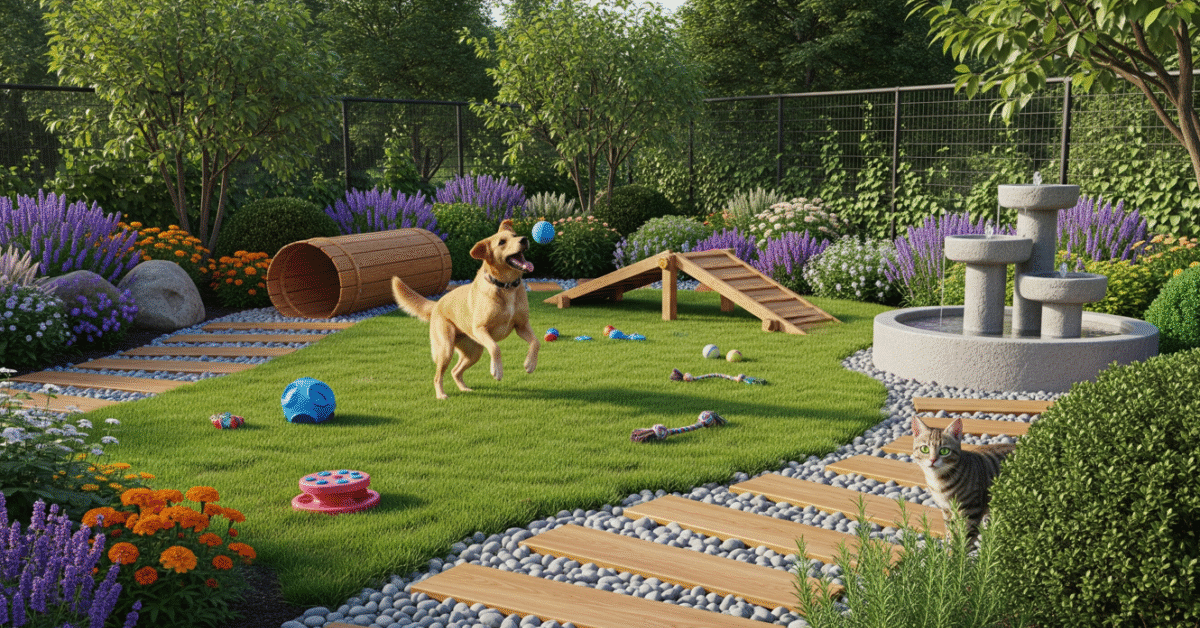
📅 Updated on 06/14/2026
A well-designed pet garden is not just a yard with a fence around it. It is a safe outdoor space for pets that balances movement, shade, durable surfaces, and plant choices that won’t poison a curious dog or cat. Done right, it reduces injuries, lowers cleanup time, and gives animals a place to explore without wrecking the landscape.
That balance is harder than it looks. The best pet-friendly garden works with pet behavior, not against it: dogs need paths, dig-friendly zones, and resilient ground cover; cats want vertical interest, hiding spots, and escape routes; both need protection from toxic plants, standing water, sharp edging, and chemical residues. The sections below turn that into a practical design plan.
Key Takeaways
- A pet-friendly garden is defined by safety first: non-toxic plants, stable footing, secure boundaries, and materials that hold up to claws, paws, and rain.
- Most garden damage comes from predictable behavior, so the smartest design redirects digging, marking, and running instead of trying to eliminate them.
- Good pet gardens are built with boring maintenance in mind: fewer fragile beds, fewer loose decorations, and more mulch, gravel, or turf substitutes that are easy to clean.
- Dogs and cats need different layouts; one shared yard can still work if the space includes distinct zones for exercise, rest, and observation.
- In small yards, balconies, and urban spaces, the winning move is not adding more features, but choosing a few durable ones that do several jobs well.
What Pet Gardens Are and Why a Pet-Friendly Garden Matters
A pet garden is an outdoor area intentionally designed to be safe, durable, and enriching for animals. In plain language, it is a garden where pets can move around without constant correction, emergency worry, or repeated damage to plants and surfaces. The goal is not perfection; the goal is predictable, manageable behavior in a space that still looks good.
The practical value is bigger than aesthetics. A safe outdoor space for pets can reduce boredom, support exercise, and give animals a place to decompress. That matters for dogs that need physical outlets and for cats that benefit from supervised outdoor stimulation without the risks of free roaming. It also matters for owners, because the right layout cuts down on muddy paws, trampled beds, and expensive repairs.
What separates a pet-friendly garden from a decorative yard is not how polished it looks—it is whether the design anticipates animal behavior before problems start.
There is one nuance worth stating clearly: a garden that is safe for one pet can still fail for another. A calm senior dog, a high-energy retriever, and an indoor cat with access to a patio all need different design choices. That is why pet garden ideas work best when you start with behavior, not with a plant list.
Core Principles of a Safe Pet Gardens Design
The safest pet gardens follow four rules: choose non-toxic plants, create clear routes, separate fragile areas, and use materials that tolerate wear. If one of those breaks, the whole garden becomes harder to manage. The design should assume that pets will run through beds, sniff edges, and test weak points.
Build Around Traffic, Not Just Beauty
Pets create their own paths. If you do not design for that movement, they will invent one through the flower border or along the softest patch of soil. A narrow stone path, a mulched loop, or a compact lawn strip gives them a place to travel without destroying the rest of the garden.
Use Boundaries That Pets Understand
Low hedges, edging, and raised beds can help, but only if they are physically believable barriers. A tiny border that looks elegant in a catalog may do nothing against a medium-size dog. For determined pets, combine visual cues with sturdier edging and consistent reinforcement.
Think in Zones
A good dog-friendly garden or cat-friendly garden is divided into zones: movement, rest, enrichment, and planting. This makes maintenance easier and gives pets a clearer sense of where they can play. It also protects high-value beds from the highest-traffic areas.
If a surface cannot handle repeated paw traffic, it does not belong in the main route of a pet garden.
For chemical safety, follow guidance from authoritative sources on toxic plants and pesticide exposure. The ASPCA’s toxic and non-toxic plant database is one of the most useful references for checking plant safety before you buy anything. For lawn and pest treatments, the U.S. Environmental Protection Agency’s pet guidance is worth reading before any spray, granule, or lawn treatment goes down.
Best Pet-Safe Plants, Materials, and Ground Cover
The best pet-safe garden choices are the ones that stay non-toxic, resist crushing, and do not create hidden hazards when pets dig, lick, or roll in them. A beautiful planting plan fails fast if it leaches chemicals, sheds thorns, or collapses under traffic.
Plants That Usually Fit Pet-Friendly Spaces
- Herbs such as rosemary, thyme, and basil, which are commonly used in pet-safe garden ideas when kept out of heavy trampling zones.
- Many ornamental grasses with soft blades, as long as they are not sharp-edged or invasive.
- Marigolds and sunflowers are popular in mixed beds, but plant safety should still be checked for the specific species and the pet’s habits.
- Spider plants and Boston fern are often used in cat-friendly garden spaces and shaded patios.
Always verify a plant before placing it near an animal. The ASPCA database is still the fastest reality check because “non-toxic” in casual gardening talk is not the same thing as “safe if chewed in quantity.”
Materials That Hold Up Better
| Material | Why It Works | Watch Out For |
|---|---|---|
| Pea gravel | Drains well and resists mud | Can shift under fast-running dogs |
| Mulch made for pet areas | Soft underfoot and easy to refresh | Some types splinter or attract chewing |
| Artificial turf | Clean look, low mowing, consistent surface | Needs proper drainage and heat management |
| Pavers or flagstone | Stable routes and easy cleanup | Gaps can collect debris or traps for nails |
For ground cover, the right choice depends on use. Real grass works for some homes but can turn into a mud factory in rainy seasons or in narrow side yards. Artificial turf can solve that, but it needs drainage and shading to avoid heat buildup. Gravel and stone are durable, yet they work best when used as paths, not as the only surface everywhere.
How to Design Pet Gardens for Dogs vs. Cats
Dogs and cats use outdoor space in different ways, so a single layout rarely serves both well without some partitioning. Dogs want to patrol, run, sniff, and sometimes dig. Cats prefer perches, cover, observation points, and routes that let them move without feeling exposed.
Dog-Friendly Garden Priorities
A dog-friendly garden needs wide circulation, tough edges, and at least one area that is acceptable to mess up. If you do not provide a legal digging zone, many dogs will make one beside the best-looking border. A sand patch, a loose-soil corner, or a designated play strip can save the rest of the yard.
Water bowls should stay shaded and stable. So should resting spots. Dogs overheat faster than many owners expect, especially on dark stone or synthetic surfaces in direct sun.
Cat-Friendly Garden Priorities
A cat-friendly garden is more about control and cover than open space. Cats like visual depth, sheltered edges, and elevated spots such as shelves, cat-safe fencing, or sturdy planters they can perch near. They also need enough escape routes to avoid feeling trapped by dogs or unfamiliar noise.
In practice, the best cat-friendly setups use layered planting and enclosed access. A screened patio, catio, or fenced section gives cats outdoor stimulation without the same level of escape risk.
A shared pet garden works best when dogs get room to move and cats get room to hide, perch, and observe.
One small example: a family with a border collie and two indoor cats turned a narrow side yard into a two-lane system. The dog got a gravel path and a turf strip for fetch. The cats got a raised planter edge, a screened corner with cat grass, and a climbing shelf near the fence. The chaos dropped immediately because each animal had a job and a territory.
Enrichment Ideas: Shade, Digging Zones, Paths, and Play Areas
An enriching garden for pets is not just safe; it gives animals reasons to use the space. Without shade, textures, scent changes, and opportunities to explore, most outdoor areas become either boring or destructive. Enrichment is what turns a functional yard into a place pets actually want to visit.
Shade and Cooling
Shade should be designed, not hoped for. Trees, pergolas, shade cloth, and strategic placement of tall shrubs can protect both pets and plants from heat stress. In warmer climates, this is not a luxury. It is what makes the yard usable in summer.
Digging and Sniffing Zones
Many owners try to stop digging by scolding, but that usually fails if the dog has already learned the behavior. A better strategy is to redirect it to a designated area with loose soil or sand. The same logic applies to scent zones: a patch of herbs, a log, or even rough bark can create interesting sniffing without turning the whole garden into a mess.
Paths and Play Layouts
- Use a looped path so pets can move without sharp turns or dead ends.
- Keep play zones away from delicate borders and young plantings.
- Place toys and water where your pet naturally spends time, not where the landscaping looks best.
- Leave at least one clear “no plant” buffer near the main route.
Here is the key idea: enrichment should absorb energy, not add clutter. Too many decorative objects create hazards, not interest. One well-placed digging pit does more for a dog than five fragile ornaments ever will.
Common Hazards to Avoid in Pet Gardens
The biggest garden hazards for pets are often the ones owners overlook because they look normal in a yard. Toxic plants, fertilizer residue, slug bait, sharp mulch, exposed irrigation parts, and standing water can all create problems. If a feature would make you pause with a toddler, it deserves the same scrutiny for a pet.
Some plants are especially risky. Lilies are dangerous for cats. Sago palm is highly toxic to dogs and cats. Oleander, foxglove, azalea, and certain types of ivy also belong on the no-go list. The Humane Society’s guidance on toxic plants is a useful companion to the ASPCA database, especially when you are comparing design options across a full yard, not just a few potted plants: keeping pets safe around plants.
Also watch the invisible hazards. Lawn chemicals and insect control products can linger on surfaces long after application. If you use any treatment at all, read the label, keep pets out until the area is fully safe, and favor non-chemical control methods where possible. The EPA’s pet safety guidance exists for a reason: exposure often happens during routine play, not from dramatic accidents.
One limit worth admitting: no garden can be made hazard-free in every circumstance. A determined digger can still expose roots or irrigation parts, and a cat can still find a gap in fencing. The real goal is risk reduction through layers, not total control.
Maintenance Tips for a Clean, Durable, and Beautiful Space
Low-maintenance garden design for pets is less about doing nothing and more about choosing systems that are easy to reset. The best yards are the ones you can clean after rain, after play, and after a season of wear without rebuilding half the space.
Keep Cleanup Simple
- Rinse high-traffic areas regularly so urine spots and mud do not build up.
- Trim ground cover before it gets tangled in paws.
- Use hose-friendly materials where pets rest or play most often.
- Remove broken sticks, fallen fruit, and seed pods before they become chew toys or tripping hazards.
Choose Replacements You Can Repeat
If a plant dies in a pet zone, replace it with something equally durable and safe rather than redesigning the whole bed. Repetition is underrated in outdoor design. When a layout is based on a few reliable plants and surfaces, it stays coherent even after repairs.
Seasonal checks matter too. In spring, inspect fences, irrigation, and plant growth. In summer, check heat on pavers and turf. In fall, clear leaf piles before they turn into slippery or moldy patches. In winter, watch for salt, ice melt, and runoff that pets may track inside.
Pet Garden Ideas for Small Yards, Balconies, and Urban Homes
Small-space pet gardens can work surprisingly well because they force better priorities. In limited areas, every square foot has to earn its place. That means fewer decorative extras, more multifunctional features, and tighter attention to safety.
For Small Yards
Divide the space into three parts: a path, a rest area, and a plant edge. Even a modest layout can include a sandbox for digging, a shady corner, and one durable surface that handles traffic. If the yard is long and narrow, use a visual break to stop pets from turning it into a racetrack.
For Balconies and Rooftops
Use containers with stable bases, rail-safe barriers, and plants verified as non-toxic. Keep everything low, anchored, and easy to clean. A balcony setup should never rely on loose decorative rocks or anything that can fall, roll, or be swallowed.
For Urban Homes
City gardens often benefit from enclosed courtyards, vertical planting, and modular surfaces like pavers or turf tiles. The trick is to make the space feel open without making it unsafe. Cats usually do better here than dogs unless there is enough room for movement and weather protection.
That is where pet garden ideas get practical: not every home needs a big yard, but every home needs a layout that respects the animal actually living there. A tiny, well-planned outdoor pet area beats a larger space that creates stress, mess, or repeated cleaning.
What to Do Next
If you are planning a pet-friendly garden, start with a hard look at the current layout: identify toxic plants, map pet traffic, and mark the spots that get muddy, damaged, or too hot. Then choose one improvement that changes the whole system, such as a safe path, a shade structure, or a designated digging zone.
The smartest next move is to sketch your space by behavior, not by decoration. Once you know where the dog runs, where the cat hides, and which materials can survive daily use, the rest of the design becomes much easier to decide. Build for the animal first; beauty follows from a space that actually works.
Frequently Asked Questions
What makes a garden pet-friendly?
A pet-friendly garden is safe, durable, and designed around animal behavior. It uses non-toxic plants, stable surfaces, secure boundaries, and enough space for movement and rest. The best versions also reduce cleanup by directing traffic away from fragile beds.
Which plants are safe for dogs and cats?
Common safer choices include rosemary, thyme, basil, spider plant, and Boston fern, but every plant should still be verified before planting. The ASPCA toxic plant database is the most practical reference for checking specific species. When in doubt, treat unknown ornamentals as unsafe until confirmed.
How do I stop my pet from damaging the garden?
You usually do not stop the behavior so much as redirect it. Give pets a legal digging area, a clear path, and enough enrichment that they are not forced to invent their own. Inconsistent boundaries and fragile layouts are what usually invite damage.
What should I avoid in a pet garden?
Avoid toxic plants, sharp mulch, exposed chemicals, unstable decor, and anything that can trap paws or claws. Lilies, oleander, sago palm, and foxglove are common examples of plants that should not be placed where pets can reach them. Also avoid using pesticides or fertilizers without checking pet-safe guidance first.
How can I create a pet garden in a small space?
Use zones, not clutter. A small yard, balcony, or patio can support pets if you choose one or two durable surfaces, a shaded rest area, and a safe planting plan. Containers, vertical elements, and easy-to-clean materials make compact spaces far more workable.
Are artificial turf and gravel safe for pets?
They can be, but only if installed and maintained correctly. Artificial turf needs drainage and heat control, while gravel should be rounded, stable, and used in the right areas so it does not shift under running pets. Neither material is automatically safe in every yard.