Warning: Cannot modify header information - headers already sent in /home/u278635817/domains/myhousegarden.com/public_html/wp-content/plugins/artigosgpt/artigosgpt.php on line 28454
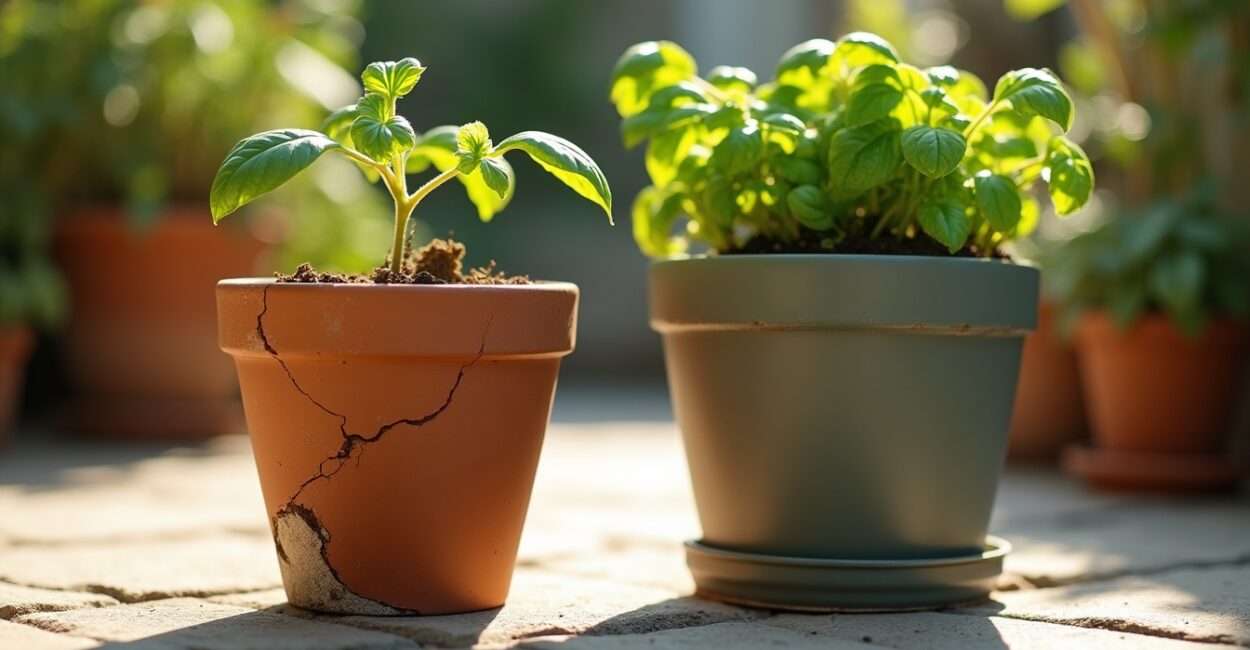
Sun at noon, a cracked terra-cotta pot, and the sinking feeling that you forgot to water the patio plants for three days straight — we’ve all been there. Self-watering pots are the low-effort fix that actually keeps plants alive when life gets busy. They do more than “slow down” drought; they change how water reaches roots. If you want patio plants that survive your schedule (and sometimes thrive because of it), read on.
The Surprising Reason Self-watering Pots Outperform Daily Watering
Consistent moisture beats emotional watering every single time. Watering on a schedule or when you feel like it creates feast-and-famine cycles: shallow roots, salt buildup, and plants that sulk under heat. Self-watering systems deliver steady moisture at the root zone, which encourages deeper root growth and fewer stress responses. In practice this means fewer yellow leaves, less wilting mid-afternoon, and fewer emergency watering sessions after a weekend away.
The Mechanism Nobody Explains Right: Reservoir Types Decoded
There are three reservoir systems you’ll see: wicking (simple cloth or rope), capillary/reservoir with a water level indicator, and sub-irrigation planters (SIP) with a separate filler neck. Each one controls water delivery differently — and that difference matters for which plants will thrive.
- Wicking: cheap, simple, good for smaller pots and humidity-loving plants.
- Reservoir with indicator: versatile, lets you see when to refill, great for busy owners.
- Sub-irrigation planter (SIP): best for larger containers and vegetables — holds more water and reduces evaporation.
Expectation vs. reality: people expect “set and forget,” but reality is seasonal adjustment — refill frequency still depends on heat, pot size, and plant demand.
Which Pot Sizes Actually Work for a Forgetful Patio Owner?
Size dictates how long a pot can go without attention. Small pots (under 6 inches) dry fast even with reservoirs; they’re a false promise. Medium pots (8–12 inches) with a decent reservoir will get you 5–10 days. Large pots (14 inches plus) with SIP systems can stretch to 2–3 weeks. If you travel often, think larger — but don’t over-pot a small plant into a huge container and drown its roots.
Best Plant Matches: Who Loves Self-watering Pots (and Who Doesn’t)
Some plants sing in self-watering pots, others silently resent consistent moisture. Pick the right personality match and you’ll end up with lush, carefree foliage.
- Ideal: herbs like basil and mint (in warmer months), many tropicals (philodendron, pothos), and most vegetables in SIPs (tomatoes, peppers with good drainage).
- Use caution: succulents and cacti — they hate constant wet roots unless you use a very dry mix and minimal reservoir contact.
- Good compromise: Mediterranean herbs (rosemary, thyme) prefer drier conditions; use small reservoirs and fast-draining soil.
Common Mistakes People Make (and How to Avoid Them)
Most failures are avoidable with one or two smart choices.
- Choosing tiny reservoirs for thirsty plants — mismatch equals frequent refills and disappointment.
- Using heavy, water-retentive potting mixes — they reduce the reservoir’s benefit and invite root rot.
- Not cleaning the reservoir — algae and mosquito larvae can build up; cover vents and clean seasonally.
- Assuming “self-watering” means “no maintenance” — you still need to top up, prune, and check drainage.
A Quick Comparison: Before-and-after Patio Test
I tried two identical patio setups: one with standard pots, one with SIPs. After four weeks of mixed weather, the standard pots showed dry, stressed edges and required daily hand-watering. The SIP pots were fuller, greener, and needed refill only twice. Before: shallow roots, last-minute panics. After: deeper roots, calm weekends away.
| Metric | Standard Pots | Self-Watering (SIP) |
|---|---|---|
| Refill frequency | Every 1–2 days | Every 7–14 days |
| Plant vigor | Average | High |
| Maintenance | High | Low–Medium |
How to Choose the Foolproof Setup for Your Patio
Pick a system based on three things: plant type, how long you leave home, and pot placement (sun vs shade). A simple decision flow:
- If you travel more than a week often — choose large SIPs and plants that tolerate steady moisture (tropicals, many vegetables).
- If you want a low-cost trial — start with wicking pots for herbs and potted houseplants on a shaded patio.
- If mosquitoes are a concern — pick reservoirs with sealed fill ports and use covers; clean every 4–6 weeks.
Also consider buying from brands with clear refill indicators and replacement wicks — they make life easier. For science-based care tips, check guidance from extension services like USDA and university horticulture resources such as the Penn State Extension.
Self-watering pots won’t replace observation, but they change the margin of error. They turn panic watering into predictable care. For a patio owner who forgets sometimes, that’s freedom paired with healthier plants.
FAQ
How Often Should I Refill a Self-watering Pot?
Refill frequency depends on reservoir size, pot volume, plant type, and weather. A small wicking pot might need topping up every 3–5 days in hot sun, while a large SIP can go 10–21 days between refills under moderate conditions. Monitor the water-level indicator if your pot has one; if not, check the reservoir until you learn your setup’s rhythm. During heat waves or when plants are actively flowering and fruiting, expect shorter intervals. Seasonal adjustments mean more frequent refills in summer and less in cool weather.
Can I Use Regular Potting Soil in Self-watering Pots?
Regular potting soil can work, but mixes designed for self-watering systems perform better. Ideal blends balance moisture retention and aeration so roots can breathe while accessing the reservoir. Too dense a mix traps water and invites root rot; too fast-draining a mix prevents capillary action from reaching roots. A mix with perlite or pumice and some peat or coco coir often hits the sweet spot. You can also top-dress with coarser material near the fill tube to prevent clogging and algae growth in the reservoir.
Are Self-watering Pots Safe for Vegetables and Herbs I Eat?
Yes—self-watering pots are safe for edible plants, and many gardeners prefer SIPs for tomatoes, peppers, and herbs because they reduce water stress and boost consistent growth. The main concerns are drainage and soil aeration; ensure your mix and reservoir design prevent waterlogging. Clean reservoirs before planting and avoid stagnant water to reduce pests. Wash harvests as usual. If using fertilizers, follow recommended dosage because slow-release from the reservoir can concentrate nutrients in the root zone.
How Do I Prevent Mosquitoes and Algae in the Reservoir?
To keep mosquitoes and algae out, choose pots with sealed or covered fill ports and airtight vents. Clean reservoirs every 4–8 weeks depending on exposure and use a small screen over vents to block larvae. Algae grows in sunlight-accessible reservoirs, so paint or cover clear components and use opaque containers. Adding a bit of mosquito dunk (Bacillus thuringiensis israelensis) to the reservoir is an organic option for standing water, but always follow label instructions. Regular inspection and maintenance are the simplest prevention methods.
What Adjustments Do I Need for Winter or Dormant Seasons?
In cooler months, plant water demand drops, so reduce reservoir fills and switch to less frequent checks. Move sensitive tropicals indoors or to warmer spots and cut back on fertilization. For outdoor pots that freeze, empty reservoirs to avoid cracking and keep soil slightly moist but not saturated—frozen water expands and can harm roots and containers. If you overwinter plants in place, insulate large reservoirs and raise pots off cold surfaces. Monitor for soggy soil, which causes rot when temperatures are low.