Warning: Cannot modify header information - headers already sent in /home/u278635817/domains/myhousegarden.com/public_html/wp-content/plugins/artigosgpt/artigosgpt.php on line 28454
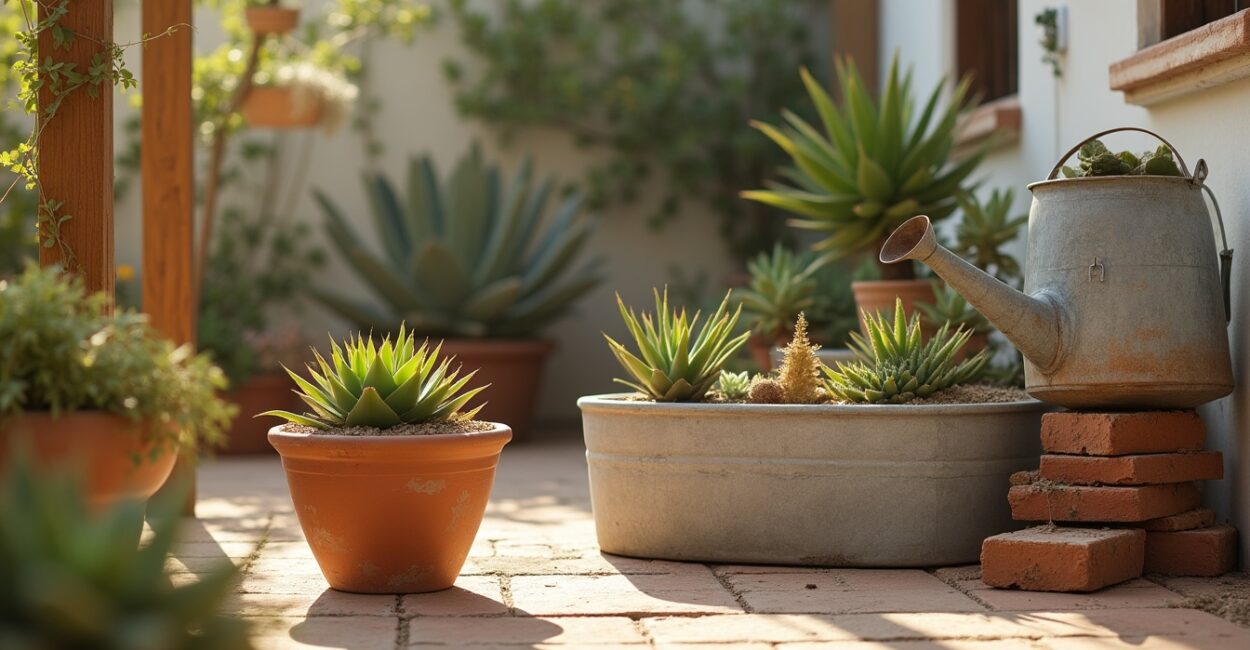
Sun-bleached pottery, a corner of a patio, and a watering can you forget for weeks—those are the conditions many of us live with. If you’re here for succulent container ideas that actually survive bright sun, heat, and long stretches of neglect, welcome: this is a playbook, not a wish list. Within the first few lines you’ll get the one potting mix trick that cuts watering in half and three container layouts that look intentional even when you ignore them.
Why Positioned Drainage Beats Fancy Pots Every Time
Drainage is the single biggest reason succulents live or die in containers. That cute glazed planter without a hole can turn your echeveria into compost by week two in summer. Position matters: elevate pots on feet, use a layer of coarse grit, and never let saucers sit full of water. In practice, a shallow gravel layer below porous soil prevents capillary rise and root rot much better than any trendy top dressing.
- Use terracotta, concrete, or unglazed ceramic for heat tolerance.
- Drill a drainage hole if the pot lacks one—it’s worth the noise.
- Raise pots on bricks for airflow and faster drying.
The Soil Tweak That Halves Watering Frequency
Swap garden soil for a gritty, fast-draining mix with pumice or perlite. A rule that changed my patio: 50% succulent/cactus mix, 30% pumice, 20% coarse sand. That combo sheds water fast and keeps the root zone oxygenated. For extreme heat, add biochar or coconut coir to retain minimal moisture without turning soggy. The result: plants that drink less often but stay plump.
Three Container Layouts That Scream “minimal Care, Maximum Style”
Design with intention so neglect looks deliberate. Try these layouts: a monochrome rosette cluster, a spiky-center rosette-edge mix, and a layered height display. Each is low-maintenance because they group plants with similar water needs and light tolerance. Arrange by drought tolerance: largest, deepest-rooted at the back or center; shallow-rooted rosettes and sedums in front. The effect is cohesive and forgiving.
- Monochrome rosette cluster: same color palette, varied textures.
- Spiky-center mix: a single agave or yucca as an anchor.
- Layered heights: stack on a tiered stand for airflow and sun access.
Containers Built for Blazing Sun: Material and Placement Rules
Some pots cope with heat better than others. Terracotta and concrete breathe; plastic traps heat and moisture. But don’t dismiss plastic—light-colored, UV-stable plastic can be fine if shaded during peak sun. Placement beats material: put sensitive colors where afternoon sun softens or use a reflective backdrop to reduce heat load. In cities, radiant heat from walls can double temperature; keep a few inches between pot and wall to allow cooling airflow.
Watering Hacks for People Who Forget—set It and Ignore It
Think irrigation-lite. A handful of slow-release techniques keeps succulents happy without daily attention: thick top mulch of small stones, buried clay granules, and using terracotta olla or a buried ceramic spike. Water deeply and infrequently; that encourages roots to go deep and resist heat. If you must, use a drip emitter on a timer set for short runs once every 10–14 days in hot spells.
- Soak-and-dry beats light misting every time.
- Use a moisture meter to avoid guesswork.
- Mulch with stones to reduce evaporation and display style.
Common Mistakes That Turn a Charming Display Into a Crispy Mess
People make the same five mistakes over and over. The biggest: overwatering a well-draining pot; second: mixing plants with different water needs in one container; third: using dense potting soil; fourth: placing pots where reflected heat bakes them; fifth: skipping season adjustments. Avoid these and you’ll dodge 80% of patio succulent failures.
- Don’t crowd thirsty and drought-tolerant species together.
- Avoid sealed planters without drainage unless you retrofit them.
- Rotate pots seasonally if you can to manage light exposure.
Before/after: A Three-line Mini-story That Explains the Difference
Last summer, an overwatered succulent bowl turned brown and floppy. I dumped the mix, added pumice, grouped heat-tolerant sedums with an agave, and elevated the pot on bricks. By September the agave held a new, healthy spear and the sedums carpeted the rim. Expectation: another failed experiment. Reality: a low-water display that drew neighbors’ questions instead of pity. Small changes made the whole patio resilient.
For deeper reading on plant water needs, see USDA gardening resources and for soil science basics check research from university extension services.
Ready for a little patio revolution? Pick one container, change the soil, and move it where the afternoon sun arrives—but not the reflected oven heat. Do that and you’ve got a living centerpiece that survives your busy life.
How Often Should I Actually Water Succulents in Containers During Summer?
Water deeply but infrequently: once every 10–14 days is a practical baseline in summer heat for well-draining mixes. The key is to let the soil dry between waterings; stick a finger an inch down or use a moisture meter. If the top two inches are bone dry and the plants show slight wrinkling or color darkening, it’s time. Always water early morning or late afternoon to avoid shocking roots under intense midday sun, and reduce frequency in cooler months.
Can I Use Decorative Pots Without Drainage If I’m Careful?
Yes, but only with precautions: add an inner nursery pot with drainage or create a deep gravel reservoir and water much less. The safer route is to drill a hole or use a liner with holes—this preserves the look while preventing waterlogging. Remember that decorative sealed pots trap moisture and heat, which raises rot risk. If you choose sealed containers, pick plants that tolerate higher humidity and reduce watering to avoid root failure.
What’s the Simplest Soil Mix I Can Make at Home That Still Performs?
Mix one part potting soil, one part coarse sand, and one part pumice or perlite for a fast-draining blend that’s easy to source. The sand must be coarse (builder’s sand), not beach sand. If pumice isn’t available, use crushed lava rock or a 50/50 mix of potting soil and horticultural perlite. This basic mix sheds water quickly, keeps oxygen in the root zone, and cuts watering frequency significantly compared with standard garden soil.
Which Succulent Species Are Most Forgiving in Blazing Sun and Neglect?
Top resilient choices include sedums, sempervivums (hens and chicks), certain echeverias, portulacaria afra (dwarf jade), and small agaves. These tolerate heat, bright sun, and sporadic watering thanks to water-storing leaves and deep or extensive root systems. Avoid high-water tropical succulents or newly propagated cuttings in full sun—their tender tissues scorch. Group resilient species together so their similar needs keep maintenance minimal and your display cohesive.
How Do I Prevent Pests and Diseases When I’m Not Checking Plants Daily?
Prevention is about airflow, cleanliness, and inspection habit. Use a gritty mix and keep pots off the ground to discourage fungus and slugs. Fertilize lightly to avoid soft new growth that pests love. Once a week, do a quick 60-second scan to remove mealybugs or scale; early intervention is easy and effective. If you find pests, isolate the pot and treat with horticultural oil or insecticidal soap rather than broad-spectrum chemicals that upset beneficial insects.