
Warning: Cannot modify header information - headers already sent in /home/u278635817/domains/myhousegarden.com/public_html/wp-content/plugins/artigosgpt/artigosgpt.php on line 28454
It was a single narrow balcony, three plants, and a stack of boxes that refused to leave. Then someone suggested vertical shelving and everything changed. In less than an hour, the usable floor area doubled. Light still poured through. The plants survived. Even the neighbor asked where we bought the idea.
Why Vertical Shelving Doubles Usable Balcony Space (fast)
Vertical shelving turns wasted air into real storage. Instead of piling crates on the floor, you build up. That simple swap often doubles capacity on narrow balconies because walls aren’t in use. You keep the floor clear for foot traffic, small tables, or drying laundry. For renters, a wall-mounted unit with bracket systems can create the same effect without permanent anchors. Vertical shelving also keeps items visible and reachable, which means you actually use the space rather than stacking things until they rot into a mystery.
The Mounting Trick Landlords Usually Accept
Most landlords allow non-penetrating or reversible fixes. Use tension pole shelving, rail-and-bracket systems, or heavy-duty command hooks for lighter loads. These options avoid drilling into bricks or concrete. When drilling is unavoidable, use sleeve anchors for concrete or toggle bolts for drywall if your lease permits. Always photograph the wall before and after. For legal peace of mind, attach a simple written plan to your rental agreement. Small changes now save big disputes later.

Load Limits You Must Know Before You Hang Anything
Not all shelves are equal: know the numbers. Typical floating shelves hold 20–50 lbs per linear foot, while stud-mounted wooden shelves can support 100+ lbs if attached to two studs. Metal wall racks vary from 30–200 lbs depending on anchors. For balcony use, assume lower capacity because of vibration and weather. If you store heavy pots or tools, spread weight across multiple mounting points and use steel brackets. When in doubt, err on the conservative side — sagging shelves are expensive and dangerous.
Styling Cues That Keep Light and View Intact
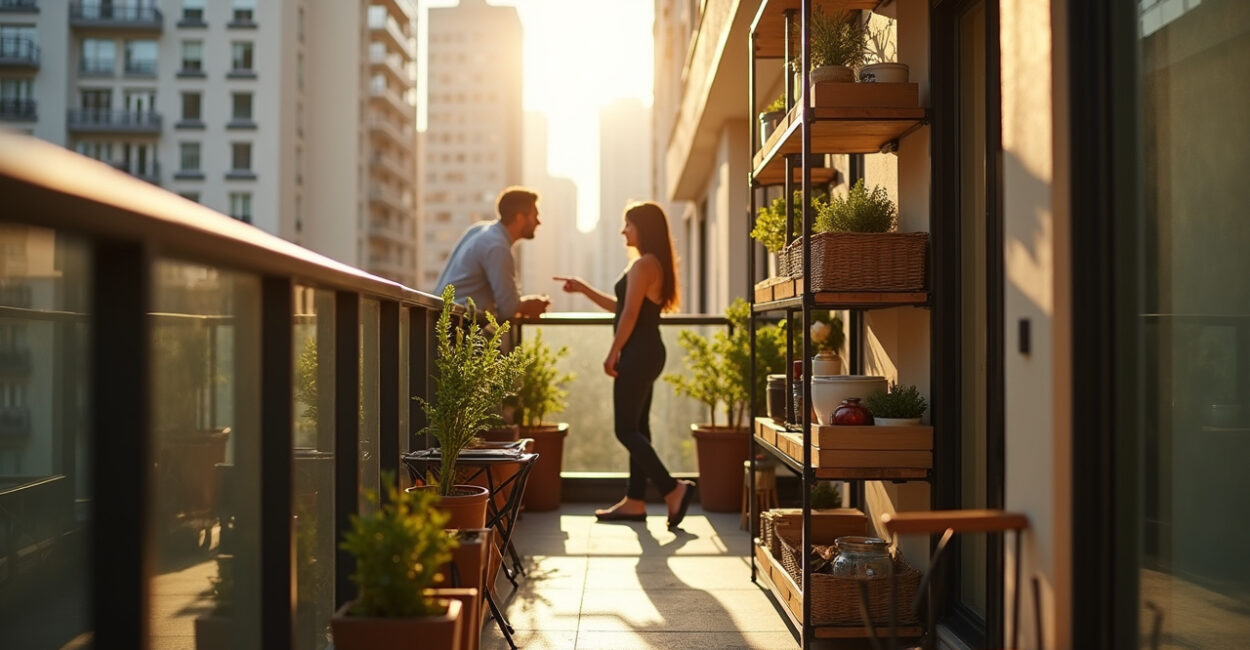
Storage shouldn’t feel like a wall. Use open-backed vertical shelving to let daylight through. Choose narrow planks, wire shelving, or slatted wood to preserve airflow. Place taller items to the rear and lower items on the outer edge to maintain sightlines. Add planters on alternating shelves to soften the look. Light colors and reflective surfaces amplify brightness. The result: more storage that reads like a living feature rather than a blockade.

What to Avoid — Common Mistakes That Ruin Balconies
People make the same five errors with vertical shelving.
- Overloading a single bracket — causes collapse.
- Using solid back panels that block light and air.
- Ignoring water runoff — wood swells, metal rusts.
- Mounting too low and blocking drainage or vents.
- Failing to check lease rules about drilling.
Fix these by spreading loads, choosing open designs, weatherproofing materials, and confirming rental limits. Small prevention stops big headaches.
A Surprising Before/after That Proves the Concept
Expectation: a cramped balcony with a bike, a chair, and a suspicious cardboard tower. Reality: after adding a 12-inch-deep vertical shelving run, the bike hung on a wall hook, boxes moved up, and a tiny bistro set fit comfortably. The transformation took one afternoon and under $150. That before/after shows how vertical shelving reclaims circulation and makes the balcony usable again. The trick is planning height zones: heavy gear low, daily items at elbow height, plants on higher shelves where rain reaches them easily.
Quick Installation Checklist and Materials List
Do this before you drill or buy:
- Measure width, depth (12–14″ ideal), and stud locations.
- Decide if you need reversible mounts for rental rules.
- Pick materials: powder-coated steel, treated wood, or synthetic slats.
- Choose anchors by wall type — consult manufacturer specs.
- Test one shelf loaded to rated capacity before full use.
For detailed load charts, see manufacturer pages and construction guidance like the U.S. Department of Housing and university extension resources such as the Penn State Extension for safe mounting practices.
Small choices change how we live in small spaces. Vertical shelving does more than store things: it gives you back the piece of home you thought was gone. Try one narrow run against the railing wall and watch the balcony breathe.
How Much Weight Can a Typical Wall-mounted Shelf Hold?
A typical floating shelf anchored into drywall with plastic anchors holds about 20–30 pounds per linear foot, while a shelf attached to studs can support 70–100+ pounds depending on bracket quality and span. Metal brackets paired with heavy-duty anchors on masonry can exceed those numbers. When using vertical shelving on a balcony, assume lower capacity because of outdoor exposure and vibration. Distribute heavy items across multiple shelves and anchor points to reduce stress on any single connection.
Can I Install Vertical Shelving Without Drilling Into Walls in a Rental?
Yes. Non-penetrating options include tension pole shelving that braces floor to ceiling, rail systems clamped to balcony rails, or freestanding narrow towers secured with anti-tip straps. Command-style hooks and heavy-duty outdoor adhesive can work for lightweight shelves and planters. These solutions preserve the wall and often comply with rental rules, but verify your lease. For heavier storage, discuss temporary drilling with your landlord and offer to restore the wall to its original state when you move out.
What Materials Resist Weather and Require Low Maintenance?
Powder-coated steel, marine-grade stainless steel, treated cedar, and PVC composite boards stand up well on balconies. Powder coat prevents rust and looks clean. Cedar resists rot and smells pleasant, but still needs occasional sealing. PVC composites never rot and handle moisture, though they can fade under intense sun. For vertical shelving, choose slatted or open designs to let water pass through and avoid pooled moisture that accelerates decay. Regular rinsing and fastener checks extend lifespan significantly.
How Do I Keep My Balcony Breathable and Still Add Storage?
Opt for open-backed or slatted vertical shelving to preserve airflow. Stagger shelf depths and leave gaps for light. Use lighter color finishes and reflective planters to bounce daylight. Avoid solid boxes stacked against the railing; instead, use baskets and hooks that let air move. Position heavier, weather-tolerant items lower and rotate stored goods seasonally to prevent mildew. These steps let you double storage while keeping plants healthy and the space pleasant to use.
Are There Safety Considerations for Balcony Shelving and Plants?
Yes. Secure all shelves to prevent tipping. Heavy objects should sit low and be evenly distributed. Keep pathways clear for evacuation and don’t block building drainage. Use wind-tested anchors for high-rise balconies. For plants, ensure water runoff doesn’t drip onto neighbors or building materials; use trays and saucers. Check local fire codes about combustibles and avoid storing flammable liquids on balconies. Regularly inspect brackets and screws—exposure to weather loosens hardware faster than indoor use does.