

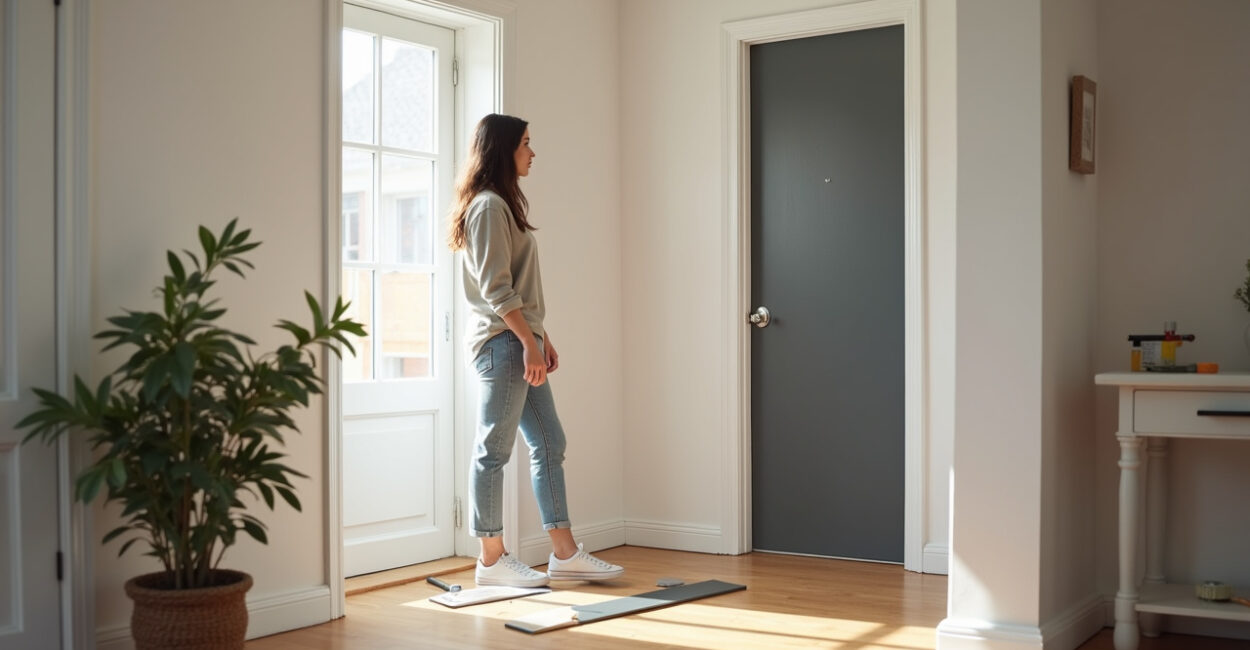
Ten dollars of vinyl can change a door faster than a gallon of paint ever will, but only if the surface and the room are right for it. Peel-and-stick door panels are self-adhesive decorative sheets or panels designed to cover a smooth, stable door surface and give it a new look without sanding, priming, or waiting for paint to cure.
That’s why the comparison with paint matters. Paint is still the better long-term finish for many doors, but peel-and-stick wins when speed, pattern, and renter-friendly reversibility matter more than a perfectly permanent result. In the next few sections, I’ll break down where each option earns its keep, where it fails, and how to choose the one that gives you the best value for your budget.
What You Need to Know
- Peel-and-stick works best on flat or lightly profiled interior doors with clean, dry, non-porous surfaces.
- Paint usually delivers better durability, especially on high-touch doors, humid spaces, and detailed panel profiles.
- The cheapest option is not always the best value; labor, prep, and future touch-ups change the math fast.
- Surface prep is the dealbreaker: dust, grease, texture, and old failure layers ruin both finishes.
- If you want a fast visual upgrade with reversible results, adhesive panels can beat paint on speed and convenience.
Peel-and-Stick Door Panels and Paint: The Real Difference in Everyday Use
Technically, the difference is straightforward: paint creates a bonded film that becomes part of the door’s finished surface, while adhesive panels are a laminated layer sitting on top of it. In plain English, paint changes the door itself; peel-and-stick changes what you see on top of the door.
That distinction matters because doors get slammed, touched, wiped, and scuffed. A painted finish can be refinished, spot-repaired, and matched more easily over time. Adhesive panels, on the other hand, are judged by how well they stay flat, how clean the edges look, and whether the adhesive can handle real household wear.
Paint wins on permanence, but peel-and-stick wins on speed and reversibility; the better choice depends on whether you need a finish that lasts for years or a visual update you can change quickly.
If you want a technical baseline for paint safety and renovation prep, the EPA’s guidance on lead-safe renovation is a good place to start: EPA lead safety guidance. And if your door is part of a larger interior refresh, surface-prep guidance from a university extension can be more useful than glossy DIY advice: University of Maryland Extension on painting preparation.
Where Adhesive Panels Make the Most Sense
Adhesive panels are strongest when the door is visually plain and physically stable. That usually means flat slab doors, closet doors, pantry doors, and some apartment interior doors. If the surface is smooth, the room is dry, and the door doesn’t take constant abuse, the result can look surprisingly polished.
Best-fit Rooms and Doors
- Closets and wardrobes
- Pantry doors
- Bedroom doors with light use
- Rental units where reversibility matters
- Temporary refreshes before selling or staging
Why They Work There
The upside is mostly about friction: less labor, less mess, and no curing time. A homeowner repainting six doors may lose a weekend to prep, sanding, and drying. A renter updating one closet door can finish in an hour if the surface is already clean and level. That’s real value, not just a cheap sticker gimmick.
Na prática, the best results happen when the door is boring in the right way. A flat white hollow-core door is the ideal candidate because the new finish has nowhere obvious to fail. The same product on a warped, textured, or badly patched door can look fine from five feet away and sloppy up close.

When Paint Still Wins on Durability, Cost, and Repairability
Paint is the better choice when the door gets frequent contact or needs to survive years of use. Entry doors on the inside, bathroom doors, children’s rooms, and laundry areas usually see more moisture, fingerprints, and cleaning. Paint handles all of that better because it can be cleaned, touched up, or repainted without stripping the whole surface.
Paint’s Biggest Strengths
- Better edge durability around knobs, hinges, and latches
- Easier color matching for future repairs
- Better performance on raised panels and trim profiles
- No seam lines, overlaps, or vinyl lift issues
There’s also a hidden cost angle. Paint often looks cheaper upfront, but only if the door is already in decent shape. If the existing finish is peeling, stained, or glossy, prep time rises fast. In those cases, the finish job is only as good as the sanding, cleaning, and priming beneath it.
The biggest mistake is comparing material price alone; the real comparison is finish cost per year of useful life.
For rooms with moisture or ventilation concerns, consumer and health guidance on indoor air quality matters too. VOCs and drying time are not the same thing, and paint selection can affect both. The EPA’s VOC guide is worth checking before choosing a product for a tight interior space.
The Cost Math That Actually Decides the Winner
Here’s the part most people skip: the cheapest material is not always the cheapest project. A peel-and-stick door update may cost less per door, but if you end up replacing it early because corners lift or the pattern looks off, the long-term cost climbs. Paint may cost more in supplies and labor, yet deliver a longer service life.
| Category | Peel-and-Stick Panels | Paint |
|---|---|---|
| Upfront material cost | Low to moderate | Low to moderate |
| Labor time | Usually lower | Usually higher |
| Durability | Moderate | High |
| Repairability | Limited | Strong |
| Reversibility | Better | Worse |
What usually tips the scale is how many doors you’re doing and how long you plan to stay put. For a quick apartment refresh, adhesive panels can be the smarter spend. For a forever home, especially on doors that get heavy use, paint usually gives better value.
One small but real example: a homeowner I worked with wanted to “fix” a dated hallway in a weekend. The hallway had four flat doors, all in good shape. We used adhesive overlays on two closet doors and paint on the two main passage doors. Six months later, the painted doors still looked clean; the adhesive doors looked great too, but only because no one was constantly grabbing them. That split decision was the right call.

Surface Prep Makes or Breaks Both Options
Good prep is where the project becomes professional-looking. Skipping it is how people end up blaming the product instead of the surface. Clean, dry, and smooth is the rule for both finishes, but adhesive panels are less forgiving than paint when the door has texture, chips, or residue.
Prep Checklist for Adhesive Panels
- Wash off grease and fingerprints with a residue-free cleaner.
- Remove hardware or mask it carefully.
- Fill deep dents and sand them flush.
- Let the door dry fully before applying any sheet or panel.
- Use firm pressure, especially along edges and corners.
Prep Checklist for Paint
- Degrease the surface.
- Sand glossy areas to create tooth.
- Patch holes and caulk gaps where needed.
- Prime if the old finish is stained, slick, or uneven.
- Allow full dry and cure times before rehanging or heavy use.
Who works with this stuff every week knows the same annoying truth: most failures start at the edge. If the corner lifts on an adhesive door, the whole finish starts looking cheap. If a painted edge chips near a knob, the door starts looking tired fast. So the prep is not a side task. It is the project.
Design Choices That Change the Final Look
The style question is bigger than color. Texture, grain direction, sheen, and panel profile all affect whether the update looks intentional or improvised. Woodgrain vinyl can read as warm and layered, while solid matte finishes feel cleaner and more modern. On the paint side, satin and semi-gloss are practical, but the sheen also changes how defects show up.
What to Match to the Room
- Use flatter finishes in modern rooms with simple trim.
- Choose warmer textures when the space already has wood tones.
- Avoid busy patterns on narrow doors; they can look cramped.
- Keep hardware consistent, or the upgrade loses coherence.
There’s a reason designers lean on restraint here. A door is a large vertical surface, so a loud pattern can dominate a small hallway very quickly. If you want a high-end look on a low budget, the safest move is often a simple, believable surface rather than a dramatic one.
How to Choose the Better Budget Update for Your Door
If you want the short answer: choose adhesive panels for speed, rental flexibility, and low-traffic interior doors; choose paint for permanence, repairability, and high-use areas. That’s the decision tree that holds up in real homes, not just in product photos.
Use this quick filter:
- Choose peel-and-stick if the door is flat, clean, dry, and mostly decorative.
- Choose paint if the door gets slammed, scrubbed, or exposed to humidity.
- Choose neither if the door is warped, damaged, or peeling badly; fix the substrate first.
- Mix both if different doors in the same home serve different roles.
One practical rule: if you expect to touch the door every day, invest in paint. If you mainly want the door to stop looking builder-basic, adhesive panels can be a smart shortcut. That’s where peel-and-stick door panels earn their place instead of pretending to be a universal solution.
If the goal is a smarter budget update, don’t start with the product aisle. Start with the door’s condition, the room’s moisture level, and how much abuse the finish will take. Then pick the option that fits the job instead of the trend. That is how you keep the update looking good long after the first week.
FAQ: Peel-and-Stick Door Panels Vs. Paint
Do Peel-and-stick Door Panels Damage the Door When Removed?
They can, but the risk depends on the adhesive quality, how long the panels stayed up, and the door’s original finish. On smooth, well-sealed surfaces, removal is usually cleaner. On older paint, laminate, or damaged finishes, adhesive can pull up loose material. That is why a small test patch matters before covering an entire door.
Can You Use Peel-and-stick Panels on Textured or Raised-panel Doors?
Sometimes, but results are inconsistent. Flat slab doors give the best finish because the adhesive sits evenly across the surface. Raised panels, grooves, and heavy texture create seams, air pockets, and edge lift. If the profile is detailed, paint usually gives a cleaner and more durable result.
Which Option is Better for a Rental Apartment?
Peel-and-stick panels usually make more sense in a rental because they are faster, easier to remove, and less permanent than paint. That matters if you need to restore the original look later. Still, check your lease first. Some landlords allow temporary adhesive upgrades but prohibit changes to hardware or painted finishes.
How Long Do Peel-and-stick Door Panels Usually Last?
Lifespan varies a lot, but real-world durability is usually measured in years, not decades. Low-traffic doors in dry rooms can hold up well if the surface was prepped correctly. High-touch doors, humid rooms, and poor edge sealing shorten that life fast. Paint remains the better long-term option when durability is the priority.
Is Paint Always Cheaper Than Peel-and-stick Panels?
Not always. Paint materials can be inexpensive, but labor, prep, primer, and multiple coats add up quickly. Adhesive panels may cost more per square foot, yet save time and mess. The cheaper choice depends on whether you are paying mostly in money or mostly in labor.