

How to Choose Solar Backyard Lights That Last All Night
How solar backyard lights lasting all night depend on battery type, panel size, charging efficiency, and weather resistance—not just LED brightness or market…
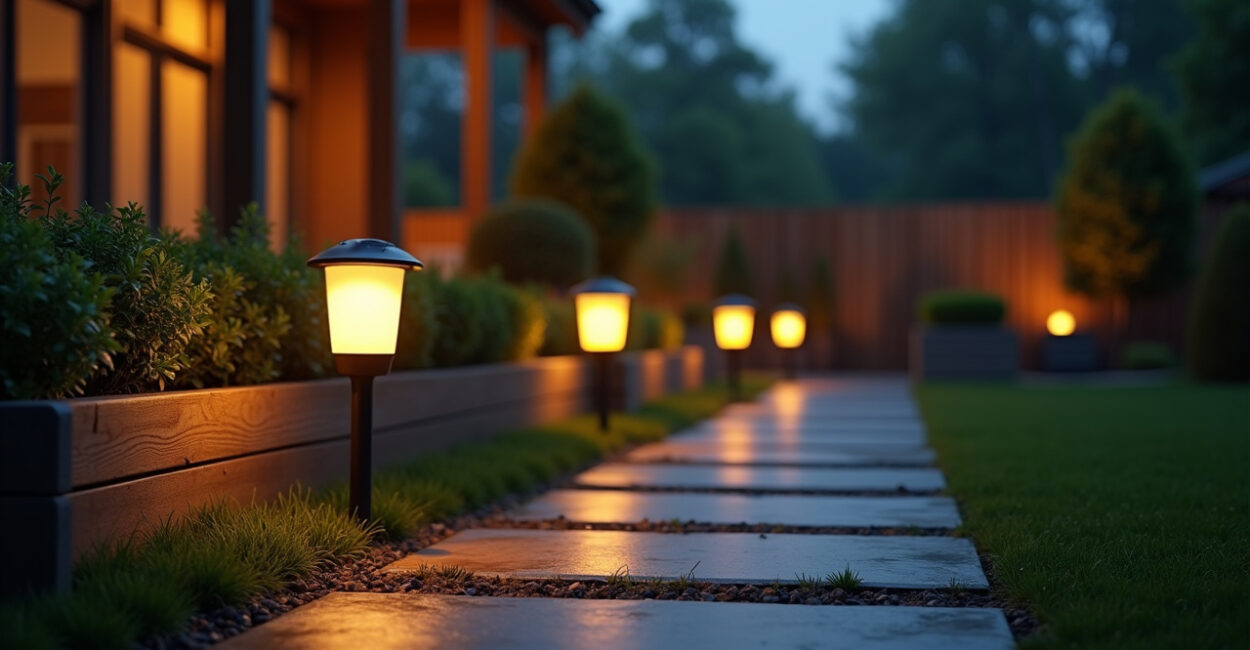
A solar light that looks bright at 8 p.m. and goes dead by midnight is not a “bad light” so much as a bad match between battery capacity, panel output, and real-world sun exposure. If you want solar backyard lights that last all night, the difference is usually not the LEDs — it’s the energy storage, charging efficiency, and how the fixture handles heat, rain, and winter. This article breaks down the parts that matter, what specs are worth paying for, and where marketing claims tend to overpromise.
In practice, the best backyard setup is less about buying the brightest model and more about buying the one that can charge fully and discharge slowly. That means looking at battery chemistry, solar panel size, lumen output, motion settings, and IP weather ratings as a system, not as isolated features. I’ll also show where a light can still fail even when the spec sheet looks good, because that is where most homeowners get caught.
Quick Takeaways
- The longest-lasting solar garden lights usually pair a larger solar panel with a lithium iron phosphate battery, because that combination charges faster and tolerates more cycles.
- “All night” performance depends on how many hours the light runs and at what brightness, not just on the advertised battery capacity.
- IP65 or higher is the practical minimum for exposed backyard fixtures, but sealing alone will not save a weak battery or an undersized panel.
- Motion sensors stretch runtime more reliably than constant full brightness, especially in shaded yards or during short winter days.
- Installation angle and sun exposure can matter as much as brand name; a premium light in shade can underperform a midrange model in full sun.
How Solar Backyard Lights That Last All Night Really Work
Technically, a solar backyard light is a small off-grid photovoltaic system: a solar panel converts sunlight into electrical energy, a charge controller regulates that energy, and a rechargeable battery stores it for LED use after dark. In plain English, the panel fills the battery during the day, and the battery powers the light at night. If any one of those three parts is weak, the light will dim early.
The key detail most listings hide is that runtime is limited by stored watt-hours, not by panel wattage alone. A panel may be large enough to collect plenty of energy, but if the battery is tiny, the light still fades early. The reverse is also true: a big battery with a small panel can look impressive for a few nights and then struggle after cloudy weather.
What separates a backyard light that stays on until dawn from one that quits early is not brightness alone — it is the balance between panel size, battery chemistry, and daily charging conditions.
The Three Parts That Decide Runtime
- Solar panel: Collects energy, and its size and placement determine how much charge the battery gets.
- Battery: Stores energy, and its chemistry determines how long it can hold output without rapid degradation.
- LED driver and controller: Manages brightness and discharge, which affects whether the light stays steady or fades early.
Why Battery Chemistry Matters More Than Flashy Lumen Claims
If you only compare lumens, you will probably buy the wrong light. A 300-lumen fixture with a smart controller and a decent battery can outlast a 700-lumen model that runs too hard for too long. For backyard use, the battery chemistry is usually the real separator.
Lithium Iron Phosphate Vs. Standard Lithium-Ion
Lithium iron phosphate (LiFePO4) batteries are widely favored in outdoor solar lighting because they offer better thermal stability and longer cycle life than many generic lithium-ion packs. That means they generally tolerate daily charging and discharging better over time. The tradeoff is that some lower-cost lights use smaller packs to keep price down, so you still need to check capacity and panel size together.
What Capacity Numbers Actually Mean
Battery listings often use milliamp-hours (mAh), which sounds precise but can be misleading without voltage. A 10,000 mAh battery at one voltage does not equal the same stored energy as 10,000 mAh at another. For a more honest comparison, look for watt-hours if the manufacturer provides them, or at least compare similar voltage systems side by side.
In the real world, a backyard wall light, pathway stake, or floodlight that needs to stay on from dusk until dawn benefits more from efficient low-watt LEDs than from brute-force battery size. If the fixture has a dim mode or adaptive brightness, that can extend runtime dramatically without making the yard feel dark.
For long runtime, battery chemistry and energy management matter more than headline brightness. A well-controlled 200-lumen light can outlast a poorly managed 600-lumen light by several hours.

Panel Size, Sun Exposure, and Why Placement Beats Marketing
The panel is the charging engine, and in backyard installations it is usually the first point of failure. A light mounted under dense trees, beside a tall fence, or facing the wrong direction may never reach a full charge, even in summer. That is why a modest light in full sun often outperforms a premium unit in partial shade.
For most U.S. backyards, south-facing exposure gets the most predictable daylight collection, but the exact setup depends on your yard layout and seasonal sun angle. Roof edges, pergolas, and eaves can work, but only if they do not cast afternoon shade. If the panel is detachable, that is a real advantage because you can place it where the light is, not where the fixture is mounted.
Placement Rules That Actually Help
- Give the panel several hours of direct sun, not filtered light through leaves.
- Keep it clear of gutters, overhangs, and wall shadows that shift during the day.
- Clean dust, pollen, and bird droppings regularly; even a thin film reduces charging efficiency.
- Angle the panel so it sheds water and captures direct rays instead of sitting flat in debris.
For additional background on how photovoltaic systems respond to shading and orientation, the U.S. Department of Energy explains core solar basics in plain language on its solar photovoltaic technology overview. That guidance applies to small backyard fixtures too: less sun means less stored energy, no matter how good the label looks.
Weatherproofing, Heat, and the Outdoor Durability Test
Outdoor solar lighting has to survive more than rain. It deals with heat cycling, freezing nights, humidity, UV exposure, and physical impacts from wind-blown debris or sprinkler spray. That is why weatherproofing is not a luxury feature; it is a runtime feature, because moisture and heat degrade batteries and electronics long before the LEDs themselves fail.
Read also: Best Solar Path Lights for Backyard Ambiance and Safety
Read also: Backyard Firepits for Gatherings: Safety and Style Tips 2025
Read also: Backyard Setup: Low-Cost Kits for Supplying Restaurants
IP Ratings You Should Care About
For backyard use, IP65 is a sensible baseline because it protects against dust ingress and low-pressure water jets. IP67 is better for fixtures that may sit closer to splash zones or wetter ground. Still, an IP rating does not guarantee longevity if the seals are poor or the battery compartment traps heat.
Heat is the quiet killer here. Viable solar lights often fail after a season or two not because the panel stopped working, but because the battery lived too hot for too long. Anyone who has pulled apart a cheap outdoor light in August knows the inside can feel like a tiny greenhouse.
Materials That Hold Up Better
- UV-resistant polycarbonate lenses resist yellowing better than thin, brittle plastic.
- Powder-coated aluminum housings usually handle weather better than glossy low-grade plastic shells.
- Well-gasketed battery compartments reduce water intrusion after repeated storms.
For broader consumer safety and battery handling context, the U.S. Consumer Product Safety Commission is a useful reference for outdoor product risks and failure modes. It is not a solar-light buying guide, but it is relevant when evaluating anything with rechargeable cells installed outside.
Brightness Modes, Motion Sensors, and Smart Control
If your real goal is “last all night,” constant full-brightness mode is often the wrong setting. Backyard lights are more useful when they save power during low-traffic hours and ramp up only when someone walks by. Motion sensors, dim-to-bright behavior, and adjustable timers can stretch runtime more reliably than a bigger battery alone.
When Motion Detection Makes the Most Sense
Motion-activated lights work best for side yards, gates, patios, and garage-adjacent paths where you need visibility only when someone is present. They are less ideal if you want a decorative glow every hour of the night, because motion-only operation can make the yard feel dark between activations. That tradeoff is worth accepting in many backyards, especially in winter when charging hours are shorter.
Why Dimming is Not a Compromise
A dimmer nighttime output is often a smart design choice, not a cheap one. Many good fixtures run at low ambient brightness for six to eight hours, then boost output when movement is detected. That pattern conserves stored energy while keeping the yard usable.
Whoever designs a product for real outdoor use knows this: the best light is not always the brightest one, but the one that spends energy where people notice it.
Reading Specs Without Falling for Weak Listings
Product pages often mix useful specs with marketing noise, so you need a few filters. The first is whether the manufacturer states runtime at a specific brightness level. The second is whether the battery type is named. The third is whether the panel dimensions are shown clearly enough to judge charging potential.
| Spec | Good Sign | Red Flag |
|---|---|---|
| Battery type | LiFePO4 or clearly stated rechargeable cell | “High-capacity battery” with no chemistry listed |
| Runtime claim | Runtime tied to brightness mode and charge conditions | “All-night” claim with no context |
| Panel info | Panel size or wattage disclosed | Only a photo, no measurements |
| Weather rating | IP65 or higher | No ingress protection stated |
A Simple Buying Filter
- Choose LiFePO4 if you want better durability and stable outdoor performance.
- Prefer detachable panels in shaded yards.
- Ignore huge lumen claims unless the runtime is specified at that output.
- Check for replaceable batteries if you want the fixture to last more than one season.
There is one limitation worth stating plainly: no solar fixture can guarantee a full-night output in every climate, every season, and every yard. Heavy shade, snow cover, and long stretches of cloud can reduce charging enough that even strong units underperform. That is not a defect so much as physics.
A Real-World Backyard Setup That Works Better Than Expected
Last summer, a homeowner wanted path lights that would stay on through a late dinner, then continue glowing until the dog was let out before sunrise. The first set they tried looked good on paper: high lumens, cheap price, and a bold “10-hour runtime” claim. In the yard, they died by 1 a.m. because the small panel sat under a fence shadow by late afternoon.
We swapped them for lower-lumen fixtures with LiFePO4 batteries, larger detachable panels, and motion-boosted output. The lights were not as dramatic at full brightness, but they were still on when the old ones had long since gone dark. That is the pattern I see most often: better charging beats bigger claims.
A solar light that lasts all night is usually the one that charges fully during the day, not the one with the biggest advertised battery.
For context on solar performance and seasonal variability, the National Renewable Energy Laboratory has helpful technical resources at NREL. The takeaway is consistent across systems: exposure, efficiency, and storage capacity have to work together.
Practical Picks by Backyard Use Case
Different backyard jobs call for different designs, and that is where many buyers overspend. A decorative string light, a path stake, and a security floodlight should not be judged by the same standard. If your goal is all-night performance, match the fixture to the task instead of chasing one universal option.
Best Fit by Use Case
- Path lighting: Low-lumen, wide-dispersion fixtures with dependable dusk-to-dawn sensors.
- Patio ambiance: Warm LEDs with dimmable output and enough panel area to recharge after mixed-use evenings.
- Security lighting: Motion-activated floodlights with larger batteries and weatherproof housings.
- Accent lighting: Smaller fixtures are fine if they get full sun and do not need constant high output.
If you are deciding between two models, choose the one that discloses more about battery type, panel size, and IP rating. Better transparency usually signals a better-built product. In this category, vague marketing is often a sign that the specs would not look good under scrutiny.
What to Do Before You Buy
The smartest move is to test your yard before buying a full set. Watch where shadows fall at 3 p.m., 5 p.m., and sunset. If a location loses direct sun too early, assume the light will underperform no matter how promising the product page sounds.
Your next step should be to compare products on three questions: Does the battery chemistry make sense, does the panel get real sun, and is the fixture built for weather rather than showroom conditions? If the answer is yes to all three, you are far more likely to end up with solar backyard lights that stay on through the night instead of fading after dinner.
Can Solar Backyard Lights Really Stay on All Night?
Yes, but only if the panel gets enough direct sun and the battery is sized for the brightness mode you actually use. “All night” is realistic for low-to-moderate output fixtures in full sun, especially with LiFePO4 batteries and efficient LEDs. It becomes much less reliable in shade, winter, or cloudy climates. That is why runtime claims should be treated as conditional, not absolute.
Is a Bigger Battery Always Better?
Not by itself. A larger battery helps only if the solar panel can recharge it fully during the day and the fixture manages power well at night. A big battery paired with a weak panel can still disappoint because it never reaches a full charge. The best results come from balanced systems, not oversized parts.
What IP Rating Should I Look For?
IP65 is a sensible minimum for most exposed backyard fixtures, and IP67 is a stronger choice for wetter locations or harsher conditions. The rating matters because it tells you how well the housing resists dust and water intrusion. That said, a good rating does not fix poor battery quality or heat buildup. It is one layer of durability, not the whole answer.
Do Motion Sensors Help Lights Last Longer?
Yes, often dramatically. Motion sensors reduce the amount of time the LEDs run at full output, which preserves stored energy for later in the night. They are especially useful for security lights, gates, and side yards. The tradeoff is that they do not provide a constant decorative glow, so they are best when energy savings matter more than continuous illumination.
Why Do Some Solar Lights Fail After One Season?
The usual causes are heat damage, water intrusion, weak batteries, and undersized panels. Cheap housing materials can crack or let moisture in, while low-quality cells lose capacity after repeated charge cycles. In many cases, the LEDs are not the problem at all. The support electronics and battery compartment fail first, which is why build quality matters so much.