

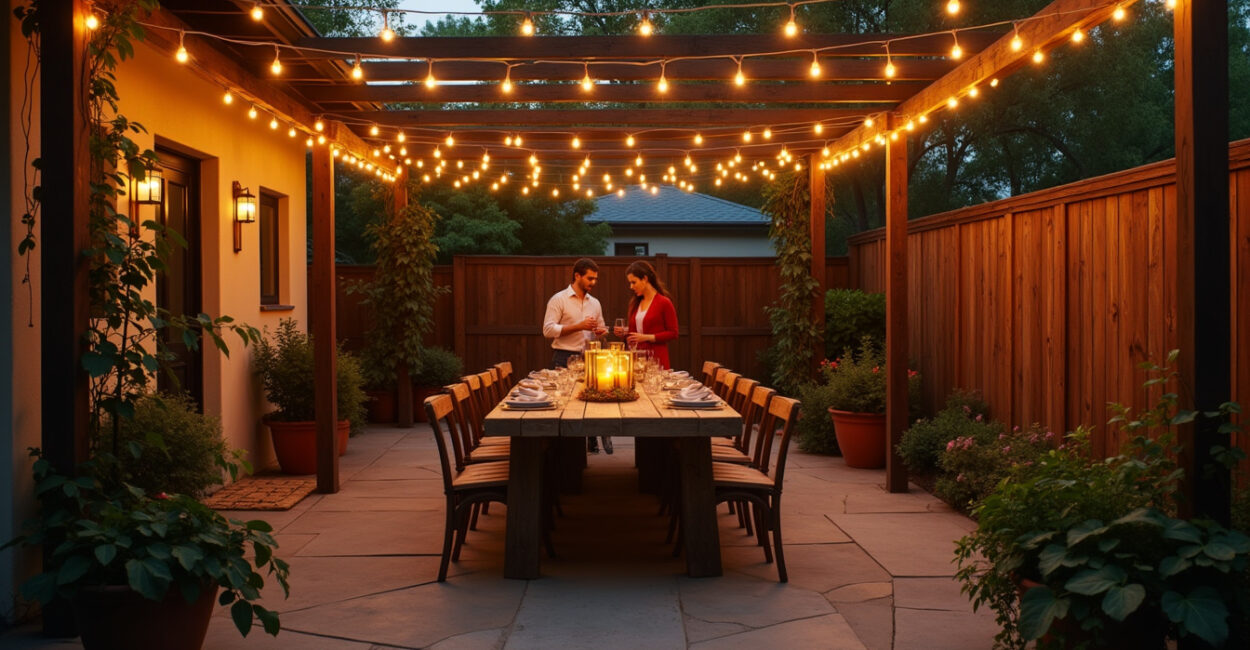
Rustic backyard string lights for parties work because they solve two problems at once: they make an outdoor space feel intimate, and they spread usable light without turning the yard into a stadium. The best setups do not rely on brightness alone. They rely on placement, height, and a warm color temperature that flatters wood, stone, plants, and people.
If you are planning a dinner, birthday, rehearsal meal, or casual evening gathering, the right string light layout can change the whole mood of the backyard. This guide covers where to hang lights, how high they should sit, how to avoid glare, and which rustic styling choices make patios, fences, pergolas, and dining zones feel finished instead of improvised.
Key Takeaways
- Warm-white string lights at about 2,700K to 3,000K usually create the most rustic look because they soften wood grain, greenery, and stone.
- For party lighting, the goal is even coverage with visible darkness left in the background; too much light flattens the atmosphere.
- Posts, pergolas, fences, and house-to-tree runs are the most reliable anchor points for backyard string lights.
- Overhead lines should stay high enough for head clearance but low enough to feel cozy, which is why most setups land around 8 to 10 feet above the ground.
- Weatherproof bulbs, outdoor-rated cords, and GFCI protection matter more than décor details when the setup runs for several hours.
Rustic Backyard String Lights for Parties: What Makes the Glow Work
The rustic look comes from warmth, texture, and restraint. In practice, that means using outdoor party lighting that looks soft rather than sharp, and arranging it so guests notice the atmosphere before they notice the fixtures. The most effective rustic outdoor string lights usually have clear or Edison-style bulbs, black or dark brown wire, and a warm color temperature that avoids the blue-white cast of office lighting.
That warm tone matters because it changes how materials read at night. Wood looks richer, plants look fuller, and metal accents stop feeling cold. If you want a reference point for color and placement beyond decorative advice, the U.S. Consumer Product Safety Commission has useful guidance on outdoor electrical safety, and the National Fire Protection Association explains why weather exposure and overloaded cords create avoidable risks: CPSC consumer safety guidance and NFPA safety resources.
Rustic string lighting works best when the bulbs create pools of warmth rather than a uniform wash of light; the space should feel inviting, not overexposed.
One more thing: rustic does not mean dim. It means controlled. A backyard can feel cozy and still be fully functional for serving food, walking safely, and keeping faces visible in photos.
What Gives a Setup a Rustic Look
- Warm-white bulbs instead of cool daylight bulbs
- Visible bulb shapes, especially globe or Edison styles
- Dark wiring that disappears into trees, beams, or fencing
- Natural anchor points such as cedar posts, pergola beams, and mature trees
Best Places to Hang Lights in a Backyard
Use the structures you already have first. The most reliable places for hanging string lights outdoors are pergolas, fence lines, porch edges, tree trunks, and posts set specifically for lighting. If your yard has a patio, the edge of that hardscape usually defines the best overhead zone because it gives you a clear party footprint and keeps the light where people actually sit and stand.
A good example is a backyard dinner setup I saw where the host ran one line from the house corner to a cedar post near the dining table, then added a second line across the pergola. The result looked intentional because each line had a job: one defined the gathering area, the other softened the table. That is why budget-friendly backyard patio lighting ideas often work better than flashy centerpieces; they frame the whole scene.
Anchor Points That Hold Up Best
- Pergolas: best for structured, repeatable spacing
- Fences: good for perimeter glow and side-yard definition
- House to post: ideal when you need one strong span over a patio
- Tree to tree: works well if the trunks are sturdy and the run is short
Fences are especially useful when you want edge lighting instead of overhead coverage. They give the yard a boundary and keep the visual focus inside the party zone. For spaces where the ground itself needs work, pair lighting with durable surfaces from these backyard flooring ideas for patios so the whole setting reads as finished.


How to Place Lights for the Right Glow and Coverage
For most backyard party lights, aim for a height of 8 to 10 feet above walking areas and a little lower over seating if you want a closer, more intimate feel. That range gives head clearance, keeps cords out of reach, and still creates a canopy effect. If you go much higher, the lighting starts to feel decorative instead of immersive; if you go much lower, guests notice the cables and the space can feel cramped.
The right string light placement depends on the mood you want. A zigzag or crisscross pattern spreads the glow across a patio table and works well for dinners. Straight perimeter runs make a cleaner frame for cocktails and mingling. Parallel lines over a long table give the most orderly look, especially when you want the food to stay visible without blasting the whole yard.
Good backyard lighting for parties is not about maximum brightness; it is about balancing visibility, comfort, and shadow so the gathering feels alive at night.
Simple Placement Rules That Work
- Start by marking the center of the main gathering area.
- Hang the primary line first, then add secondary lines only if the space feels uneven.
- Keep bulbs out of direct eye level when guests are seated.
- Leave some dark space at the yard’s edge so the light feels intentional.
If you want a more polished patio finish, coordinate the lighting with planters and seating. The scale of the room changes fast once the bulbs go up, which is why styled potted plants for patios and soft lighting tend to work together better than either one does alone.
Rustic Styling Ideas for Patios, Fences, Pergolas, and Dining Areas
Different structures call for different treatment. A pergola wants clean geometry, a fence wants edge definition, and a dining area wants overhead softness. That is why the same lights can look elegant in one part of the yard and messy in another. The trick is to let the architecture lead and let the lights follow, not the other way around.
Patios
For patios, run lights across the longest axis of the space so the eye follows the room instead of bouncing around. This works especially well with a rectangular table or a conversation set. If the patio already has strong flooring texture or a weather-resistant rug, the lights should support that texture rather than compete with it. A helpful pairing is weatherproof rug styling for patios, because the rug anchors the seating area while the lights soften it overhead.
Fences
Fence string lights are best when they outline the party instead of trying to light everything evenly. On a wooden fence, keep the wire tension moderate so the line stays straight without pulling the mounts. On vinyl, use fasteners designed for outdoor use rather than improvised clips. Fence lighting is especially useful when the yard opens toward a neighboring lot and you want a visual boundary without building a wall.
Pergolas
Pergola string lights almost always look more intentional than random overhead runs because the beams give you a built-in grid. A single line along each beam can look too rigid, so many good setups use a softer drape across selected spans. That keeps the structure visible while reducing glare. If you want a comparable approach to layered height and balance, the logic is similar to arranging potted plants on a patio by height.
Dining Areas
Over a dining table, the light should flatter food and faces. Do not center bulbs directly where people will stare upward while talking; offset the line slightly so the glow washes across the table instead of shining into eyes. Warm outdoor lighting helps glassware sparkle without making the scene feel harsh, and it photographs well at dusk when the ambient light drops but the sky still holds color.
Safety, Power, and Weatherproofing Tips
Outdoor string lights should be treated like electrical equipment first and décor second. That means using outdoor-rated cords, bulbs, plugs, and extension connections, then protecting the whole run from moisture and strain. If an outlet is near the patio, confirm that it is GFCI-protected; that circuit type is designed to shut off power when a ground fault occurs, which is exactly what you want outdoors.
For weather resistance, check the fixture rating, not just the bulb style. A lot of people assume that a pretty bulb means an outdoor-safe setup, but that is only part of the story. Look for the actual outdoor or wet-location rating on the product, and keep connections off the ground. The U.S. Department of Energy also has practical consumer advice on lighting efficiency and usage that is worth reviewing: U.S. Department of Energy lighting guidance.
Safety Rules Worth Following
- Do not overload one outlet or daisy-chain too many extension cords.
- Keep plugs, timers, and connectors elevated and sheltered.
- Use outdoor clips or cable supports instead of nails that can damage wiring.
- Turn the system on before the party and inspect every span for sag or hot spots.
One practical limit: not every backyard is suited to heavy overhead runs. If your yard lacks strong anchor points, a fence, pergola, or freestanding post system will be safer than stretching long lines across weak structures. That is where rustic backyard string lights for parties can fail if the setup looks good in photos but cannot handle wind, rain, or repeated use.
Common Layout Mistakes to Avoid
The biggest mistake is making the whole yard equally bright. That kills depth. A second mistake is hanging lights too high, which makes them look detached from the gathering. A third is choosing decorative bulbs that overpower the space with glare. Rustic lighting should create shape and warmth, not wash out every shadow.
Errors That Show Up Fast
- Too much coverage: every corner lit, no contrast left
- Too little tension: sagging lines that look temporary
- Wrong color temperature: cool light that fights the rustic style
- Poor anchor choice: flimsy posts, loose fence caps, weak tree ties
Another issue is mixing too many visual styles. A rustic setup works best when the lighting, furniture, and hardscape all point in the same direction. If the patio is rough stone, the lights should be warm and understated. If the yard already has bold decor, keep the lights cleaner and let the rest of the scene breathe.
The fastest way to ruin a rustic lighting plan is to treat brightness as the goal; the real goal is controlled atmosphere with enough light for movement and conversation.
Simple Setup Checklist for Party Prep
Before guests arrive, run through the setup as if you were seeing it for the first time at dusk. That is when flaws show up. A line that looked fine at noon may sag, glare, or disappear into the background once the sun drops. This is also the point where good solar path lights for backyard ambiance can help by guiding movement without adding visual clutter overhead.
Pre-Party Checklist
- Test every bulb and replace any that flicker.
- Confirm that cords are secured and clear of foot traffic.
- Check that the main seating area has enough light for food and conversation.
- Look at the yard from three angles: entry path, dining area, and side view.
- Make sure the lighting still feels warm after dark, not flat or overly bright.
If you want the setup to feel rustic rather than generic, finish with one design decision that is visible in every photo: a pergola span, a fence perimeter, or a dining canopy. That single choice gives the space identity. For most backyards, the best result comes from one clear overhead plan, one warm bulb type, and one deliberate boundary line.
What to Do Next
Choose the main gathering zone first, then build the lighting around it instead of decorating the whole yard at once. Measure the spans, confirm the outlet path, and use one strong overhead structure rather than several half-finished runs. For a party-ready result, test the lights at dusk, adjust the height before guests arrive, and keep the design simple enough that the rustic texture still feels natural.
If the goal is a welcoming evening space, the next step is not buying more lights; it is improving the layout you already have. Start with the anchor points, verify the weather rating, and compare your setup against the calm, warm look that works best for patios, pergolas, and fences.
FAQ
Where Should I Hang String Lights in a Backyard for a Party?
The best places are pergolas, fence lines, house corners, sturdy posts, and mature trees with solid trunks. Start with the main seating or dining zone, then extend the lights to define the party’s edges. That approach gives you useful coverage without wasting light on low-traffic areas. If the yard is open, create at least one overhead span and one boundary line so the space feels anchored.
How High Should Backyard String Lights Be Hung?
Most backyard string lights look and function best at about 8 to 10 feet above the ground. That height keeps the lights out of head range, reduces glare, and still gives the party a cozy overhead canopy. Over dining tables, you can go a little lower if the bulbs stay out of direct eye level. Much higher than that, and the lights start to feel decorative instead of immersive.
What Type of Lights Give the Most Rustic Look?
Warm-white bulbs with a color temperature around 2,700K to 3,000K usually create the most rustic feel. Edison-style or globe bulbs work well because the visible filament look adds texture without making the scene feel harsh. Dark wiring also helps the fixtures disappear into wood, beams, and foliage. Cool white bulbs tend to fight the rustic style by making the space feel sharper and more modern.
Can String Lights Be Used Safely on a Fence or Pergola?
Yes, as long as the lights and cords are rated for outdoor use and the mounting method does not damage the structure. Fences and pergolas are two of the safest and most practical anchor points because they provide clear lines and predictable support. Keep connectors dry, avoid over-tightening, and use clips or fasteners made for outdoor lighting. If a structure feels weak or unstable, do not use it as an anchor.
How Do I Light an Outdoor Party Without Making It Too Bright?
Use warm bulbs, limit the number of overhead runs, and keep some parts of the yard darker so the light has contrast. The best outdoor party lighting creates pockets of brightness over seating and dining areas while leaving the edges softer. If you need more visibility, add path lights or table-level light instead of increasing the overhead brightness. That keeps the atmosphere relaxed and avoids the flat, overlit look.