
Low-Maintenance Front Yard Landscaping Ideas That Work in 2026
How to design a low maintenance front yard using shape over quantity: focus on clean lines, repetition of drought-tolerant shrubs, and strategic stone placem…
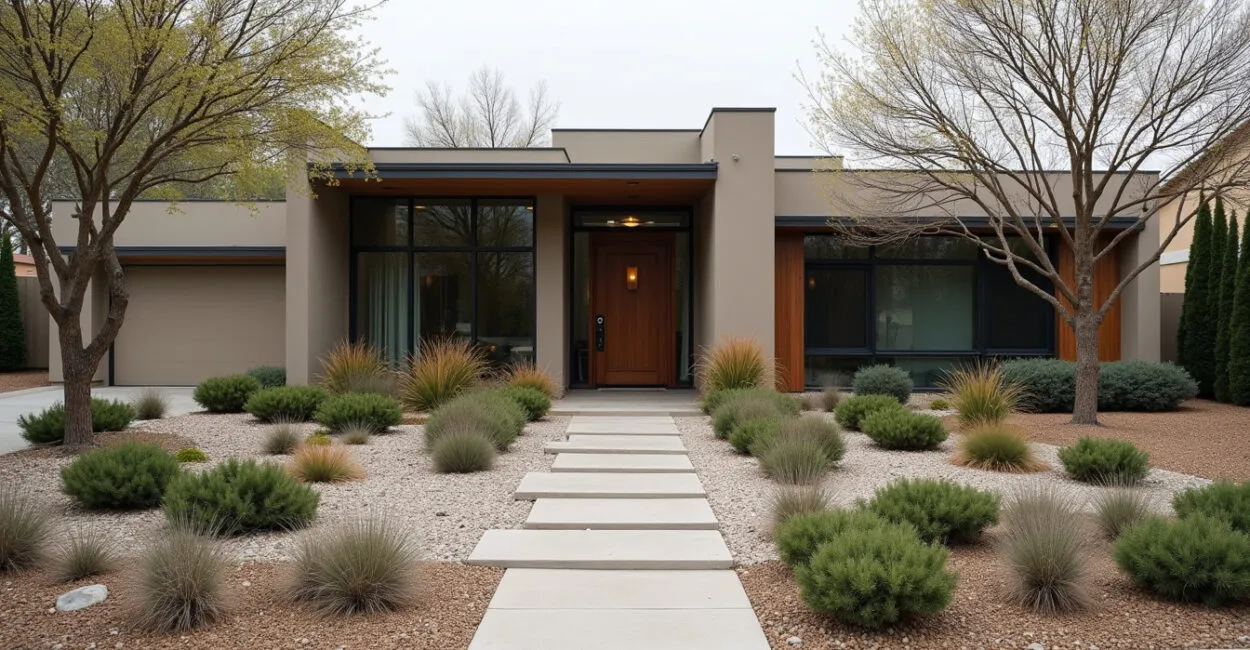 A sculptural tree anchors a low-maintenance front yard
Stone, spacing, and the right plants can make a front yard look finished without turning Saturday into yard work.
Low-Maintenance Front Yard Landscaping Ideas That Work in 2026
If your entrance feels either overgrown or too bare, the fix usually isn’t “more stuff.” It’s smarter structure. The best low maintenance front yard landscaping ideas rely on fewer plants, larger masses, and hardscape that does the visual heavy lifting.
That means drought-tolerant shrubs instead of fussy flower beds, gravel or stone where mulch keeps disappearing, and spacing that lets plants mature without constant pruning. In practice, the goal is a front yard that still looks deliberate in February. That’s the difference between low effort and low quality.
Read also: Drought-Tolerant Front Yard Plants: 9 Picks That Stay Neat
1) Build the Yard Around Shape, Not Quantity
For a front yard, clean lines beat crowded borders almost every time. One well-placed tree, a few repeating shrubs, and a defined edge create more presence than ten mixed plants fighting for attention. This is where low maintenance front yard landscaping ideas start paying off: fewer decisions, fewer cuts, fewer replacements.
Go for repetition. Three to five of the same shrub reads as designed. Random variety reads as work.
Read also: Small Front Yard Landscaping Designs That Feel Finished Fast
- Choose rounded shrubs that need light shaping, not weekly trimming.
- Use one groundcover type instead of patching in many small fillers.
- Leave open space near the walk so the entry feels calm, not crowded.
A common mistake is planting for instant fullness. Two years later, the bed is swallowing the porch light. A better move is to leave room for mature size now. That one choice cuts upkeep for years.
2) Use Stone as the Quiet Workhorse
Stone does two jobs at once: it reduces weeding and makes the yard look finished even when plants are still young. In 2026, that matters more than ever because many homeowners want front-yard appeal without weekly touch-ups. According to the EPA’s WaterSense guidance on outdoor water use, smarter landscaping can reduce outdoor demand without sacrificing curb appeal.
Think crushed granite, river rock, or larger decorative stone in places where mulch would need constant refreshing. The trick is restraint. Too much stone feels hot and sterile. Used in bands, borders, or dry-river strips, it adds texture and keeps the design from looking flat.
Low maintenance does not mean empty. It means every square foot has a job.
Stone also works best when it frames planting beds instead of replacing them. A little contrast goes farther than a yard full of gravel.
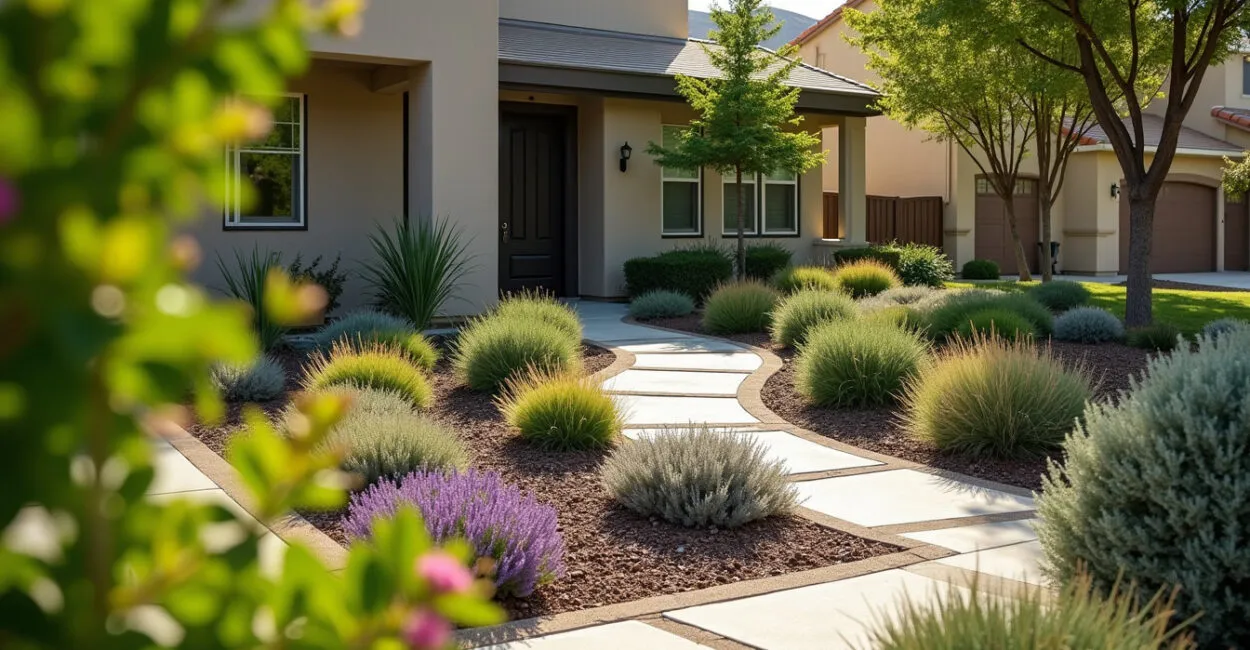
3) Pick Plants That Stay Composed with Less Help
The smartest plant choices are the ones that hold their shape, tolerate heat, and don’t collapse after one dry week. Native and climate-adapted plants usually win here. The U.S. Forest Service native gardening guidance explains why adapted species often need less irrigation and care once established.
Here’s the practical version: choose shrubs with predictable growth, grasses that don’t flop, and perennials that come back without drama. Lavender, dwarf yaupon holly, boxwood in the right climate, ornamental grasses, and sedums are common examples, but local conditions still decide the final list. This method works best when sun, soil, and water needs match the plant.
One small front yard I saw had been rebuilt three times because the owner kept choosing “pretty” plants that needed weekly rescue. The fourth version used just six repeating species, stone edging, and wider spacing. Less color, more calm. Less work, better curb appeal.
What Low-effort Yards Usually Get Wrong
They squeeze in too many varieties, use mulch where stone would last longer, and plant too close to the house. The result looks busy for a month, then needy for years. If you want the entrance to stay sharp, plan for the plant at year three, not week three.
How Much Spacing is Enough?
Enough spacing is whatever lets mature plants touch lightly, not fight. That usually means reading the tag, then giving a little extra room for airflow and cleanup access. When beds are crowded, pruning becomes a permanent chore. In low maintenance front yard landscaping ideas, breathing room is not wasted space; it is saved labor.
Is Gravel Always Better Than Mulch?
No. Gravel lasts longer and can cut down on replacement work, but it can look harsh if overused and may be harder to change later. Mulch is softer and better around some plants, but it breaks down faster. The best choice depends on climate, drainage, and how much upkeep you want to avoid.
What Makes a Front Yard Look Sparse?
Usually it’s not the number of plants—it’s the lack of layers. A yard can be low-maintenance and still feel full if it mixes a few shrubs, a groundcover, and a strong border. Repetition matters more than volume. One repeated plant group often looks richer than a bed packed with random choices.
Where Should You Start If the Whole Yard Needs Help?
Start at the entry path, then the largest bed visible from the street. Those two areas shape first impressions fast. Fixing them gives you the biggest visual return for the least work. Once the structure is right, adding a few more plants later is easy; tearing out a messy layout is not.
The best front yards don’t ask for attention every week. They earn it quietly, through structure that still looks good when nothing is blooming. That’s the real win.
📱 See this content as a Web Story