

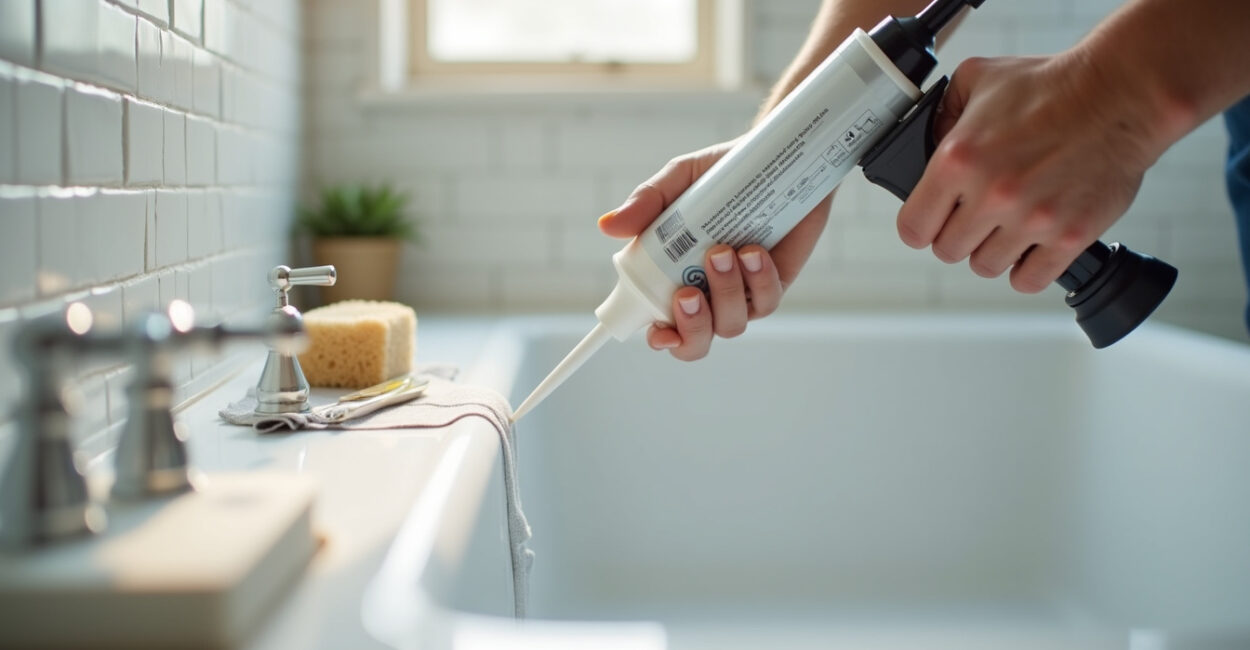
Fresh caulk fails fast when the bead is too thick, the joint is dirty, or the line gets rushed.
That’s the part most people miss with easy bathroom caulking tips for beginners: the trick is not “more caulk.” It’s the right bead size, a properly prepped joint, and a finish you don’t touch twice.
Start with the Right Bead Size
The bead is the thin line of caulk you lay into the seam. For tubs, sinks, and tile edges, a small, steady bead is stronger than a fat one. Too much caulk looks sloppy, takes longer to cure, and often peels because it skins over before it bonds well.
Think pencil-thin, not toothpaste tube. That’s the easiest rule to remember for easy bathroom caulking tips for beginners. If the gap is wider than about 1/4 inch, caulk may not be the right fix alone; you may need backer rod or a different repair method.
In practice, a beginner usually does better by cutting the nozzle tip smaller than they think. You can always add a little more. You can’t easily rescue a giant bead that ran across glossy tile.
- Cut the nozzle at a 45-degree angle.
- Start with a small opening.
- Test on cardboard before the joint.
That tiny test line saves real frustration. And it sets up the part people rush next: the joint itself.
Prep the Joint Like It Matters
Caulk is not glue for dirt. It bonds best to clean, dry, stable surfaces. If old caulk is loose, remove it fully. If soap film, mildew, or moisture stays behind, the new line may look fine today and fail early tomorrow.
Who works with bathrooms for a living knows this: the prep takes longer than the bead, and that is normal. For easy bathroom caulking tips for beginners, wipe the seam with a bathroom-safe cleaner, scrape out old material, then let the area dry completely. If the tub or shower has been used recently, wait.
Here’s the comparison that surprises most first-timers: a perfect-looking bead over a dirty joint often lasts less time than a messy bead over a clean one. That is why prep beats speed.
Clean joint, small bead, one smooth pass. That’s the whole game.
For a technical reference on sealant performance and moisture issues, see the EPA guidance on mold and moisture and the National Institute of Standards and Technology materials research resources.

Avoid the Rookie Mistakes That Ruin Fresh Caulk
The biggest beginner mistake is touching the bead too much. You get one good smoothing pass, maybe two. After that, the surface starts to skin, and dragging a wet finger or tool across it can tear the line.
Another common error: using the wrong product for the bathroom. Look for a 100% silicone or high-quality bathroom sealant labeled for wet areas. Some sealants handle paint better; others handle water better. That tradeoff matters, and not every bathroom situation is the same.
Here’s a mini-story I’ve seen play out more than once: someone spends an hour perfecting the line, then turns on the shower that night. The caulk looks cured on top, but the joint underneath is still soft. By morning, the edge has slipped. One skipped drying step erased the whole job.
- Don’t apply over wet surfaces.
- Don’t use a bead that’s too wide.
- Don’t overtool the line.
- Don’t use the shower before cure time is done.
For cure-time and product handling basics, check OSHA’s safety and material handling guidance. The exact cure time depends on the product, humidity, and bead thickness, so the label wins every time.
How Long Should Bathroom Caulk Dry Before Water Hits It?
Read the label, then respect the longest number on it. Many bathroom sealants need at least 24 hours, and some need more if the bead is thick or the room is humid. The surface may feel dry sooner, but that does not mean the inside has cured. For easy bathroom caulking tips for beginners, patience is part of the tool kit. If you rush this step, the finish can fail even when your application looked perfect.
Do I Need a Caulking Gun for a Small Bathroom Job?
Yes, if you want control. A caulking gun lets you keep steady pressure, which matters more than strength. Hand-squeezing a tube usually creates uneven output and a thicker bead than you intended. For a tiny repair, the gun still helps you place the line cleanly and stop exactly where you want. That makes the final result look calmer, and it usually lasts longer because the bead stays consistent.
What’s the Best Way to Smooth the Bead?
Use one light pass with a caulk tool or a gloved finger slightly dampened if the product allows it. The goal is to press the caulk into the seam, not wipe it off the surface. If you see ridges, stop and fix them right away. Waiting turns a small adjustment into a tear. The smoother the bead, the better the finish usually blends into the tub or tile line.
Can I Caulk over Old Caulk?
Sometimes, but only if the old caulk is firmly attached and fully clean. If it’s cracked, moldy, peeling, or soft, remove it first. New caulk depends on a stable base, not a flaky one. In a bathroom, shortcuts here tend to show up fast as gaps or edge lifting. If you’re unsure, remove the old line and start fresh. That usually takes longer, but it saves you from doing the same job twice.
Why Does My Caulk Keep Peeling at the Edges?
Usually because the joint wasn’t dry, clean, or fully compatible with the product. Another cause is using too much caulk and then overworking it, which can pull it away from the edge. If the line fails in the same spot repeatedly, the issue is often the surface or movement, not your hands. That’s the part beginners miss: bathroom caulking is as much about prep and timing as it is about the bead itself.
The best caulk line is the one you barely notice six months later. Small bead, clean joint, no panic. That’s the difference between a quick fix and a repair that quietly holds.
Do it once with patience, and the bathroom stops reminding you you rushed it.