
Gravel Front Yard Landscaping Ideas: Where It Beats Mulch
Why gravel outperforms mulch in front yard landscaping: advantages in drainage, durability, clean edges, and low maintenance for sloped beds and entry paths.
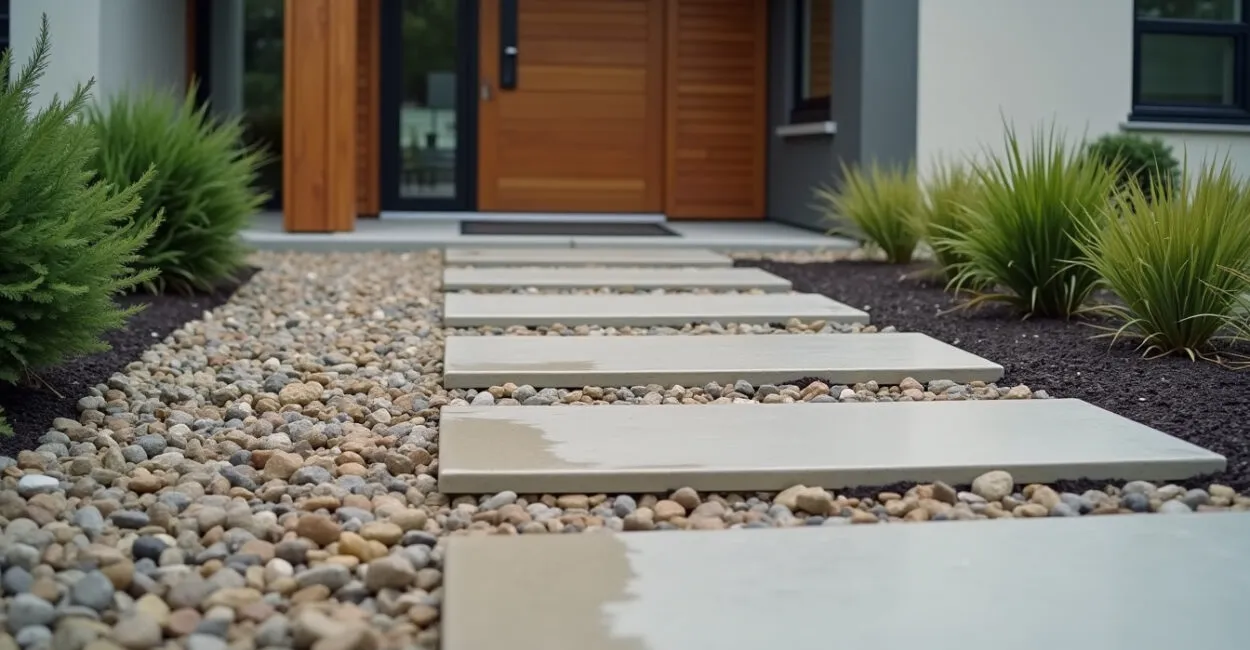 Pale gravel borders a rain-soaked modern entryway
Gravel front yard landscaping ideas win when you want clean edges, fast drainage, and less weekend upkeep than mulch can usually deliver.
That sounds boring until you’ve seen mulch wash into the sidewalk after one hard rain. Gravel stays put, sheds water, and does not turn into a yearly top-up project.
Where Gravel Beats Mulch Fast
For front yards, gravel shines in three places: drainage, durability, and cleanup. It is the better choice on sloped beds, near downspouts, and around entry paths where mulch tends to float, stain, or scatter. In practical gravel front yard landscaping ideas, gravel also gives a sharper, more modern look that holds its shape longer.
Mulch wins when you want softer color and a soil-friendly surface for planting beds. But if the goal is a front yard that looks finished after rain, gravel usually wins the argument. I’ve seen homeowners replace mulch every spring because it migrated into the street; the same beds with gravel looked the same months later. That difference is the whole game.
Read also: Small Front Yard Landscaping Designs That Feel Finished Fast
Drainage and Cleanup Decide the Real Winner
Gravel is a top layer, not a water-blocking layer. When installed over landscape fabric and a graded base, it lets water move through instead of pooling. That matters in front yards where runoff can push debris toward the house. For hard facts on stormwater behavior and runoff control, see the EPA’s rainwater guidance.
Cleanup is where the choice becomes obvious. Leaves sit on gravel and can be blown off in minutes; mulch traps leaves, then breaks down into slush after wet weather. The tradeoff: gravel can be harder to rake clean if debris settles between stones, while mulch is easier to refresh but messier to maintain. That’s why gravel front yard landscaping ideas often work best for low-plant, high-visibility spaces.
Read also: Low-Maintenance Front Yard Landscaping Ideas That Work in 2026
Gravel is maintenance-light, not maintenance-free. It saves time by resisting washout, but you still need occasional debris removal and weed control.
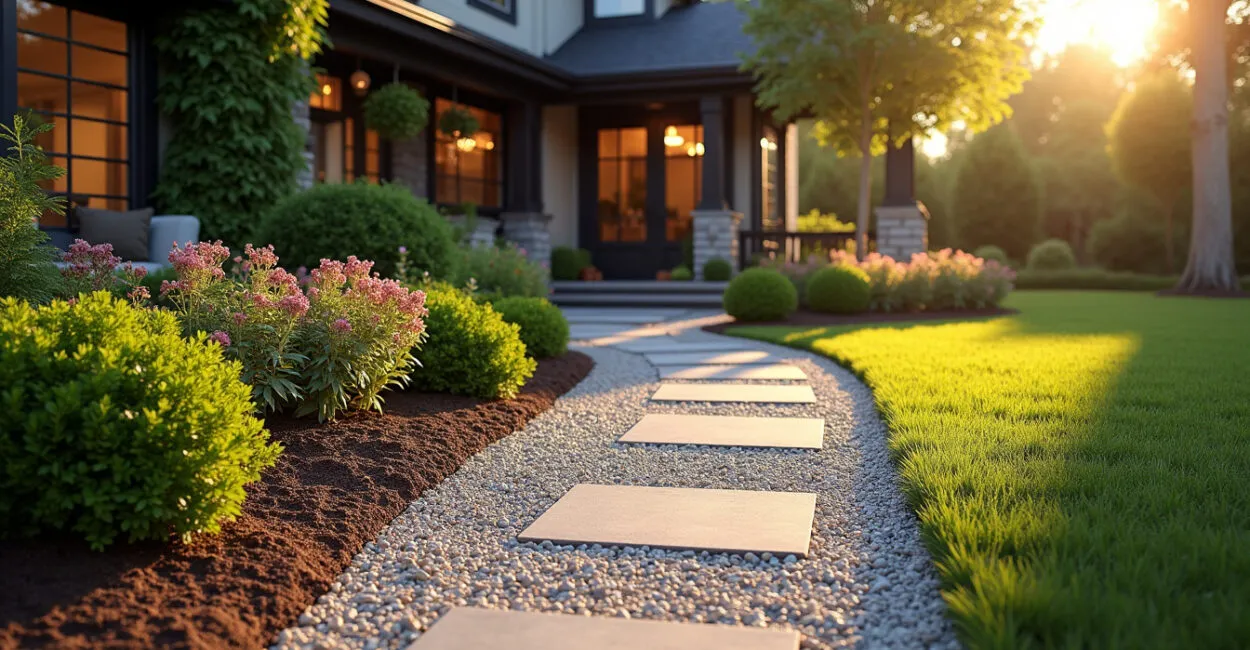
The Look You Want Changes the Material You Should Choose
If you want a crisp, architectural front yard, gravel gives you that immediate contrast against plants, pavers, and dark trim. If you want a lush cottage look, mulch softens everything and makes beds feel more planted. That is the honest split: gravel performs better where the yard must handle traffic, runoff, and curb appeal at the same time.
Use mulch in planting-heavy areas where moisture retention helps roots. Use gravel in sunny, exposed, or slope-prone spots where erosion and cleanup matter more than a rich garden feel. For soil and mulch performance basics, Cornell’s mulch and soil guidance explains why organic cover behaves differently from stone.
Best rule: if the bed is more visible than planted, choose gravel. If it is more planted than visible, choose mulch.
📱 See this content as a Web Story
FAQ
Is Gravel Better Than Mulch for Front Yards?
Usually, yes, if your priority is drainage, cleanup, and a cleaner look that lasts. Mulch is better for moisture retention and planting beds, but gravel handles rain and wind better in exposed front yards. In gravel front yard landscaping ideas, gravel is the stronger choice for sloped areas and places near walkways or driveways.
Does Gravel Stop Weeds Better Than Mulch?
Not by itself. Gravel still needs landscape fabric and good edging to reduce weed pressure. Mulch suppresses weeds well at first, but it breaks down and turns into compost over time, which can invite new growth. Gravel lasts longer, but if you skip the base layer, weeds will still find a way through.
Which is Easier to Clean in the Fall?
Mulch is faster to rake, but it also moves around more and can get messy after rain. Gravel takes a little more care because leaves can settle between stones, yet a blower usually clears the surface quickly. If your yard gets heavy leaf drop, gravel often stays tidier over the whole season.
Can Gravel Hurt Plant Health?
It can, if you use it in the wrong place. Gravel reflects heat and dries faster than mulch, so sensitive plants may struggle in full sun. That makes mulch better around thirsty shrubs and fresh plantings. Gravel works best where plants are established, drought-tolerant, or limited to accent spots instead of dense beds.
What is the Biggest Mistake with Gravel Front Yards?
Using gravel without planning drainage and edging. Without a base and border, stones drift, sink, and scatter into the lawn or sidewalk. The cleanest gravel front yard landscaping ideas all share the same thing: a graded base, solid edging, and the right stone size for the space.