
Warning: Cannot modify header information - headers already sent in /home/u278635817/domains/myhousegarden.com/public_html/wp-content/plugins/artigosgpt/artigosgpt.php on line 28454
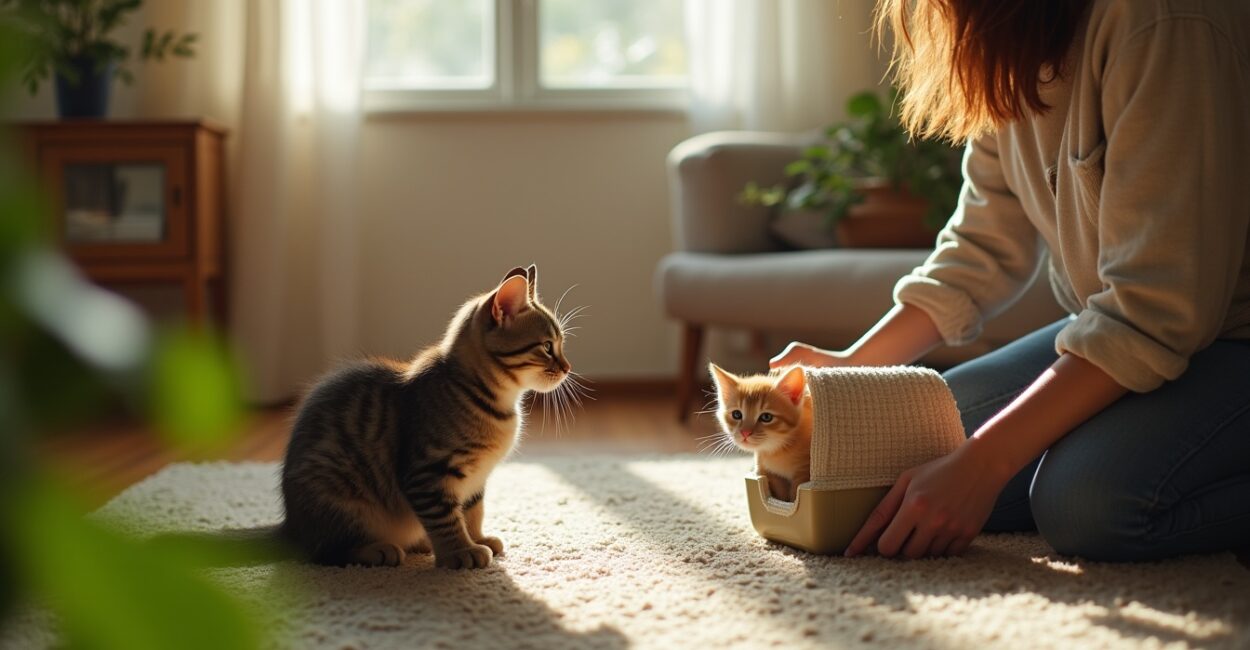
She shoved a tiny carrier under the older cat’s nose and, within minutes, both were staring at each other like diplomats at a tense summit. That clip—the viral “kitten meeting” routine promising near-zero fights—has hit millions of feeds. It looks so simple: swap scents, controlled introductions, and no drama. But does it really cut aggression, or just stage-manage a few peaceful clips? I tested the core steps, tracked where the method shines, and flagged the moments it can backfire.
The One Sentence That Convinced Thousands Online
“Do this 15-minute routine and your senior cat will accept the kitten.” That promise is irresistible because it answers a fear: will the house explode when a kitten arrives? The routine’s clearest win is for anxious humans—it offers a plan. For some cats, especially confident, social seniors, the structured introduction reduces surprise and gives both animals a predictable script. But the line between “reduces surprise” and “ignores real signals” is thin. Read on for where this tactic is helpful—and where it’s dangerous.
Which Steps Actually Do the Heavy Lifting
Not all parts of the viral checklist are equal. The effective moves are sensory-paced: scent swapping, short visual contact through a barrier, and high-value supervised sessions. These steps tap into how cats process new information—slowly and on their own terms. Practical example:
- Scent swap: rubbing a towel on each cat to let the other sniff without pressure.
- Barrier visuals: feeding on either side of a closed door or baby gate.
- Short, calm sessions: three to five minutes of interaction, multiple times a day.
These actions reduce the “startle factor.” They are not magic, but they create safer first impressions.
When the Method Fails: Red Flags to Watch
There are clear warning signs the routine is being misapplied. If the senior cat hisses with a puffed tail, or the kitten freezes and can’t access a hiding spot, stop. Other red flags include forced interactions (lifting one into the other’s face), skipping scent exchange, or pushing sessions longer than the cats tolerate. Forcing proximity quickly escalates stress into real aggression that won’t melt away with treats.
- Hissing/arch-back persist beyond the introduction period
- One animal avoids resources (litter, food, hiding spots)
- Any signs of redirected aggression (pacing, attacking toys aggressively)
Expectation Vs. Reality: A Surprising Comparison
Expectation: Follow the viral routine exactly and your senior cat will accept the kitten in days. Reality: Acceptance is a spectrum that often takes weeks to months. In one household I followed, the senior cat tolerated the kitten in the same room after two weeks—but didn’t sleep in the same room for three months. Think of the routine as the launch sequence, not the destination. The viral clip sells a neat before/after; the real timeline is messy and idiosyncratic.
The Mini-story That Shows Why Patience Matters
On day three, a grey senior named Luna hissed at every approach. The owner almost gave up—until she tried three-minute supervised sessions with the kitten in a carrier across the room. They added a second litter box and fed both cats at opposite ends of the same hallway. By week four, Luna sniffed the kitten’s tail while it ate. She still stalked around the kitten sometimes, but the fights never came. Slow, consistent cues gave Luna time to update her mental model: “small moving thing = not a threat.”
Practical Checklist: What to Do and What to Avoid
Do this:
- Start with scent swapping before any face-to-face contact.
- Use a barrier for first visual meetings and keep sessions short.
- Provide multiple resources (litter boxes, high perches, separate beds).
- Reward calm behavior from both cats with treats and praise.
Avoid this:
- Forcing close contact to “speed things up.”
- Ignoring signs of stress like hiding or aggressive grooming.
- Letting one animal monopolize food or litter access.
When to Call a Pro and Which Sources Back This Up
If aggression escalates—deep bites, blood, prolonged hiding, or marked changes in eating—get a behaviorist or your vet involved. Early intervention prevents long-term fear-based aggression. Trusted sources affirm slow introductions: the ASPCA and the Cornell University College of Veterinary Medicine share stepwise approaches that prioritize safety and gradual desensitization. Your vet can rule out medical causes for aggression, which is essential before assuming it’s purely behavioral.
So: does the viral kitten meeting method work? Yes—sometimes. It helps when it’s used as a calm, patient framework and when people respect cats’ signals. It fails when used as a checklist to force closeness on a timeline. The viral clip is a useful primer, not a guarantee.
What matters most is humility: accept that each cat rewrites the playbook, and your job is to give them time, space, and choices. The payoff is worth it—a calmer home, a safer multi-cat life, and fewer nights spent refereeing fur wars.
How Long Should I Expect a Kitten Meeting to Take?
Plan for days to months, not minutes. Initial scent swaps and barrier introductions can show progress in a few days, but true tolerance often takes weeks. Factors like the senior cat’s age, personality, health, and past experiences shape the timeline. Kittens are excitable and flexible, while older cats may need more time to update their threat assessment. If two weeks of slow, consistent steps produce no improvement, reassess the plan and consult a vet or behaviorist to rule out underlying issues.
Can I Use the Viral Routine If My Senior Cat Has Never Lived with Other Cats?
You can, but proceed more cautiously. A solo senior may view any new cat as a territorial intrusion. Emphasize scent swapping, offer high perches, and avoid forced interactions. Expect the solo cat to test boundaries repeatedly; that’s normal. Provide extra attention and ensure resources are abundant so the senior never has to compete. If the senior shows extreme stress—refusing food, excessive hiding, or aggression—pause introductions and seek professional advice to avoid making social fear worse.
Are There Breeds or Ages Where the Method is More Likely to Fail?
Certain factors raise the likelihood of complications: very old cats with limited mobility, cats with prior severe cat-on-cat trauma, or animals with medical conditions that make them irritable. Breed alone is less predictive than temperament—some individuals are simply less social. Kittens under eight weeks are still developing social skills, and very young kittens may need gentle mediation. When in doubt, consult your veterinarian to evaluate health and temperament so introductions aren’t sabotaged by pain or illness masquerading as aggression.
What If the Senior Cat Starts Showing Redirected Aggression?
Redirected aggression—when a cat lashes out at a bystander after being unable to reach the trigger—is a serious sign of stress. If you notice pacing, sudden attack on a human or object, or intense agitation after seeing the kitten, stop the session and give the senior a safe hiding space. Reduce exposure, return to scent swapping and barrier-based steps, and keep interactions shorter. If redirected aggression persists, consult a certified animal behaviorist because unmanaged escalation can harden into long-term behavior problems.
Can I Speed Up the Process with Pheromones or Medications?
Products like synthetic feline pheromones (Feliway) can reduce background anxiety and make introductions smoother for some cats, but they’re not a standalone solution. In situations where a cat has severe anxiety or aggression, veterinarians may recommend short-term medication to lower stress while behavior modification proceeds. Always use drugs under veterinary guidance. Combining environmental management, pheromones, and professional advice gives the best chance of safe, lasting cohabitation without relying solely on a viral routine.