
Under-Bed Storage Hacks That Triple Seasonal Closet Capacity
How to select underbed storage that fits your bed clearance and belongings: measuring space, choosing materials for seasonal clothing, and managing access wi…
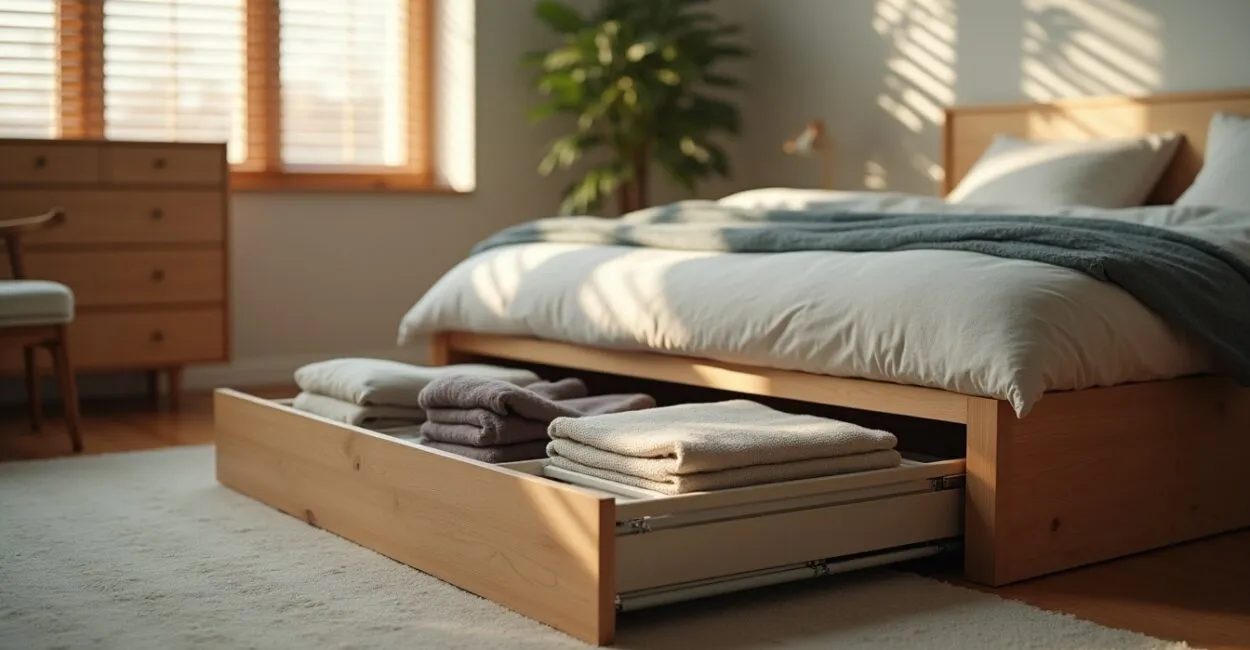 Rolling drawers organize sweaters beneath a wooden bed
📅 Updated on 10/11/2026
A storage bin that fits under the bed can still be the wrong choice if it traps moisture or blocks a vent. Underbed storage works best when the container’s height matches the bed clearance, its material suits the items inside, and you can pull it out without dragging it across the floor.
For seasonal clothing, use clean, fully dry garments in a lidded bin or breathable fabric bag, then leave enough room to retrieve it without shifting heavy furniture. Measure the lowest point beneath the bed, account for wheels or handles, and choose a setup based on how often you need access.
Quick Takeaways
- Measure both bed clearance and the path the container must travel before buying under-bed organizers.
- Store clean, dry clothing; breathable fabric is a sound choice when moisture may be a concern.
- Vacuum bags can compress suitable clothing, but they are a poor default for leather, delicate textiles, or long-term storage.
- There is no universal safe weight limit: the bed frame, floor, container, and load distribution all matter.
Underbed Storage: Choose a Setup That Fits Your Bed and Belongings
Underbed storage is a system for keeping belongings in the clearance beneath a bed, using containers, bags, or dividers that fit the available space and protect their contents. To choose one, measure the gap at its lowest point, check how far the bed sits from the wall, and match the storage material to the item and how often you need it.
Measure from the floor to the bed frame, not just to the mattress. Include container lids, casters, pull tabs, and any sagging fabric or bed skirt. A bin that technically fits may still be awkward if its handles catch on a support rail or there is no room to pull it out.
Start with the contents. A shallow rolling bin suits frequently used shoes or spare bedding; a lidded plastic container can help shield clean seasonal garments from dust; a breathable fabric organizer is useful for items that should not sit in a sealed enclosure. Check bed-frame instructions before placing heavy loads beneath the bed, particularly with lift-up or slatted designs.
Store Seasonal Clothing So It Stays Fresh and Uncrushed
Wash or dry-clean clothing according to its care label, then let it dry fully before packing. Leftover moisture can encourage mildew in a closed container, while body oils and food traces can attract fabric pests. Fold knits loosely and avoid compressing structured pieces such as tailored jackets.
Use breathable storage for wool, cashmere, and other natural fibers when the space is dry and clean. A lidded bin can provide better dust and pest protection, but it should hold only dry items and be checked for condensation or musty odors. The right balance depends on the room’s humidity and the garment’s care requirements.
Vacuum storage bags are useful when space is tight and the clothing can tolerate compression, such as many washable synthetic garments. They can crease garments and place sustained pressure on down or delicate fibers; leather and suede should not be vacuum-compressed. Follow the garment maker’s storage guidance when available.
Clean, fully dry clothing is the starting point for safe seasonal storage, whatever container you choose.
Read also: Closet Organization Routine for Faster Seasonal Swaps
Compare Bins, Bags, and Dividers on a Budget
Choose by protection, access, and shape rather than by appearance alone. A rigid container keeps its form under light incidental contact, while a soft bag bends around bulky items but offers less crush protection. Dividers work best for small items that need to remain sorted, not as a substitute for a dust cover.
| Option | Best for | Watch for |
|---|---|---|
| Lidded plastic bin | Clean seasonal clothing, bedding, and items that need a dust barrier | Confirm the bin is dry inside and does not trap damp contents |
| Breathable fabric bag | Dry garments that benefit from airflow | It offers less protection from spills, dust, and pests |
| Vacuum storage bag | Compressible clothing that tolerates pressure | Compression can wrinkle or damage some materials |
| Open divider or tray | Frequently used shoes and small accessories | Contents remain exposed to dust and may slide around |
Read also: Shoe Storage Solutions That Protect and Rotate Seasonal Pairs
Reuse sturdy containers if they are clean, odor-free, and in good condition. Avoid cardboard for long-term storage in a damp room: it can absorb moisture and provides less protection from pests than a properly closed, sound plastic bin.
Make Stored Items Easy to Reach and Return
Put the items you use most often closest to the side of the bed with the clearest access. Keep heavier containers near the center of the bed’s support area, and avoid stacking bins where a pull-out container could catch or tip.
Use storage labels that identify both the contents and the relevant season, such as “Winter scarves and gloves” or “Guest bedding.” A brief inventory inside the lid helps when a bin holds several categories. Group items by use, not by whichever container happened to be empty.
A practical detail that often gets overlooked: measure the bin with its lid on, then test the pull path. A handle that clears the frame can still snag on a rug, bed skirt, or nearby nightstand.
Avoid Common Under-Bed Storage Mistakes
- Packing damp items: Dry clothes and containers completely before sealing them.
- Ignoring clearance at the frame: Measure around crossbars, legs, and any center support.
- Overloading one area: A heavy bin can strain a container or concentrate weight on part of the floor or frame.
- Blocking airflow: Do not cover floor vents or restrict airflow around equipment beneath the bed.
- Storing forgotten items indefinitely: Inspect contents when seasons change and remove anything with a musty smell or signs of pests.
There is no dependable universal weight limit for a bin under a bed. Safe loading depends on the bed frame’s design and condition, the floor, the container’s rating, and how the load is distributed. Check manufacturer guidance; if the frame flexes, creaks, or shifts, reduce the load and reassess.
Protect Clothing with Affordable, Suitable Materials
Clean cotton or other breathable fabric bags can help limit dust while allowing airflow, making them useful for dry garments in a low-humidity room. For a stronger dust barrier, choose a sound lidded bin and inspect it periodically. Plastic is not automatically protective if clothing goes in damp or the room has a moisture problem.
For moth prevention, clean garments before storage, vacuum the surrounding floor and bed frame, and inspect woolens for damage before packing. The U.S. Environmental Protection Agency’s pesticide guidance is a useful reference for using pest-control products according to their labels. Avoid scattering mothballs or other pesticides loosely among clothes; use products only as directed and keep them away from children and pets.
For household moisture and mold concerns, the EPA’s mold resources explain why moisture control matters. If the space beneath the bed is damp, musty, or prone to condensation, address that condition before storing textiles there.
Shoes, Delicates, Pests, and Weight: Common Questions
Can shoes go under the bed without getting damaged?
Yes, if they are clean and dry before storage. Use shoe boxes or a divided tray to keep pairs from rubbing together, and retain shoe trees for leather footwear when appropriate. Avoid tightly sealed storage for damp shoes, and keep leather and suede away from vacuum compression.
Are vacuum bags safe for delicate fabrics and leather?
They are not a good default for delicate fabrics, structured garments, leather, or suede because sustained compression can cause creasing or alter shape. Use a breathable garment bag or a correctly sized box instead, following the care instructions for the item.
How can I reduce the chance of moths and other pests?
Store only clean, dry items, vacuum nearby floors and bed-frame joints, and inspect natural-fiber garments before packing. A closed, intact container can add a barrier, but it cannot compensate for a damp room or an existing pest problem.
How should I label seasonal bins?
Write the season and the main contents on the outward-facing side, then keep a short item list inside the lid. Put the next season’s essentials in the easiest-to-reach bin so you do not have to unpack several containers to find one scarf or pair of gloves.
Before organizing a full season of clothing, test one container in the actual space. Check that it slides out cleanly, leaves vents unobstructed, and stays dry after a few days; then use the same setup for similar items.