

Best Solar Path Lights for Backyard Ambiance and Safety
How to choose solar path lights that balance brightness, battery quality, and design for lasting safety and ambiance in real backyard conditions.
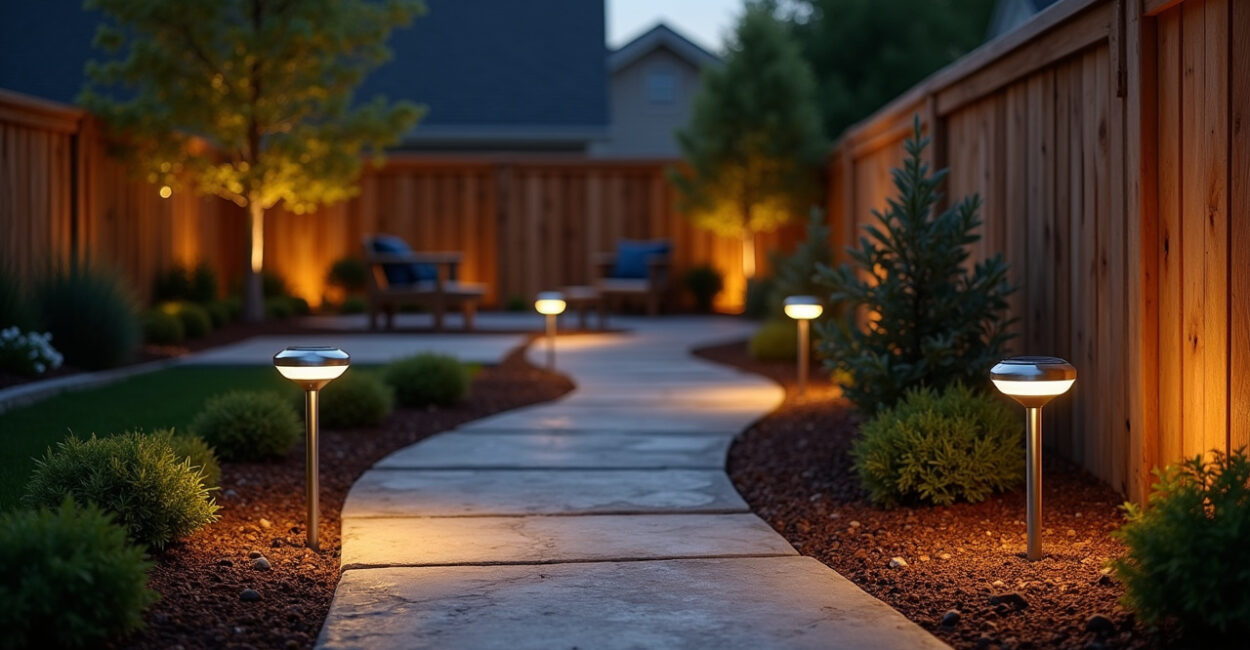
One weak path light can make a backyard feel unfinished; the right one can make it safer and more inviting in the same evening. The best solar path lights for backyards do two jobs at once: they guide people along walkways, borders, and patio edges, and they add a softer layer of nighttime atmosphere without adding wiring, trenching, or higher electric bills.
In practical terms, solar path lighting is a low-voltage outdoor lighting setup powered by a photovoltaic panel, a rechargeable battery, and an LED fixture. That sounds technical, but the buying decision is usually simpler than people think: brightness, beam spread, battery quality, material, and stake design matter more than marketing claims. Below, I’ll break down which styles work best, where each one fails, and how to choose lights that still look good after the first rainy season.
O Que Você Precisa Saber
- Path lights are strongest when they cast a low, downward pool of light; glare is the first sign a model is better for decoration than for safety.
- Monocrystalline panels and replaceable batteries usually outperform bargain kits because they hold charge better through short winter days.
- For most backyards, 10 to 30 lumens per fixture is enough for guidance, while 40 to 80 lumens works better near steps or uneven pavers.
- Metal housings and sealed battery compartments last longer than thin plastic, especially in climates with heat swings, sprinkler overspray, or frost.
- The safest layout is a staggered line, not a runway of evenly spaced dots; spacing should follow the path’s width and bends.
Best Solar Path Lights for Backyards: What Actually Matters in a Real Setup
Solar path lights look simple, but the differences show up fast once they leave the box. A light that looks bright on a product page can fade after a cloudy day, while a modest-looking fixture with a good panel and battery may stay consistent all night. The real test is not peak brightness; it is whether the light still performs after weather, shade, and age reduce its input.
Brightness, Beam Angle, and Why “More Lumens” is Not the Whole Story
For walkways, the goal is visibility without creating a bright line that washes out the yard. A narrow beam can punch light onto the ground, but it often creates harsh contrast and dark gaps. A wider beam with moderate output usually feels better along edging, gravel paths, and patio borders. In other words, controlled spread matters more than brute force.
Why Panel Quality Beats Fancy Styling
The panel is the engine. Monocrystalline solar cells are typically more efficient than cheaper amorphous panels, especially when daylight hours are short or the fixture sits under partial shade. If a product hides the panel inside decorative metalwork, check whether it still gets direct sun for several hours. A beautiful top that cannot charge well is just garden clutter after sunset.
In backyard lighting, the fixture that charges reliably usually outperforms the fixture that only looks premium in daylight.
For a practical benchmark, the U.S. Department of Energy’s guidance on solar outdoor lights explains why placement and sun exposure drive performance as much as hardware quality. That matters because many complaints about solar lighting are really placement problems, not product defects.
Styles That Work Best Along Walkways, Borders, and Patio Edges
Different backyard zones need different light behavior. The mistake I see most often is using the same fixture everywhere and then wondering why the path feels flat or the patio edge looks overlit. A better approach is to match the style to the job: guidance, definition, or accent.
Lantern-Style Stake Lights for a Softer Welcome
Lantern-style path lights are a good fit for front-to-back circulation routes and side garden paths where you want a warmer, more decorative feel. They usually cast a broader glow and look less utilitarian than spike heads with exposed LEDs. They are not the brightest option, but they create the most forgiving light for social spaces and mixed landscaping.
Low-Profile Bollard Lights for Clean Edges
Bollard-style solar lights work well for patio perimeters, fence lines, and straight edges where you want structure without visual clutter. They are also easier to keep consistent because their height and light direction stay predictable. If your backyard has modern hardscaping, this is often the cleanest-looking choice.
Moonlight and Dome Designs for Decorative Paths
These are the prettiest when viewed from a distance, but they are usually weaker for safety. They fit best where the route is already obvious and the goal is atmosphere. Think of them as accent lighting first and navigation lighting second. That distinction matters. A decorative glow can make a yard feel finished, but it should not be the only light near steps or uneven borders.
For homeowners comparing outdoor lighting behavior more broadly, the National Park Service’s lighting guidance is useful because it explains the value of aiming light where it is needed and limiting spill. The principle translates well to backyards: better direction means better visibility and less glare.

Materials, Batteries, and Weather Resistance That Hold Up After the First Season
Solar lights fail for a few predictable reasons: weak batteries, poor sealing, brittle plastic, and corrosion around the switch or stake. The first two are performance problems; the last two are durability problems. If you live in a place with intense sun, heavy rain, or freeze-thaw cycles, those weaknesses show up quickly.
Read also: Best Houseplants to Purify the Air: 12 Top Indoor Picks
Read also: How to Choose Solar Backyard Lights That Last All Night
What to Look for in Battery Specs
Nickel-metal hydride (NiMH) batteries are common, and they can perform well if the panel gets enough sun. Lithium-ion batteries tend to handle repeated charging better in premium models, but the whole fixture has to be designed around that chemistry. Replaceable batteries are a practical advantage because they extend the life of the light far beyond one season.
IP Ratings and Real-World Exposure
An IP rating tells you how well a light resists dust and water intrusion. For backyard use, a better seal is not luxury; it is survival. Sprinklers, puddles, and wind-driven rain create problems that product photos never show. If a model has no clear weather-resistance spec, that is usually a reason to skip it.
A solar path light is only as durable as its weakest seal, and the battery compartment is usually that weak point.
Who works on outdoor fixtures knows this from experience: lights often fail at the connection point, not the LED itself. That is why the most useful product reviews come from people who have run the same fixtures through a full summer and winter, not from unboxed first impressions.
Placement and Spacing Rules That Make the Yard Safer, Not Just Brighter
Spacing changes everything. If lights are too close together, the path looks theatrical and wastes charge on overlapping beams. If they are too far apart, the yard develops dark gaps that defeat the purpose. The ideal spacing depends on fixture height, beam spread, and how curved the route is.
A Simple Rule for Most Backyards
For standard walkways, placing lights about 6 to 8 feet apart is a reasonable starting point. Narrow paths may need less, while wide or curved areas may need staggered placement on both sides. Near steps, landings, or transitions from grass to stone, add extra coverage rather than relying on one stronger fixture.
Where Solar Lights Struggle Most
Shade is the obvious problem, but not the only one. South- or west-facing sunny exposure helps many fixtures charge better, while tree cover, roof overhangs, and privacy fences can reduce output enough to make a good light seem disappointing. If the location gets only a few hours of weak sun, consider a wired low-voltage fixture instead of forcing solar to do a job it cannot sustain.
How the Price Tells You More Than the Packaging Does
Price is not a perfect predictor, but it is still one of the fastest ways to sort the market. Very cheap kits often use tiny batteries, lower-grade LEDs, and thin housings that look fine until their first storm. Midrange models tend to offer the best balance of appearance, charging performance, and longevity. Premium lights can be worth it if you need replaceable cells, aluminum bodies, or a more refined beam pattern.
| Price Range | What You Usually Get | Best Use Case | Main Risk |
|---|---|---|---|
| Budget | Smaller batteries, basic plastic bodies, limited sealing | Short-term decorating, low-traffic borders | Fast dimming and early failure |
| Midrange | Better panels, stronger stakes, more consistent runtime | Most walkways and patio edges | Some models still use weak battery packs |
| Premium | Replaceable batteries, better metal housings, improved optics | High-visibility paths and weather-exposed yards | Paying for style without better performance |
One practical example: a homeowner on a tree-lined lot bought a dozen bargain lights for a side path, then replaced half of them after one wet spring. The second purchase was fewer lights but better-built ones with larger panels and sealed battery doors. The yard ended up looking less crowded and stayed visible longer after sunset. The lesson was not “buy expensive.” It was “buy for the conditions you actually have.”
Installation, Maintenance, and the Small Habits That Extend Runtime
Solar path lighting does not need hard wiring, but it still needs attention. The best systems are usually the ones that are installed carefully and checked a few times a season. Dust on the panel, a tilted stake, or a misaligned cap can cut output enough to matter.
Install Once, Then Inspect
- Place each light where it gets direct sun for most of the day.
- Push stakes into firm soil so the beam stays level and the fixture does not lean.
- Clean the panel with a soft cloth every few weeks during pollen season or after storms.
- Replace rechargeable batteries when runtime drops even though charging conditions are still good.
There is one limit worth saying out loud: solar path lights are excellent for guidance and mood, but they are not a substitute for code-compliant security lighting around dangerous transitions, steep steps, or large dark yards. In those areas, a wired fixture or a brighter dedicated outdoor lamp may be the better tool.
Which Solar Path Light Style Fits Your Backyard Best
The right choice depends on the job you want the light to do. If safety and visibility come first, choose a fixture with a stable beam, a dependable panel, and a body that can survive weather. If the yard is already easy to navigate and you want ambiance, choose something lower and softer. The mistake is treating every path as if it needs the same output.
For most homeowners, the smartest purchase is a midrange solar stake light with a monocrystalline panel, replaceable battery, and weather-sealed housing. That combination usually gives the best mix of runtime, durability, and curb appeal. If your yard has heavy shade or you need consistent brightness near steps, test a small set before buying a full run. That one step prevents the most common regret: filling a path with fixtures that look good on day one but disappoint by week three.
What to Do Next
Measure the path, note where sun actually hits, and decide whether you need guidance, accent lighting, or both. Then choose fixtures based on battery access, panel exposure, and weather resistance before you care about style. If the backyard has mixed conditions, buy a small test batch first and evaluate runtime after several cloudy days, not just on the first clear afternoon.
FAQ
How Many Solar Path Lights Do I Need for a Typical Backyard Walkway?
Most walkways need enough lights to eliminate dark gaps, not enough to create a runway effect. A useful starting point is one fixture every 6 to 8 feet on straight paths, with tighter spacing on curves, steps, or wider edges. If the yard has dense shade or reflective surfaces, test a small section first and adjust based on how the light looks after dusk and again late at night.
Are Solar Path Lights Bright Enough for Safety?
Yes, if they are chosen and placed correctly. For general navigation, moderate output is usually better than harsh brightness because it reduces glare and helps the eye adapt. They are suitable for walkways, borders, and patio edges, but they should not replace stronger lighting near steep stairs, uneven masonry, or any area where a fall would be serious. Safety improves most when the beam lands on the ground, not in people’s eyes.
What Type of Solar Panel is Best for Backyard Path Lights?
Monocrystalline panels are usually the best choice because they convert sunlight efficiently and tend to perform better when daylight is limited. That matters in winter, under partial shade, or in yards where the panel cannot sit in perfect sun all day. The panel is only part of the equation, though; a good battery and a well-sealed housing are just as important for real-world performance and durability.
Do Solar Path Lights Work Well in Shady Yards?
Sometimes, but not reliably. If the fixtures only get a few hours of weak or filtered sunlight, runtime will drop and brightness will fade earlier in the evening. In those yards, choose the sunniest spots available, trim back blocking foliage if possible, or use solar lights only for accent and switch the most important routes to wired low-voltage lighting. Shade is the main reason solar products underperform.
How Long Should Good Solar Path Lights Last?
A well-built light can last several seasons if the housing is sealed, the stake is sturdy, and the rechargeable battery is replaceable. The LED itself often lasts longer than the battery, which is why battery access matters so much. Cheap fixtures may fail after one harsh season, while better models survive much longer. Longevity depends less on the label and more on how well the product handles sun, water, and replacement parts.